Disclosure: This post contains affiliate links. If you purchase through these links, we may earn a small commission at no extra cost to you.
Disclaimer: This article is for informational purposes only and is not a substitute for professional veterinary advice. Consult your veterinarian before making significant changes to your dog’s diet, especially if your dog has health or digestive issues.
If you’ve been scrolling through pet store shelves or browsing online and keep seeing bags labeled “freeze-dried dog food,” you’re not alone in wondering what it actually is. Freeze-dried dog food has quietly become one of the fastest-growing categories in the pet nutrition world, and for good reason — it promises the nutritional benefits of raw feeding without the mess, smell, or spoilage risk.
This guide breaks everything down in simple terms so you can decide whether freeze-dried food is the right choice for your dog, how to transition safely, and what to look for when buying your first bag.
What Is Freeze-Dried Dog Food?
Freeze-dried dog food starts out as raw meat, organs, bone, and sometimes fruits or vegetables. Instead of being cooked at high heat like kibble, the food is frozen and then placed in a vacuum chamber where the ice turns directly into vapor, skipping the liquid stage entirely. This process, called sublimation, removes almost all the moisture from the food while leaving its nutritional structure largely untouched.
The result is a lightweight, shelf-stable product that looks like small nuggets, patties, or crumbles. Because the food was never exposed to high heat, many of the natural enzymes, vitamins, and amino acids that can be damaged during traditional cooking remain more intact.
How Is Freeze-Dried Dog Food Made?
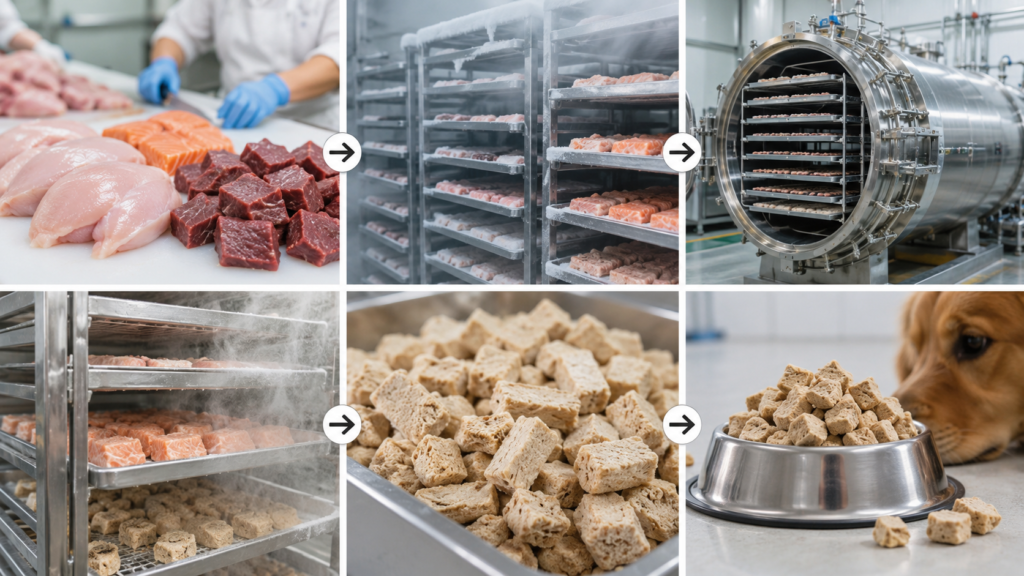
Understanding the process helps explain why this food behaves so differently from kibble or canned food.
- Raw ingredient preparation — Meat, organs, and bone (often ground) are mixed with supplemental vitamins and minerals to meet complete-and-balanced nutrition standards.
- Flash freezing — The mixture is frozen rapidly to preserve its structure and prevent large ice crystals from damaging cell walls.
- Sublimation chamber — The frozen food goes into a vacuum chamber where controlled heat causes the ice to sublimate (turn directly into vapor) without ever becoming liquid water again.
- Moisture removal — This leaves the food with roughly 2 to 5 percent moisture, compared to the 60 to 70 percent moisture found in raw or fresh food.
- Packaging — Because there’s almost no moisture left, bacteria and mold have very little to grow on, which is why the food can sit on a shelf for a year or more when sealed.
Why Are So Many Dog Owners Switching to Freeze-Dried Food?
1. Closer to a Natural, Raw Diet
Many owners choose freeze-dried food because they want to feed something closer to what a dog’s ancestors ate, without handling raw meat directly.
2. Long Shelf Life Without Refrigeration
Unlike raw or fresh frozen food, freeze-dried bags can be stored in a pantry. That makes it far more convenient for daily feeding, travel, or emergency stockpiling.
3. Easy to Transport
Freeze-dried food is lightweight since almost all the water has been removed. This makes it a favorite among people who hike, camp, or travel with their dogs.
4. Often Highly Palatable
Dogs frequently find freeze-dried food more appealing than kibble because of its stronger natural aroma and texture, which can help picky eaters.
5. Minimal Processing
Because it skips high-heat cooking, some owners feel it retains more of the original nutritional profile of the raw ingredients compared to extruded kibble.
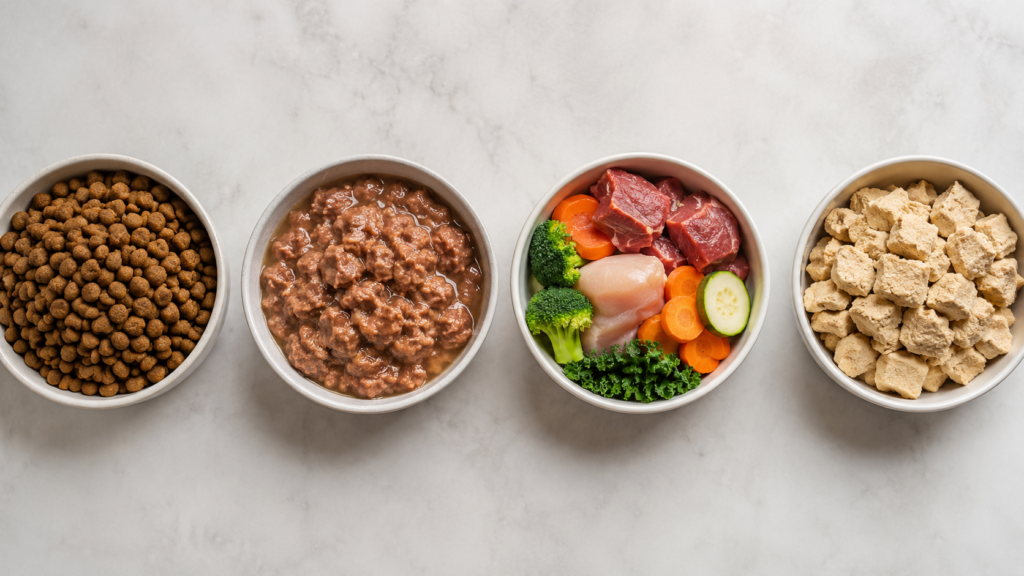
Freeze-Dried vs. Kibble vs. Raw vs. Dehydrated: What’s the Difference?
| Type | Moisture Content | Shelf Life | Convenience | Typical Cost |
|---|---|---|---|---|
| Kibble | Around 10% | Long (unopened) | Very high | Low to moderate |
| Canned/Wet | 70-80% | Long (sealed) | High | Moderate |
| Fresh Frozen Raw | 60-70% | Short, needs freezer | Low | High |
| Dehydrated | 10-15% | Moderate | High | Moderate to high |
| Freeze-Dried | 2-5% | Long, no fridge needed | High | High |
Freeze-dried food essentially tries to bridge the gap between raw feeding’s nutritional appeal and kibble’s convenience, which is why it tends to cost more than either extreme.
Pros and Cons of Freeze-Dried Dog Food
Pros
- No refrigeration required before opening
- Lightweight and easy to store or travel with
- Minimal processing compared to kibble
- Often made with limited, recognizable ingredients
- Long shelf life when sealed
Cons
- Generally more expensive per pound than kibble
- Requires rehydration for most complete meals, which takes a few extra minutes
- Some formulas are treats or toppers only, not complete diets — always check the label
- Not pre-cooked, so basic raw-food handling hygiene still applies (wash hands and bowls)
Is Freeze-Dried Food Safe? What Beginners Should Know
Because freeze-dried food starts as raw meat, some pet owners worry about bacterial contamination such as salmonella or listeria. Reputable manufacturers typically use one of several safety steps, such as high-pressure processing (HPP), to reduce pathogens before packaging. If safety is a top concern, look for a brand that clearly states it uses HPP or a similar pathogen-reduction step on its packaging or website.
As with any raw or minimally processed pet food, it’s sensible to:
- Wash your hands after handling
- Use a dedicated bowl and wash it after each meal
- Store the sealed bag in a cool, dry place
- Keep it away from small children
If your dog has a compromised immune system or an underlying health condition, it’s worth talking to your veterinarian before switching diets.
How to Transition Your Dog to Freeze-Dried Food
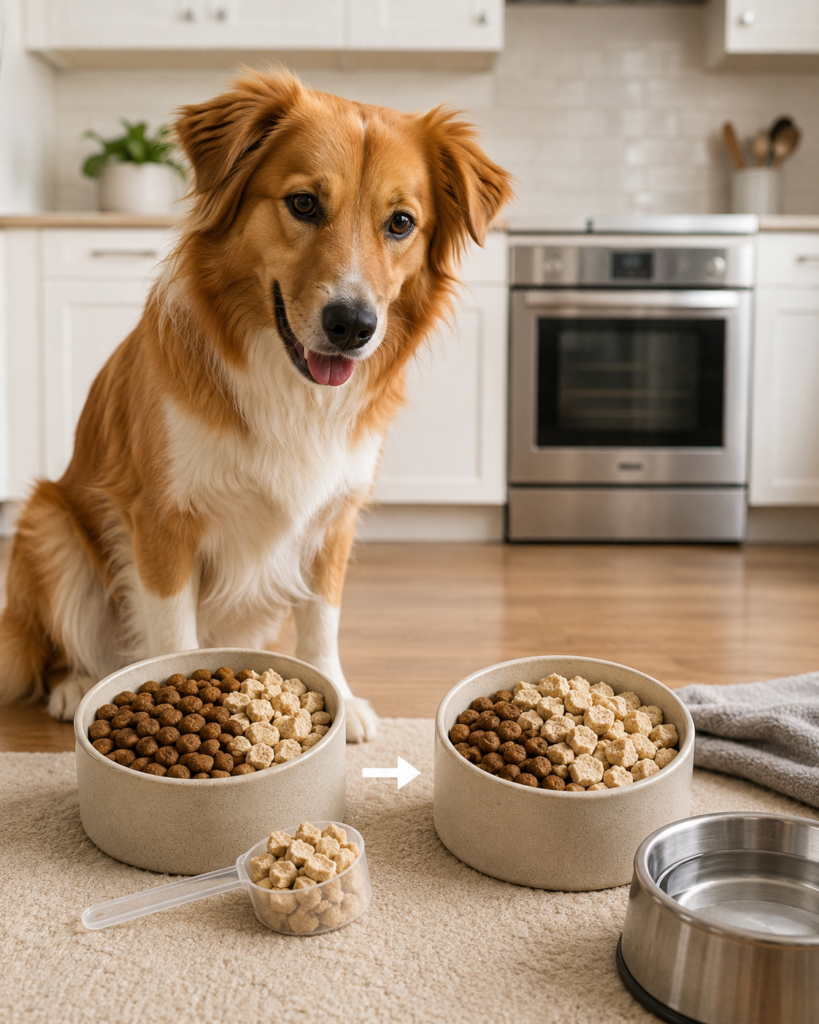
Switching foods too quickly is one of the most common reasons dogs get an upset stomach. A gradual transition over 7 to 10 days gives your dog’s digestive system time to adjust.
A simple schedule looks like this:
- Days 1-2: 75% old food, 25% new freeze-dried food
- Days 3-4: 50% old food, 50% new freeze-dried food
- Days 5-6: 25% old food, 75% new freeze-dried food
- Days 7+: 100% freeze-dried food
Watch your dog’s stool and energy levels throughout. If you notice ongoing diarrhea or vomiting, slow the transition down or consult your vet.
How to Serve Freeze-Dried Dog Food
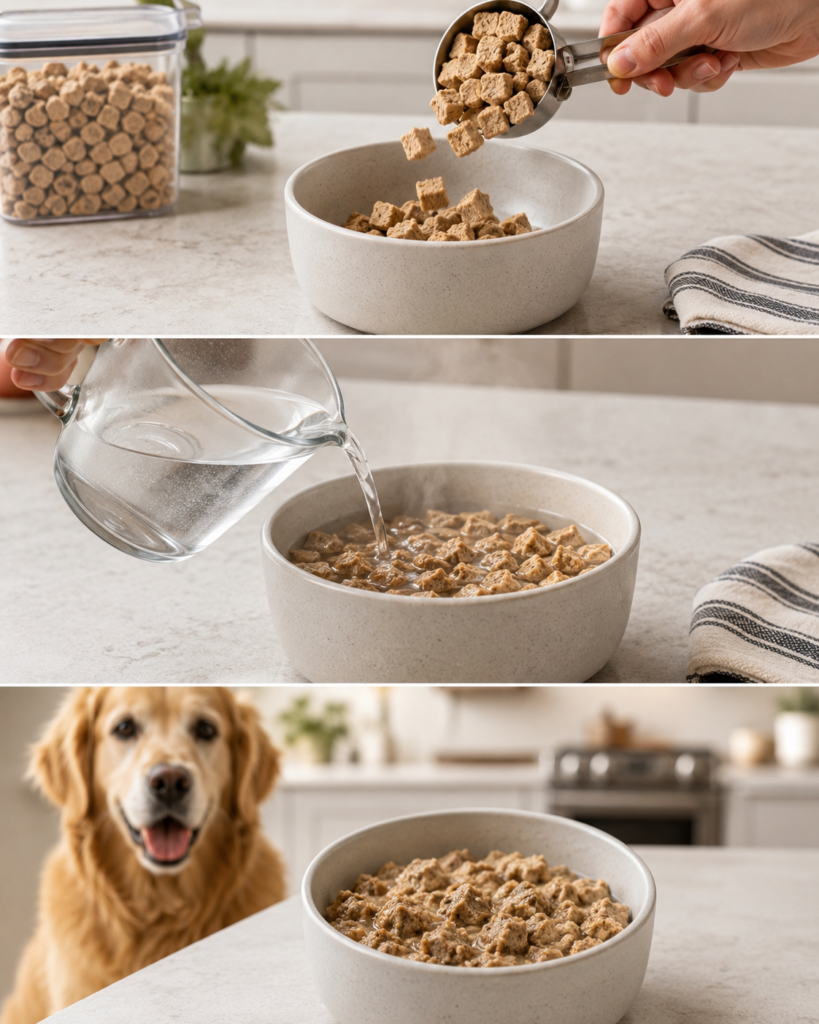
Most complete freeze-dried meals need to be rehydrated with warm water before serving, though some dogs enjoy the crunchy texture as-is for snacking. To rehydrate:
- Break the nuggets or patties into a bowl.
- Add warm (not hot) water according to the package ratio, usually about equal parts water to food by weight.
- Let it sit for 5 to 10 minutes until it reaches a moist, ground-meat-like texture.
- Serve at room temperature.
Freeze-dried toppers and treats generally don’t need rehydration and can be sprinkled directly over your dog’s regular meal.
What to Look for When Buying Freeze-Dried Dog Food
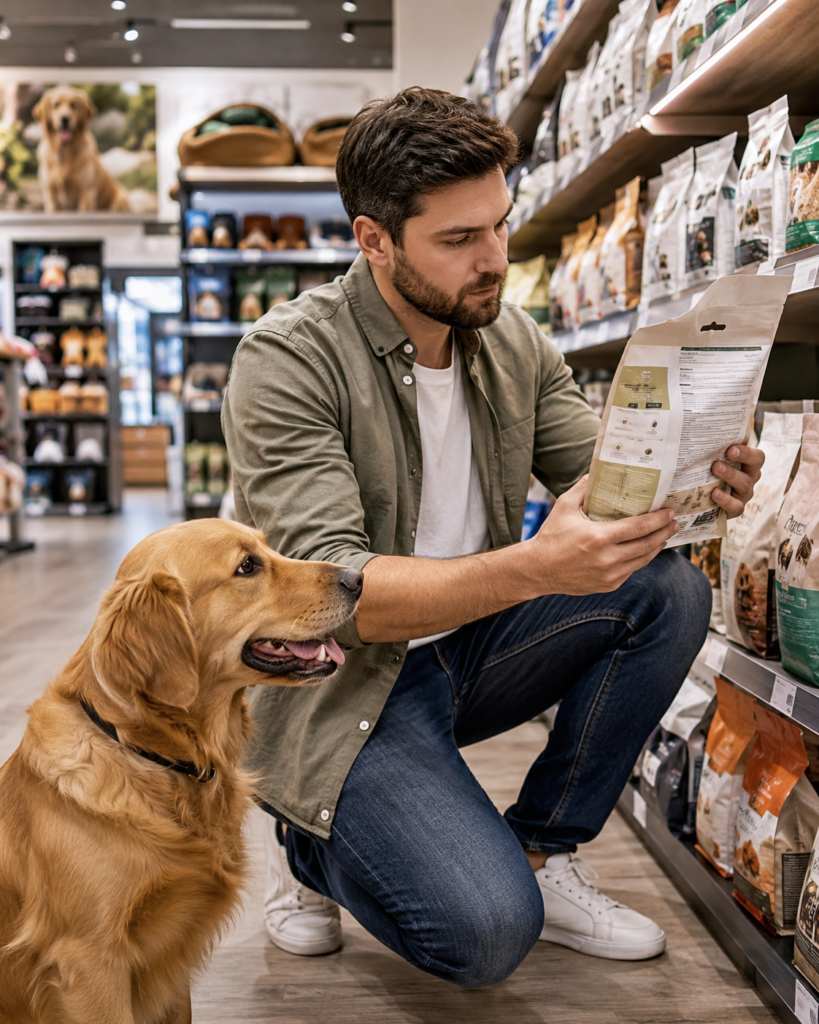
- “Complete and Balanced” labeling — Look for an AAFCO statement confirming the food meets nutritional standards for your dog’s life stage, rather than being a treat or topper only.
- Named protein sources — “Chicken” or “beef” is more transparent than vague terms like “meat meal” or “animal byproduct.”
- Limited ingredient lists — Fewer, recognizable ingredients are usually a good sign of quality.
- Life-stage appropriateness — Puppies, adults, and seniors have different nutritional needs, so match the formula to your dog’s stage.
- Pathogen-reduction methods — Brands using HPP tend to offer extra peace of mind.
- Your budget — Freeze-dried food is premium-priced, so consider whether you’ll feed it as a full diet, a topper, or an occasional treat.
Recommended Freeze-Dried Dog Food Products to Get You Started
Below are well-known, widely available freeze-dried options that are popular starting points for beginners. Prices and availability may vary, so check current listings before buying.
- Stella & Chewy’s Freeze-Dried Raw Dinner Patties — a favorite complete-meal option with several protein varieties. https://link.amazon/B0h0BSV9u
- Primal Freeze-Dried Nuggets — known for simple, whole-food ingredient lists. https://link.amazon/B0dsq2d8P
- The Honest Kitchen Grain-Free Dog Food — a gentle option often recommended for sensitive stomachs.https://link.amazon/B0g6582j3
- Instinct Raw Freeze-Dried Meals — offers both complete meals and toppers. https://link.amazon/B0jjAAaS0
- Nulo Freeze-Dried Raw Dog Food — formulated with higher protein content for active dogs.https://link.amazon/B0d0O7C7G
- ZIWI Peak Freeze-Dried Dog Food — uses air-dried and freeze-dried processes with high meat inclusion. https://link.amazon/B05AA1Dx4
- Vital Essentials Freeze-Dried Dog Food — offers single-protein and mixed formulas. https://link.amazon/B03W0OdGv
- Sojos Complete Freeze-Dried Dog Food Mix — a mix-it-yourself style formula popular with owners who like control over ingredients. https://link.amazon/B0h6V9Iyc
- Rehydration/Feeding Bowl Set for Freeze-Dried Meals — a handy accessory for beginners getting started. https://link.amazon/B06OfhBCT
How to Store Freeze-Dried Dog Food Properly
- Keep the bag sealed tightly after each use, or transfer to an airtight container.
- Store in a cool, dry pantry away from direct sunlight.
- Avoid areas with high humidity, which can reintroduce moisture and shorten shelf life.
- Once rehydrated, treat leftovers like fresh food — refrigerate and use within the timeframe listed on the packaging, typically within a day or two.
Common Mistakes Beginners Make
- Skipping the transition period, which often causes digestive upset.
- Feeding a topper or treat product as a full meal, leading to nutritional gaps over time.
- Not measuring rehydration water correctly, which can under- or over-hydrate the meal.
- Buying based on price alone, without checking whether the formula is complete and balanced.
Frequently Asked Questions
Is freeze-dried dog food better than kibble? Neither is universally “better” — they serve different priorities. Freeze-dried food is minimally processed and often more palatable, while kibble is generally more affordable and convenient for large dogs or multi-dog households.
Can puppies eat freeze-dried food? Yes, as long as the formula is labeled complete and balanced for growth or all life stages. Always check the label rather than assuming.
Does freeze-dried dog food need to be cooked? No. It’s typically rehydrated with warm water rather than cooked, since cooking would defeat the purpose of preserving the raw nutritional profile.
How long does freeze-dried dog food last once opened? Most brands recommend using an opened bag within 4 to 6 weeks for best quality, though this varies by product, so check the packaging.
Is freeze-dried food safe for dogs with sensitive stomachs? Many owners find freeze-dried diets easier on sensitive stomachs due to limited ingredients, but every dog is different. Introduce it gradually and consult your vet if your dog has ongoing digestive issues.
Can I mix freeze-dried food with kibble long-term? Yes, many owners feed a mix as a permanent routine, using freeze-dried food as a topper for flavor and nutrition while keeping kibble as the affordable base.
Final Thoughts
Freeze-dried dog food offers a practical middle ground between raw feeding and traditional kibble — you get many of the nutritional benefits associated with minimally processed food, along with the shelf stability and convenience that busy pet owners need. As with any diet change, the keys to success are transitioning gradually, choosing a complete and balanced formula, and paying attention to how your individual dog responds.
Every dog is different, so take note of your dog’s energy, coat condition, and digestion during the first few weeks. If you’re ever unsure, your veterinarian is the best resource for tailoring the right diet to your dog’s specific needs.