
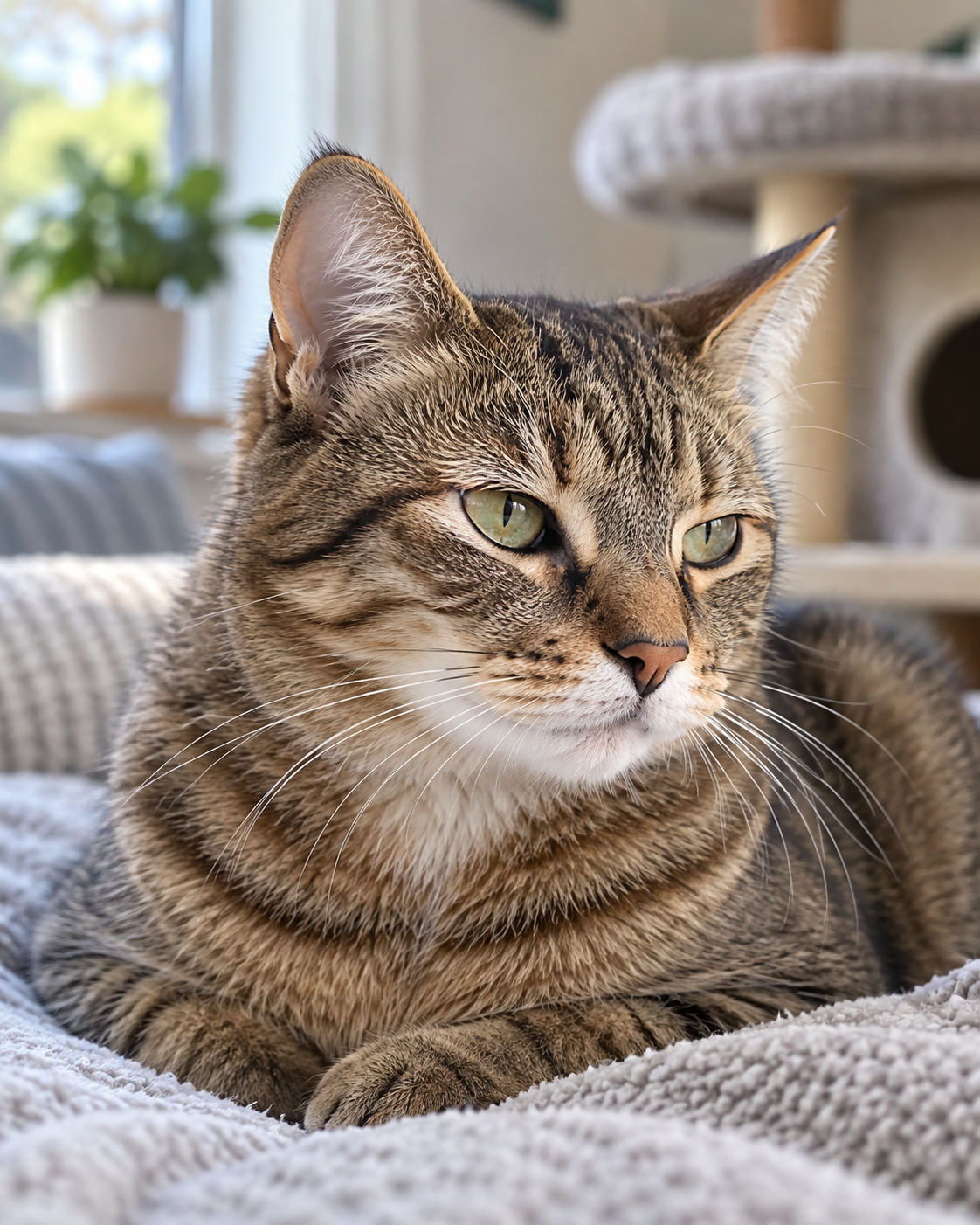
Cats are masters at hiding pain. In the wild, showing weakness makes an animal a target for predators — and even though your cat has never faced a predator in your living room, that instinct never went away. This is exactly why so many cat parents miss the early signs that something is wrong.
The good news? Scientists have developed a simple, visual tool that helps ordinary pet owners — not just vets — spot pain in cats just by looking at their face. It’s called the Cat Grimace Scale (CGS), and once you learn it, you’ll never look at your cat’s expressions the same way again.
In this beginner-friendly guide, we’ll break down exactly what the Cat Grimace Scale is, how to use it at home, what each facial feature means, and which tools can help you track your cat’s comfort over time.
Table of Contents
- What Is the Cat Grimace Scale?
- Why Cats Hide Pain (And Why This Matters)
- The 5 Facial Action Units of the Cat Grimace Scale
- How to Score Your Cat Step-by-Step
- When to Use the Grimace Scale
- Common Mistakes Beginners Make
- Tools That Make Tracking Easier
- When to Call the Vet
- Frequently Asked Questions
1. What Is the Cat Grimace Scale?
The Cat Grimace Scale is a pain-assessment tool developed by veterinary researchers to help identify acute pain in cats based on facial expressions alone. It was created following similar “grimace scale” research in mice, rabbits, and horses, and has since become one of the most useful at-home tools for everyday cat owners.
Unlike a mood chart or a guess based on behavior, the CGS gives you a structured, repeatable way to look at specific parts of your cat’s face and assign a score. The higher the score, the more likely your cat is experiencing pain.
It’s important to understand what this tool is — and isn’t:
✅ It is a quick screening tool you can use at home in under two minutes.
✅ It is backed by peer-reviewed veterinary research.
❌ It is not a replacement for a veterinary diagnosis.
❌ It does not tell you why your cat is in pain — only that they might be.
Think of it like a thermometer. A thermometer tells you if something’s wrong; it doesn’t tell you if it’s the flu or an infection. The Grimace Scale works the same way for pain.
2. Why Cats Hide Pain (And Why This Matters)
Cats are what veterinarians call a “prey species with predator instincts.” This means:
- They hunt small animals (predator behavior)
- But they’re also hunted by larger animals in the wild (prey behavior)
Because of this dual identity, cats have evolved to mask signs of weakness. A limping cat, a cat that’s clearly uncomfortable, or a cat in visible distress is an easy target in nature. So even a well-fed, safe house cat still carries this instinct.
This is why so many cat owners are shocked when a vet says, “Your cat has been in pain for weeks.” The cat never cried out. It never stopped eating (much). It just… quietly hurt.
This is exactly the gap the Cat Grimace Scale was built to close. Facial muscles are much harder to consciously control than behavior, which makes them a more honest window into how a cat is actually feeling.
3. The 5 Facial Action Units of the Cat Grimace Scale
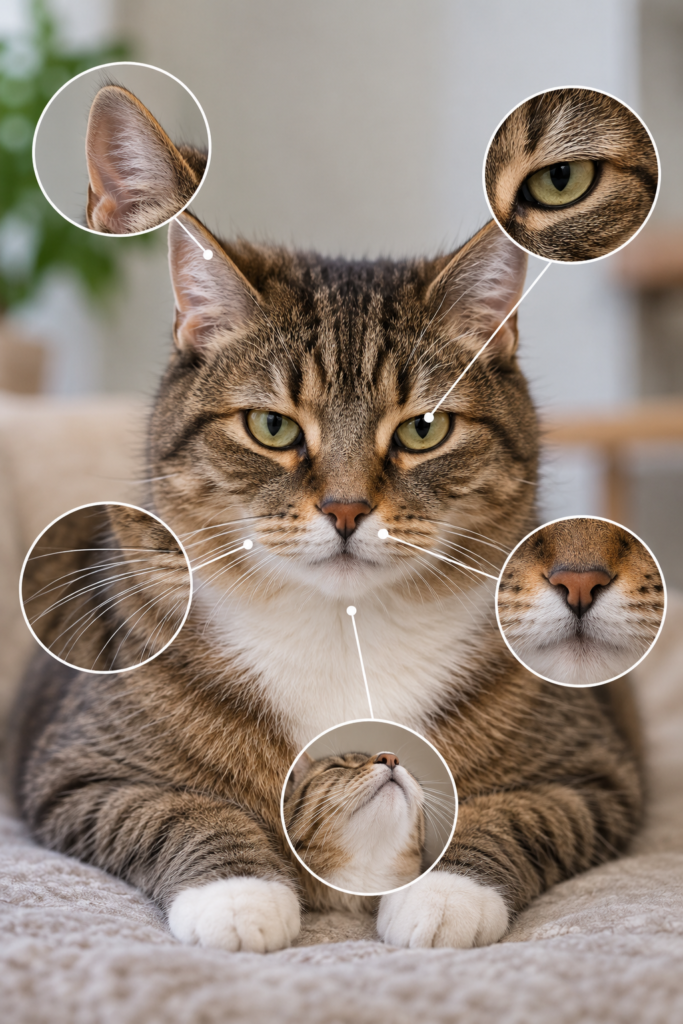
The CGS breaks the face down into five separate “action units.” Each one is scored on a simple 0–2 scale:
- 0 = Not present (normal, relaxed)
- 1 = Moderately present (some tension)
- 2 = Markedly present (clear sign of pain)
Here are the five action units, explained simply:
A. Ear Position
- 0: Ears facing forward, upright, and relaxed.
- 1: Ears slightly pulled apart or rotated outward.
- 2: Ears flattened, rotated, and pulled apart like little “airplane ears.”
B. Orbital Tightening (Eyes)
- 0: Eyes open normally.
- 1: Eyes partially squinted.
- 2: Eyes tightly closed or squeezed shut, sometimes with a slight bulge.
C. Muzzle Tension
- 0: Muzzle round and relaxed.
- 1: Slightly tense, mouth line beginning to flatten.
- 2: Muzzle appears tense, elongated, or elliptical rather than round.
D. Whisker Position
- 0: Whiskers loose and curved naturally.
- 1: Whiskers slightly less curved, starting to straighten.
- 2: Whiskers stiff, straight, and pointing forward like little antennae.
E. Head Position
- 0: Head held up and alert, above the shoulder line.
- 1: Head held at shoulder level.
- 2: Head held below the shoulder line, or tilted downward.
💡 A Simple Way to Remember It
Many beginners use this quick mental checklist: “E-O-M-W-H” — Ears, Orbital (eyes), Muzzle, Whiskers, Head.
If you want a printable version of this checklist to stick on your fridge or keep in your cat’s care binder, a laminated pet health binder or planner makes this much easier to manage day-to-day.
🔗 Recommended: [Pet Health & Symptom Tracker Binder]
https://link.amazon/B02ZsZ6Zs
4. How to Score Your Cat Step-by-Step
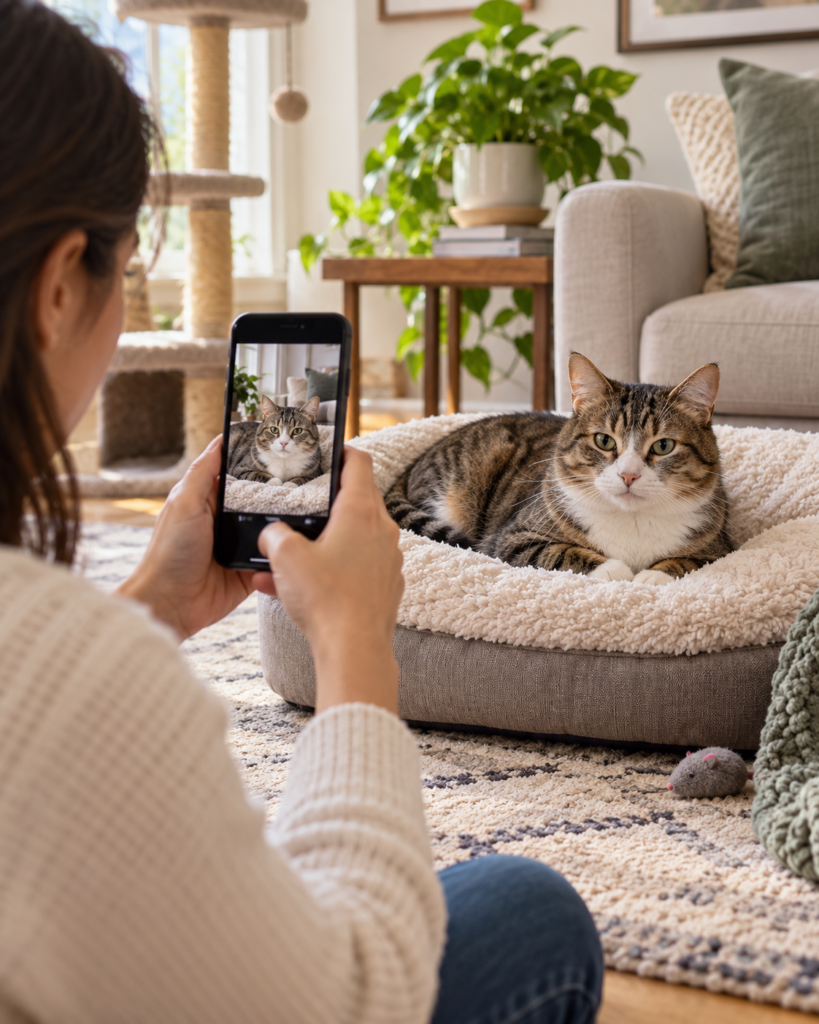
Here’s exactly how to perform a Cat Grimace Scale check on your cat at home:
Step 1: Choose a calm moment. Don’t attempt this right after play, a vet visit, or a loud noise. You want your cat in a resting, undisturbed state.
Step 2: Observe from a short distance. Don’t loom over your cat or hold their face. Natural, undisturbed expressions are the most accurate. Sit a few feet away and simply watch.
Step 3: Take a clear photo. A front-facing photo, ideally with good lighting, makes scoring much easier and lets you compare over time. A simple pet camera or phone tripod mount can help you capture the same angle consistently.
🔗 Recommended: [Mini Phone Tripod for Pet Photos]
https://link.amazon/B012eR8j3
Step 4: Score each of the 5 action units (0, 1, or 2). Add them together. Total possible score: 0 to 10.
Step 5: Interpret the total score.
0–3: Low likelihood of pain
4–6: Moderate — worth monitoring closely
7–10: High likelihood of pain — contact your veterinarian
Step 6: Track it over time. A single score is a snapshot. A pattern over days is real data. This is where a simple pet journal or app becomes incredibly useful — especially post-surgery or during chronic illness management.
🔗 Recommended: [Pet Wellness Journal Notebook]
https://link.amazon/B0fM7Bt9h
5. When to Use the Grimace Scale
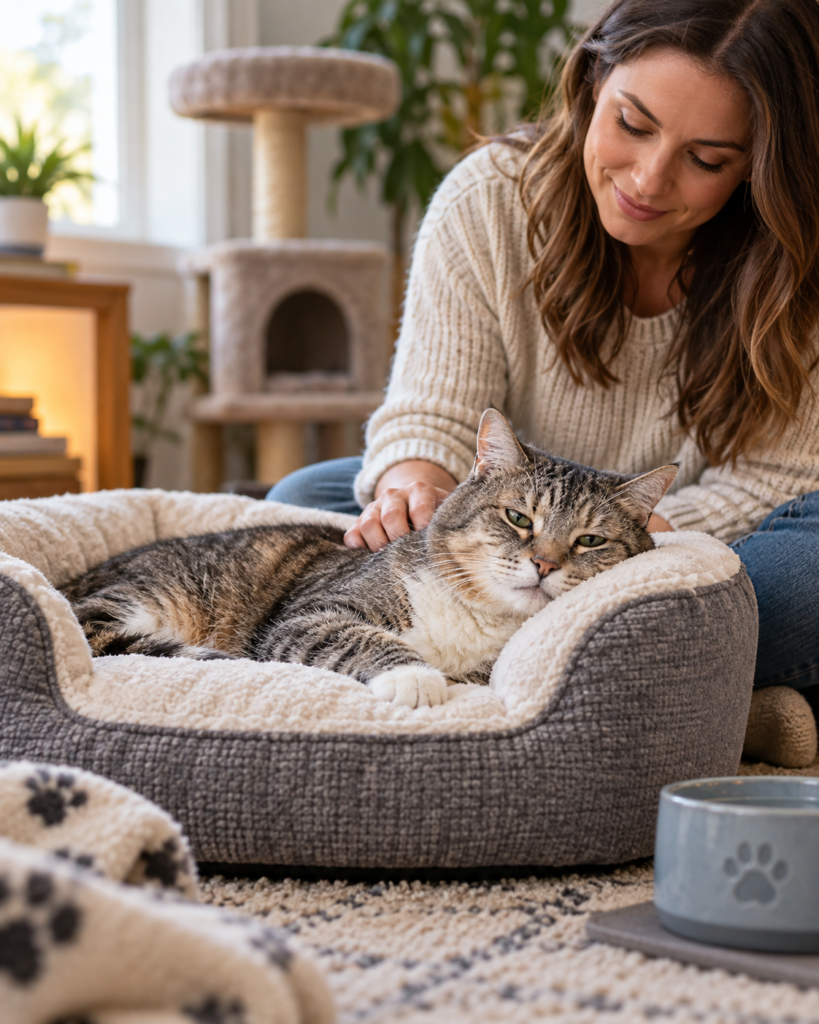
You don’t need to score your cat’s face every single day. The CGS is most useful during specific windows:
- After surgery or a medical procedure (e.g., spay/neuter, dental work)
- During recovery from an injury
- If your cat has a chronic condition like arthritis or kidney disease
- If you notice subtle behavior changes — hiding more, eating less, grooming less
- Before and after starting a new medication, to see if it’s helping
- As cats age, since senior cats often develop arthritis that goes unnoticed
Many senior cat owners build the Grimace Scale into a weekly routine, especially cats aged 10+, since feline arthritis is estimated to affect a very large share of senior cats — often silently.
If your cat is a senior, a supportive and orthopedic cat bed can make a noticeable difference in comfort between vet visits.
🔗 Recommended: [Orthopedic Memory Foam Cat Bed]
https://link.amazon/B0aai7qMv
6. Common Mistakes Beginners Make
Even well-meaning cat owners get this wrong sometimes. Here are the most common pitfalls:
Mistake 1: Scoring during an unnatural moment
If your cat is mid-yawn, hissing at another pet, or startled by a noise, their face won’t reflect their baseline pain level. Always score during quiet rest.
Mistake 2: Only checking once
One score tells you very little. The real value comes from comparing scores across several days.
Mistake 3: Ignoring lighting and angle
A dim room or an angled photo can make ears or eyes look different than they really are. Consistent lighting matters.
Mistake 4: Treating it as a diagnosis
The CGS tells you pain is likely — not what’s causing it. A high score should always lead to a vet visit, not a guessing game about medication.
Mistake 5: Forgetting body language entirely
The Grimace Scale works best when combined with body posture, appetite, litter box habits, and activity level — not used in isolation.
7. Tools That Make Tracking Easier
Since consistency is the key to using the Cat Grimace Scale effectively, a few simple tools can make a real difference:
- A dedicated pet health journal or planner to log scores, appetite, and behavior daily. 🔗https://link.amazon/B0fwwZ1br
- A quiet, comfortable resting spot so your cat feels safe enough to show their natural resting face. 🔗 https://link.amazon/B05ZSThCl
- Treat puzzle feeders to gently observe how enthusiastically your cat eats and moves — a helpful secondary pain indicator. 🔗https://link.amazon/B0gdAwdf2
- A digital pet thermometer, useful when combined with facial scoring to rule out fever-related discomfort. 🔗 https://link.amazon/B0jeEqYRK
- Calming pheromone diffusers, which can help reduce stress-related facial tension that might otherwise be mistaken for pain. 🔗https://link.amazon/B01ZM0W0I
- A good pet first-aid guide book, useful for beginners who want to understand feline health basics beyond just the Grimace Scale. 🔗 https://link.amazon/B076gHFiA
Using these tools together builds a fuller picture of your cat’s comfort and wellbeing — not just a single facial score in isolation.
8. When to Call the Vet
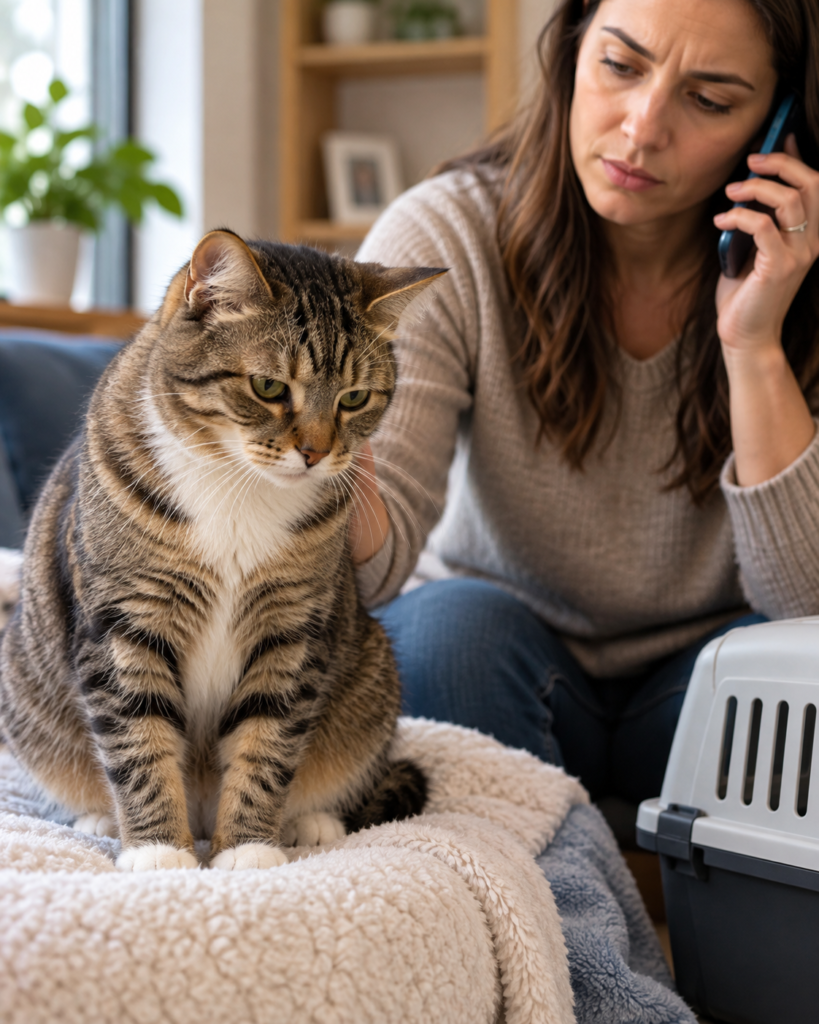
The Cat Grimace Scale is a wonderful early-warning system, but it should never replace professional veterinary care. Contact your vet promptly if you notice:
- A CGS score of 7 or higher
- Sudden lethargy or hiding
- Refusal to eat or drink for more than 24 hours
- Difficulty walking, jumping, or using the litter box
- Vocalizing in pain (yowling, growling when touched)
- Rapid breathing or panting
- Any noticeable swelling, limping, or wounds
If you’re ever unsure, it’s always better to call your vet and describe what you’re seeing — including your Grimace Scale score — rather than wait and hope it resolves on its own.
9. Frequently Asked Questions
Q: Can I use the Cat Grimace Scale on kittens? The scale was developed and validated primarily on adult cats. Kittens have different facial proportions, so results may be less reliable, though the same general principles (tense muzzle, flattened ears, squinted eyes) can still be useful indicators.
Q: Does the Grimace Scale work on all cat breeds? Most research has focused on domestic shorthair cats. Flat-faced breeds (like Persians) or cats with naturally folded ears (like Scottish Folds) may require some adjustment, since their baseline facial structure differs.
Q: How often should I score my cat? For healthy cats, there’s no need for daily scoring. For cats recovering from surgery, injury, or managing chronic pain, once or twice daily during the recovery period is a reasonable starting point.
Q: Is a low score a guarantee my cat isn’t in pain? No. Some cats, especially very stoic ones, may show minimal facial changes even with underlying pain. The Grimace Scale is one tool among several — always combine it with attention to appetite, activity, and litter box habits.
Q: Where did the Cat Grimace Scale come from? It was developed by veterinary pain researchers and published in peer-reviewed journals, building on similar successful grimace scales used in mice, rats, rabbits, and horses.
Final Thoughts
Learning to read your cat’s face might feel like a small skill, but it can genuinely change how quickly you notice when something’s wrong. Cats can’t tell us in words when they’re hurting — but their eyes, ears, whiskers, and muzzle often tell the story long before their behavior does.
Start simple: the next time your cat is resting calmly, take thirty seconds to really look at their face. Notice the ears, the eyes, the whisker position. Over time, this becomes second nature — and it just might help you catch a problem early enough to make a real difference.
This article is for educational purposes only and is not a substitute for professional veterinary advice, diagnosis, or treatment. Always consult a licensed veterinarian regarding your cat’s health.
Affiliate Disclosure: This post contains affiliate links. If you purchase through these links, we may earn a small commission at no additional cost to you. We only recommend products we believe genuinely support cat health and comfort.