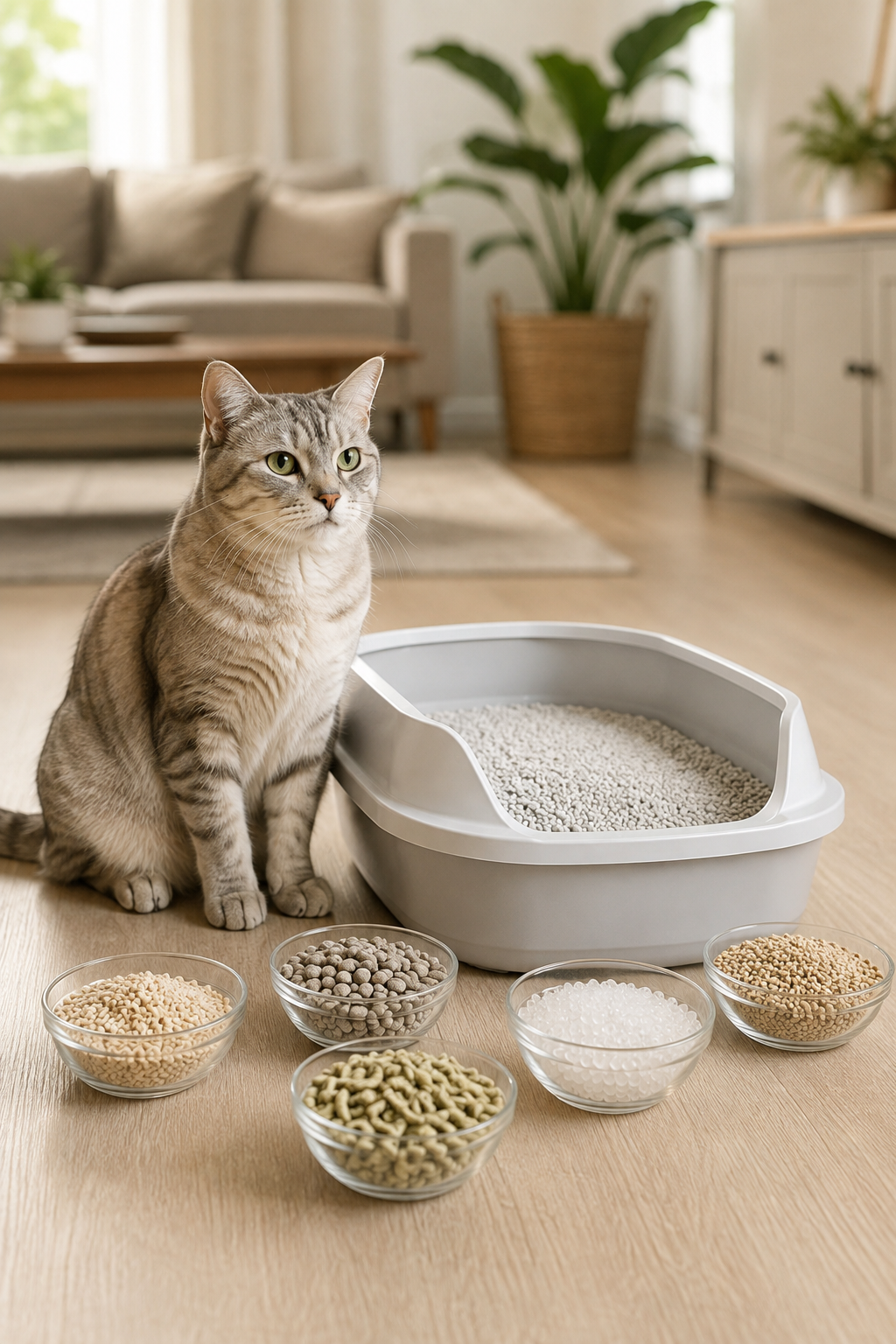
Choosing the right cat litter feels simple until you stand in front of a store shelf or scroll through hundreds of options online and realize there are dozens of types, each promising to be the “best.” Clumping, lightweight, crystal, natural, scented, unscented, biodegradable… where do you even start?
The truth is, there’s no single “best” cat litter for every household. The right choice depends on your cat’s preferences, your budget, how many cats you have, whether anyone in the home has allergies or asthma, and how much time you want to spend scooping every day.
In this guide, we’ll break down the four major types of cat litter clumping, lightweight, crystal, and natural comparing how each one performs on odor control, dust, tracking, cost, and environmental impact. By the end, you’ll know exactly which litter fits your lifestyle and your cat’s needs.
This post contains affiliate links. If you purchase through these links, we may earn a small commission at no extra cost to you. We only recommend products that are well-reviewed and widely trusted by cat owners.
Why Litter Type Actually Matters
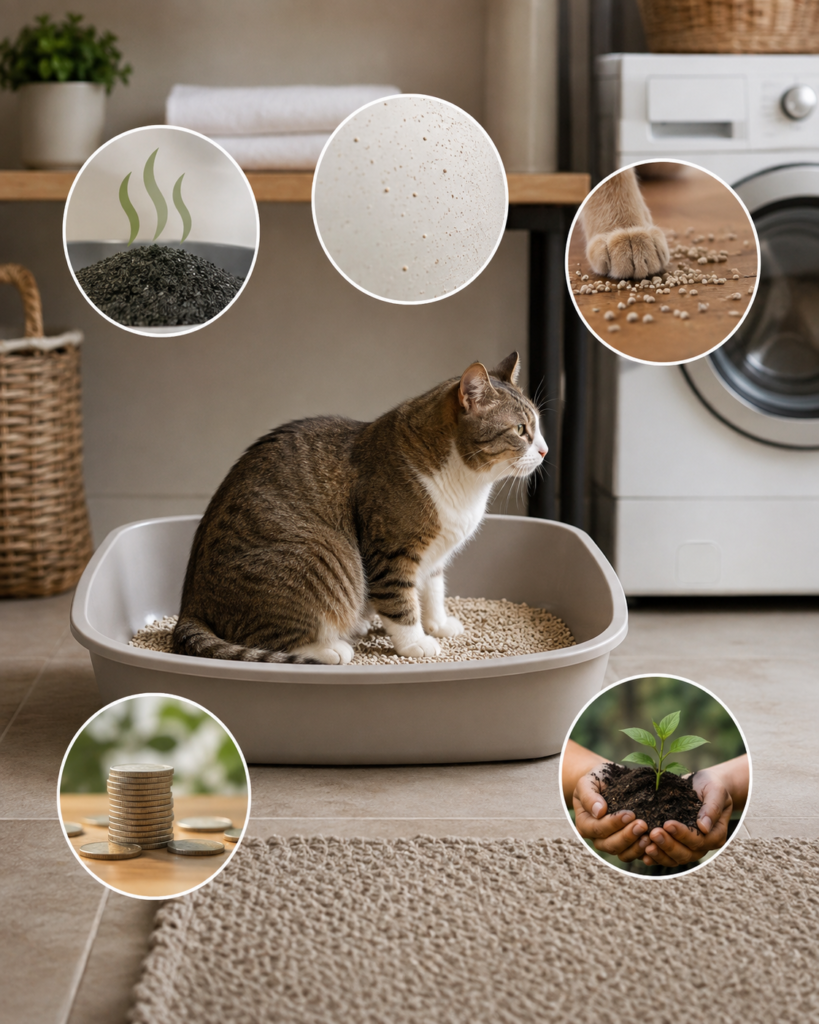
Cats are famously particular about where they go to the bathroom. Vets and behaviorists agree that litter box avoidance is one of the most common reasons cats develop house-soiling habits — and litter texture, scent, and dust levels are often the culprit. Picking the wrong litter doesn’t just create more work for you; it can lead to stress for your cat and stains on your carpet.
Beyond behavior, litter type affects:
- Odor control — how well it neutralizes ammonia smell
- Dust levels — important for cats and owners with respiratory sensitivity
- Tracking — how much litter ends up on your floors
- Cost per month — some litters are cheaper upfront but need replacing more often
- Environmental footprint — clay litters are mined, while natural litters are biodegradable
Let’s go through each type in detail.
Quick Comparison Table
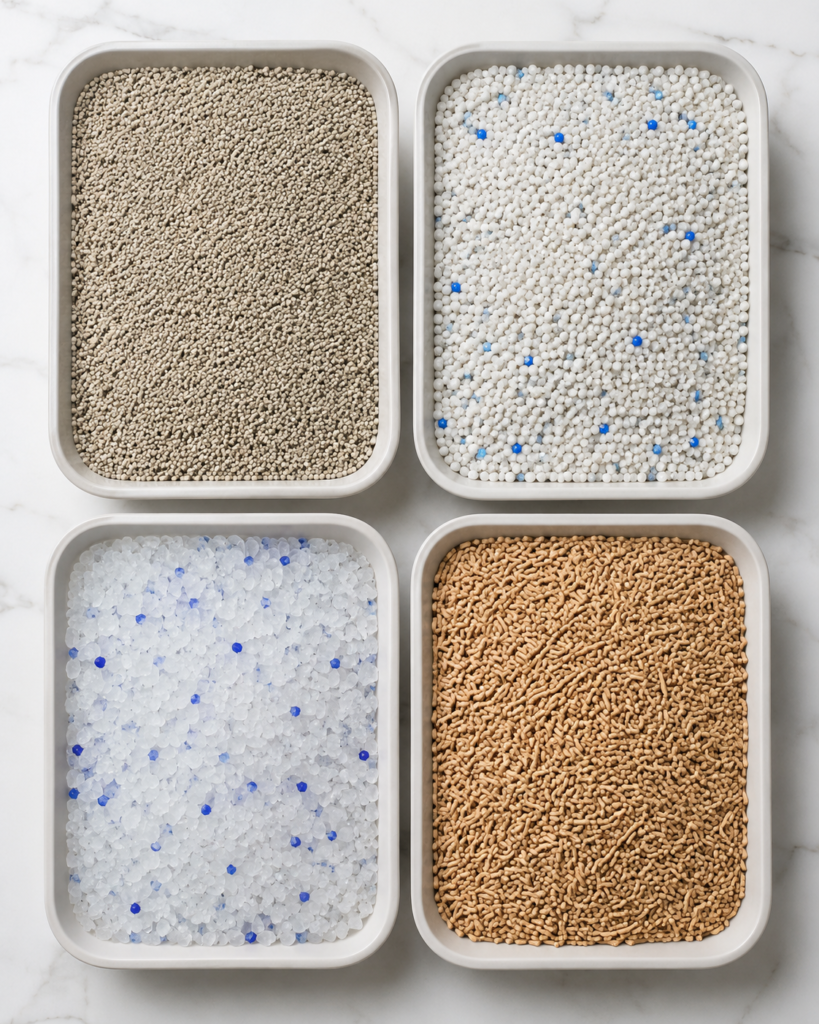
| Litter Type | Odor Control | Dust Level | Tracking | Cost | Best For |
|---|---|---|---|---|---|
| Clumping Clay | Excellent | Medium-High | Medium | Low-Medium | Most households |
| Lightweight Clumping | Good-Excellent | Low-Medium | Low-Medium | Medium | Multi-story homes, seniors |
| Crystal/Silica | Very Good | Low | Low | Medium | Low-maintenance owners |
| Natural (corn, wheat, wood, paper) | Good-Very Good | Low | Low-Medium | Medium-High | Eco-conscious, allergy-prone homes |
1. Clumping Clay Litter
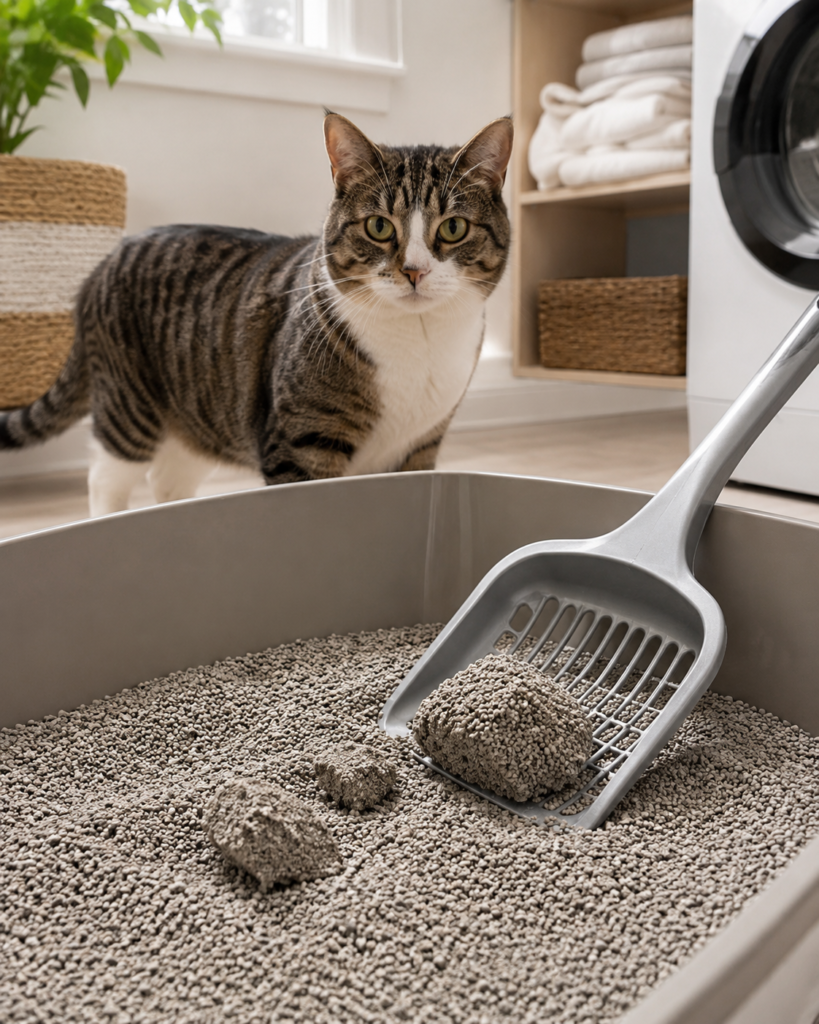
Clumping clay litter is the most widely used type of cat litter in the world, and for good reason. Made primarily from bentonite clay, it forms tight, solid clumps around urine and waste the moment it gets wet, which makes scooping fast and clean.
Pros
- Forms hard clumps that are easy to scoop
- Excellent odor control, especially scented or activated-charcoal versions
- Widely available and affordable
- Familiar texture that most cats accept without issue
Cons
- Heavier to carry and store
- Produces more dust than other types, which can bother cats and people with asthma
- Not biodegradable — clay is strip-mined and doesn’t break down in landfills
- Can track more than lightweight alternatives
Clumping clay is a solid default choice, especially for multi-cat households where fast, reliable clumping matters most.
✅ https://link.amazon/B05T6jQaW
2. Lightweight Clumping Litter
Want a closer look at the differences between lightweight and regular litter? See our Lightweight vs Regular Cat Litter guide.
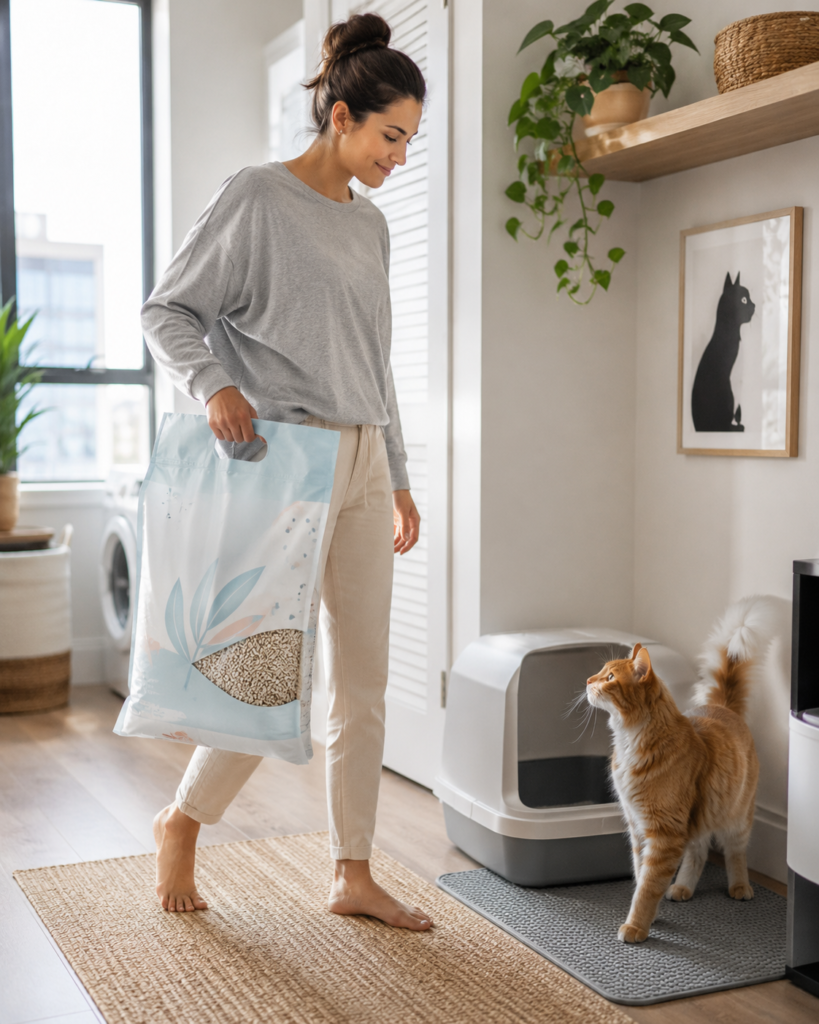
Lightweight litter uses the same clumping clay technology but processes it differently so the granules are less dense. The result is a litter that clumps just as well but weighs up to 50% less per bag.
Pros
- Much easier to carry, especially for people with back issues or who live in apartments without elevators
- Lower dust than traditional clay in most formulas
- Still forms strong, scoopable clumps
- Good odor control
Cons
- Costs more per pound than standard clay litter
- Some cats dislike the lighter texture underfoot and may need a gradual transition
- Still clay-based, so not biodegradable
Lightweight litter is ideal if you’re carrying heavy bags up stairs, buying in bulk, or simply want less strain when changing the litter box.
✅ https://link.amazon/B08jzwZI0
3. Crystal (Silica Gel) Litter
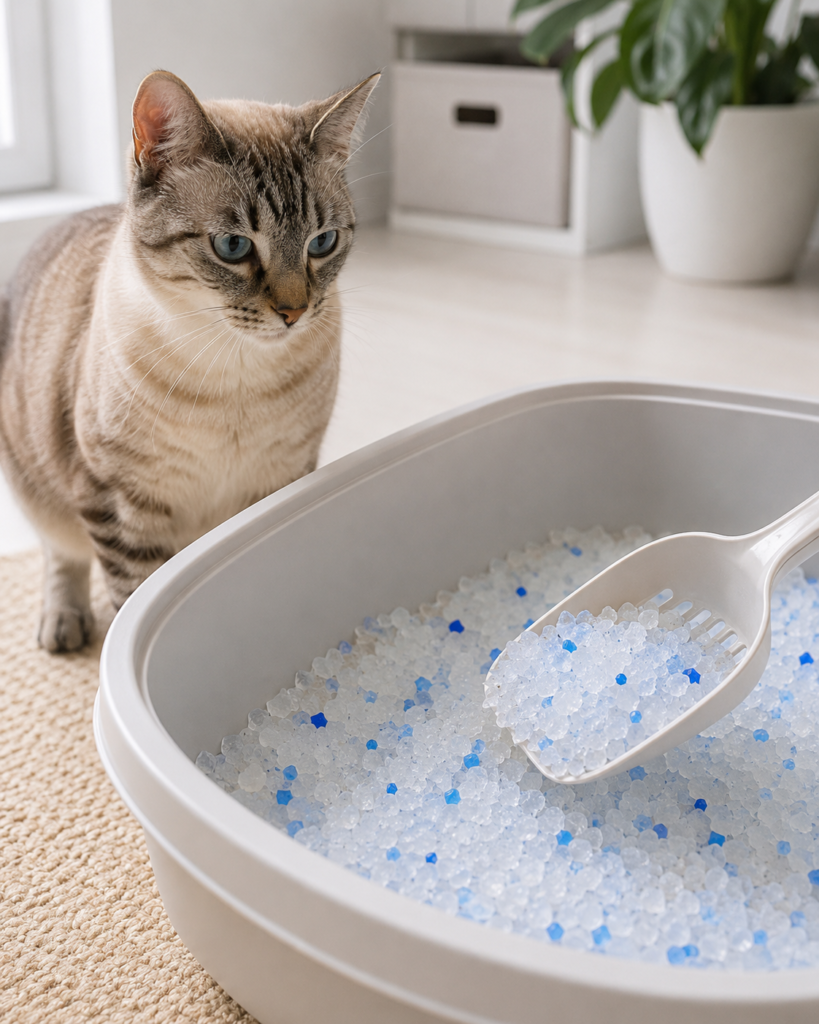
Crystal litter, also called silica gel litter, is made from sodium silicate — the same material found in the small “do not eat” packets that come with shoes and electronics. These crystals absorb urine and moisture directly, drying out waste and locking away odor at the source rather than through clumping or scent masking.
Pros
- Extremely absorbent — a single bag often lasts 3–4 weeks for one cat
- Very low dust and minimal tracking
- Doesn’t clump, so no sticky mess on the scoop
- Long-lasting means fewer bag changes and less monthly cost per use in some cases
Cons
- Doesn’t clump solid waste, so it needs to be scooped out and the crystals stirred regularly
- Some cats find the texture uncomfortable on their paws
- More expensive per bag than clay litter
- Not biodegradable and not compostable
Crystal litter works especially well for single-cat households, apartments, or owners who travel and need a litter that stays fresh longer between changes.
✅ https://link.amazon/B0ibhWWCj
4. Natural and Biodegradable Litter
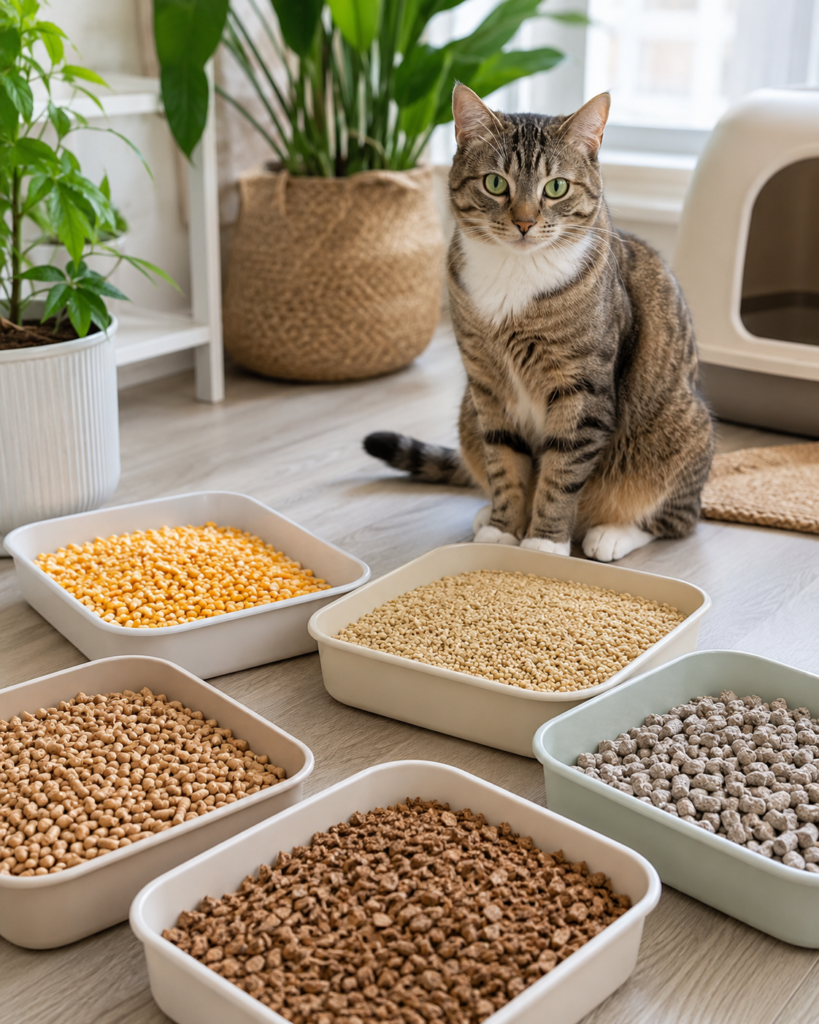
Natural litter has grown rapidly in popularity as more owners look for eco-friendly, low-dust, and often flushable alternatives to traditional clay. This category includes litters made from:
- Corn — clumps well, naturally low dust, but can attract pantry pests if stored improperly
- Wheat — clumps using natural plant enzymes, biodegradable, generally well-tolerated by sensitive cats
- Walnut shells — very absorbent and low tracking, though the dark color can make it harder to spot waste
- Wood/pine pellets — excellent odor control from natural pine oils, breaks down into sawdust when wet
- Recycled paper pellets — extremely low dust, ideal for kittens, post-surgery cats, or cats with respiratory issues
Pros
- Biodegradable and often flushable (always check local plumbing guidelines first)
- Naturally low dust — great for allergy-prone households
- Renewable, sustainable materials
- Many are safer if accidentally ingested by kittens
Cons
- Generally more expensive than clay
- Clumping strength varies by brand and material
- Some cats are hesitant about the different texture or smell compared to clay
- Corn and wheat varieties need dry storage to avoid mold or pests
Natural litter is the top choice for owners prioritizing sustainability, homes with kittens or recovering surgical cats, or anyone dealing with a cat (or owner) that reacts to dust and fragrance.
✅ https://link.amazon/B0aJWYm05
Scented vs. Unscented Litter: Which Should You Pick?
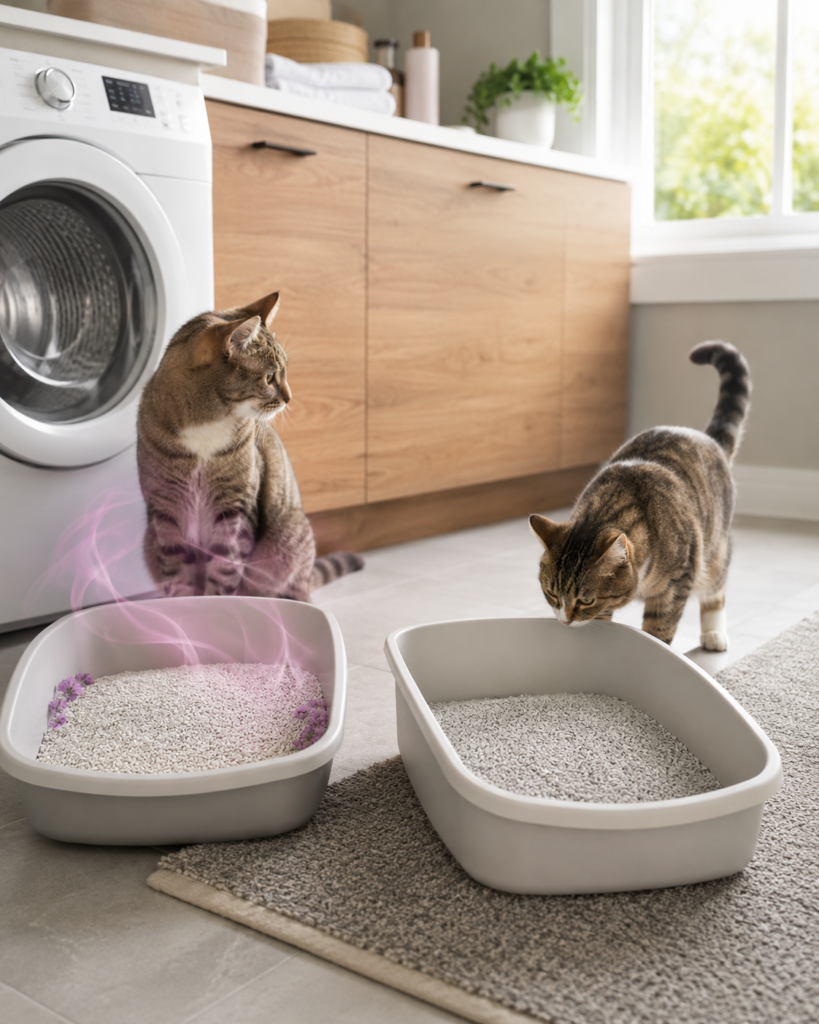
It’s tempting to reach for a heavily scented litter to mask odor, but many cats actually dislike strong fragrances and may avoid the litter box altogether. A cat’s sense of smell is far more sensitive than a human’s, so what smells like “fresh linen” to you can be overwhelming to them.
General rule of thumb: if your cat is happily using their box now, don’t switch to a scented version just to chase a fresher-smelling home. Instead, focus on:
- Scooping at least once daily
- Using an odor-neutralizing (not just fragrance-masking) formula
- Keeping the box in a well-ventilated area
If odor is a real concern, unscented litter paired with a separate odor-control additive often works better than a heavily perfumed litter.
✅ https://link.amazon/B0eRFA1c1
How to Choose the Right Litter for Your Cat
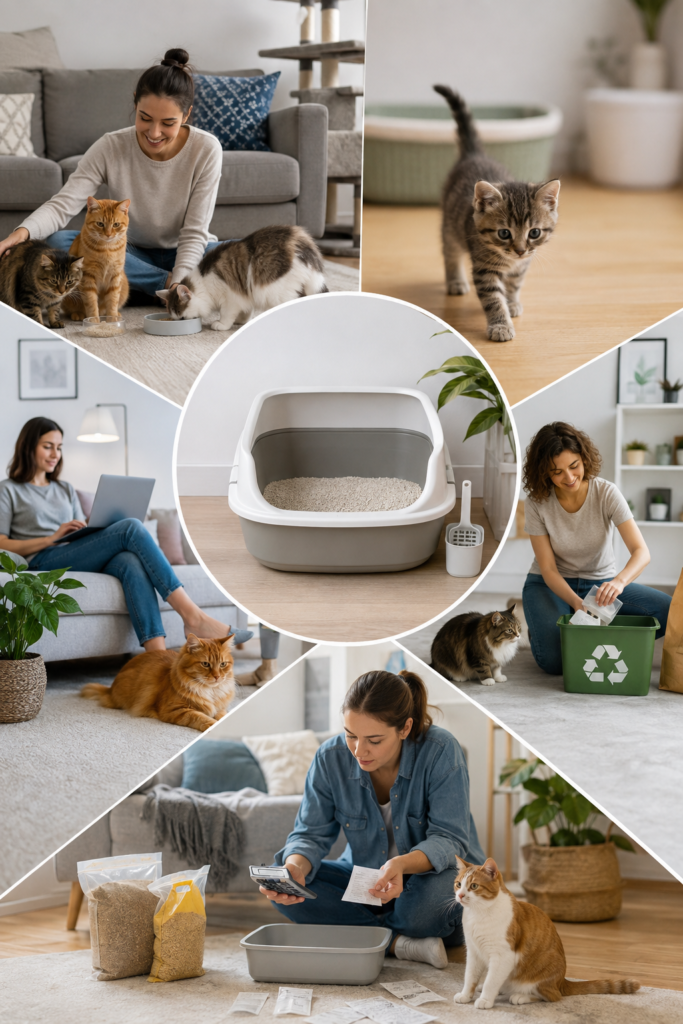
If You Have Multiple Cats
Go with a high-performance clumping clay or lightweight clumping litter. Multi-cat formulas are designed to handle higher waste volume and stronger odor without needing constant full changes.
If You Have a Kitten
Choose a natural, low-dust litter such as recycled paper or wheat. Kittens explore with their mouths, so many owners prefer non-clumping, non-clay litter for young kittens. If you’re unsure which litter is safest for your kitten, ask your veterinarian for personalized advice.
If Someone in the Home Has Allergies or Asthma
Prioritize low-dust formulas — crystal litter, recycled paper, or “99% dust-free” clumping varieties are all strong choices.
If You Travel Often or Want Low Maintenance
Crystal litter is the most forgiving option since it can go weeks without a full change, though daily scooping of solid waste is still necessary.
If Sustainability Matters to You
Natural litters made from corn, wheat, or recycled paper are biodegradable and renewable, unlike clay or silica-based products which are mined and don’t break down.
If Budget Is Your Main Concern
Standard clumping clay litter remains the most affordable option per pound, especially when bought in bulk.
Tips for Making Any Litter Work Better
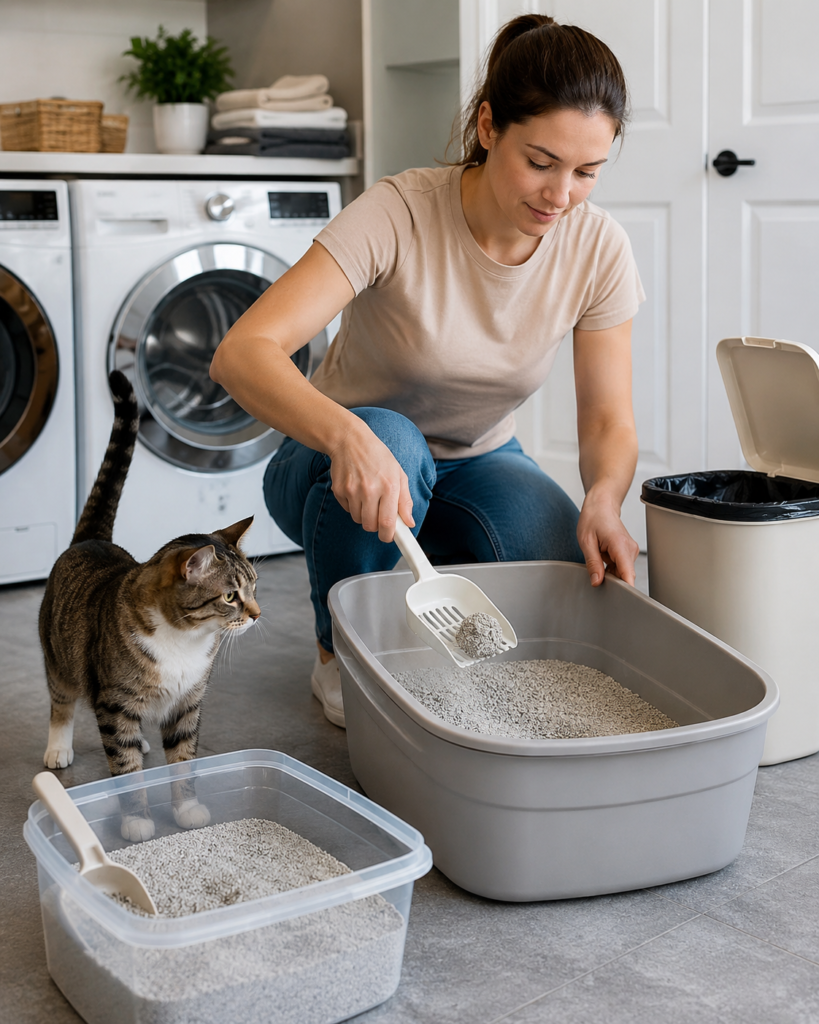
- Scoop daily. No litter, no matter how expensive, performs well if waste sits for days.
For a simple daily, weekly, and monthly cleaning routine, see our Cat Litter Box Cleaning Schedule. - Don’t fill the box too high. 2–3 inches of litter is usually enough for clumping types; crystal litter often needs less.
- Wash the box fully every 2–4 weeks. Use mild, unscented soap — harsh chemical cleaners can leave a smell that discourages cats from using the box.
- Provide one litter box per cat, plus one extra. This classic rule helps prevent territorial issues in multi-cat homes.
- Transition litters gradually. Mix the new litter with the old over 7–10 days to avoid box avoidance.
- Watch your cat’s paw sensitivity. If your cat shakes its paws excessively after using the box, the texture may be too rough — consider switching to a softer, finer litter.
Environmental Impact: A Quick Note
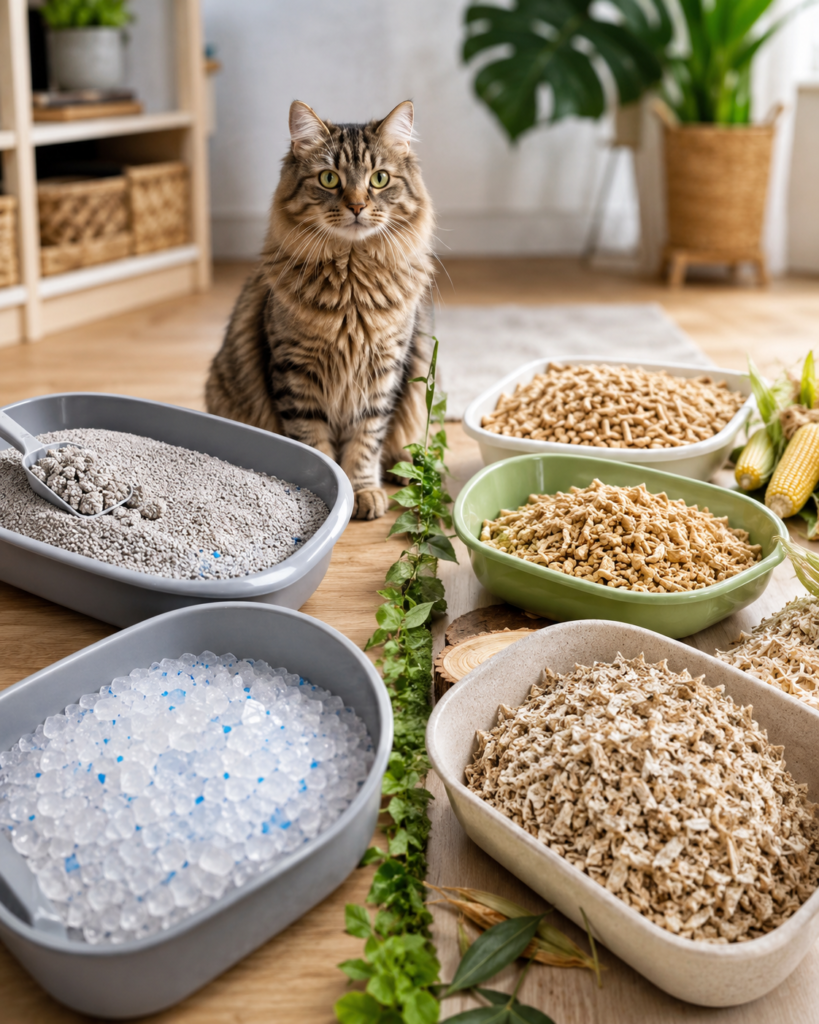
Clay-based litters (both traditional and lightweight) are strip-mined, which has a land-use and carbon footprint, and they aren’t biodegradable — meaning they sit in landfills indefinitely. Crystal litter is similarly non-biodegradable. Natural litters made from corn, wheat, wood, or recycled paper break down over time and are often better suited for eco-conscious households, provided they’re disposed of according to your local waste guidelines (never flush litter unless the packaging explicitly confirms it’s safe for your plumbing system).
Frequently Asked Questions
Is clumping or non-clumping litter better? Clumping litter is generally easier to maintain because it isolates waste into removable clumps, keeping the rest of the litter clean and reducing how often you need a full box change. Non-clumping litter needs more frequent full changes but can be gentler and safer for kittens.
Does crystal litter really last longer than clay? Yes. A single bag of crystal litter typically lasts 3–4 weeks for one cat, compared to clumping clay which usually needs a full change every 1–2 weeks even with daily scooping.
Is natural litter safe if my cat eats a little? Generally, yes — most natural litters (corn, wheat, paper) are non-toxic in small amounts, which is why they’re often recommended for kittens. Clumping clay, by contrast, can expand and cause blockages if ingested in significant quantities.
Which litter tracks the least? Crystal litter and recycled paper pellets typically track the least because of their larger, less powdery particle size. Standard clumping clay tends to track the most.
Can I mix two types of litter together? Yes, and many owners do this during a transition period. Mixing a small percentage of a new litter into your cat’s current litter over 1–2 weeks is the safest way to switch without triggering litter box avoidance.
Final Thoughts
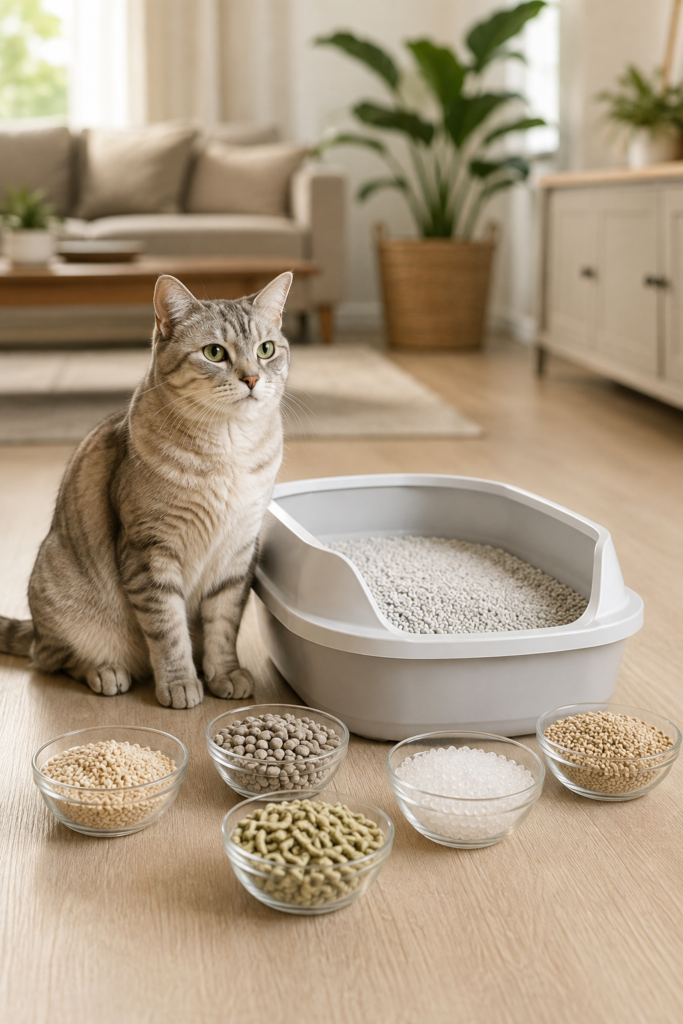
There’s no universally “best” cat litter — only the best litter for your specific cat, home, and lifestyle. If you want reliable, affordable performance, clumping clay is hard to beat. If you’re tired of hauling heavy bags, lightweight litter solves that problem without sacrificing clump strength. If low maintenance and long-lasting freshness matter most, crystal litter is worth the higher price tag. And if sustainability, low dust, or kitten safety are your priorities, natural litter is the clear winner.
Whatever you choose, the most important factor is your cat’s comfort — a clean, appropriately-sized box with a litter texture they accept will always outperform the “best-reviewed” product on paper.
Disclosure: This article contains affiliate links. We may earn a commission on qualifying purchases at no additional cost to you. All product recommendations are based on genuine research and customer reviews.