
Disclosure: This post contains affiliate links. If you purchase through these links, we may earn a small commission at no extra cost to you. We only recommend products we believe offer genuine value to cat owners.
Disclaimer: This article is for informational purposes only. Product details and recommendations may change.
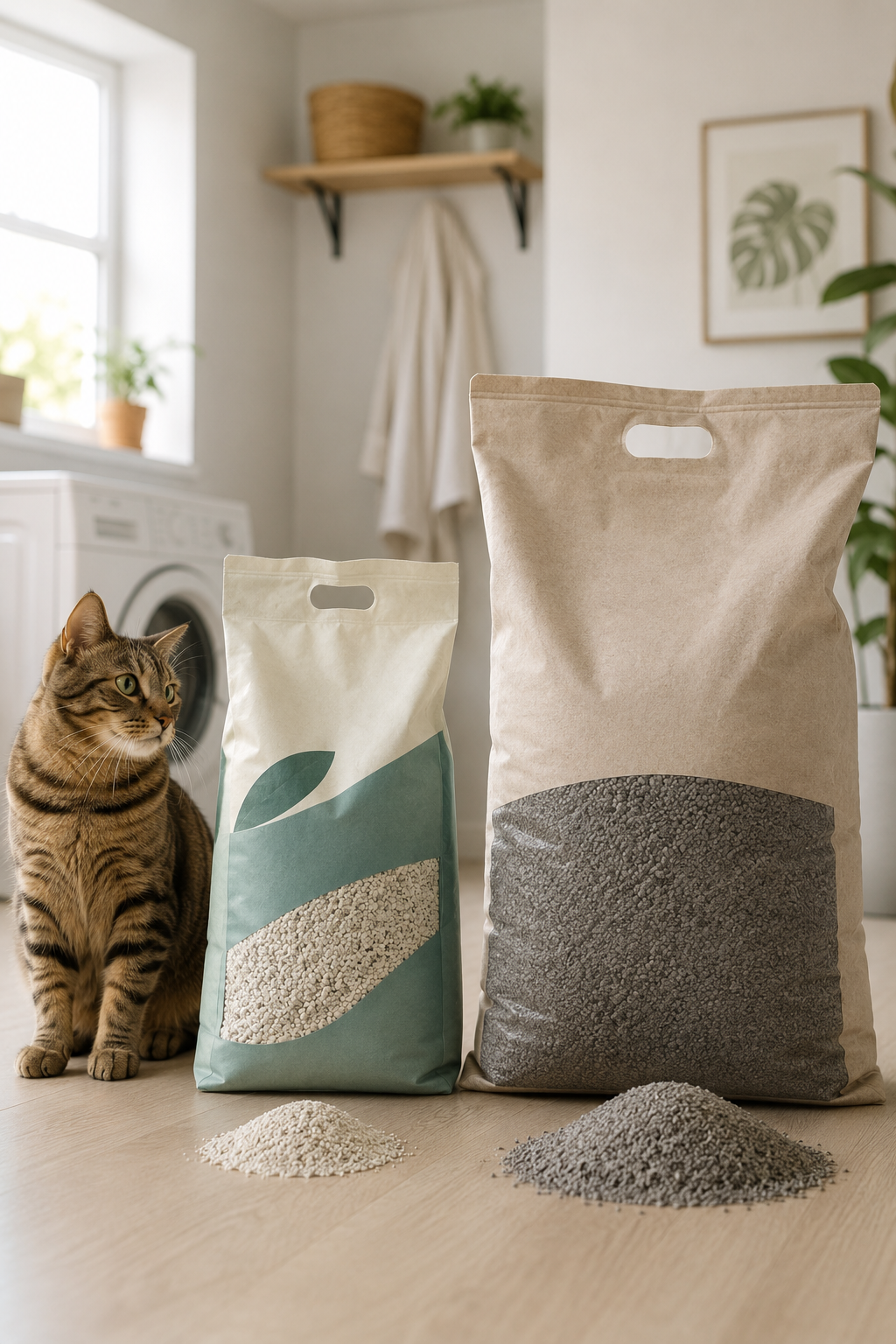
If you own a cat, you already know the litter box debate never really ends. Every few months, a new “revolutionary” litter hits the shelves promising less mess, less smell, and less back pain. Among all the choices, one comparison keeps coming up again and again in cat owner forums, Reddit threads, and pet store aisles: lightweight litter vs regular (traditional clay) litter.
Both types do the same basic job — they absorb waste and control odor — but the way they do it, and the way they affect your daily life, is surprisingly different. If you’ve ever thrown out your back lifting a 40-pound jug of clay litter, or wondered why your “lightweight” bag still smells stronger than expected, this guide is for you.
In this article, we’ll break down everything you need to know: what each litter type is made of, how they compare in weight, dust, odor control, clumping, tracking, cost, and environmental impact — and which one is genuinely easier to handle for different types of cat owners around the world.
Let’s dig in.
What Is Regular (Traditional) Cat Litter?
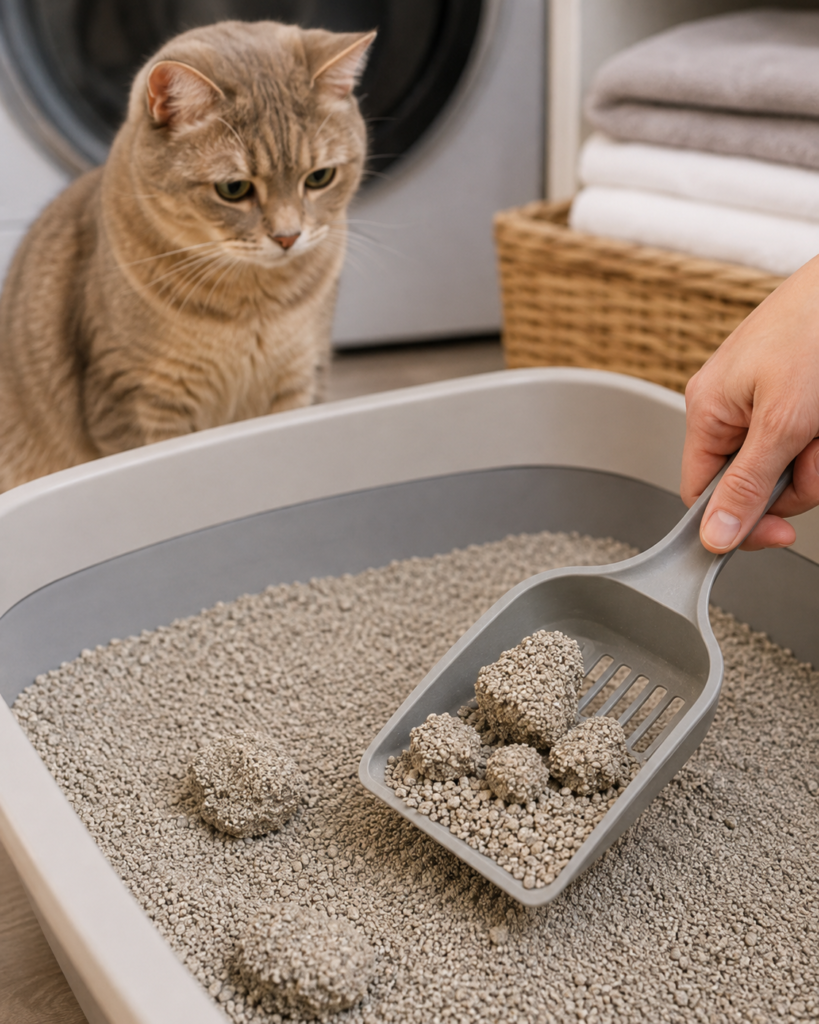
Regular cat litter, sometimes called clumping clay litter or traditional litter, is made primarily from sodium bentonite clay. This clay is mined from the earth, dried, and processed into granules. When your cat urinates on it, the bentonite clay absorbs the liquid and forms a hard, scoopable clump — which is why it became the industry standard back in the 1980s and remains the most widely used litter type globally today.
Key characteristics of regular clay litter:
- Heavy — a standard bag can weigh anywhere from 15 to 40 pounds (7–18 kg)
- Excellent, tight clumping for easy scooping
- Naturally absorbent due to the clay’s mineral structure
- Generally the most affordable litter option
- Can be dusty, especially when poured or during a cat’s digging session
- Widely available almost everywhere in the world
If you’ve used cat litter for years without thinking twice about the brand, chances are you’ve been using a clay-based regular litter like the ones below.
https://link.amazon/B0bZc10r1
What Is Lightweight Cat Litter?
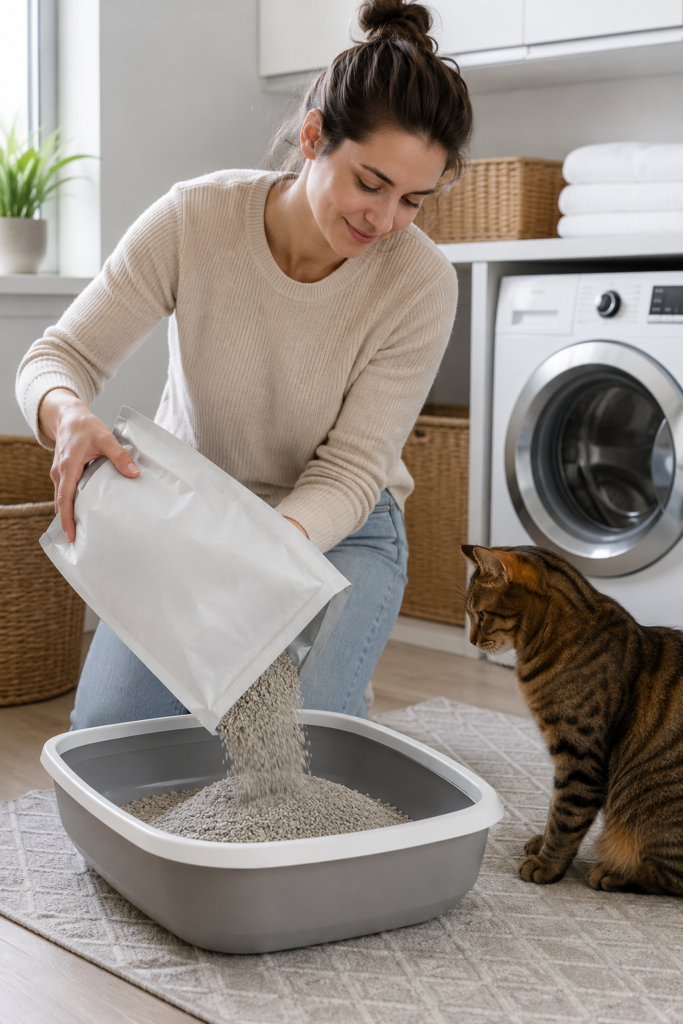
Lightweight litter is a newer innovation designed to solve one specific complaint: the sheer weight of traditional litter. Instead of dense bentonite clay, lightweight litters use a more porous, less compact form of clay or alternative absorbent materials that are processed to be airy and light without losing their absorbency.
Brands like Tidy Cats LightWeight, Dr. Elsey’s Ultra, and Arm & Hammer Slide are some of the most recognized names in this category.
Key characteristics of lightweight litter:
- Up to 50% lighter than regular clay litter for the same volume
- Still clumps well, though sometimes not as tightly as heavy clay
- Easier to carry, pour, and store
- Often priced slightly higher per bag than regular litter
- Can still produce dust, depending on the brand
- Great for multi-cat households where large quantities are needed regularly
https://link.amazon/B02KBnWcV
Lightweight vs Regular Litter: The Core Differences
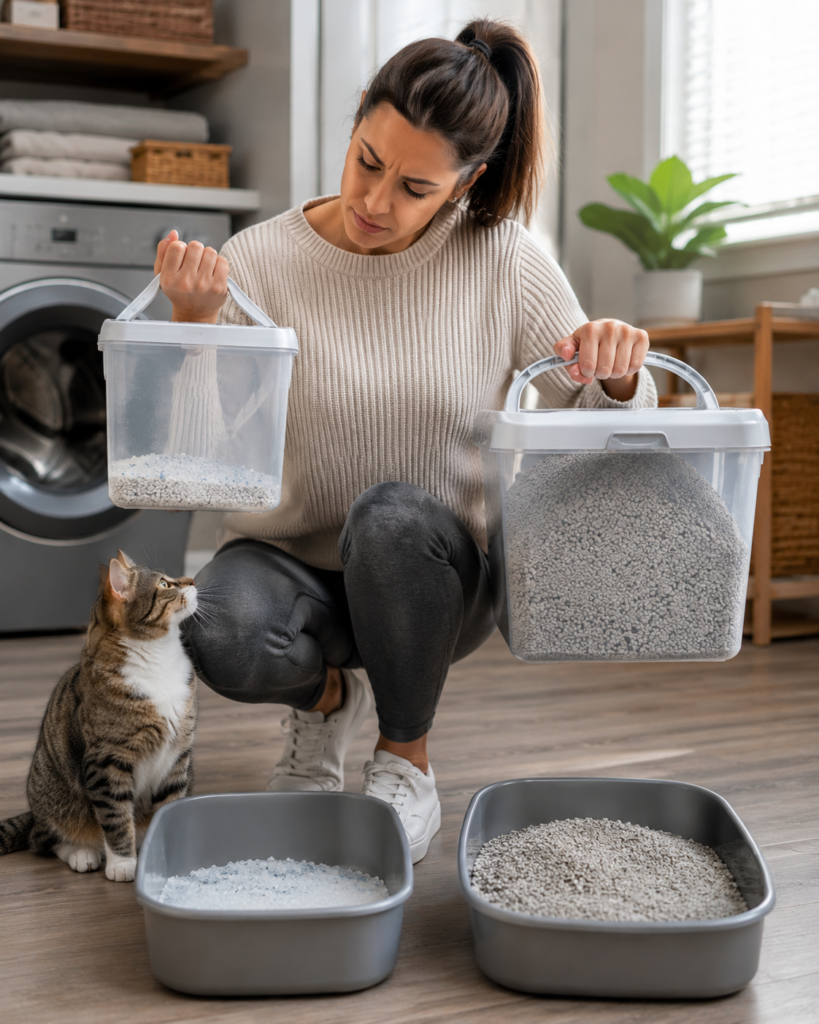
Let’s compare both litter types across the categories that matter most to everyday cat owners
Want to compare other popular litter types too? See our complete [Cat Litter Types Compared] guide..
1. Weight and Portability
This is the most obvious difference, and it’s right there in the name. Regular clay litter is dense and heavy — a large bag can genuinely strain your back, shoulders, or wrists, especially if you’re carrying it up stairs or lifting it in and out of a car trunk.
Lightweight litter solves this problem almost completely. Manufacturers achieve this by using a more porous clay structure that absorbs the same amount of liquid using less raw material. The result: bags that are roughly 40–50% lighter for a similar volume of litter.
Who benefits most: Elderly cat owners, people with back or joint issues, apartment dwellers without elevators, and anyone who buys litter in bulk.
2. Clumping Ability
Clumping quality determines how easy scooping is and how well odors stay locked in. Traditional clay litter has been refined for decades and is known for producing rock-hard, tight clumps that don’t fall apart in the box.
Lightweight litter has improved significantly over the years, but in some budget brands, the clumps can be slightly less firm, occasionally breaking apart during scooping. Premium lightweight brands like Dr. Elsey’s have mostly closed this performance gap.
Verdict: Regular clay litter still has a slight edge in raw clumping strength, but high-quality lightweight litters come very close.
If you’re also wondering how often to clean your cat’s litter box, see our [Cat Litter Box Cleaning Schedule].
3. Dust Levels
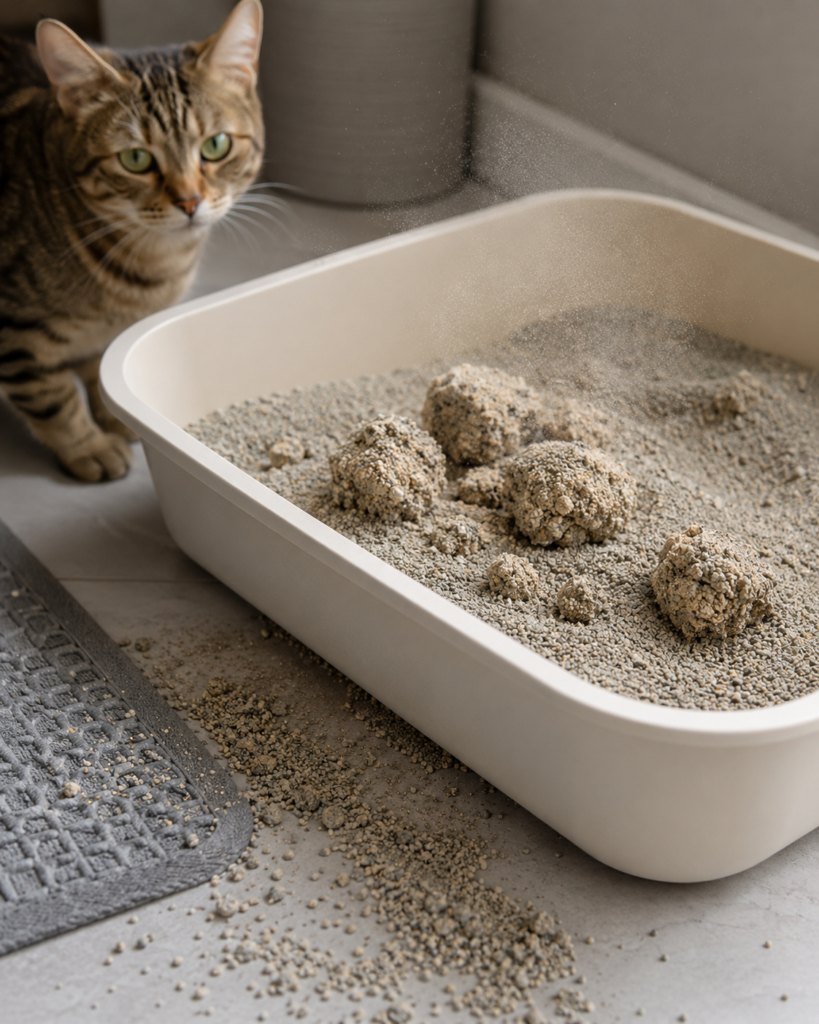
Dust is a major concern, both for your cat’s respiratory health and for your home’s cleanliness. Surprisingly, dust levels depend more on brand quality than on whether the litter is “lightweight” or “regular.” Cheaper versions of both types tend to be dustier.
That said, many lightweight litters are marketed with “99% dust-free” claims because manufacturers use this feature as a key selling point, so you’ll often find better dust control technology in the lightweight range.
https://link.amazon/B07qwPYNG
4. Odor Control
Odor control comes down to the formula, not the weight of the litter. Both regular and lightweight litters offer scented and unscented versions, activated charcoal versions, and baking-soda-infused versions.
If odor control is your top priority, look for litters — regardless of weight class — that specifically advertise ammonia-blocking or charcoal-based technology.
5. Tracking (Litter Stuck to Paws)
Tracking refers to litter granules sticking to your cat’s paws and getting scattered around your home. This is influenced by granule size and shape rather than weight class. Both regular and lightweight litters can track if the granules are small or dusty.
If tracking is a major concern for you, look for larger granule sizes or invest in a litter mat, regardless of which type of litter you choose.
6. Cost Per Use
Here’s where things get interesting. On the surface, regular clay litter looks cheaper because bags are sold at a lower price point. However, lightweight litter often lasts longer per pound because you use less of it to achieve the same clumping and odor control — since the material is more concentrated in absorbency relative to its weight.
When you calculate the cost per use rather than cost per bag, lightweight litter is often more economical in the long run, especially for multi-cat households.
7. Environmental Impact
Both litter types are primarily clay-based, meaning they come from strip-mined bentonite clay, which isn’t biodegradable and isn’t the most eco-friendly option overall. However, lightweight litter requires less raw material extraction and less fuel for transportation due to reduced weight, giving it a modestly smaller carbon footprint per bag shipped.
If sustainability is important to you, you might also want to explore plant-based litters made from corn, wheat, walnut shells, or recycled paper — though that’s a separate comparison from the lightweight vs regular debate.
https://link.amazon/B041lpSkp
Side-by-Side Comparison Table
| Feature | Regular Clay Litter | Lightweight Litter |
|---|---|---|
| Weight | Heavy (15–40 lbs per bag) | Light (up to 50% less) |
| Clumping | Excellent, very firm | Very good, slightly softer in budget brands |
| Dust | Varies, often higher | Often lower (marketed feature) |
| Odor Control | Depends on formula | Depends on formula |
| Tracking | Depends on granule size | Depends on granule size |
| Price per bag | Lower | Slightly higher |
| Cost per use | Moderate | Often better long-term value |
| Portability | Difficult for some users | Easy to carry and store |
| Eco-impact | Higher shipping footprint | Slightly lower shipping footprint |
Which One Should You Choose?
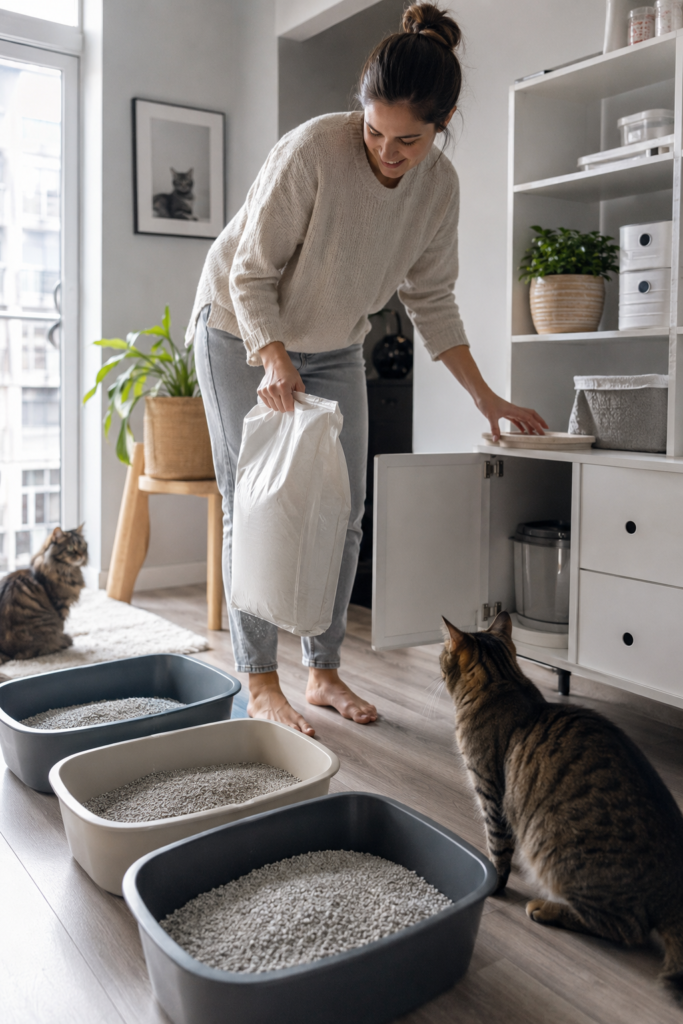
There’s no single “best” answer here — it depends on your personal situation, physical ability, budget, and how many cats you have. Here’s a simple breakdown to help you decide.
Choose Regular Clay Litter If:
- You’re on a tight monthly budget and want the lowest upfront cost
- You have easy physical access to storage (no stairs, no long carrying distances)
- You prioritize maximum clump firmness above all else
- You already have a system that works and don’t mind the weight
Choose Lightweight Litter If:
- You have back, shoulder, or joint issues
- You live in an apartment building without an elevator
- You manage multiple litter boxes for multiple cats
- You want easier pouring, storage, and disposal
- You prefer buying in bulk without the physical strain
Tips for Making Either Litter Easier to Handle
Regardless of which type you choose, these tips will make your litter box routine smoother:
- Use a litter scoop with a fine mesh to reduce the amount of dust kicked up while cleaning.
- Store litter in a rolling storage bin instead of lifting the bag every time — this is especially helpful with heavier regular litter.
- Place a litter mat under and around the box to catch tracked granules.
- Scoop daily rather than every few days; this reduces odor buildup and makes each cleaning session faster regardless of litter type.
For a simple daily, weekly, and monthly cleaning routine, see our [Cat Litter Box Cleaning Schedule]. - Buy smaller bags more frequently if lifting heavy bags is a challenge, even if it costs slightly more per pound.
- Consider an automatic litter box if convenience is your biggest priority — many are compatible with both lightweight and regular clumping litters.
Common Myths About Lightweight Litter
Myth 1: “Lightweight litter doesn’t clump as well.” This was true years ago, but modern lightweight formulas from established brands have closed the gap significantly. Always check reviews for the specific product, not the category as a whole.
Myth 2: “Lightweight litter is always more expensive.” Per bag, yes, slightly. But per use, it often works out cheaper because you use less litter for the same results.
Myth 3: “Lightweight means low quality.” Lightweight simply refers to the density of the material, not its performance. Many premium litter brands now offer lightweight versions specifically because pet owners requested easier handling.
Frequently Asked Questions (FAQ)
Q1: Is lightweight cat litter safe for kittens? Yes, as long as it’s a non-clumping or kitten-safe formula. Always check the packaging, since some clumping litters aren’t recommended for kittens under a certain age due to ingestion risk during grooming.
Q2: Does lightweight litter smell worse than regular litter? Not inherently. Odor control depends on the specific formula (charcoal, baking soda, fragrance-free, etc.), not on whether the litter is lightweight or regular.
Q3: Can I mix lightweight and regular litter in the same box? Yes, many owners do this during a transition period to help their cat adjust to a new texture or scent gradually.
Q4: Which litter is better for multi-cat households? Lightweight litter is often preferred for multi-cat homes simply because you’ll be buying and carrying litter more frequently, and the reduced weight makes bulk purchases far more manageable.
Q5: Is lightweight litter better for the environment? It has a slightly smaller footprint due to lower shipping weight and less raw material use, but it’s still clay-based. For a genuinely eco-friendly option, look into plant-based or biodegradable litters.
Final Verdict
Both lightweight and regular cat litter get the job done — your cat won’t know or care about the weight of the bag. The real difference lies in your own comfort and convenience as the person doing the lifting, pouring, and scooping.
If you value affordability and maximum clump strength, and physical handling isn’t a major issue for you, regular clay litter remains a solid, tried-and-tested choice.
If you want to save your back, simplify storage, and manage multiple litter boxes with less physical strain, lightweight litter is very likely the smarter long-term choice — especially with today’s improved formulas that match traditional litter in clumping and odor control.
Whichever you choose, the most important factor is consistency: scoop daily, choose a formula your cat actually likes, and keep the box clean. That, more than the weight of the bag, is what keeps both you and your cat happy.