
Affiliate Disclosure: This article contains affiliate links. We may earn a small commission from qualifying purchases at no extra cost to you.
This article is for general informational purposes and does not replace advice from a licensed veterinarian regarding your cat’s health or behavior.
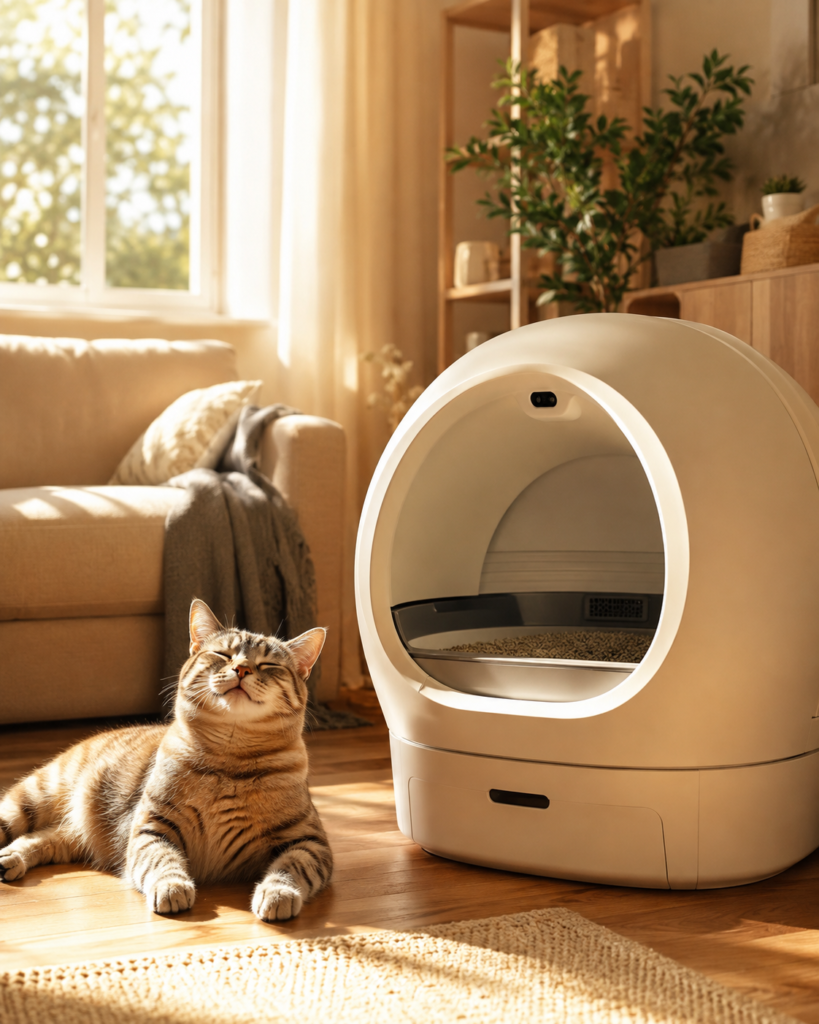
If you’ve ever scooped a litter box at 6 a.m. before your coffee kicked in, you already know why automatic litter boxes have become one of the most searched-for products among cat owners worldwide. They promise a simple thing: less mess, less smell, and more free time. But not all automatic litter boxes work the same way, and the “best” one really depends on your cat’s personality, your home setup, and your budget.
In this guide, we’ll break down every major type of automatic litter box on the market, compare their pros and cons in plain language, and help you figure out which one actually fits your life. Whether you have one laid-back senior cat or a multi-cat household full of chaos, there’s a system here that will make sense for you.
Why Consider an Automatic Litter Box in the First Place?
Before comparing types, it helps to understand what problem these devices actually solve.
A traditional litter box needs to be scooped at least once a day, sometimes twice if you have multiple cats. Skip a day or two, and you’ll notice the smell, your cat may start avoiding the box, and bacteria can build up quickly. Automatic litter boxes handle the raking, sifting, or rotating process for you, dropping waste into a sealed compartment so you only need to empty it every few days to two weeks, depending on the model and how many cats use it.
The main benefits people report are:
- Less daily hands-on cleaning. The unit does the scooping automatically after your cat leaves.
- Reduced odor. Waste is sealed away almost immediately instead of sitting in the open box.
- Better litter box habits. Cats are naturally clean animals, and a consistently clean box can reduce the chance of them avoiding it (a common cause of accidents outside the box).
- More consistency for multi-cat homes. With several cats sharing a box, manual scooping often can’t keep pace. Automation helps close that gap.
That said, automatic litter boxes aren’t magic. They still need regular maintenance, and some cats take time to adjust to the noise or movement. Let’s look at the different designs so you can pick the right one.
The Main Types of Automatic Litter Boxes
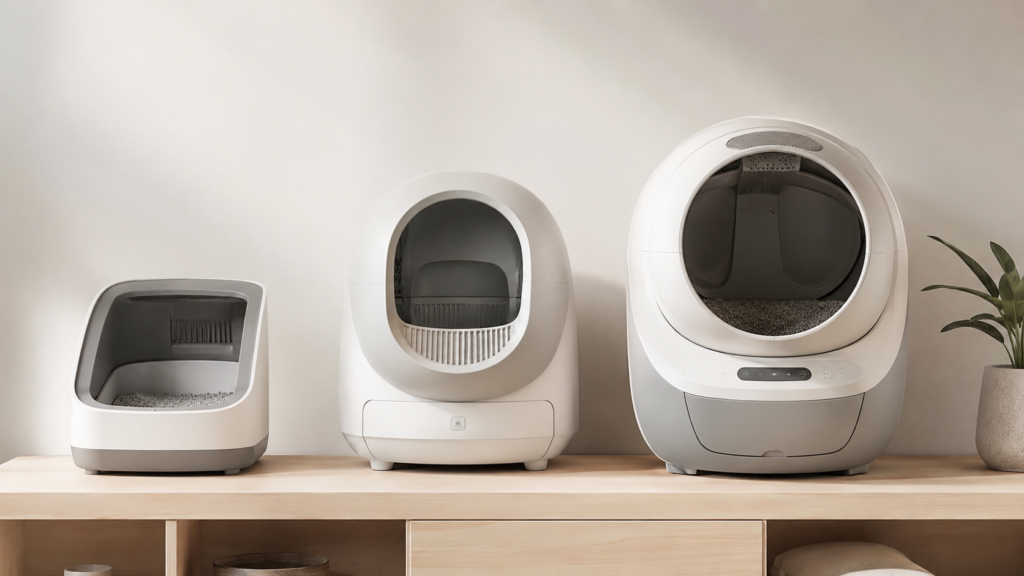
There are four broad categories of automatic litter boxes on the market today: rake-style, sifting/rotating, self-washing, and app-connected “smart” systems (which often overlap with the categories abve but add monitoring features). Let’s go through each one.
1. Rake-Style Automatic Litter Boxes
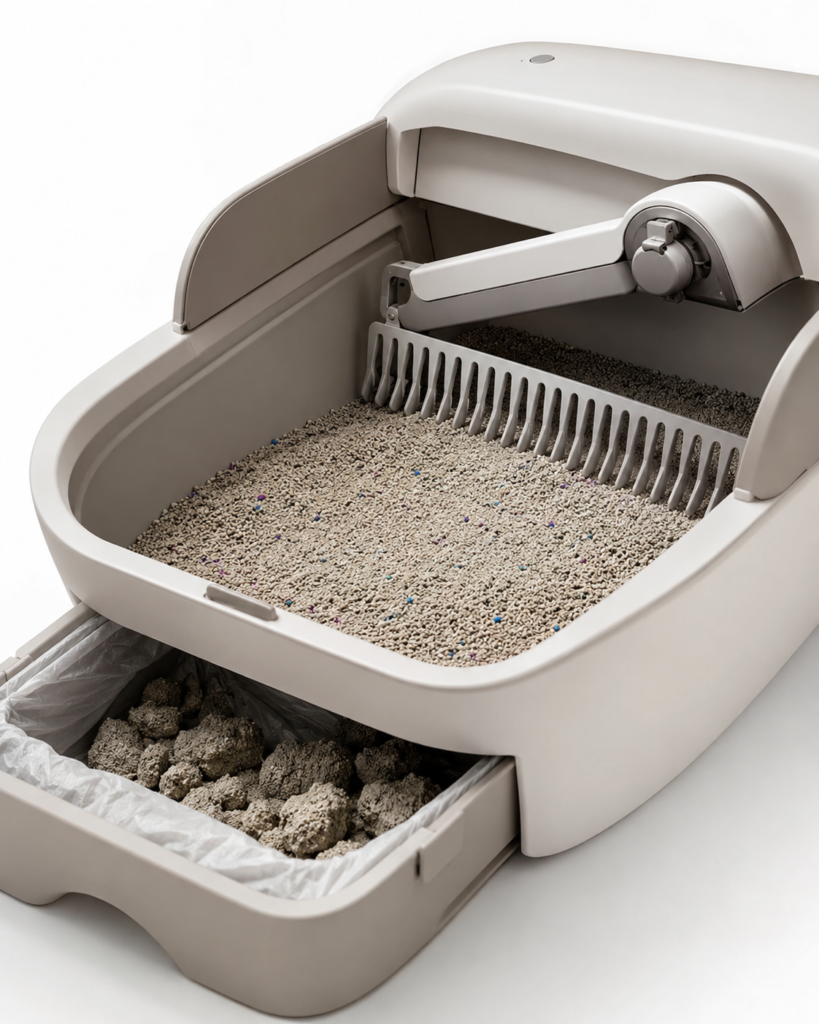
This is the original and still the most common design. A sensor detects when your cat has left the box, waits a set number of minutes, then a rake glides across the litter, pulling clumps into a covered waste receptacle.
Pros:
- Generally the most affordable category of automatic litter box.
- Works with regular clumping clay litter, which is easy to find and inexpensive.
- Simple mechanics mean fewer things can go wrong, and repairs (if needed) are usually straightforward.
Cons:
- The rake can jam if litter clumps are too soft or if there’s excess litter tracked into the rake’s path.
- Some cats are sensitive to the sound of the rake moving and may hesitate to use the box again.
- You still need to keep the waste receptacle lined and empty it regularly.
Best for: Single-cat homes or owners who want a reliable, budget-friendly entry into automation.
👉 Compare top-rated rake-style automatic litter boxes here: ✅https://link.amazon/B08qybWRU
2. Sifting and Rotating Litter Boxes
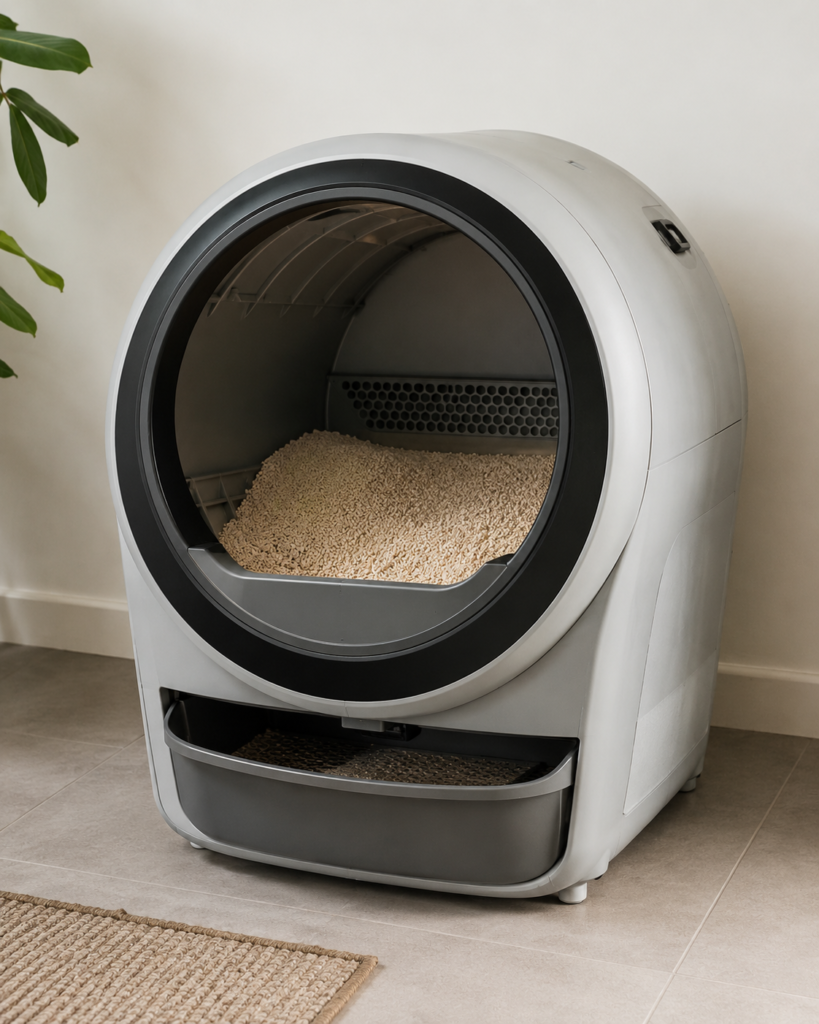
Instead of a rake, these boxes use a rotating drum or a sifting screen to separate waste from clean litter. The box rotates a set number of degrees, and gravity does the sorting — clean litter falls back down while waste drops into a separate tray or bag.
Pros:
- No exposed moving rake, which some cats find less intimidating.
- Tends to handle larger clumps well since the whole drum rotates rather than a single arm scraping across the surface.
- Often quieter than rake-style models.
Cons:
- The rotating mechanism can be bulkier and take up more floor space.
- If litter gets damp or sticks to the sides of the drum, sifting efficiency can drop.
- Usually a step up in price compared to basic rake models.
Best for: Owners with a medium-sized cat or two who want quieter operation without jumping to a premium price point.
👉 See current deals on sifting and rotating litter boxes: ✅ https://link.amazon/B0bmFtcBA
3. Self-Washing Litter Boxes
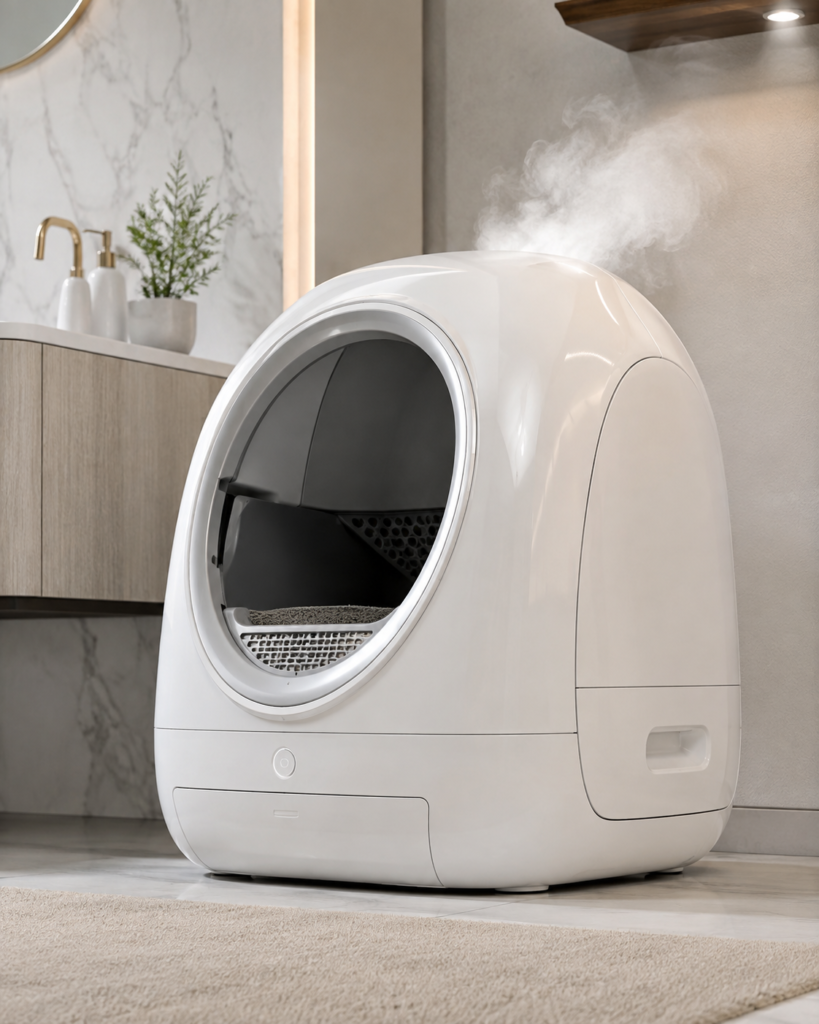
These are the most advanced (and most expensive) category. After your cat uses the box, the unit separates solid waste, and on a schedule, it flushes the remaining area with water and a cleaning solution, then dries the surface before the next use. Some self-washing systems use reusable litter granules instead of traditional clumping litter.
Pros: <br>
- The deepest level of cleanliness among all automatic options, since the surface is actually washed, not just raked.
- Long stretches between manual maintenance, sometimes weeks depending on the number of cats.
- Many models are designed to work with reusable litter, which can save money long-term and reduce dust.
Cons:
- Highest upfront cost of any automatic litter box category.
- Requires a water line or a water reservoir that needs refilling.
- More complex mechanically, which means more components that could eventually need servicing.
- Some cats need a longer adjustment period due to the sound of water cycling.
Best for: Multi-cat households, owners who travel frequently, or anyone who wants the lowest possible maintenance and doesn’t mind the higher price tag.
👉 Browse top self-washing litter box systems:✅ https://link.amazon/B0i5EKp1P
4. App-Connected “Smart” Litter Boxes
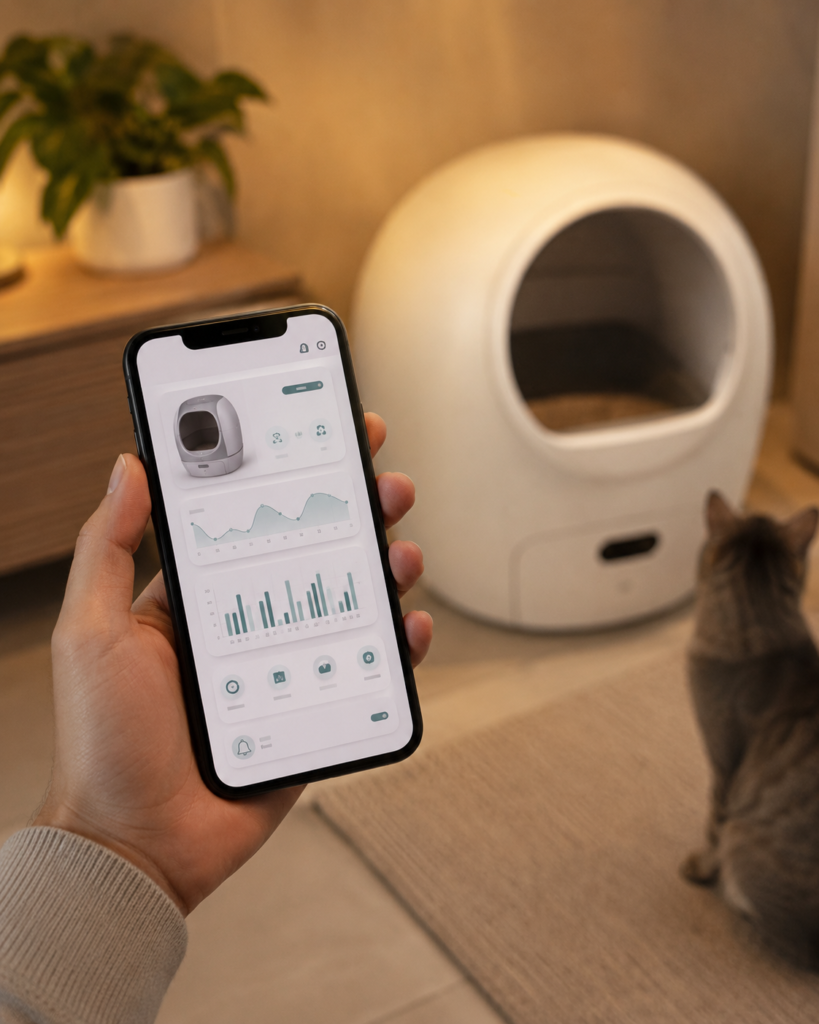
Smart litter boxes aren’t really a separate mechanical category — they’re usually rake-style, sifting, or self-washing boxes with added sensors and Wi-Fi connectivity. What sets them apart is the data and alerts they send to your phone.
Pros:
- Tracks how often each cat uses the box, which can help you notice health changes early (sudden increases or decreases in visits can be a sign something’s wrong).
- Sends alerts when the waste bin is full or when a cleaning cycle fails.
- Some models can recognize individual cats in multi-cat homes using weight sensors or microchip readers, giving you per-cat usage reports.
Cons:
- Ongoing app or cloud subscription fees are common on some brands for full feature access.
- Wi-Fi dependency means outages or router issues can interrupt monitoring.
- Adds another price layer on top of the base mechanical type (rake, sifting, or self-washing).
Best for: Owners who want detailed usage tracking, especially those who want to monitor changes in their cat’s litter box habits.
Side-by-Side Comparison
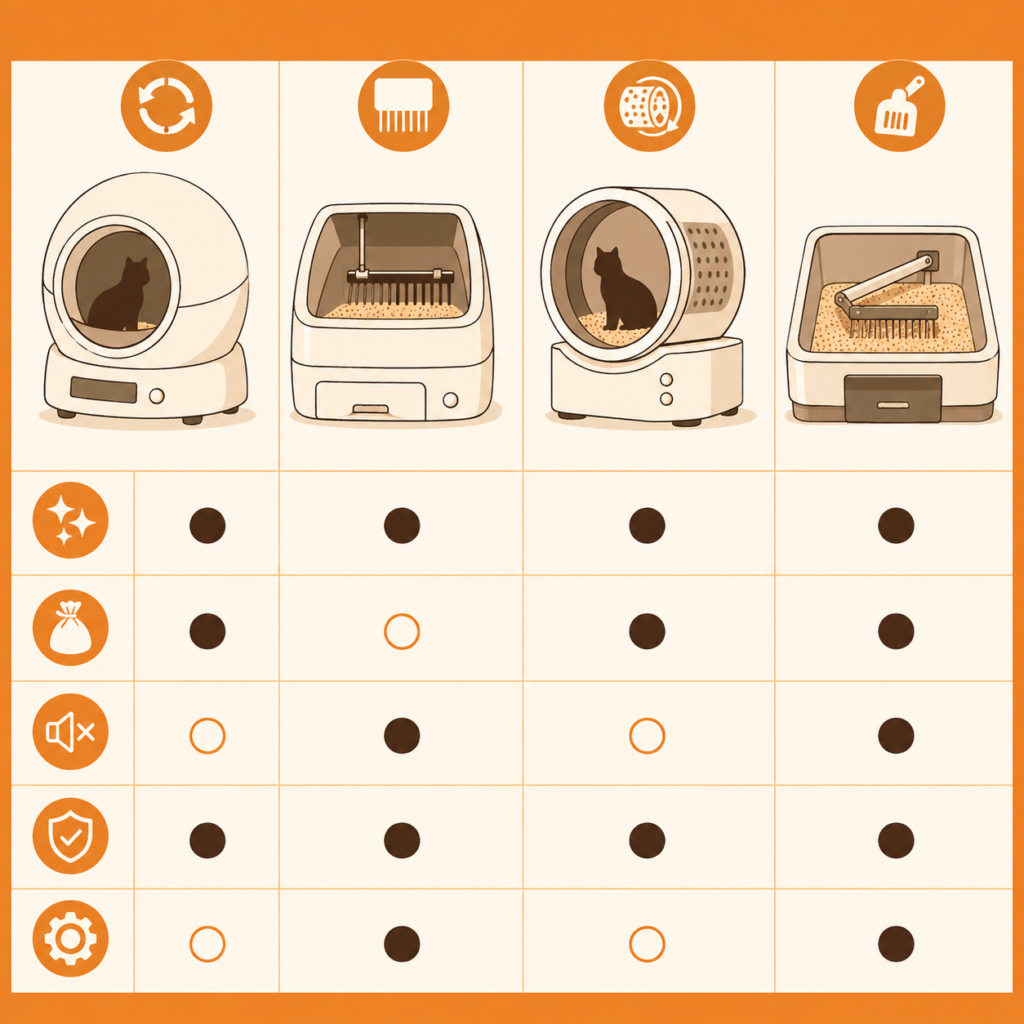
| Type | Noise Level | Maintenance Frequency | Upfront Cost | Best For |
|---|---|---|---|---|
| Rake-style | Moderate | Every 1–3 days | Low | Single-cat homes, budget shoppers |
| Sifting/Rotating | Low–Moderate | Every 3–5 days | Low–Medium | Quiet homes, small multi-cat setups |
| Self-washing | Moderate (water cycle) | Every 1–3 weeks | High | Multi-cat homes, frequent travelers |
| Smart/App-connected | Varies by base type | Varies by base type | Medium–High | Health monitoring, tech-savvy owners |
What to Look for Before You Buy
Picking the “best” automatic litter box isn’t just about the category — a few practical details matter just as much.
Size and Weight Sensors
Most automatic litter boxes have a minimum weight requirement to trigger the cleaning cycle, usually around 5 pounds. This is a safety feature meant to prevent kittens or very small cats from accidentally activating the mechanism while inside. If you have a kitten, check the minimum weight rating carefully, or wait until they’re older before switching.
Litter Compatibility
Rake and sifting models generally need clumping clay litter to work properly. Non-clumping or crystal litters often don’t sift correctly. Self-washing models sometimes require proprietary reusable litter, which limits your options but can reduce dust and tracking.
Not sure which type of cat litter is best for your automatic box? See our Cat Litter Types Compared guide before choosing a model.
Noise Sensitivity
Cats can be surprisingly particular about sudden sounds. If your cat is easily startled, look for models advertised as “quiet operation” and read verified owner reviews mentioning noise levels specifically.
Waste Bin Capacity
A larger waste bin means fewer trips to empty it, which is especially useful in multi-cat homes. Some models use standard kitchen trash bags for the liner, which can save money over proprietary bags.
Safety Sensors
Look for multiple redundant sensors (weight, motion, and infrared) that pause or stop the cleaning cycle immediately if your cat re-enters the box during a cycle. This is one of the most important safety features and shouldn’t be skipped.
How to Transition Your Cat to an Automatic Litter Box
Cats are creatures of habit, and a sudden new object in the house — especially one that moves and makes noise — can be unsettling. Here’s a simple approach that tends to work well:
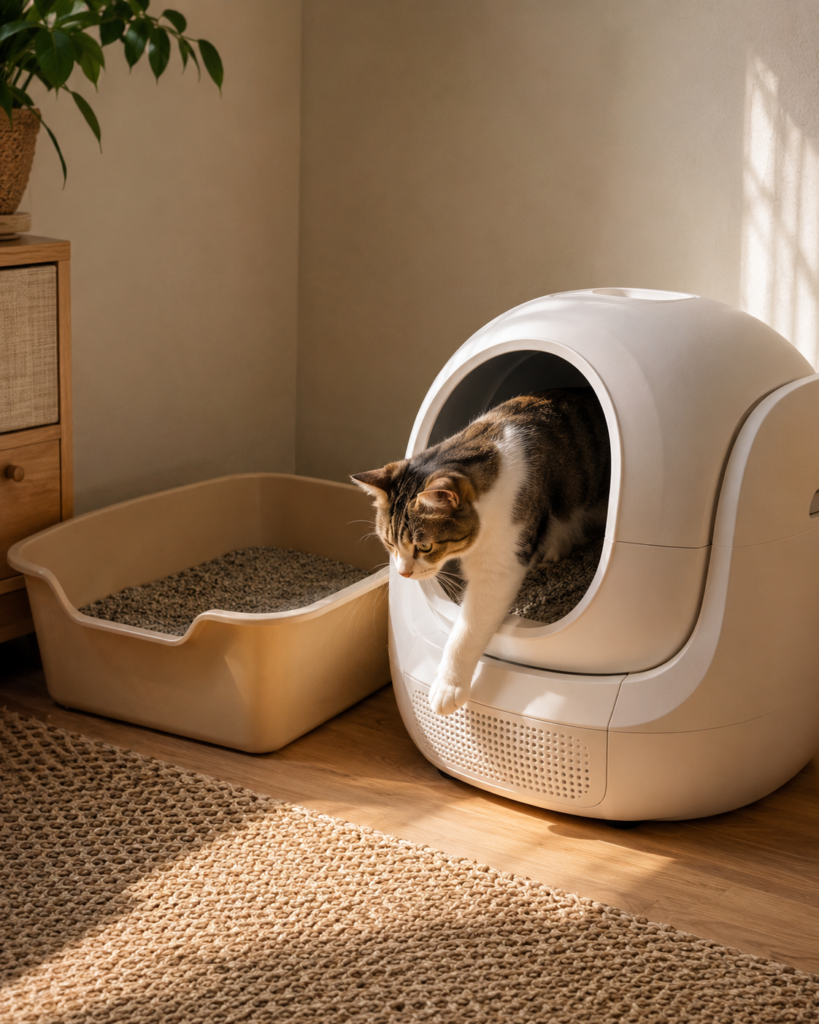
- Place it next to the old box first. Don’t remove the old box immediately. Let both sit side by side for a few days.
- Turn off automatic cycling initially. Let your cat explore and use the box manually for the first few days before enabling auto-cleaning.
- Use familiar litter. Keep the same litter brand and texture your cat is used to, at least at first.
- Reward calm behavior. A treat or praise after your cat uses the new box can help build a positive association.
- Be patient. Some cats adjust within a day; others take two to three weeks. If your cat consistently avoids the box after a month, consider switching to a quieter model.
👉 Related accessory: a mat that catches tracked litter can make the transition period much easier to clean up: ✅ https://link.amazon/B06EC2xx9
Common Problems and How to Fix Them
The rake keeps jamming. This usually means there’s too much litter in the box, or the litter is too fine and sticking together in odd shapes. Try reducing the litter level slightly and switching to a clumping litter specifically recommended by the manufacturer.
My cat won’t go near it. Give it more time with the cycle disabled, and make sure the box is in a low-traffic, quiet spot. Loud utility rooms or areas near washing machines can make cats nervous.
It smells even though it’s “automatic.” Automatic doesn’t mean odor-free forever. You still need to empty the waste receptacle on schedule and do a full litter change periodically, just less often than with a manual box.
The app keeps disconnecting (for smart models). Check your router placement and make sure the unit isn’t too far from your Wi-Fi signal. A range extender near the litter box area can help if it’s in a basement or garage.
Budget Tiers: What You Get at Each Price Point
Entry-level (basic rake-style): Reliable single-cat cleaning, manual waste disposal every few days, minimal smart features. A solid starting point if you’re testing whether automation fits your routine.
👉 Best entry-level pick:✅ https://link.amazon/B0fJzJGwg
Mid-range (sifting or rake with app connectivity): Better odor control, quieter cycles, and basic usage tracking. Good for households with two cats.
Premium (self-washing with full app integration): The lowest hands-on maintenance, deepest cleaning, and per-cat health tracking. Ideal for multi-cat homes or owners who are frequently away.
Frequently Asked Questions
Are automatic litter boxes safe for kittens? Most manufacturers recommend waiting until kittens reach the minimum weight threshold, typically around 5 pounds, before using an automatic box. Below that weight, use a standard manual box.
Do automatic litter boxes work for multiple cats? Yes, many are designed for multi-cat households, though you’ll want a larger waste bin capacity and a model with strong odor control since usage will be more frequent.
How often do I need to empty the waste bin? This depends on the number of cats and the bin size, but generally every 3 to 14 days. Smart models will often alert you when it’s getting full.
Will my cat be scared of the noise? Some cats need an adjustment period. Starting with the cleaning cycle disabled and gradually introducing it tends to reduce anxiety significantly.
Can I use any litter in an automatic box? Not always. Rake and sifting models typically require clumping clay litter. Always check the manufacturer’s litter recommendations before buying, since using the wrong type can cause jams or reduce sifting efficiency.
Final Thoughts
There isn’t a single “best” automatic litter box for every cat owner — the right choice depends on your budget, how many cats you have, and how sensitive your cat is to noise and change. Rake-style boxes are a great, affordable starting point. Sifting and rotating models offer a quieter middle ground. Self-washing systems deliver the most hands-off experience for multi-cat households. And smart, app-connected features are worth considering if you want health insights alongside convenience.
Whichever type you choose, give your cat time to adjust, keep the box in a quiet spot, and stick to the litter type recommended by the manufacturer. A little patience during the transition goes a long way toward making automatic litter boxes a genuinely stress-free upgrade for both you and your cat.