
Affiliate Disclosure: This post contains affiliate links. If you click through and make a purchase, we may earn a small commission at no extra cost to you. We only recommend products we genuinely believe can help you and your cat.
Disclaimer: This article is for informational purposes only. Product details and recommendations may change. For pet health concerns, consult a veterinarian.
If you’ve ever walked into a room and been hit by a smell you’d rather forget, or found a “surprise” outside the litter box instead of inside it, you already know: litter box setup matters. A lot.
Most litter box problems aren’t behavioral issues at all. They’re setup issues. Cats are naturally clean animals with very specific preferences, and when their bathroom situation doesn’t meet those preferences, they tell you about it — usually by avoiding the box altogether.
The good news? Almost every litter box problem can be fixed with the right setup. In this guide, we’ll walk through the nine most important things every cat owner — new or experienced — should know about creating a litter box setup your cat will actually want to use.
Let’s dive in.
1. Choosing the Right Litter Box Size (Bigger Is Almost Always Better)
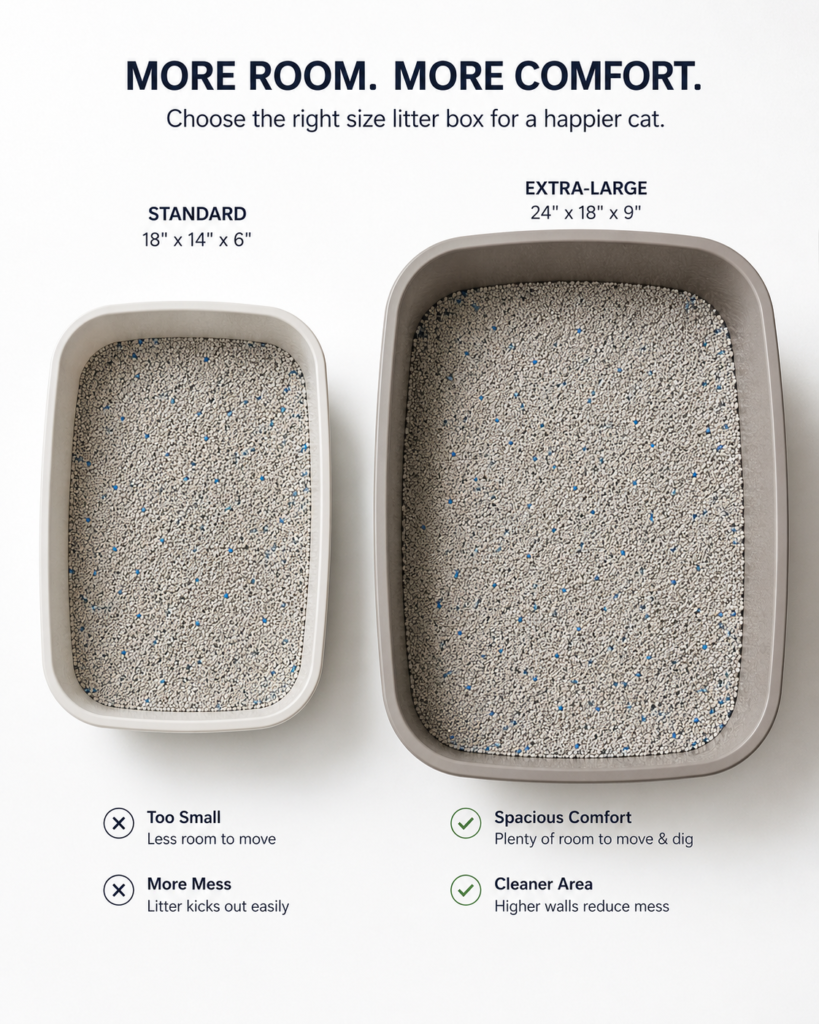
The single most common litter box mistake is using a box that’s too small. Most litter boxes sold in stores are sized for kittens, not adult cats. As a general rule, the box should be at least 1.5 times the length of your cat from nose to the base of the tail. If your cat can’t turn around, dig, and squat comfortably without touching the sides, the box is too small.
Bigger boxes also mean less mess, since your cat has more room to bury waste properly instead of digging right up against the wall of the box.
For most adult cats, a large, open, high-sided storage bin works better than a “designed” litter box from the pet aisle. Many experienced cat owners actually convert plastic storage totes into oversized litter boxes.
If you’d rather buy something ready-made, look for extra-large or jumbo litter pans designed specifically for bigger cats or multi-cat homes.
👉 https://link.amazon/B062OA6ZW
2. Litter Box Placement: Location Can Make or Break the Setup
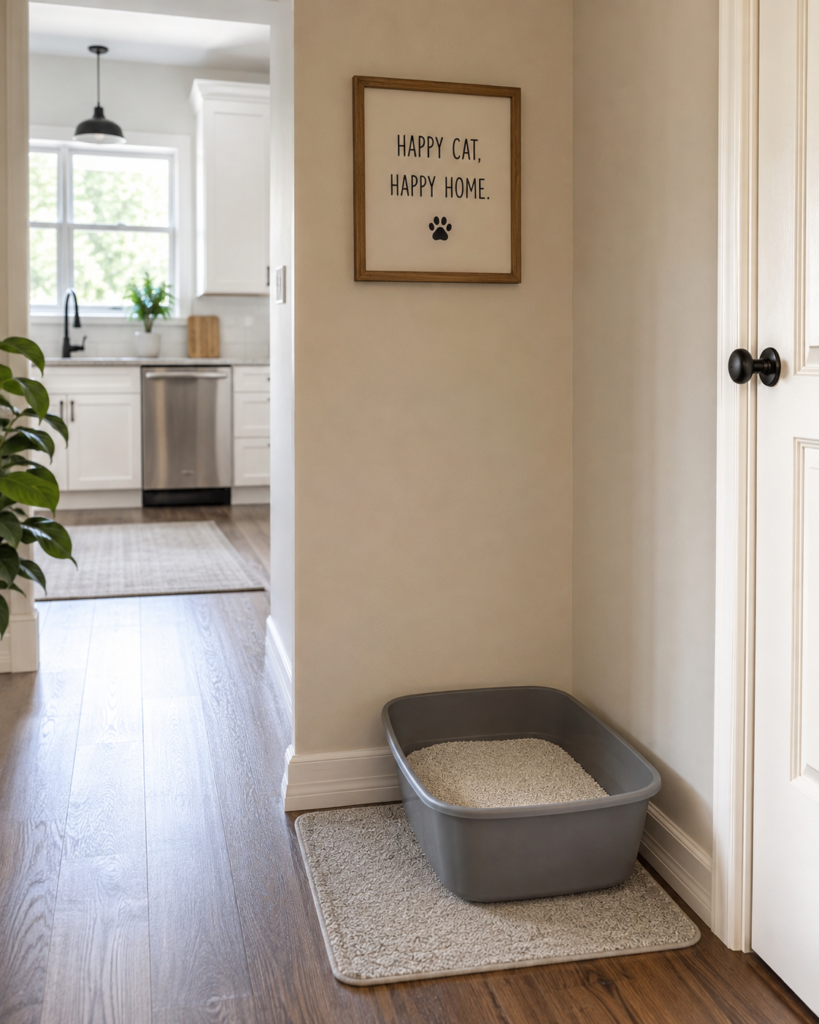
Cats want privacy, but they also want a quick escape route if needed. That means the litter box should never be tucked into a tight, closed-off corner with only one way in or out.
A good litter box location is:
- Quiet, but not isolated (avoid loud appliances like washing machines or furnaces)
- Away from food and water bowls (cats instinctively don’t want to eliminate near where they eat)
- Easily accessible at all times, especially for kittens, senior cats, or cats with mobility issues
- Not near loud foot traffic areas where the cat could feel “ambushed”
If you live in a multi-level home, place at least one box on each floor. Older cats especially shouldn’t have to climb stairs to reach a litter box in time.
3. The N+1 Rule: How Many Litter Boxes You Actually Need
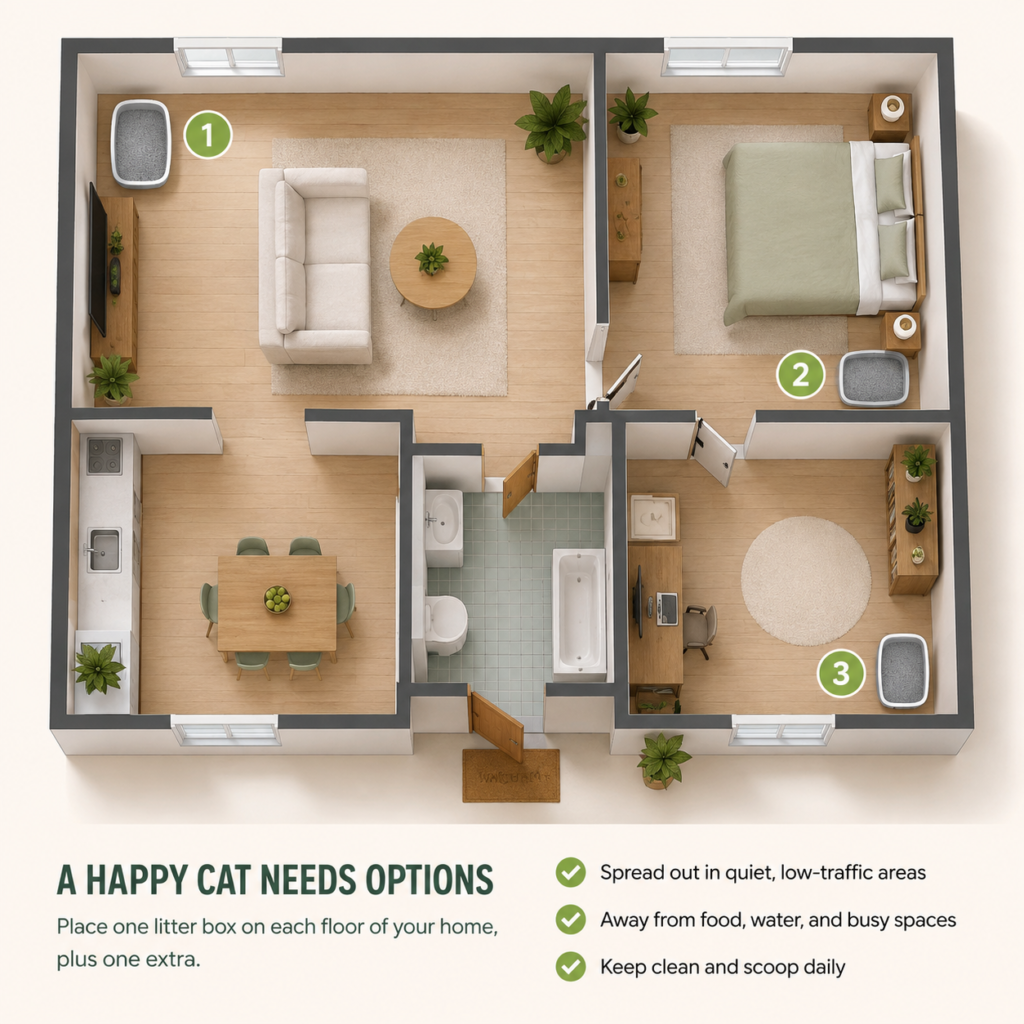
Here’s a rule that surprises a lot of new cat owners: the number of litter boxes should equal the number of cats in the household, plus one extra.
So:
- 1 cat = 2 litter boxes
- 2 cats = 3 litter boxes
- 3 cats = 4 litter boxes
This isn’t just a nice-to-have it directly prevents territorial disputes, reduces stress, and lowers the chances of inappropriate elimination outside the box. Cats don’t like to share a bathroom any more than people do, and a dirty or “occupied” box is one of the top reasons cats start going elsewhere in the house.
Spacing matters too don’t put all the boxes in one row in the same room. Spread them out across different areas of your home.
4. Picking the Right Litter Type

Walk down any pet store aisle and you’ll be faced with a wall of litter options: clumping, non-clumping, clay, crystal, pine, corn, wheat, paper. It can be overwhelming.
Not sure which litter type is right for your cat? See our Cat Litter Types Compared guide for a detailed comparison of clumping, lightweight, crystal, and natural litter.
Here’s the simple version:
Clumping clay litter is the most popular choice for good reason it’s affordable, controls odor well, and makes scooping fast and easy since waste clumps together instead of spreading through the whole box.
Natural/plant-based litters (pine, corn, wheat, walnut) are a good option if you want something more eco-friendly or if your cat has sensitivities to clay dust.
Crystal/silica litter is excellent for odor control and low maintenance, though some cats dislike the texture underfoot.
Most cats prefer a soft, sand-like texture that’s easy on their paws similar to what they’d dig in outdoors. Unscented litter is also strongly recommended, since cats have a far stronger sense of smell than humans and heavily fragranced litter can actually discourage box use.
👉 https://link.amazon/B05CU3oB0
5. Covered vs. Uncovered Litter Boxes
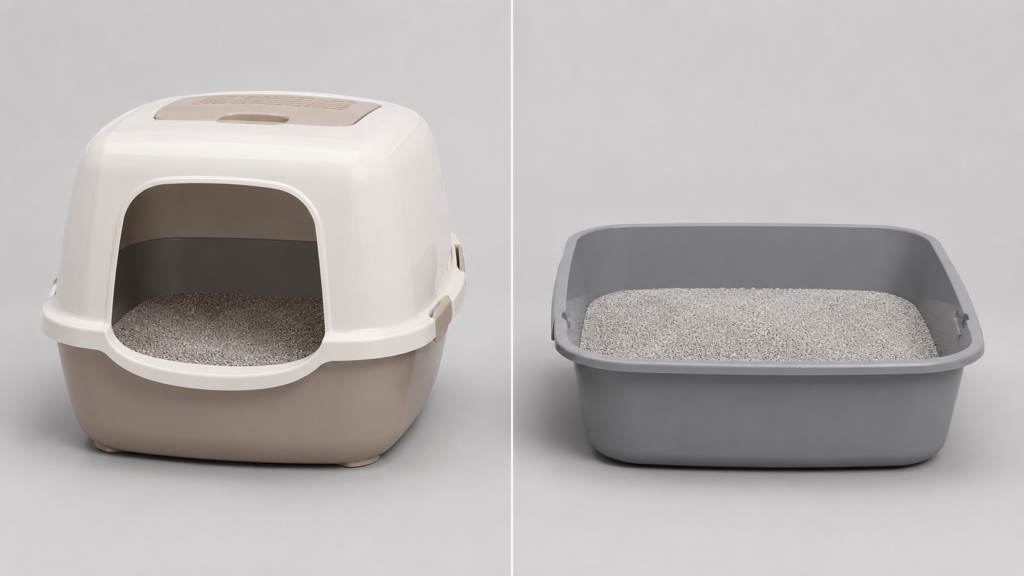
This is one of the most debated topics among cat owners, and honestly, it depends on your individual cat.
Covered boxes trap odor better and give shy cats a sense of privacy. However, they can also trap smells inside the box itself, which some cats find unpleasant, and they limit visibility, which can make a cat feel trapped or ambushed by other pets.
Uncovered/open boxes offer better visibility and airflow, and most veterinary behaviorists actually recommend them as the safer default, especially in multi-cat or multi-pet homes.
If you’re unsure what your cat prefers, start with an open box. You can always test a covered version later and watch how your cat responds.
👉https://link.amazon/B08c5GtRY
6. Litter Depth: More Isn’t Always Better
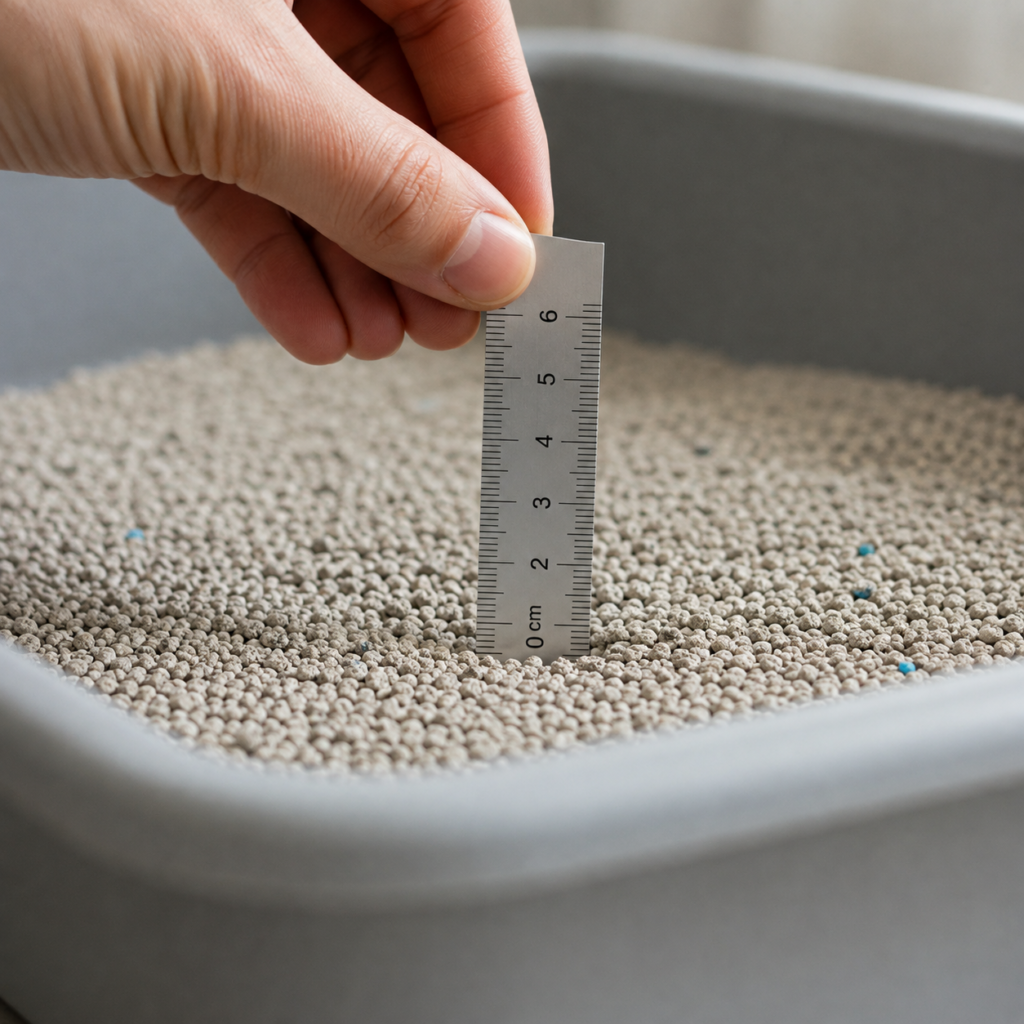
A common mistake is either underfilling or overfilling the box. Too little litter means waste isn’t properly absorbed or covered. Too much litter can feel unstable under a cat’s paws and gets tracked everywhere.
The sweet spot is generally 2 to 3 inches (5–7 cm) of litter, deep enough for digging and covering, but not so much that it spills out with every step.
A dedicated litter scoop with a fine mesh helps you maintain the right depth by removing only clumps and waste, not excess clean litter.
7. Cleaning Schedule: Consistency Is Everything

Cats have a strong aversion to dirty litter boxes far stronger than most owners realize. A box that smells even slightly “used” to a cat’s nose may already be enough to send them looking for a cleaner spot, like your carpet or laundry pile.
A simple, sustainable cleaning routine:
For a more detailed daily, weekly, and monthly cleaning routine, see our Cat Litter Box Cleaning Schedule.
- Scoop waste at least once a day, ideally twice
- Fully empty, wash, and refill the box every 1–2 weeks for clumping litter (more often for non-clumping)
- Wash the box with mild, unscented soap — avoid harsh chemicals or bleach, which can leave a smell cats find offensive
- Replace the box entirely every 1–2 years, since plastic absorbs odor over time even with regular cleaning
If daily scooping feels hard to keep up with, a covered litter disposal system can make the process faster and far less smelly.
8. Litter Mats: Solving the Tracking Problem
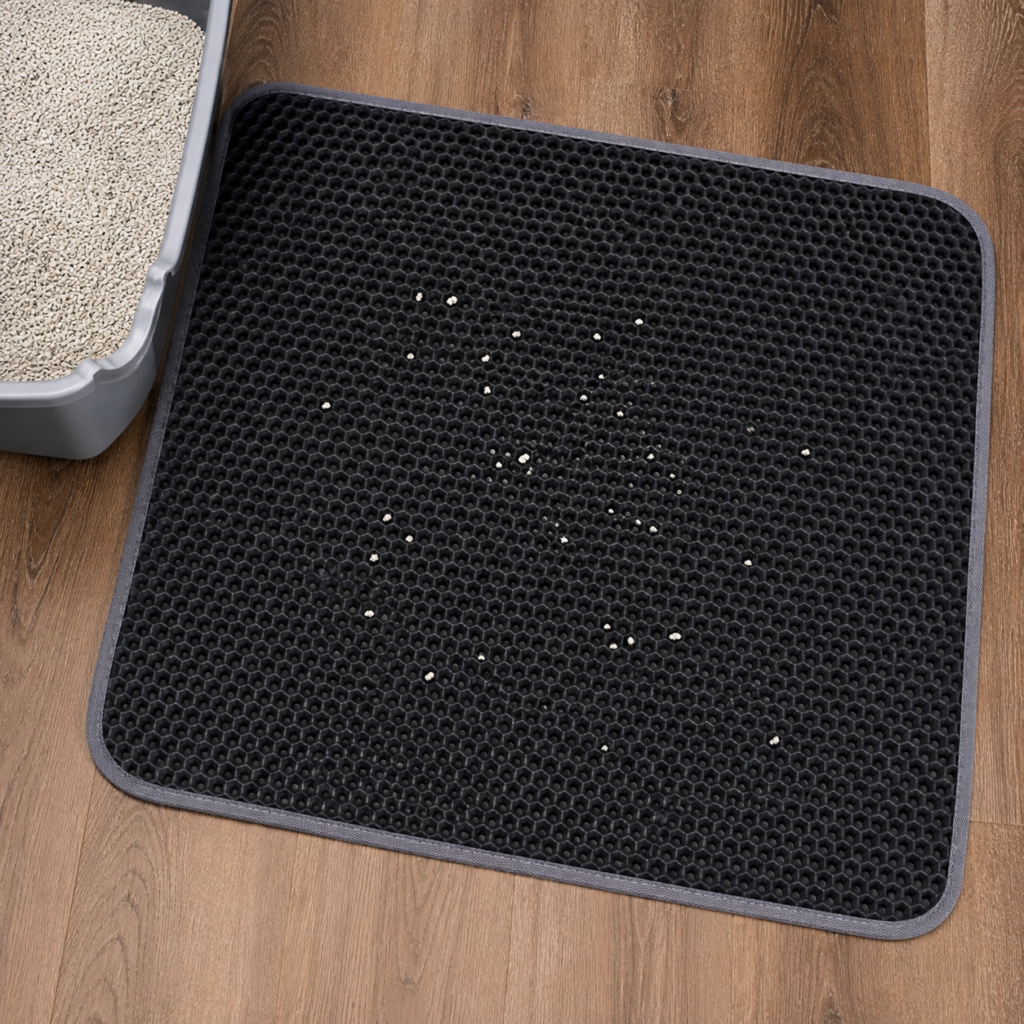
Even with a great setup, litter tracking outside the box is almost inevitable cats naturally carry a few granules out on their paws. A good litter mat placed directly outside (or under) the box captures most of this before it spreads through your home.
Look for mats with a honeycomb or waffle texture, since these trap litter between the cat’s paws far more effectively than flat mats. Larger mats work better than small ones give your cat a few steps to “shake off” the litter before they’re back on your floors.
9. Should You Get an Automatic Litter Box?
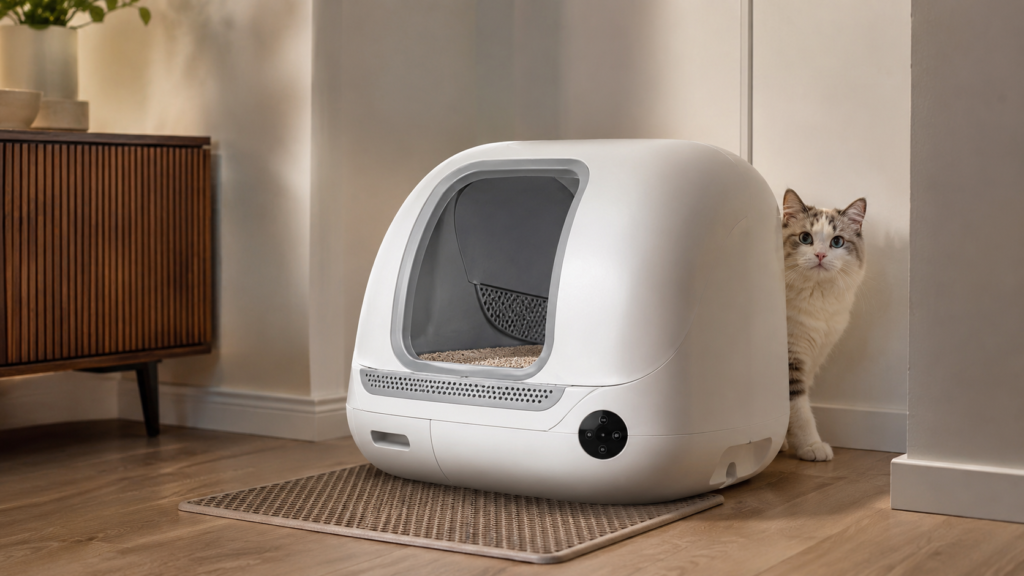
Self-cleaning litter boxes have become extremely popular, and for good reason: they automatically rake and remove waste after your cat uses the box, which means constant freshness without you scooping multiple times a day.
Want to compare the different types before buying? See our Automatic Litter Boxes Compared guide.
Automatic boxes can be a great option if:
- You work long hours and can’t scoop as often as you’d like
- You have multiple cats sharing fewer boxes than ideal
- You or a family member has mobility limitations
- You simply want a lower-maintenance setup long-term
That said, they’re not for every cat. Some cats are startled by the motor noise or the raking motion, especially at first. If you go this route, look for models with adjustable sensitivity, a safety sensor to prevent the mechanism from activating while your cat is inside, and easy-to-clean waste compartments.
It’s also smart to keep the automatic box’s litter depth and type consistent with what your cat is already used to during the transition.
👉 https://link.amazon/B0aXUZFbl
Bonus Tip: Watch for Sudden Changes in Litter Box Behavior
Sudden litter box avoidance can sometimes be linked to a health problem, so if the behavior continues after you’ve checked the setup, contact your veterinarian.
If you’ve addressed everything in this guide and the problem continues, a vet visit is the right next step, not punishment or frustration. Cats don’t act out of spite; they act out of discomfort or instinct.
Putting It All Together: A Simple Litter Box Setup Checklist
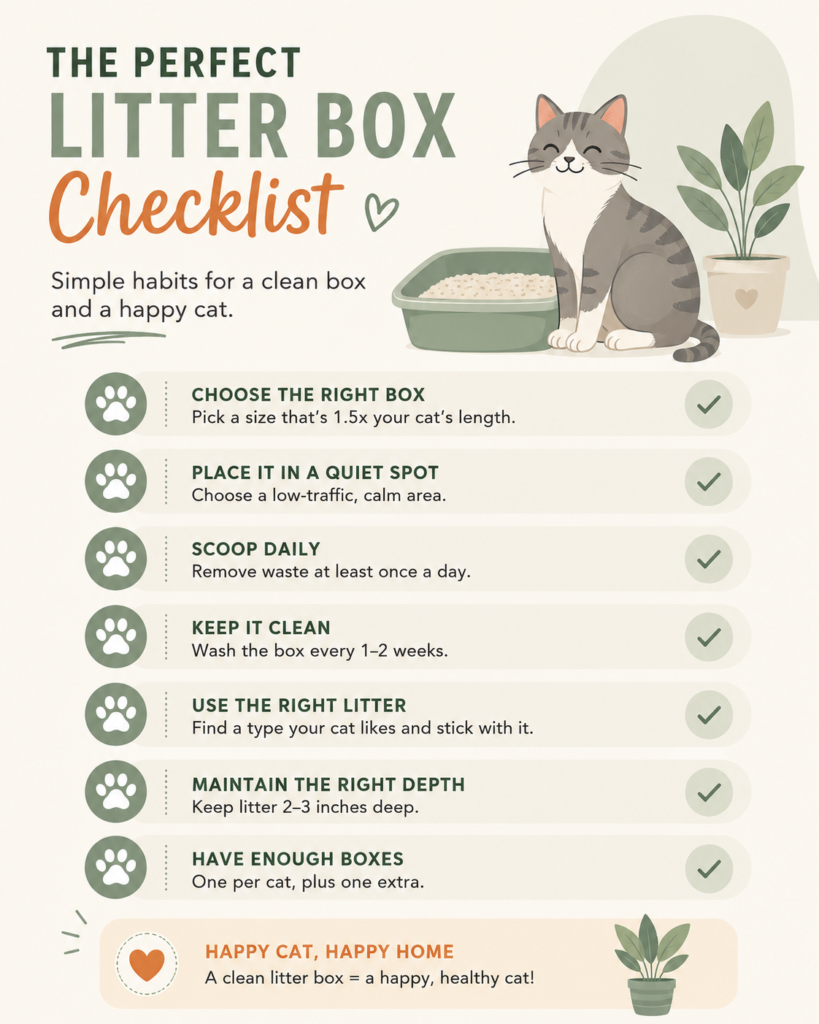
Here’s a quick recap you can use as a checklist when setting up (or fixing) your cat’s litter box station:
- ✅ Box is at least 1.5x your cat’s body length
- ✅ Placed in a quiet, accessible, low-traffic location
- ✅ One box per cat, plus one extra (N+1 rule)
- ✅ Boxes spread across different areas, not clustered together
- ✅ Unscented litter your cat responds well to
- ✅ 2–3 inches of litter depth, maintained consistently
- ✅ Daily scooping, full clean every 1–2 weeks
- ✅ Litter mat placed at every box entrance
- ✅ Box replaced every 1–2 years
Small adjustments in each of these areas add up to a much happier cat and a much cleaner, fresher-smelling home for you.
Frequently Asked Questions
How often should I completely change cat litter? For clumping litter, a full change every 1–2 weeks is typical, alongside daily scooping. Non-clumping litter usually needs a full change every 2–3 days since it doesn’t isolate waste as effectively.
Why does my cat scratch the floor instead of the litter? This usually means the litter depth is too shallow, the litter texture is uncomfortable, or the box itself feels too small or unstable for comfortable digging.
Is it normal for cats to avoid a brand-new litter box? Yes, some cats need time to adjust to a new box, especially if the shape, size, or covered/uncovered style is very different from what they’re used to. Introduce changes gradually, and keep the old box available for a short overlap period.
Do cats prefer scented or unscented litter? Almost universally, unscented litter is preferred. A cat’s sense of smell is far more sensitive than a human’s, so heavy fragrances that seem pleasant to us can be genuinely unpleasant, even repellent, to cats.
Can two cats share one litter box? They can, but it’s not ideal. Following the N+1 rule (number of cats plus one box) significantly reduces stress, territorial conflict, and the chance of litter box avoidance in multi-cat homes.
Final Thoughts
A great litter box setup isn’t about buying the most expensive products — it’s about understanding what your cat actually needs: the right size, the right location, the right litter, and consistent cleaning. Get those fundamentals right, and most litter box problems simply disappear on their own.
Start with the checklist above, make one adjustment at a time, and watch how your cat responds. Small changes really do make a big difference.
Have a litter box tip that’s worked well for your cat? Share it in the comments below new cat owners reading this guide would love to hear it.