Disclosure: This post contains affiliate links. As an Amazon Associate, we may earn a small commission from qualifying purchases made through these links, at no additional cost to you. We only recommend products we believe are genuinely useful for pet stain and odor removal.
Disclaimer: This article is for informational purposes only. Product details and recommendations may change. For pet health concerns, consult a qualified veterinarian.
Meta description: Struggling with old pet stains on your carpet? Learn proven, vet-safe methods to remove dried dog and cat stains, urine odor, vomit, and blood — plus the exact products that actually work.
Introduction: Why Old Pet Stains Are So Stubborn
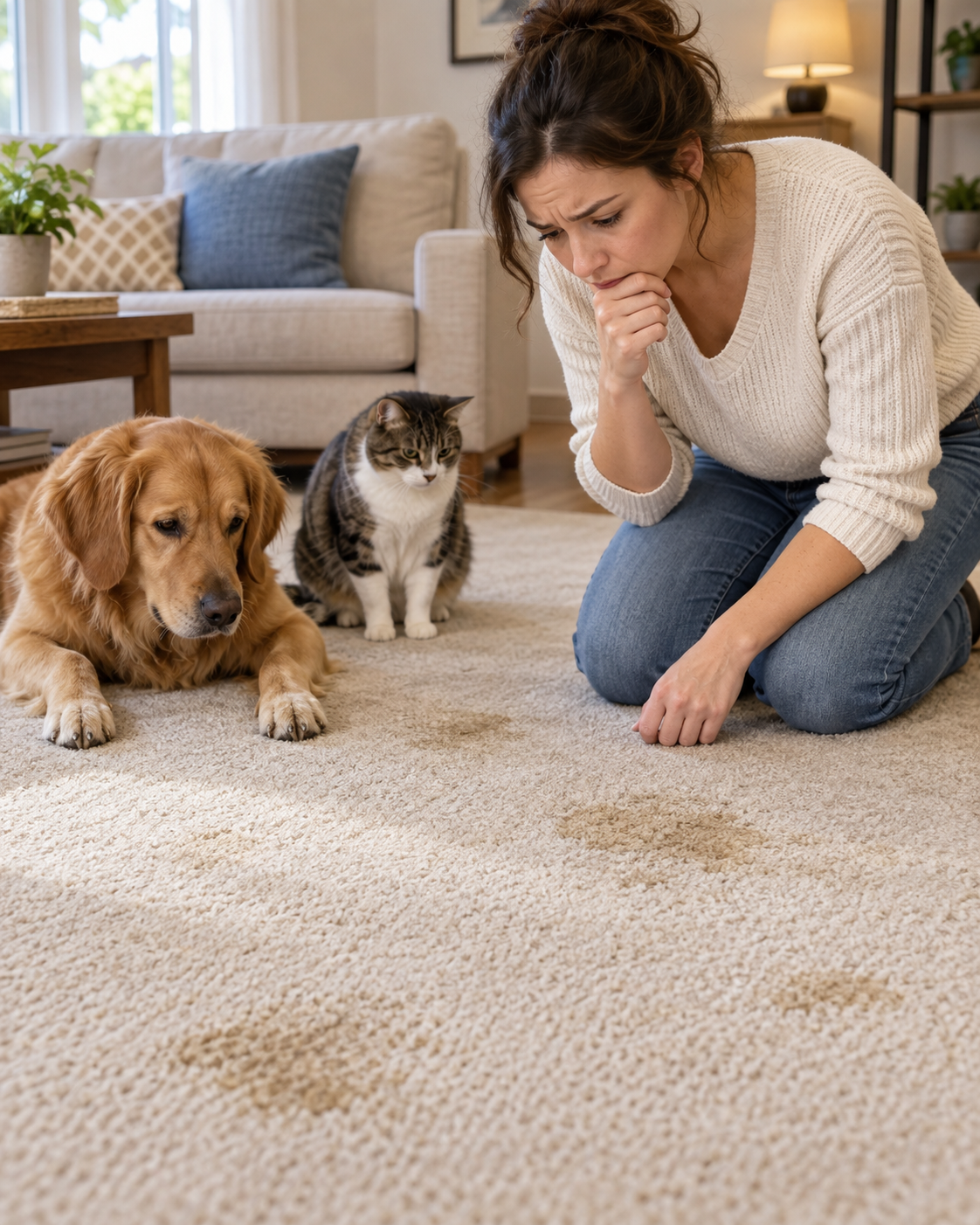
If you share your home with a dog, cat, or any furry friend, you already know that accidents happen — even to the best-trained pets. A fresh mess is annoying but manageable. The real headache begins when a stain has already dried into your carpet fibers, padding, and even the subfloor beneath.
Old pet stains are tricky because they aren’t just surface-level dirt. Urine, in particular, crystallizes as it dries, and those crystals sink deep into the carpet backing. That’s why regular carpet shampoo or a quick scrub often fails — you can wipe away the visible stain, but the odor and discoloration keep coming back, especially on humid days.
The good news? With the right technique (and the right products), even years-old pet stains can be lifted, deodorized, and removed for good. This guide walks you through everything: the science behind why stains stick around, step-by-step removal methods for dogs, cats, and other pets, and product recommendations that make the job faster and easier.
Whether you’re a renter trying to get your deposit back, a new pet parent dealing with puppy accidents, or someone who just bought a “previously loved” home, this guide has you covered.
Why Pet Stains Become Permanent (The Science Behind It)
Understanding why a stain sets in helps you choose the right removal method.
- Urine crystallizes. As pet urine dries, the liquid evaporates but leaves behind uric acid crystals. These crystals are not water-soluble, which means plain water or soap won’t dissolve them — they need an enzymatic reaction to break down.
- Bacteria continues to grow. Even after a stain looks dry, bacteria in the fibers keep producing ammonia, which is why old stains often smell worse in heat or humidity.
- Stains sink into padding. Carpet fibers are just the top layer. Liquid travels down into the padding and sometimes the subfloor, creating a hidden reservoir of odor that resurfaces no matter how much you clean the surface.
- Repeat marking. Pets are drawn back to areas that still carry their scent (even if you can’t smell it), so an untreated spot often becomes a repeat offender.
This is why the right approach isn’t just “clean the spot” — it’s “neutralize the source at every layer.”
What You’ll Need Before You Start
Before diving into stain removal, gather these basic supplies. We’ll also point out specific products worth having on hand.
- A UV/blacklight flashlight (to find invisible dried urine spots)
- Enzymatic pet stain remover
- White vinegar and baking soda (for a natural approach)
- Hydrogen peroxide (for tougher, set-in stains — use with caution on colored carpets)
- Clean microfiber cloths or paper towels
- A soft-bristle brush
- A wet/dry vacuum or carpet cleaner machine
- Rubber gloves
Recommended Product: UV Flashlight for Finding Hidden Stains
Old pet stains aren’t always visible in normal lighting — dried urine can blend into the carpet color completely. A UV blacklight makes old stains glow, so you know exactly where to treat.
👉 Pet Urine UV Flashlight on Amazon
https://link.amazon/B0cnIKUQs
Step 1: Locate Every Stain (Even the Invisible Ones)
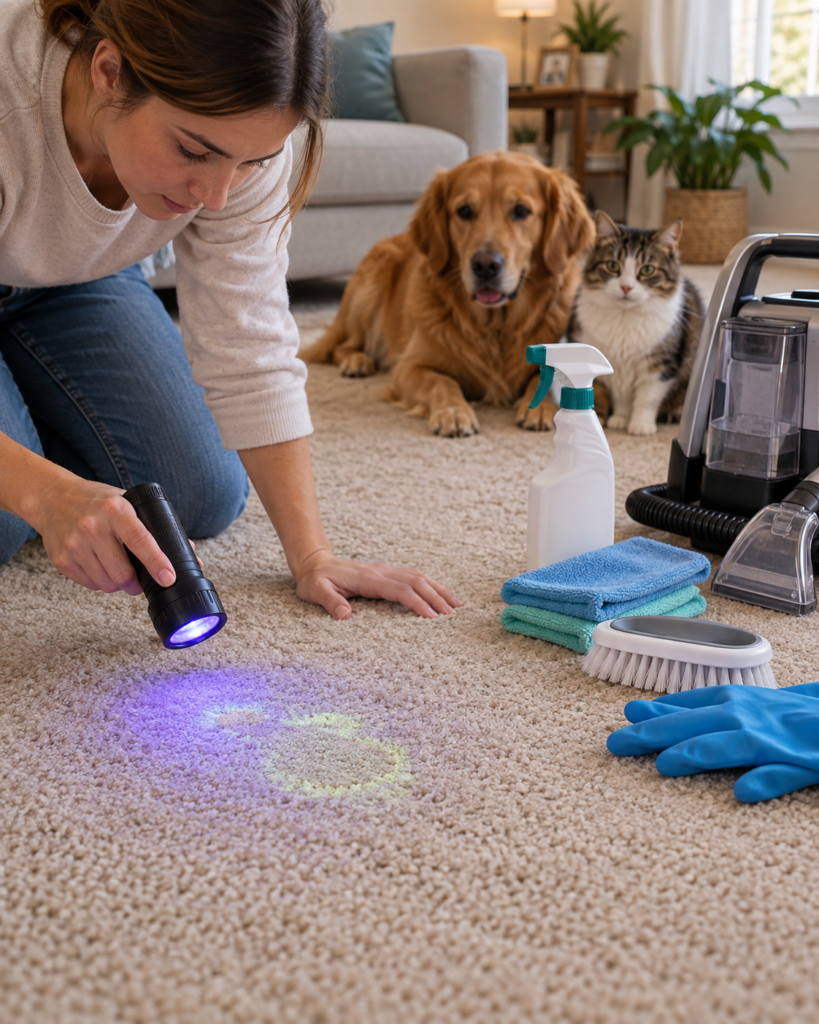
Turn off the lights, close the curtains, and scan your carpet with a UV flashlight. Old urine stains will glow yellow-green under UV light. Mark each spot with a small piece of tape or a sticky note so you don’t lose track once the lights are back on.
This step is crucial — treating only the stains you can see leaves hidden odor sources behind, and your pet will likely return to those exact spots.
Step 2: Test Any Product on a Hidden Area First
Before applying any cleaner — homemade or store-bought — test it on a small, hidden section of carpet (like inside a closet or under furniture). Wait 10 minutes and check for discoloration. This simple step can save your carpet from accidental bleaching or fiber damage.
How to Remove Old Dog Urine Stains From Carpet
Dog urine tends to be more concentrated than cat urine, especially from larger breeds, which is why it often leaves darker, more noticeable stains.
Step-by-Step Method
- Rehydrate the stain. Old, dried urine needs moisture to reactivate before it can be lifted. Lightly mist the area with warm water and let it sit for 5–10 minutes.
- Blot, don’t rub. Use a clean cloth to blot up as much moisture as possible. Rubbing pushes the stain deeper into the fibers.
- Apply an enzymatic cleaner. This is the single most effective step for dog urine. Enzyme cleaners contain bacterial cultures that literally consume the uric acid crystals, breaking down the compound that causes both the stain and the smell.
- Let it sit and air dry. Enzyme cleaners need time to work — usually 15–30 minutes, though tougher stains may need a few hours. Check the product label.
- Blot again and vacuum once dry. This lifts any loosened residue and fluffs the carpet fibers back up.
Recommended Product: Enzymatic Pet Stain & Odor Remover
This is the single most important product in your pet-owner cleaning kit. Look for one specifically labeled for dogs, with a strong enzyme concentration for set-in stains.
👉 Top-Rated Enzymatic Dog Urine Removers on Amazon
https://link.amazon/B0fn8G9DH
How to Remove Old Cat Urine Stains From Carpet
Cat urine is notoriously more pungent than dog urine due to higher concentrations of urea, uric acid, and a compound called felinine, which breaks down into strong-smelling sulfur compounds over time.
Step-by-Step Method
- Soak, don’t just spray. Old cat urine stains need a deeper soak than dog stains. Saturate the area generously with an enzymatic cleaner formulated for cats — cat urine’s chemical makeup is slightly different, so cat-specific formulas tend to work better.
- Cover and wait. Place a damp cloth or plastic wrap over the treated spot to keep it moist for a few hours, allowing the enzymes to fully penetrate and break down crystallized deposits.
- Blot thoroughly. Once the area is dry, blot with clean towels to remove residue.
- Repeat if the odor lingers. Cat urine often requires two or three treatment rounds for older, deeply set stains.
- Consider a baking soda finish. After the area is fully dry, sprinkle baking soda over it, let it sit overnight, and vacuum. This helps absorb any remaining odor molecules.
Recommended Product: Cat-Specific Enzyme Cleaner
Because cat urine has a unique chemical signature, a cat-formulated enzyme cleaner often outperforms general pet cleaners for litter box misses and marking stains.
👉 Cat Urine Odor Eliminators on Amazon
https://link.amazon/B01W79bFT
Removing Old Pet Vomit, Feces & Blood Stains
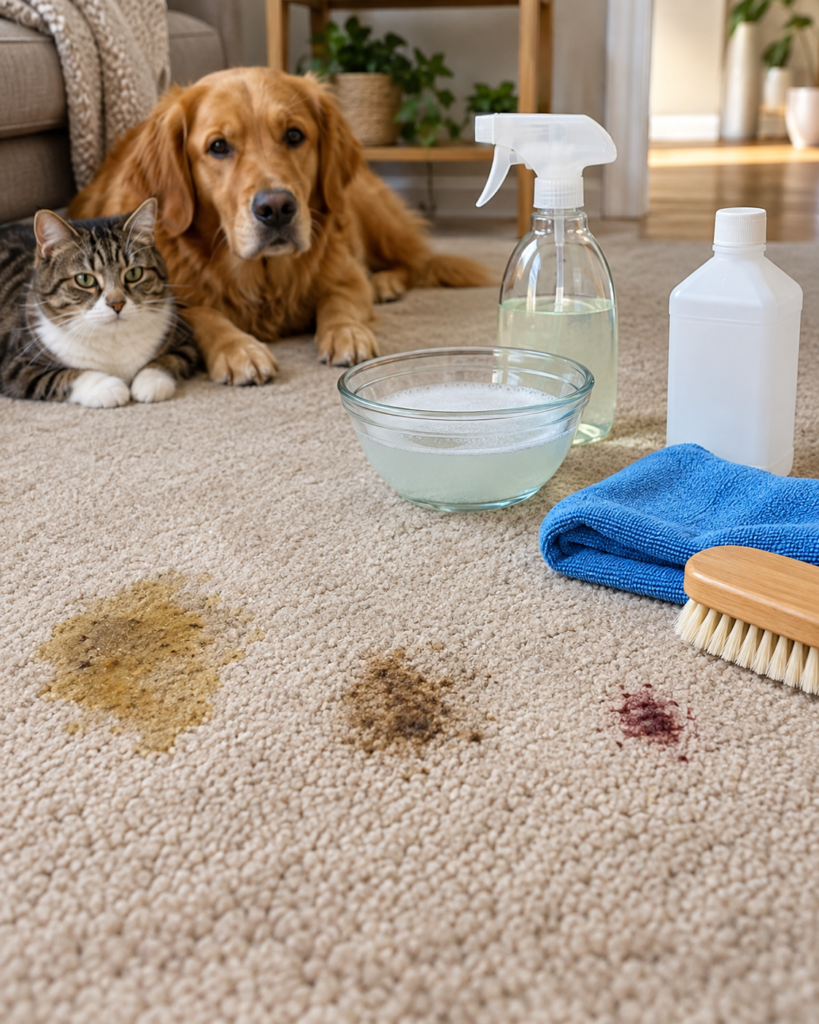
Not every pet mess is urine. Here’s how to handle the other common culprits.
Old Vomit Stains
- Scrape off any dried residue with a dull knife or spoon edge.
- Mix one tablespoon of dish soap with two cups of warm water.
- Blot the solution onto the stain, working from the outside in to avoid spreading it.
- Rinse with a clean, damp cloth and blot dry.
- If discoloration remains (common with bile), apply a small amount of hydrogen peroxide diluted with water, and blot until it lifts.
Old Feces Stains
- Remove any solid residue.
- Apply an enzymatic cleaner, since feces stains also carry bacteria and protein-based compounds that regular soap won’t fully break down.
- Let sit for 10–15 minutes, then blot and rinse.
Old Blood Stains
- Always use cold water first — hot water sets blood stains permanently.
- Blot with a mixture of cold water and a small amount of dish soap.
- For stubborn, dried spots, apply hydrogen peroxide directly (test on a hidden area first, as it can lighten some carpet dyes) and watch it foam as it lifts the stain.
- Rinse and blot dry.
The Baking Soda & Vinegar Method (Natural, Budget-Friendly Option)
If you prefer a natural approach or want to tackle a fresh stain before it fully sets, this classic combo works well for light-to-moderate stains:
- Blot up any excess moisture.
- Mix equal parts white vinegar and water in a spray bottle.
- Spray generously over the stain and let sit for 5 minutes — vinegar’s acidity helps neutralize the alkaline salts in dried urine.
- Blot dry, then sprinkle a generous layer of baking soda over the area.
- Leave for several hours or overnight to absorb odor.
- Vacuum thoroughly.
Important: Vinegar and baking soda can help with odor and light stains, but they don’t fully break down uric acid crystals the way enzymatic cleaners do. For old, deeply set stains, enzyme-based products remain the gold standard.
When DIY Isn’t Enough: Carpet Cleaner Machines
For stains that have soaked deep into the padding, a handheld or full-size carpet extractor can make a significant difference. These machines inject a cleaning solution deep into the fibers and then extract it — along with the dirt and odor-causing bacteria — far more effectively than blotting by hand.
Recommended Product: Portable Carpet & Upholstery Spot Cleaner
A compact spot-cleaning machine is a worthwhile investment for any pet household, especially for treating multiple old stains found under UV light.
👉 Top Portable Carpet Spot Cleaners on Amazon
https://link.amazon/B09lAOk1W
Dealing With Stains on the Carpet Padding and Subfloor
If a stain has been there for months or years, it’s likely soaked through to the padding. In these cases, surface cleaning alone won’t fully remove the odor.
- Pull back the carpet at the affected corner if possible.
- Treat the padding directly with an enzymatic cleaner, or replace the padding section entirely if it’s severely saturated.
- Seal the subfloor with an odor-blocking primer if the smell has soaked into wood or concrete underneath — this step is often used by professionals restoring pet-damaged homes.
- Reinstall or replace the carpet section as needed.
If this sounds like too much for a DIY project, it may be worth calling in a professional carpet cleaning service, especially for large or multiple stains.
How to Prevent Old Stains From Coming Back
Removing a stain is only half the job — keeping your pet from returning to the same spot is just as important.
- Use a UV light periodically to catch new accidents before they set in.
- Clean fresh accidents immediately with an enzymatic cleaner rather than waiting.
- Block off previously stained areas temporarily with furniture or a training mat while the scent fully clears.
- Address the root cause — frequent accidents can signal a medical issue (like a UTI), anxiety, or incomplete house-training, so a vet visit or refresher training may help long-term.
- Consider a carpet protector spray on high-traffic pet areas to make future cleanups easier.
Recommended Product: Pet-Safe Carpet & Fabric Protector Spray
A protective spray creates a barrier that keeps liquids from soaking in immediately, giving you more time to blot up fresh messes before they become old, stubborn stains.
👉 Pet-Safe Fabric & Carpet Protector Sprays on Amazon
https://link.amazon/B00Y8cMKW
Frequently Asked Questions
Does steam cleaning remove old pet urine stains? Steam cleaning can help with surface stains, but heat can actually set urine stains permanently by bonding the proteins to the carpet fibers. It’s generally better to use cold or lukewarm water with an enzymatic cleaner rather than a steam cleaner for urine specifically.
Will vinegar alone remove old urine odor? Vinegar helps neutralize odor temporarily and can lighten mild stains, but it doesn’t break down the uric acid crystals responsible for long-term smell. For a full fix, pair vinegar treatments with an enzymatic cleaner.
How long do enzymatic cleaners take to work on old stains? Fresh stains may clear in 15–30 minutes, but old, deeply set stains often need several hours or even a second treatment the next day for full effect.
Can old pet stains be permanently removed, or just faded? With enzymatic treatment and patience, most old stains can be fully removed, including the odor. Very old or deeply penetrated stains in the padding may require padding replacement for a 100% fix.
Is hydrogen peroxide safe for all carpet colors? No. Hydrogen peroxide can lighten dyed carpets. Always test on a hidden patch first, and avoid it on dark or richly colored carpets unless you’ve confirmed it’s safe.
Final Thoughts
Old pet stains can feel like a losing battle, but they’re absolutely fixable with the right approach: find every hidden spot with a UV light, rehydrate and treat with an enzymatic cleaner suited to the type of stain, and be patient — some stains need more than one round of treatment.
Investing in a few key products — a UV flashlight, a quality enzymatic cleaner, and a portable spot-cleaning machine — will save you time, money, and frustration compared to repeated DIY attempts that don’t fully address the root cause.
With consistent care, your carpet can look, feel, and smell fresh again, even after years of pet ownership.