Disclosure: This post contains affiliate links. If you click through and make a purchase, we may earn a small commission at no extra cost to you. We only recommend products we believe can genuinely help.
Disclaimer: This article is for informational purposes only. Product details and recommendations may change. For pet health concerns, consult a veterinarian.
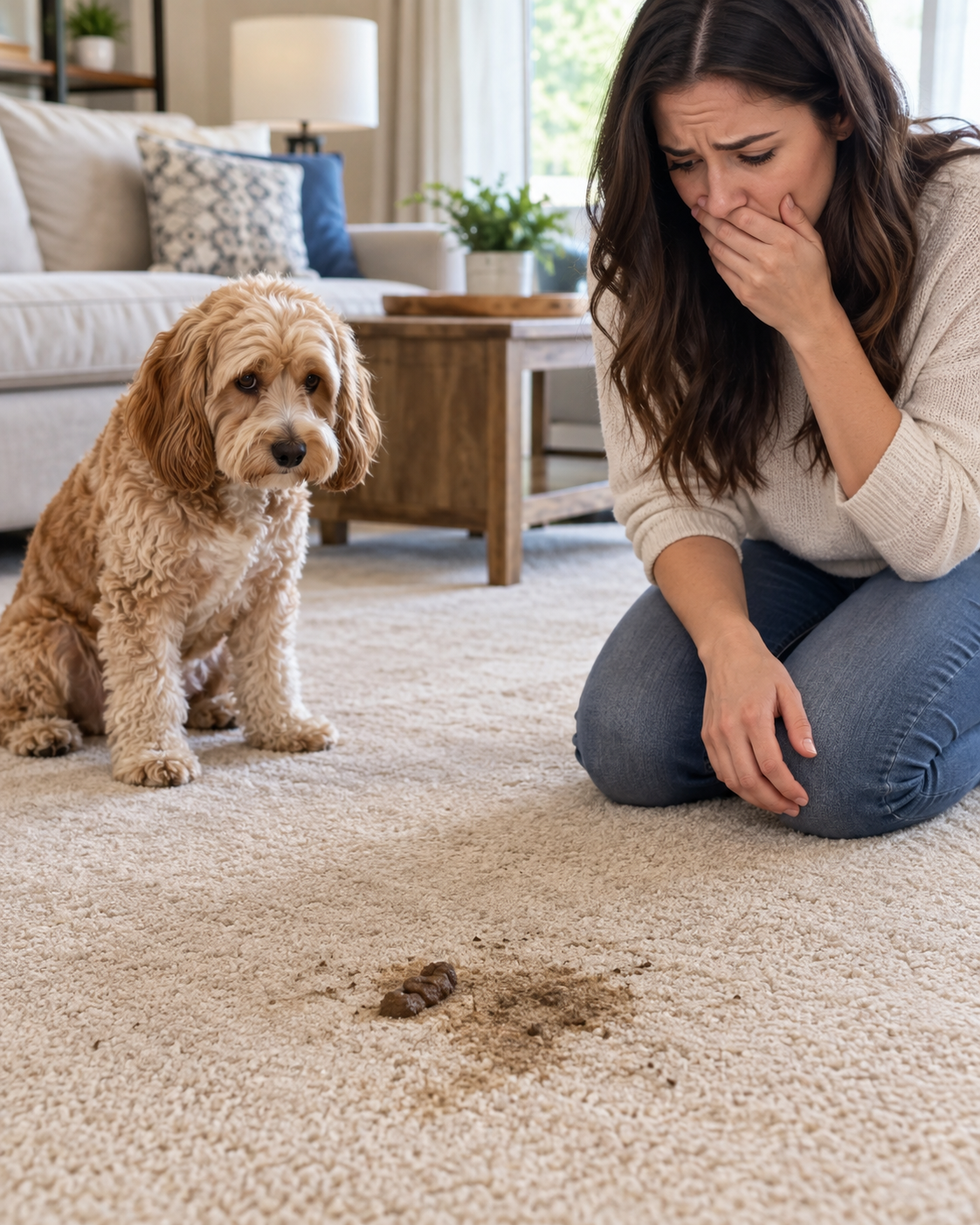
If you share your home with a dog, sooner or later you’ll deal with an accident on the carpet. It happens to every pet owner — puppies still learning the rules, senior dogs with weaker bladders, or a healthy dog who simply got sick one day. The real problem isn’t the accident itself. It’s what happens afterward: a stubborn stain that won’t lift and a smell that seems to hang around no matter how many times you clean it.
The good news is that dog poop stains, even old and dried ones, can almost always be removed completely if you use the right method. In this guide, we’ll walk through exactly how to do that from the first five minutes after you discover the mess to long-term odor control that keeps your home smelling fresh.
Why Dog Poop Stains Carpet So Easily
Carpet fibers are porous, and pet waste contains organic compounds, bacteria, and pigments that soak into those fibers quickly. The longer the waste sits, the deeper it travels — first into the carpet fibers, then into the padding underneath, and sometimes even into the subfloor. This is why fresh accidents are so much easier to clean than ones that have dried overnight.
There’s also the odor issue. Standard cleaning products can wipe away the visible mess, but they don’t always break down the proteins and bacteria left behind. That’s why a spot can look spotless yet still smell bad, especially when the carpet gets warm or humid. Understanding this is the key to choosing the right cleaning approach: you need something that removes the stain and neutralizes the source of the smell at a molecular level, not something that just masks it with fragrance.
What You’ll Need Before You Start
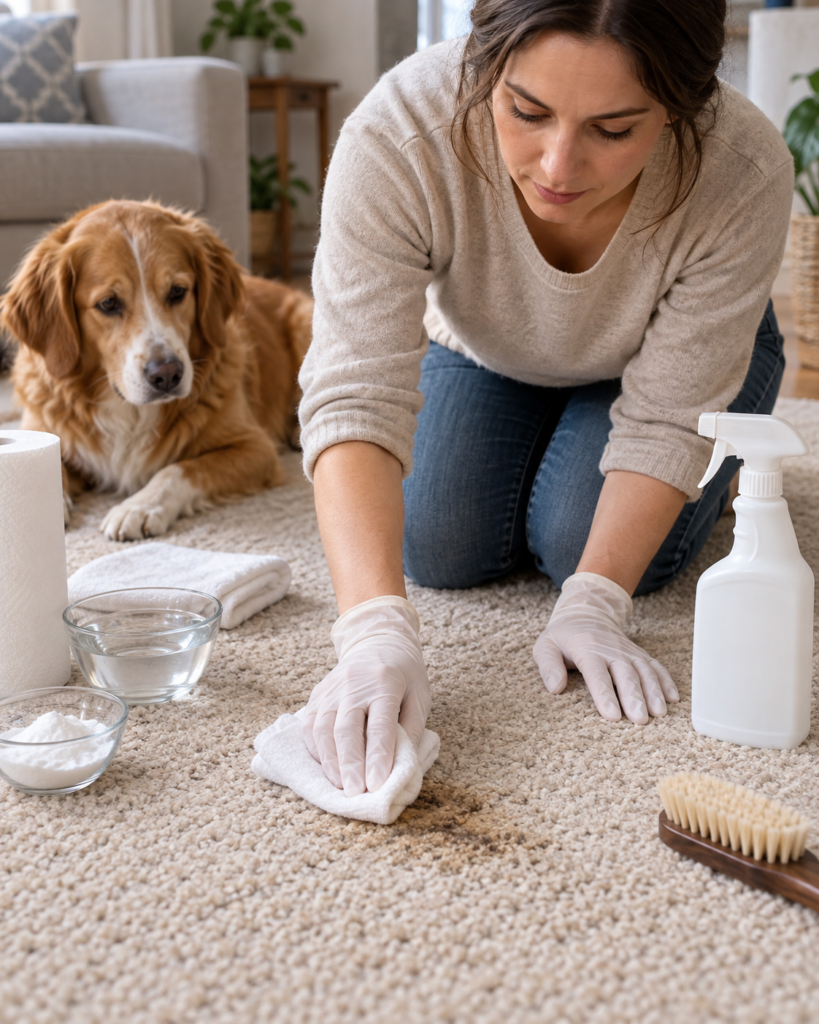
Gathering your supplies ahead of time makes the whole process faster and less stressful. Here’s a simple checklist:
- Disposable gloves
- Paper towels or old rags
- A plastic bag or dustpan for solid waste
- Baking soda
- White vinegar
- Dish soap (unscented, without bleach)
- An enzymatic pet stain and odor remover
- A soft-bristle brush or old toothbrush
- A vacuum cleaner
- Cold water
You likely have most of these items already, aside from the enzymatic cleaner, which is worth keeping on hand permanently if you own a pet.
Step-by-Step: How to Remove a Fresh Dog Poop Stain
Step 1: Remove the Solid Waste First
Time matters here. Put on gloves and use a paper towel, a piece of cardboard, or a plastic bag to lift as much solid waste as possible. Work gently and avoid pressing down, since pushing the mess deeper into the fibers only makes the stain harder to remove later. If there’s a soft or semi-liquid portion left, scoop it up with a spoon dedicated to cleaning tasks (never one you’ll use again for food).
Step 2: Blot, Don’t Rub
Once the solid material is gone, blot the area with a clean, damp paper towel. Rubbing spreads the stain outward and drives it further into the carpet padding, so always blot from the outside of the stain toward the center. This single habit — blot instead of rub — is the difference between a stain that lifts cleanly and one that leaves a permanent shadow.
Step 3: Apply a Cleaning Solution
For most fresh stains, a simple homemade solution works well:
- Mix one-quarter teaspoon of dish soap with one cup of warm water
- Mix equal parts white vinegar and water
Apply the solution to the stain with a clean cloth and let it sit for 5–10 minutes. Then blot the area again until no more residue transfers to your cloth.
For a deeper clean, many pet owners prefer using a dedicated enzymatic cleaner instead of a homemade mix, since these are formulated specifically to break down the proteins in pet waste. If you’d rather skip the DIY approach entirely, this is one of the most effective options available:
👉[Enzymatic Pet Stain & Odor Remover on Amazon]
https://link.amazon/B008a9Erz
Step 4: Rinse With Cold Water
After the stain has lifted, pour a small amount of cold water over the area and blot it up thoroughly. This step removes any leftover cleaning solution, which can otherwise attract dirt over time and leave a residue ring.
Step 5: Deodorize With Baking Soda
Even after the visible stain is gone, odor-causing bacteria can linger in the carpet fibers. Generously sprinkle baking soda over the treated area and let it sit for at least 30 minutes — ideally a few hours or overnight for stronger odors. Baking soda is a natural deodorizer that absorbs moisture and neutralizes smell at the source rather than covering it up.
Once it’s had time to work, vacuum the area thoroughly. A vacuum with strong suction and good pet-hair pickup makes this step much easier, especially if you’re dealing with a larger area or a home with multiple pets:
👉[See Top-Rated Pet-Hair Vacuum Cleaners on Amazon]
https://link.amazon/B0eOsN838
How to Remove an Old or Dried Dog Poop Stain
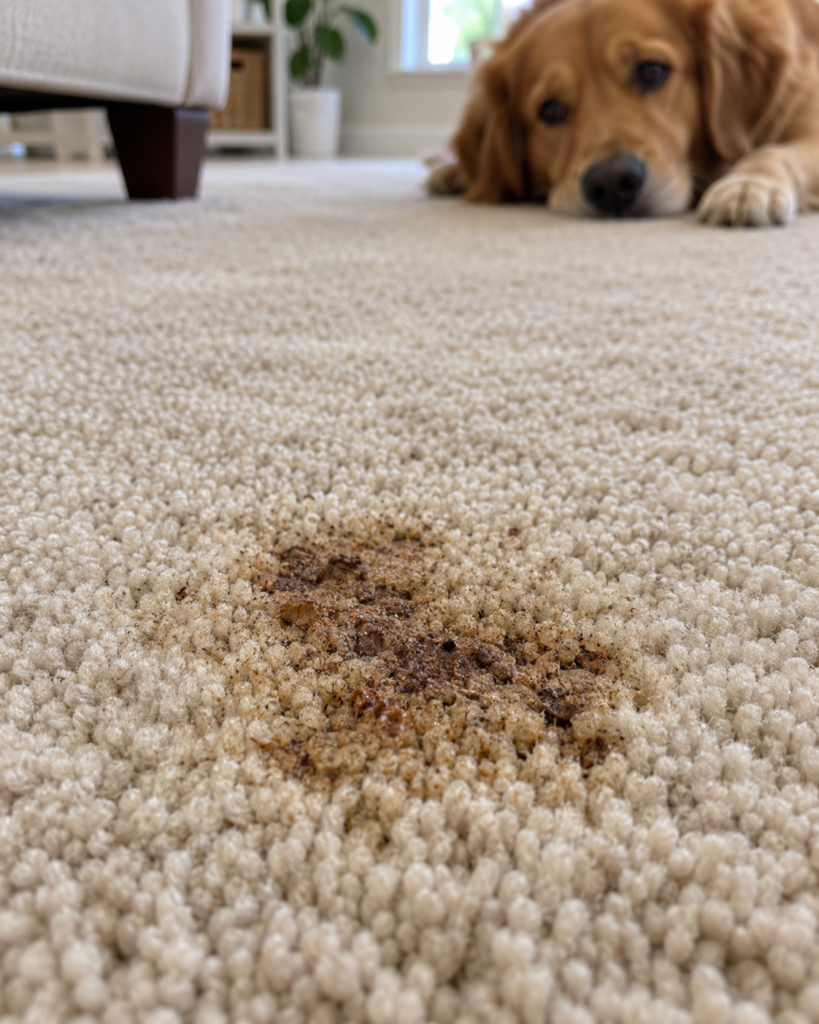
Dried stains take a bit more patience, but they are absolutely still fixable.
Step 1: Loosen the Stain
Dampen the dried area with warm water and let it sit for a few minutes to soften.
Step 2: Scrape Away Residue
Use a dull knife, a plastic scraper, or an old spoon to gently lift away any dried material. Work slowly to avoid damaging the carpet fibers.
Step 3: Apply a Vinegar and Baking Soda Combination
Mix equal parts white vinegar and water, apply it to the stain, and then sprinkle baking soda directly on top. You’ll notice some light fizzing — this reaction helps lift ground-in residue from the fibers. Let it sit for 10–15 minutes before blotting.
Step 4: Follow Up With an Enzymatic Cleaner
Old stains often carry a stronger, more embedded odor because bacteria has had time to multiply. An enzymatic cleaner is the most reliable way to break this down completely, since it targets the biological source of the smell rather than just masking it with fragrance. Look for a formula specifically designed for set-in pet stains and let it sit for the full time recommended on the label — usually 15 to 20 minutes — before blotting dry.
Step 5: Deep Clean If Needed
If the stain has left a lasting discoloration after these steps, a carpet cleaning machine can help finish the job. These machines use hot water extraction combined with a cleaning formula to pull residue and pigment out of deep carpet fibers:
Getting Rid of the Smell for Good
A stain can disappear and the smell can still linger, which is one of the most frustrating parts of dealing with pet accidents. Here’s how to make sure the odor is actually gone, not just hidden.
Use an enzymatic cleaner, not a masking spray. Air fresheners and scented sprays only cover up odor temporarily. Enzymatic cleaners contain live bacteria or enzymes that literally consume the waste proteins causing the smell, which is why professional pet groomers and cleaners recommend them as a first choice.
Check under the surface. If an odor keeps returning even after cleaning, the waste may have soaked through to the carpet padding. In this case, you may need to lift the edge of the carpet near the stain and treat the padding directly, or use a specialized odor eliminator formulated to penetrate deeper layers.
Let the area fully dry. Trapped moisture creates an environment where bacteria and mold can grow, which makes odors worse over time. Use a fan or open a window to help the area air dry completely after cleaning.
Consider an air purifier for ongoing pet odor control. If pet odors are a recurring issue in your home, an air purifier designed for pet dander and odor can make a noticeable difference in daily air quality:
👉[Check Air Purifiers for Pet Odor Control on Amazon]
https://link.amazon/B004EqQ0o
What to Avoid When Cleaning Dog Poop Stains
A few common mistakes can make stains and odors worse instead of better:
- Avoid bleach. It can damage carpet fibers and, if mixed accidentally with an ammonia-based cleaner or vinegar, can release harmful fumes.
- Avoid steam cleaning right away. Heat can actually set organic stains and proteins permanently, making them much harder to remove later. Save steam cleaning for after the stain and odor are already gone.
- Avoid scrubbing. Vigorous scrubbing spreads the stain, damages carpet fibers, and pushes residue deeper rather than lifting it out.
- Avoid heavily perfumed sprays as a first step. These mask the smell without addressing the bacteria causing it, which often means the odor returns within days.
Preventing Future Accidents on Your Carpet
While accidents are sometimes unavoidable, a few simple habits can reduce how often they happen:
- Stick to a consistent bathroom schedule, especially for puppies and senior dogs.
- Watch for early warning signs like sniffing, circling, or restlessness, and take your dog outside promptly.
- Rule out health issues. Frequent accidents, especially in a previously house-trained dog, can sometimes signal an underlying digestive or health issue worth mentioning to your veterinarian.
- Use a carpet protectant spray or a washable rug in high-risk areas like near the door or in a puppy’s favorite spot, so cleanup is faster if an accident does happen.
- Keep cleaning supplies within easy reach so you can treat any accident within the first few minutes, when it’s easiest to fully remove.
Does the Type of Carpet Matter?
Not all carpets react the same way to cleaning products, so it helps to know what you’re working with before you start scrubbing away.
Wool carpets are more delicate and can be damaged by strong chemicals or high heat. Stick to gentle solutions like diluted vinegar or a mild dish soap mixture, and always test on a hidden corner first.
Synthetic carpets (nylon, polyester, olefin) are generally more forgiving and can handle enzymatic cleaners and vinegar solutions without much risk of discoloration. These are the most common carpet types in modern homes and tend to respond well to the steps outlined above.
Berber and looped carpets trap waste more easily in their tight loops, so you may need a slightly longer sitting time with your cleaning solution and a soft brush to work it into the fibers without snagging or pulling loops loose.
Light-colored carpets are more prone to visible staining and may need an oxygen-based stain remover in addition to the enzymatic cleaner, especially for older, set-in stains. Always spot-test any new product in an inconspicuous area, such as inside a closet or under furniture, before applying it to a visible section of carpet.
DIY Cleaning vs. Professional Carpet Cleaning
Most dog poop stains can be handled entirely at home using the steps above, especially if you catch the accident within the first few hours. However, there are a few situations where calling in a professional carpet cleaner makes sense:
- The stain has been sitting for several days or longer and has soaked through to the padding
- The odor persists even after multiple rounds of home treatment
- The stained area is large, covering more than a small section of carpet
- You’re dealing with a valuable or delicate rug that you don’t want to risk damaging with DIY methods
Professional cleaners have access to industrial-strength equipment and specialized enzyme treatments that can reach deeper into carpet padding than most home methods. That said, for the vast majority of everyday accidents, a home approach using the products and steps in this guide will fully resolve both the stain and the smell, especially if you already have a portable carpet cleaner on hand (see the recommendation earlier in this guide).
Frequently Asked Questions
Does baking soda really remove dog poop stains? Baking soda is excellent for absorbing moisture and neutralizing odor, but it works best as a supporting step alongside a vinegar solution or enzymatic cleaner rather than as a standalone stain remover.
Is vinegar safe to use on all carpets? Vinegar is generally safe for most synthetic and wool carpets when diluted with water, but it’s always smart to test it on a hidden section of carpet first to check for any color change.
How long does it take for a dog poop stain to set in permanently? Fresh stains are far easier to remove, and waste that sits for more than a few hours has a much higher chance of leaving a lasting mark, since the pigments and bacteria have more time to penetrate the fibers.
Can old, dried dog poop stains be removed completely? In most cases, yes. Dried stains take more time and a slightly different process, but a combination of scraping, vinegar and baking soda, and an enzymatic cleaner can restore the carpet in the vast majority of cases.
What’s the fastest way to get rid of dog poop smell in a hurry? Remove the solid waste immediately, blot the area with a vinegar-water solution, and sprinkle baking soda over the spot. This combination handles both the visible stain and the underlying odor quickly, though a proper enzymatic treatment afterward ensures the smell doesn’t return.
Final Thoughts
Dealing with a dog poop stain on your carpet is never fun, but it doesn’t have to be a permanent problem. Whether you’re tackling a fresh mess or an old, forgotten stain, the combination of prompt action, the right cleaning solution, and a good enzymatic cleaner will get your carpet back to looking and smelling clean. Keep a small cleaning kit ready at home, and the next accident — whenever it happens — will be a quick fix rather than a stressful one.
As an Amazon Associate, we may earn from qualifying purchases made through links in this article.