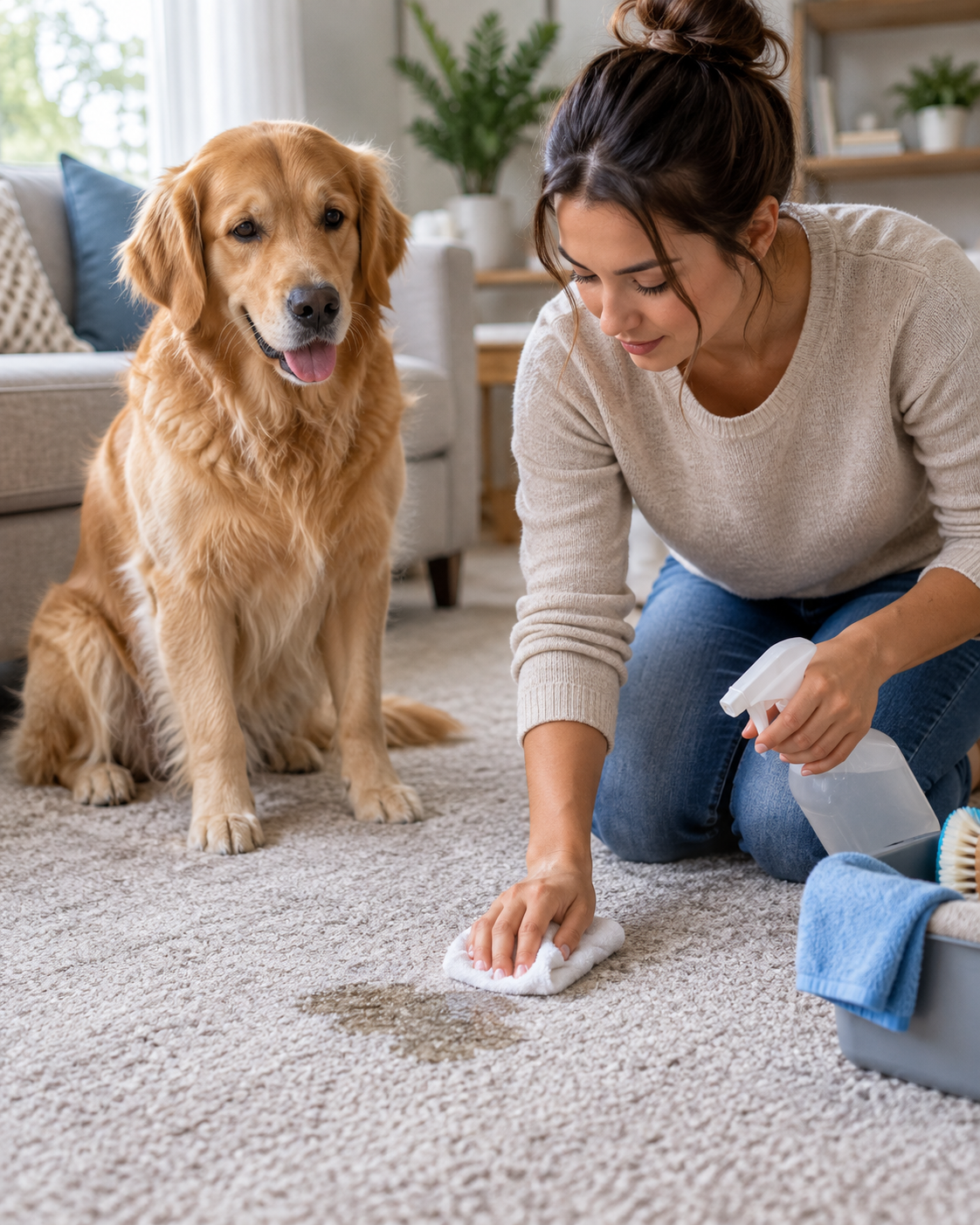
If you share your home with a dog, cat, or any furry friend, chances are you’ve dealt with a stain or two on your carpet. Whether it’s a puppy who hasn’t fully learned house training, an older pet with accidents, or just a one-time mess from an upset stomach, pet stains are one of the most common (and frustrating) problems pet owners face.
The good news? Almost every pet stain — and the smell that comes with it — can be completely removed if you use the right method. In this guide, we’ll walk through 7 proven methods that actually work, along with the best products to make the job faster and easier.
Let’s get your carpet looking and smelling fresh again.
Disclosure: This post contains affiliate links. If you purchase a product through one of these links, we may earn a small commission at no extra cost to you. We only recommend products we genuinely believe can help solve pet stain and odor problems.
Why Pet Stains Are So Hard to Remove
Before jumping into solutions, it helps to understand why pet stains are so stubborn in the first place.
Pet urine, in particular, contains uric acid crystals. When urine dries, these crystals bond tightly with carpet fibers and continue releasing odor for months — even years — if not treated properly. This is why regular carpet cleaners or air fresheners often mask the smell temporarily but never fully eliminate it. Ordinary soap and water can’t break down uric acid crystals, which is why the smell often comes back, especially on humid days.
Vomit and fecal stains work differently — they usually contain fats, proteins, and bacteria that sit on top of carpet fibers rather than bonding into them, which is why they’re generally easier to treat if cleaned quickly.
Understanding this difference is the key to choosing the right cleaning method for each type of stain.
Method 1: Act Fast on Fresh Stains
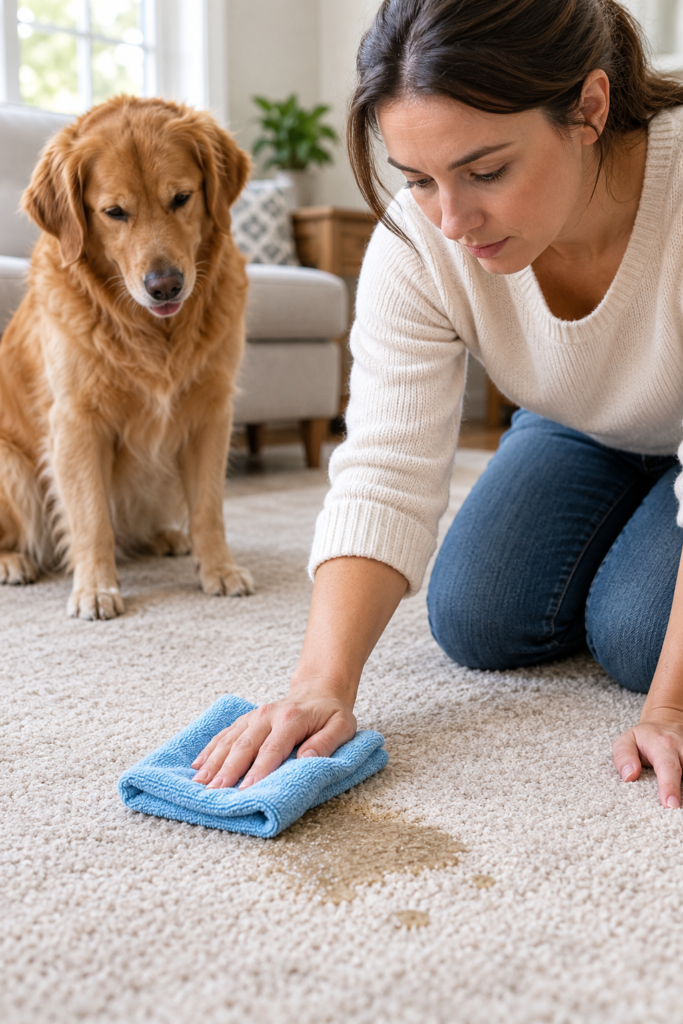
The single most important factor in pet stain removal is speed. The longer a stain sits, the deeper it soaks into the carpet padding and subfloor, making it much harder to remove later.
Steps for fresh stains:
- Blot the stain immediately with paper towels or a clean cloth. Never rub — rubbing pushes the stain deeper into the fibers.
- Press down firmly and hold for 30-60 seconds to absorb as much liquid as possible.
- Repeat with a dry section of the towel until no more liquid transfers.
- Once most of the moisture is absorbed, move on to one of the cleaning methods below.
A good absorbent towel or a dedicated pet mess mat can make this first step much easier and less messy.
[Affiliate Product Spot 1: Absorbent Microfiber Cleaning Cloths – link here]
Method 2: The Vinegar and Baking Soda Method (Best DIY Option)
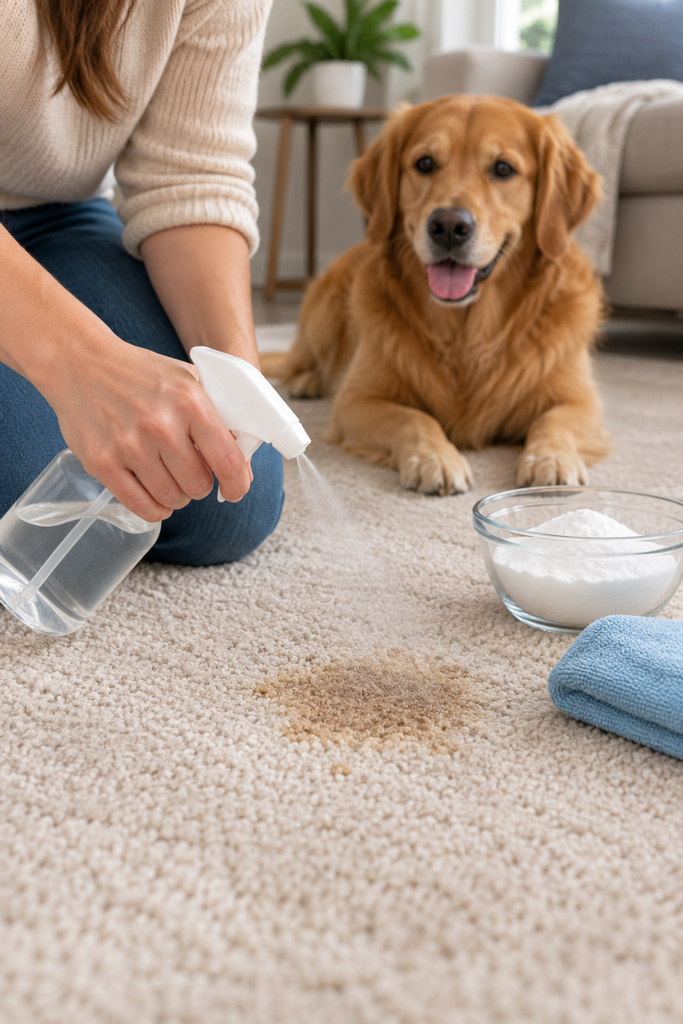
This is one of the most popular home remedies, and for good reason — it’s cheap, natural, and genuinely effective on fresh to moderately old stains.
What you’ll need:
White vinegar
Water
Baking soda
A spray bottle
A clean cloth
Steps:
- Mix equal parts white vinegar and water in a spray bottle.
- Spray the solution generously over the stained area.
- Let it sit for 5-10 minutes to break down the odor-causing bacteria.
- Blot with a clean cloth to lift the solution along with the stain.
- Sprinkle baking soda over the damp area and let it sit for a few hours (or overnight for tougher smells).
- Vacuum thoroughly once dry.
Vinegar works because its acidity helps neutralize the alkaline salts left behind by dried urine, while baking soda absorbs remaining moisture and odor.
[Affiliate Product Spot 2: Reusable Spray Bottle Set – link here] [Affiliate Product Spot 3: Baking Soda Bulk Pack – link here]
Method 3: Hydrogen Peroxide Solution (For Tougher Stains)
If vinegar alone isn’t cutting it, hydrogen peroxide is a step up in cleaning power — but it should be used carefully, especially on colored or dark carpets, since it can lighten fabric.
Steps:
- Mix a few drops of dish soap with 3% hydrogen peroxide in a spray bottle.
- Test on a hidden corner of the carpet first to check for discoloration.
- Spray directly onto the stain and let sit for 5 minutes.
- Blot with a clean towel until the stain lifts.
- Rinse the area with a damp cloth and blot dry.
This method works particularly well on older, set-in stains that regular cleaners struggle with.
Method 4: Enzyme-Based Cleaners (Most Effective for Odor)
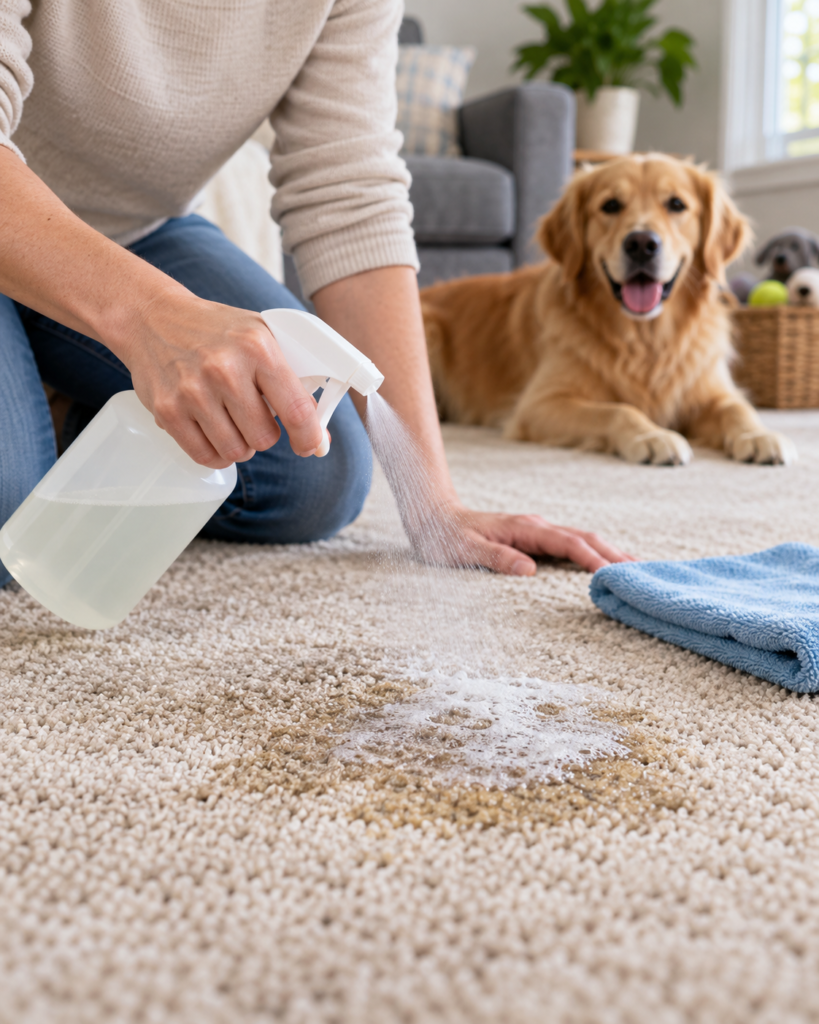
If there’s one product category that professional pet groomers and vets consistently recommend, it’s enzyme-based cleaners. Unlike vinegar or soap, enzyme cleaners contain natural bacteria cultures that literally digest the organic matter causing the stain and smell — including uric acid crystals that other methods can’t fully break down.
This is the single most effective solution for eliminating pet odor permanently, not just masking it.
How to use:
- Saturate the stained area generously — enzyme cleaners need to reach the same depth the urine soaked to in order to work properly.
- Let it sit uncovered for the time recommended on the product label (usually several hours or overnight).
- Blot dry with a clean towel.
- Avoid steam cleaning immediately after, as heat can set any remaining residue.
[Affiliate Product Spot 4: Enzyme-Based Pet Stain & Odor Remover – link here] [Affiliate Product Spot 5: Enzyme Cleaner (Large Bottle, Multi-Pet Households) – link here]
Method 5: Dish Soap and Warm Water (For Vomit and Fecal Stains)
For stains that sit mostly on the surface — like vomit, drool, or feces — a simple dish soap solution is often enough.
Steps:
- Mix a teaspoon of dish soap with two cups of warm water.
- Apply the solution to the stain with a soft cloth.
- Blot gently, working from the outside of the stain inward to prevent spreading.
- Rinse with plain water and blot dry.
- Repeat if any residue remains.
This method is gentle on carpet fibers and safe for most fabric types, including upholstery.
Method 6: Deep Cleaning with a Carpet or Upholstery Cleaner Machine
For larger stains, multiple accidents in the same spot, or whole-room odor problems, a dedicated carpet cleaning machine can reach deeper into carpet fibers and padding than manual spot cleaning.
Tips for best results:
Use a pet-specific carpet cleaning solution formulated to remove both stains and odor, not just surface dirt.
Go over problem areas slowly to allow the machine to extract as much moisture as possible.
Avoid over-wetting the carpet, as excess moisture can lead to mold growth in the padding underneath.
A portable carpet and upholstery cleaner is a worthwhile investment for households with multiple pets or frequent accidents.
[Affiliate Product Spot 6: Portable Carpet & Upholstery Cleaner Machine – link here] [Affiliate Product Spot 7: Pet-Formula Carpet Cleaning Solution – link here]
Method 7: UV Black Light for Finding Hidden Stains
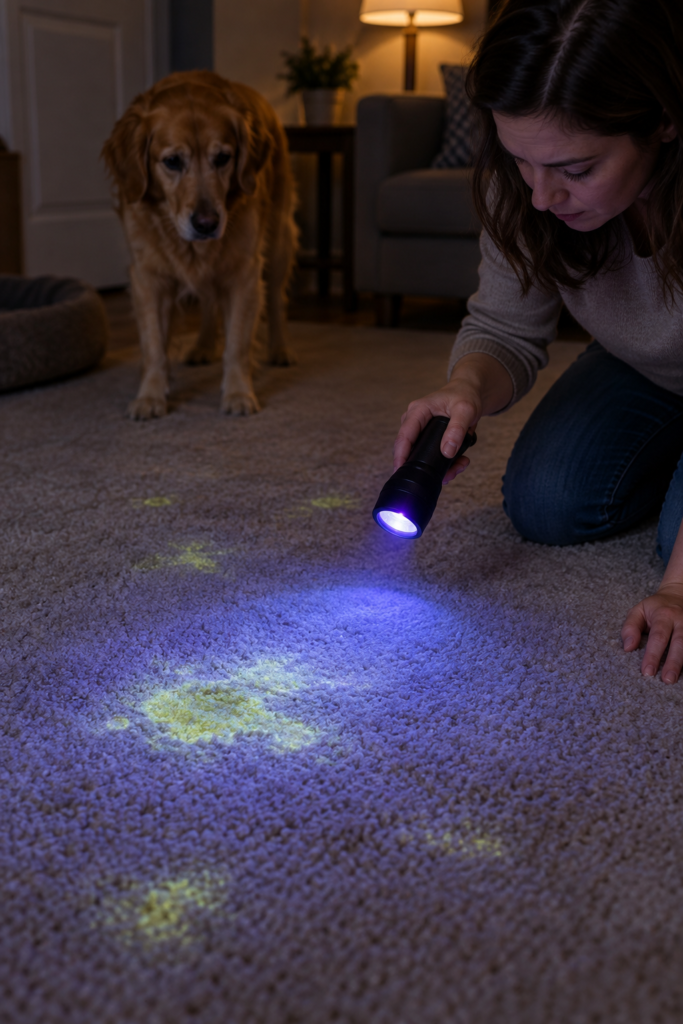
Here’s a method most pet owners don’t know about: old urine stains often aren’t visible to the naked eye once they dry, but they still smell — especially when it’s humid. A UV black light flashlight reveals dried urine stains that would otherwise go untreated.
How to use:
- Turn off the lights and close curtains to darken the room as much as possible.
- Shine the UV light across the carpet at a low angle.
- Old urine stains will glow yellow-green under the light.
- Mark the spots with masking tape and treat each one using the enzyme cleaner method above.
This step is especially useful when moving into a new home or dealing with a persistent smell you can’t seem to locate.
[Affiliate Product Spot 8: UV Black Light Flashlight for Pet Stains – link here]
Removing Pet Odor for Good (Not Just Masking It)
A common mistake is relying on air fresheners, scented sprays, or carpet powders to cover up pet odor. These products only mask the smell temporarily and do nothing to remove the source. For long-term results, always treat the actual stain with an enzyme-based cleaner rather than just spraying fragrance over it.
If odor persists even after cleaning, the padding beneath the carpet may be affected. In severe cases, cutting out and replacing a small section of padding may be necessary, since urine can soak all the way through in heavily affected areas.
Mistakes to Avoid When Cleaning Pet Stains
Using ammonia-based cleaners: Ammonia smells similar to urine to pets, which can actually encourage them to mark the same spot again.
Rubbing instead of blotting: Rubbing spreads the stain and pushes it deeper into carpet fibers.
Using hot water or steam right away: Heat can permanently set protein-based stains, making them much harder to remove later.
Skipping the “test spot” step: Always test any cleaning solution on a hidden area first to avoid discoloration.
Not treating deep enough: Surface cleaning alone often leaves the source of the smell in the padding below.
Frequently Asked Questions
How do you get old pet stains out of carpet? Old stains usually require an enzyme-based cleaner since the uric acid crystals have already bonded with the carpet fibers. Saturate the area generously, let it sit for several hours, then blot dry. A UV light can help you locate stains that aren’t visible.
Does vinegar really remove pet stains? Yes, vinegar is effective for fresh to moderately old stains because its acidity helps break down odor-causing bacteria. However, for deeply set or older stains, an enzyme cleaner is usually more effective.
Why does my carpet still smell after cleaning? This usually means the stain has soaked into the carpet padding, not just the surface fibers. Regular cleaners often can’t reach that deep. An enzyme-based cleaner applied generously, combined with proper blotting, typically resolves this.
Is it safe to use hydrogen peroxide on all carpets? Not always. Hydrogen peroxide can lighten some fabrics and carpet colors, so it’s important to test on a hidden spot first before applying it to the visible stain.
How often should I deep clean my carpet if I have pets? For most pet owners, a deep clean every 3-6 months helps maintain a fresh, odor-free home, in addition to spot-treating accidents as they happen.
Final Thoughts
Pet stains and odors don’t have to be a permanent part of living with animals. With the right combination of quick action, the correct cleaning method for each stain type, and the right products on hand, you can keep your carpets looking and smelling fresh no matter how many paws walk through your home.
Keep a few key supplies stocked — enzyme cleaner, a spray bottle, baking soda, and a UV flashlight — and you’ll be prepared to handle almost any mess your pet leaves behind, quickly and effectively.