
Affiliate disclosure: This article contains affiliate links. We may earn a small commission at no additional cost to you. As an Amazon Associate, PawPerfectGuide earns from qualifying purchases.
Introduction
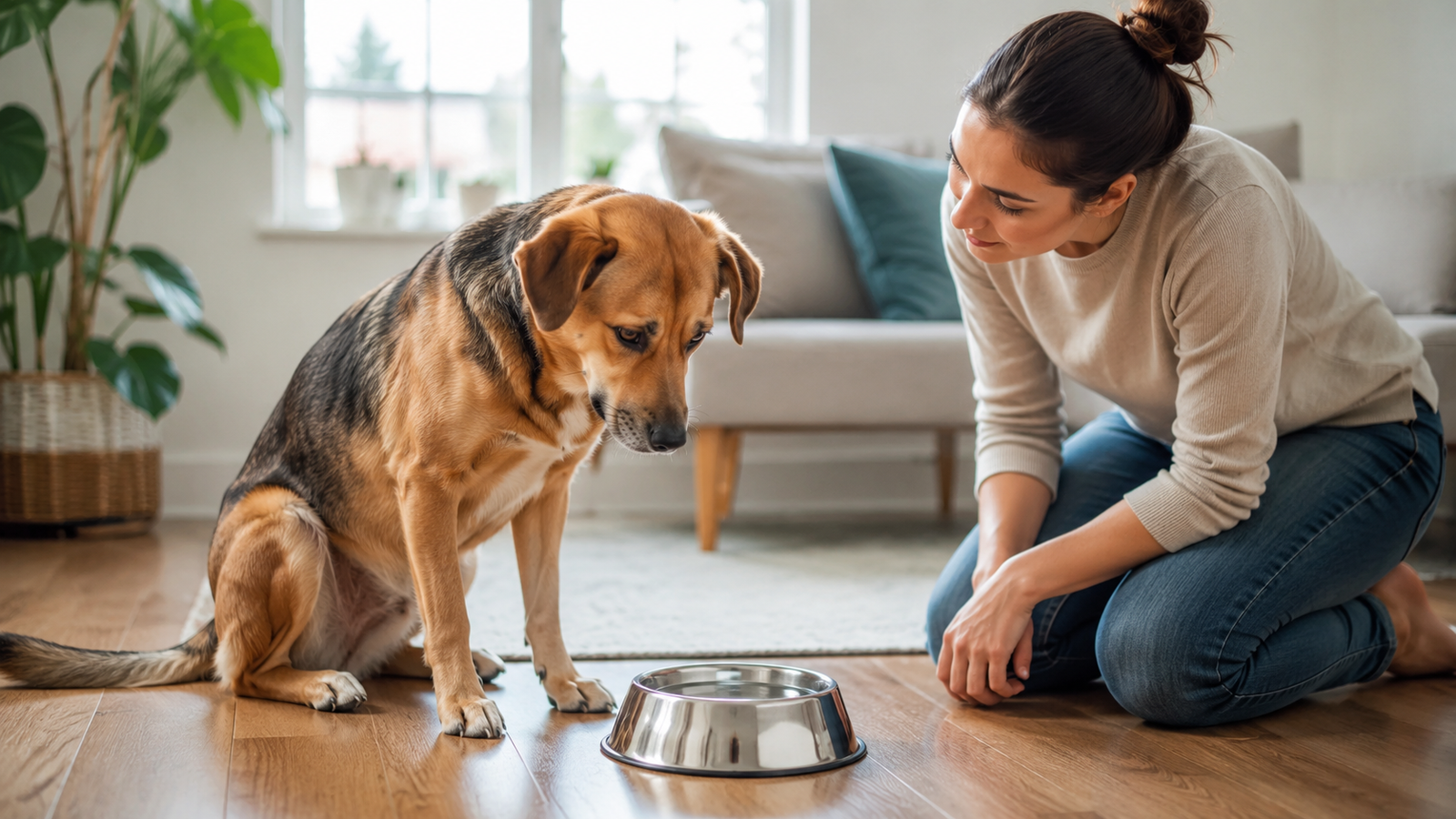
Dogs can’t tell us when they’re thirsty. They can’t say, “I feel dizzy” or “My mouth is dry.” Instead, they rely on us — their owners — to notice the small changes in their body and behavior that signal something is wrong. One of the most common, yet often overlooked, health issues in dogs is dehydration.
Dehydration in dogs can happen faster than most people realize, especially during hot weather, after vomiting or diarrhea, during travel, or simply because a water bowl was left empty for too long. Left untreated, dehydration can lead to serious complications such as kidney damage, low blood pressure, and even organ failure.
The good news? Dehydration is usually easy to spot — and even easier to prevent — once you know what to look for. In this guide, we’ll walk through the most reliable warning signs, simple at-home tests, causes, prevention tips, and product recommendations to help keep your furry friend healthy and hydrated, wherever in the world you live.
Why Hydration Matters So Much for Dogs
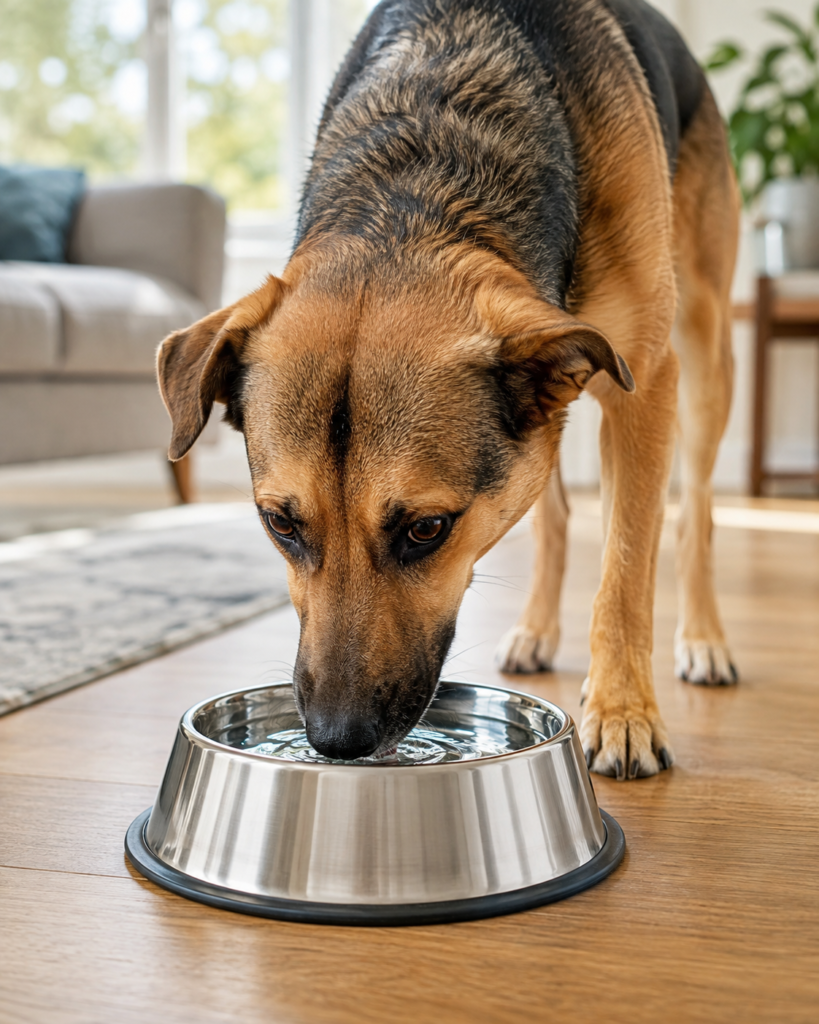
Water makes up roughly 60% of an adult dog’s body weight. It plays a role in almost every bodily function, including:
- Regulating body temperature
- Cushioning joints and organs
- Aiding digestion and nutrient absorption
- Flushing out toxins through the kidneys
- Keeping blood volume and circulation stable
Because water is involved in so many essential processes, even a small drop in hydration levels can affect your dog’s energy, mood, and organ function. A loss of just 5% of body water can cause noticeable symptoms, and a loss of 10-15% can become life-threatening.
Common Causes of Dehydration in Dogs
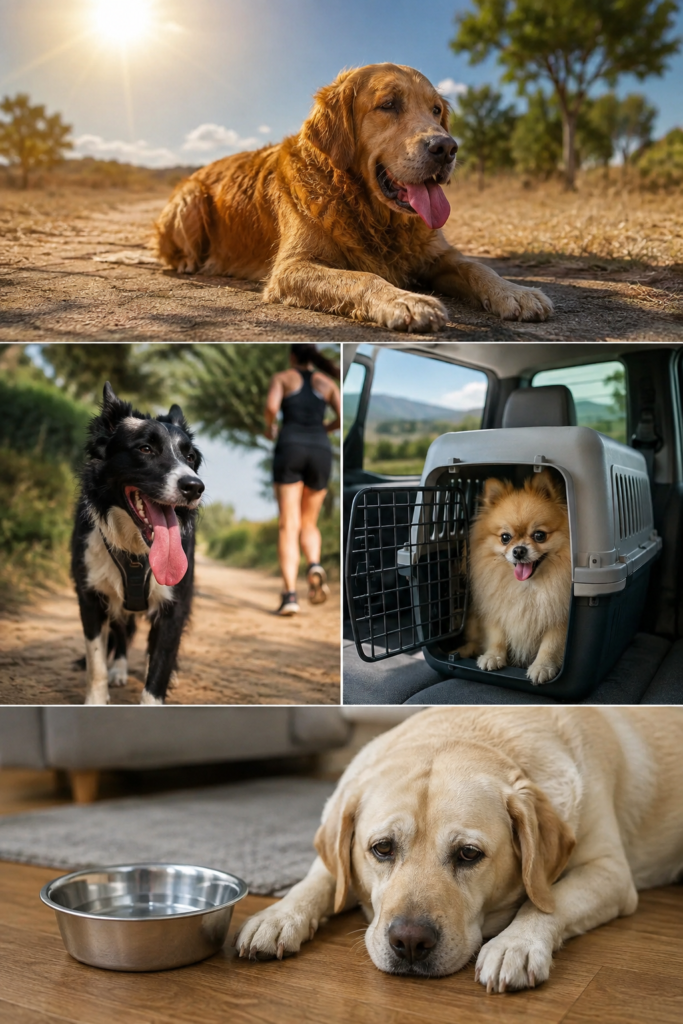
Understanding why dehydration happens can help you prevent it before it starts. Some of the most common causes include:
- Hot or humid weather – Dogs cool down primarily through panting, which uses up water quickly.
- Vomiting or diarrhea – Illness causes fluid loss much faster than normal.
- Reduced water intake – Picky drinkers, senior dogs, or dogs recovering from surgery may not drink enough.
- Excessive exercise or play – Active dogs lose fluids through panting and exertion.
- Fever or infection – Illness increases the body’s water demands.
- Travel – Long car rides or flights can disrupt a dog’s normal drinking habits.
- Kidney disease or diabetes – Certain medical conditions increase urination and fluid loss.
- Nursing mothers – Lactating dogs need significantly more water than usual.
If your dog falls into any of these categories, it’s worth paying closer attention to their hydration levels.
10 Warning Signs Your Dog May Be Dehydrated
Here are the most reliable signs to watch for, ranked from mild to severe.
1. Loss of Skin Elasticity (The Skin Tent Test)
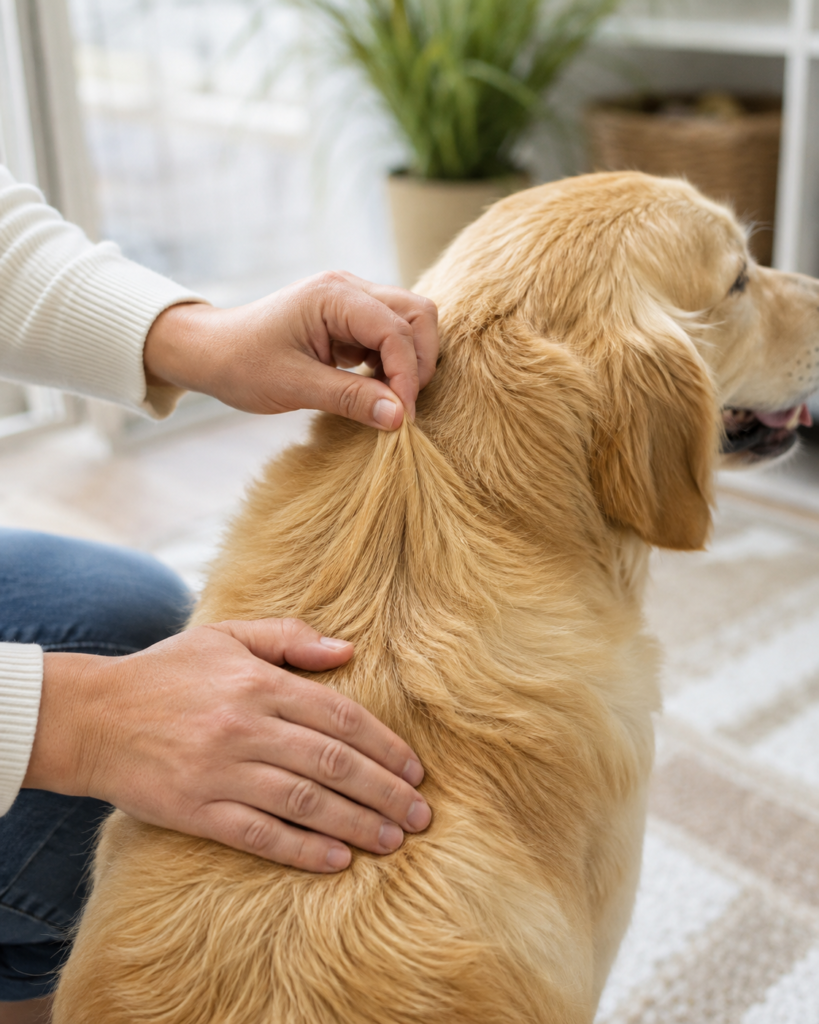
This is one of the easiest tests you can do at home. Gently pull up the skin between your dog’s shoulder blades and let go.
- Hydrated dog: Skin snaps back immediately.
- Dehydrated dog: Skin stays “tented” for a second or two before slowly returning to place.
This test works best on dogs with average body condition, since very thin or overweight dogs may give less accurate results.
2. Dry or Sticky Gums
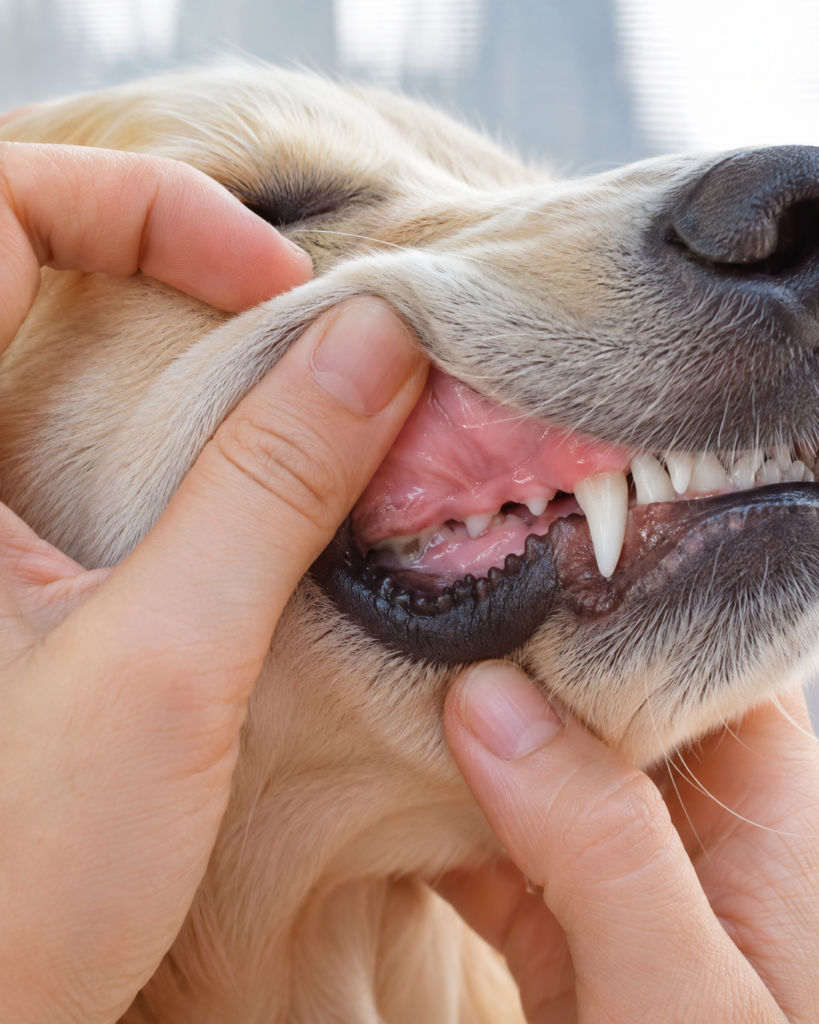
Healthy gums should be moist and slick to the touch. In a dehydrated dog, gums often feel dry, tacky, or sticky. You can check by gently touching your dog’s gums with a clean finger.
3. Thick, Ropey Saliva
Instead of normal, thin saliva, a dehydrated dog’s saliva may become thick and stringy.
4. Sunken Eyes
Dehydration can cause a dog’s eyes to appear slightly sunken or dull, sometimes with reduced brightness.
5. Lethargy and Weakness
A dehydrated dog often seems tired, less interested in play, and generally low on energy. This is one of the earliest and most common signs.
6. Loss of Appetite
Dogs that are dehydrated frequently lose interest in food, even meals they normally love.
7. Excessive Panting
While panting is normal for cooling down, unusually heavy or prolonged panting — especially without physical exertion — can indicate the body is struggling to regulate fluids.
8. Dark, Concentrated Urine or Reduced Urination
Watch for urine that is darker than usual or a noticeable drop in how often your dog urinates.
9. Dry Nose
While a dry nose alone isn’t a reliable indicator (many healthy dogs have dry noses), combined with other symptoms, it can support a dehydration diagnosis.
10. Rapid Heart Rate or Sunken Abdomen (Severe Cases)
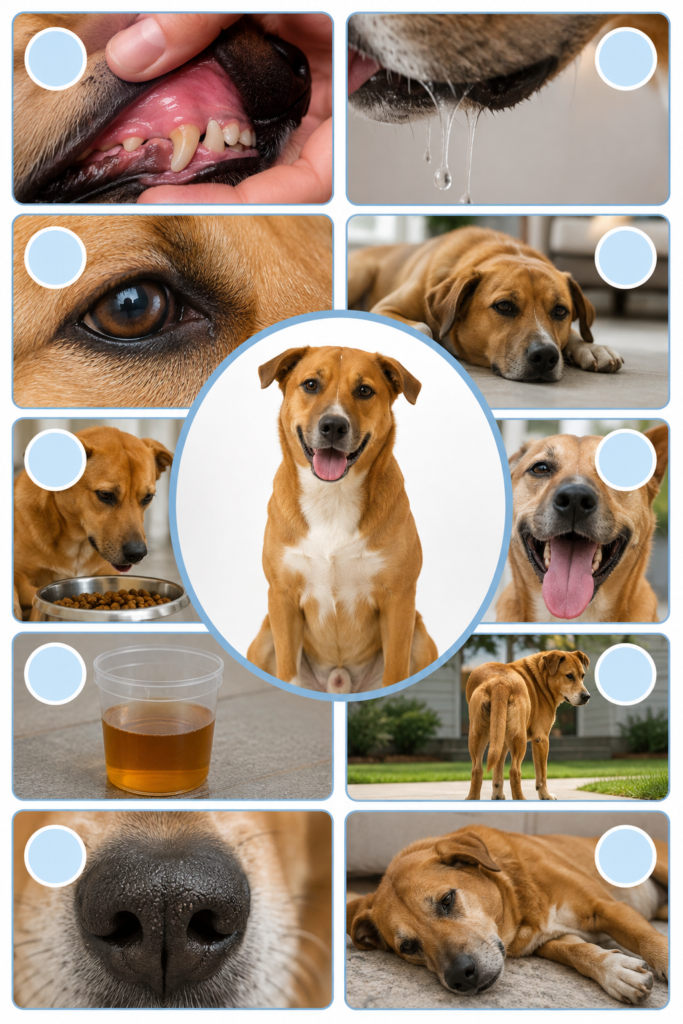
In more advanced dehydration, you may notice a faster-than-normal heartbeat, cool extremities, or a visibly sunken stomach area. This requires immediate veterinary attention.
How to Perform a Simple At-Home Hydration Check
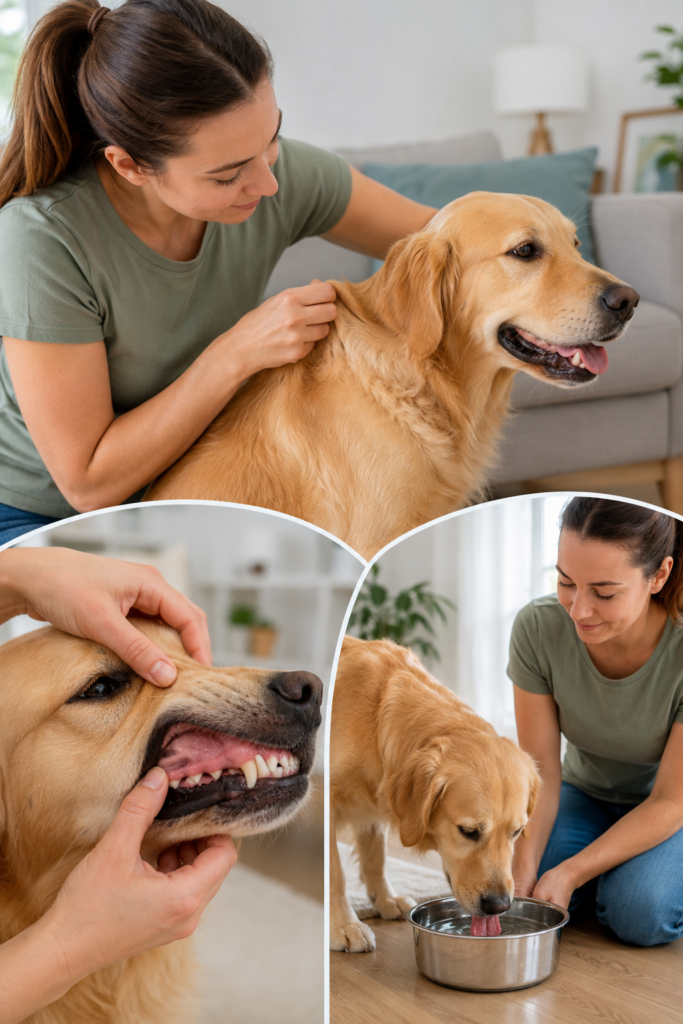
If you suspect your dog might be dehydrated, try this 3-step check:
- Skin tent test – Gently lift the skin at the back of the neck and observe how quickly it returns to normal.
- Gum check – Press a finger gently onto the gums; they should turn white briefly, then quickly return to pink (capillary refill time under 2 seconds is normal).
- Behavior observation – Note energy levels, appetite, and interest in water over the next few hours.
If two or more of these checks suggest dehydration, it’s time to encourage fluid intake and monitor closely — or contact your veterinarian if symptoms are moderate to severe.
When to See a Vet Immediately
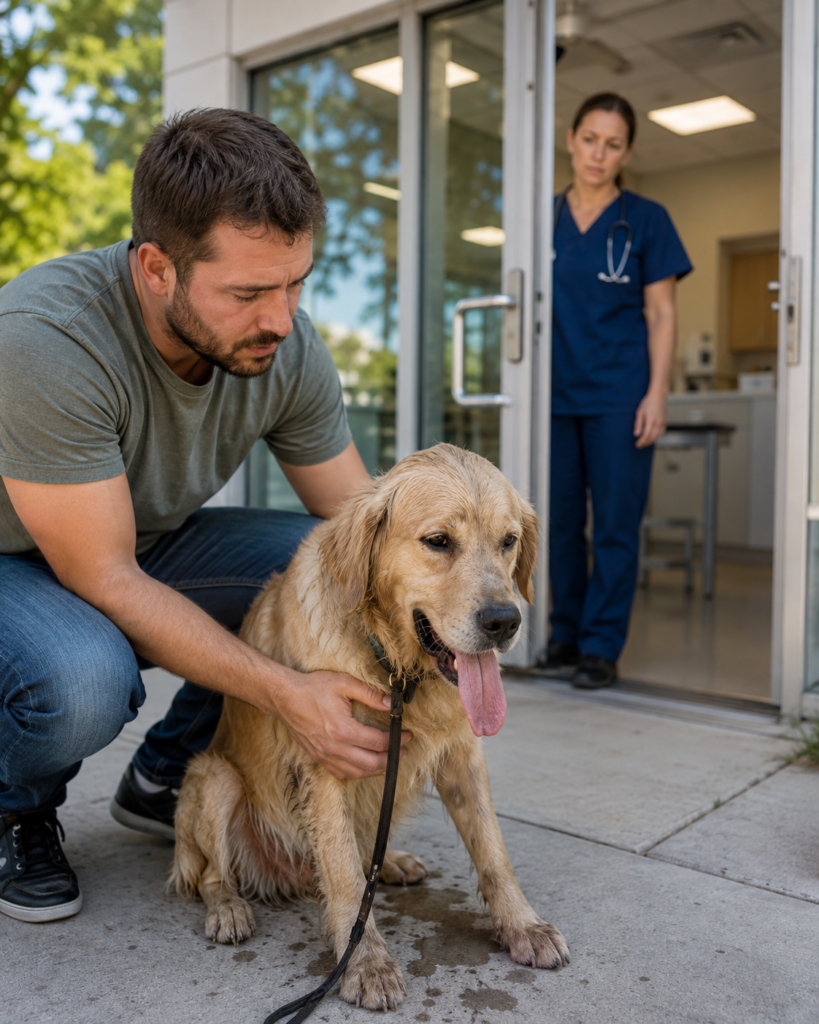
While mild dehydration can often be managed at home with encouragement to drink water, some symptoms require urgent veterinary care, including:
- Persistent vomiting or diarrhea lasting more than 12–24 hours
- Visible weakness or collapse
- Sunken eyes combined with lethargy
- Refusal to drink water for over 24 hours
- Signs of heatstroke (heavy panting, drooling, red gums, disorientation)
- Blood in vomit or stool
Severe dehydration can escalate quickly, particularly in puppies, senior dogs, and small breeds, who have less fluid reserve in their bodies. When in doubt, always consult a licensed veterinarian rather than attempting to treat serious symptoms at home.
This article is for general informational purposes only and is not a substitute for professional veterinary advice, diagnosis, or treatment.
How to Prevent Dehydration in Dogs
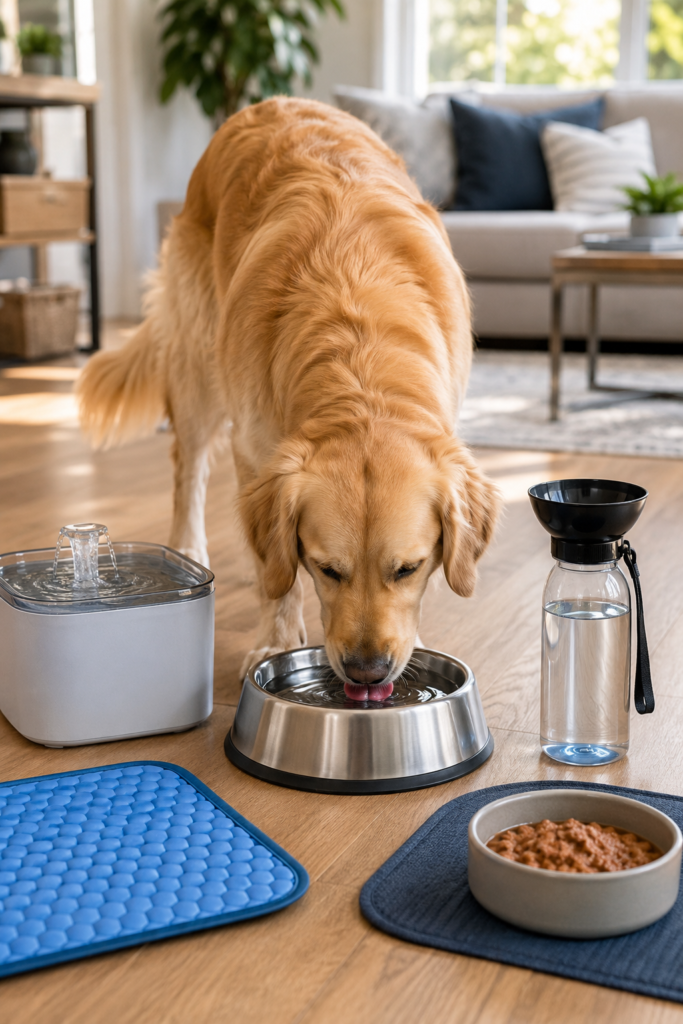
Prevention is always easier than treatment. Here are practical strategies — along with some highly-rated products that many dog owners find useful for keeping their pets hydrated.
1. Always Provide Fresh, Clean Water
This sounds obvious, but water bowls can collect dust, hair, and bacteria throughout the day. Consider a self-cleaning or filtered water fountain that encourages dogs to drink more by keeping water fresh and flowing.
🔗 Recommended Product: https://link.amazon/B01KaVAMf
2. Use a Portable Water Bottle for Walks and Travel
Dogs lose fluids quickly during walks, hikes, or road trips. A leak-proof travel bottle designed specifically for pets makes it easy to offer water on the go.
🔗 Recommended Product: https://link.amazon/B081KwW3f
3. Add Pet-Safe Electrolyte Supplements
Just like humans, dogs can benefit from electrolyte replacement after vomiting, diarrhea, or intense exercise. Look for vet-approved, dog-specific formulas — never give human sports drinks, which often contain too much sugar or sodium.
🔗 Recommended Product: https://link.amazon/B0dBbBe96
4. Feed Wet or Moisture-Rich Food
Wet dog food contains significantly more water than dry kibble and can help boost daily fluid intake, especially for picky drinkers.
🔗 Recommended Product: https://link.amazon/B0847m8aC
5. Invest in a No-Spill or Slow-Feed Water Bowl
For dogs that drink quickly or knock over their bowls, a spill-proof design ensures water stays available throughout the day.
🔗 Recommended Product: https://link.amazon/B039qZxj6
6. Use Cooling Mats or Vests in Hot Climates
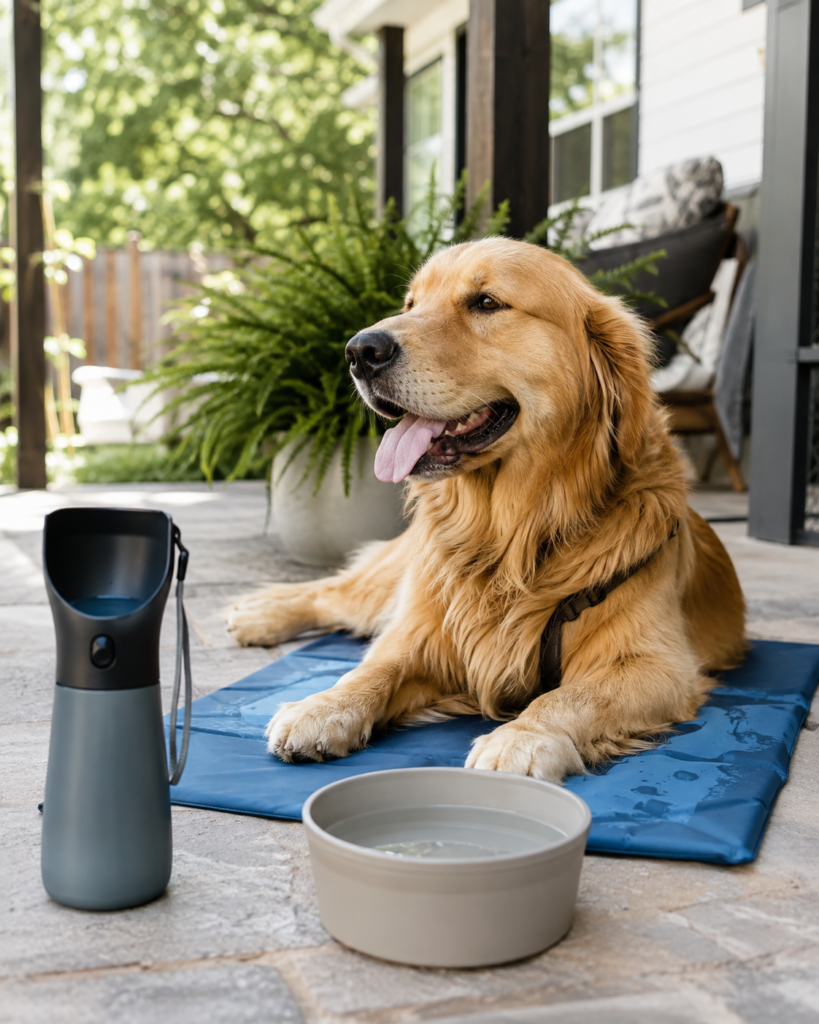
Reducing heat exposure helps prevent excessive panting and fluid loss, especially for breeds prone to overheating.
🔗 Recommended Product: https://link.amazon/B046x5Xp6
7. Keep a Pet First-Aid Kit at Home
A basic first-aid kit with rehydration essentials can help you respond quickly if your dog shows early signs of dehydration or heat stress.
🔗 Recommended Product: https://link.amazon/B08QF5RIr
8. Monitor Health with a Digital Pet Thermometer
Since fever often accompanies dehydration, having a reliable digital thermometer on hand allows you to catch problems early.
🔗 Recommended Product: https://link.amazon/B07wnj9oG
9. Consider Pet Insurance for Emergency Situations
Severe dehydration sometimes requires IV fluids or hospitalization. Pet insurance can help offset unexpected veterinary costs.
🔗 Recommended Product: https://link.amazon/B0ivz48cR
(Replace each placeholder link above with your actual affiliate URLs before publishing.)
Special Considerations for Different Dogs
Puppies
Puppies have smaller fluid reserves and can become dehydrated quickly, especially if experiencing diarrhea or reduced nursing. Watch them closely and consult a vet early if symptoms appear.
Senior Dogs
Older dogs may have reduced thirst drive or underlying kidney issues that make them more prone to dehydration. Encourage regular water breaks throughout the day.
Brachycephalic Breeds (Bulldogs, Pugs, etc.)
Flat-faced breeds struggle more with panting-based cooling, making them more susceptible to dehydration and heat-related illness.
Working or Sporting Dogs
Highly active breeds need more frequent water breaks, especially during exercise, agility training, or hunting.
Home Remedies for Mild Dehydration
If your dog shows only mild symptoms (slight lethargy, mildly dry gums, normal behavior otherwise), you can try:
- Offering small amounts of water frequently rather than a large bowl at once
- Adding a splash of low-sodium chicken broth to encourage drinking
- Moving your dog to a cool, shaded area
- Monitoring closely for improvement within a few hours
If symptoms don’t improve within a few hours, or worsen, seek veterinary care promptly.
Frequently Asked Questions (FAQs)
Q1: How much water does a dog need per day? As a general guideline, dogs need about 1 ounce (30ml) of water per pound of body weight per day, though this varies with activity level, climate, and diet.
Q2: Can dehydration in dogs be fatal? Yes. Severe, untreated dehydration can lead to organ failure and death. Early recognition and prompt treatment are key.
Q3: How quickly can a dog become dehydrated? In hot weather or during illness, dogs can become dangerously dehydrated within just a few hours, especially puppies and small breeds.
Q4: Is the skin tent test always accurate? It’s a helpful indicator but not 100% reliable, particularly in overweight or very thin dogs. Combine it with other signs for a clearer picture.
Q5: Can I give my dog human electrolyte drinks like Gatorade? It’s not recommended. Human sports drinks contain sugar and sodium levels unsuitable for dogs. Use pet-specific electrolyte products instead.
Q6: What color should a healthy dog’s urine be? Pale yellow is normal. Dark yellow or amber urine can indicate dehydration.
Final Thoughts
Recognizing the early warning signs of dehydration can make all the difference in your dog’s health and comfort. From simple checks like the skin tent test to keeping fresh water and electrolyte support on hand, small daily habits go a long way toward preventing this common but serious issue.
If you ever notice multiple symptoms together — lethargy, dry gums, sunken eyes, and loss of appetite — don’t wait. Contact your veterinarian promptly. When it comes to your dog’s health, it’s always better to be cautious and proactive.
By staying observant and prepared, you can help your furry companion stay happy, active, and well-hydrated all year round — no matter where in the world you call home.
Disclaimer: This article is intended for general informational and educational purposes only and does not constitute veterinary advice. Always consult a licensed veterinarian for diagnosis and treatment of any health condition affecting your pet.