
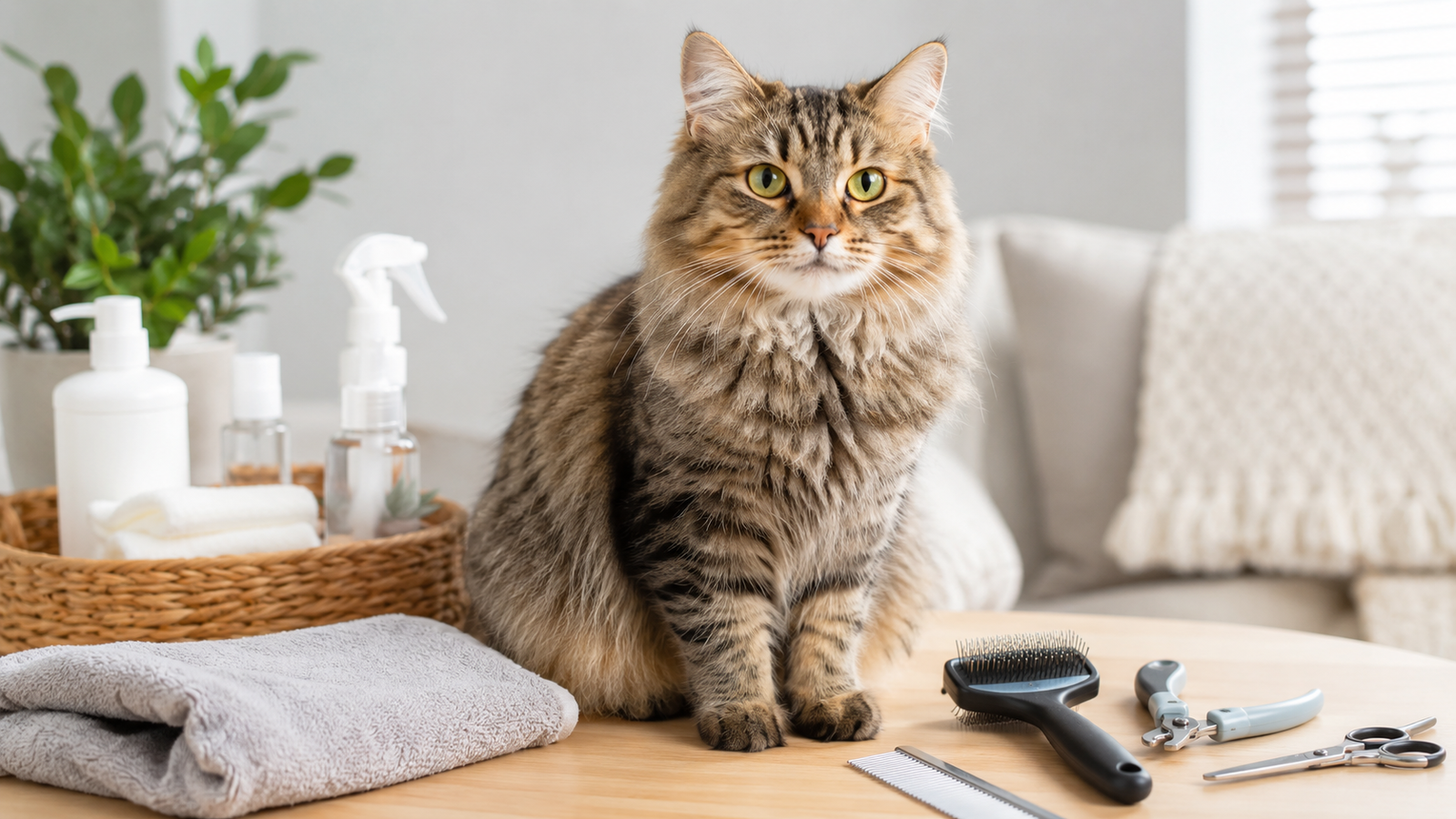
Introduction: Why a Grooming Schedule Matters for Every Cat Owner
If you own a cat, you already know they spend hours licking themselves clean. So why does your cat still need help from you? The truth is, self-grooming only covers the basics. Cats can’t brush their own teeth, trim their own nails, or check their own ears for infections. That’s where you come in.
A consistent cat grooming schedule does more than keep your home free of fur balls. It helps you catch health problems early, reduces shedding, prevents painful matting, and strengthens the bond between you and your cat. Whether you have a short-haired tabby or a fluffy Persian, every cat benefits from a simple daily, weekly, and monthly grooming routine.
In this guide, you’ll get a complete, easy-to-follow checklist that works for cats of any breed, age, or coat type — anywhere in the world. We’ll also point you toward some grooming tools that make the whole process faster and stress-free for both you and your cat.
Why Grooming Is About More Than Just Looks
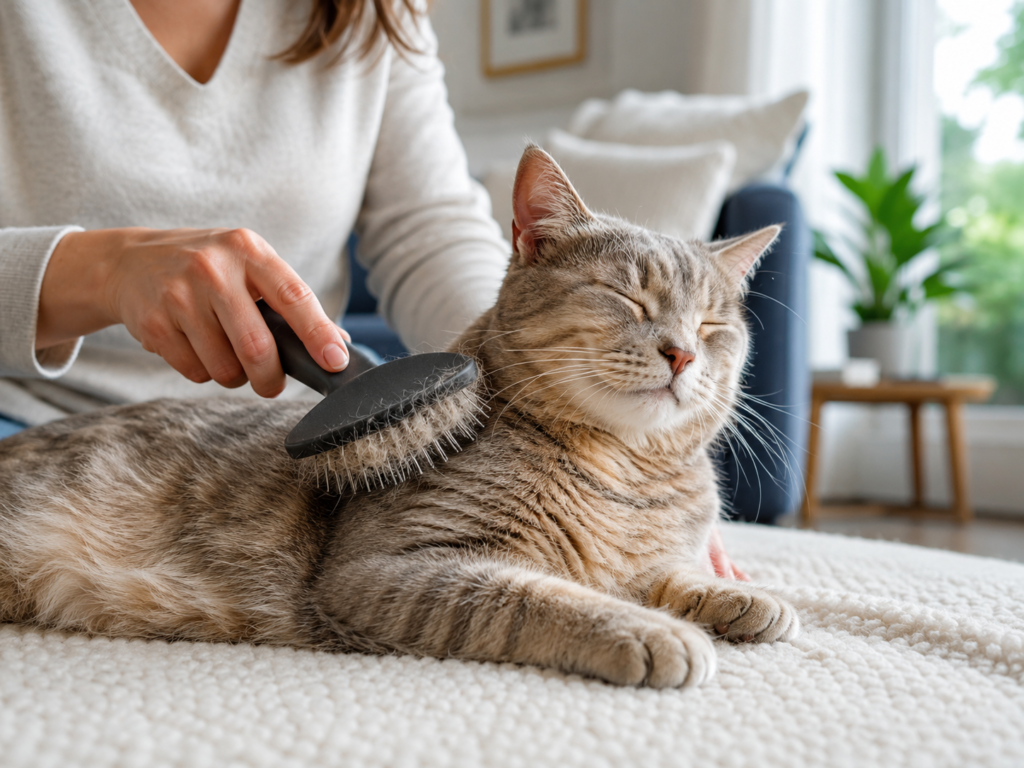
Before we dive into the schedule, let’s quickly cover why grooming matters so much:
- Reduces hairballs – Regular brushing removes loose fur before your cat swallows it.
- Prevents matting and skin irritation – Especially important for long-haired breeds.
- Improves circulation – Brushing stimulates blood flow to the skin.
- Early health detection – You’ll notice lumps, fleas, or skin issues before they become serious.
- Reduces shedding around the house – Less fur on your couch, clothes, and carpet.
- Builds trust – Grooming sessions are a great bonding activity, especially for shy or nervous cats.
Now, let’s break the routine down into daily, weekly, and monthly tasks so it never feels overwhelming.
Daily Cat Grooming Checklist (5–10 Minutes a Day)
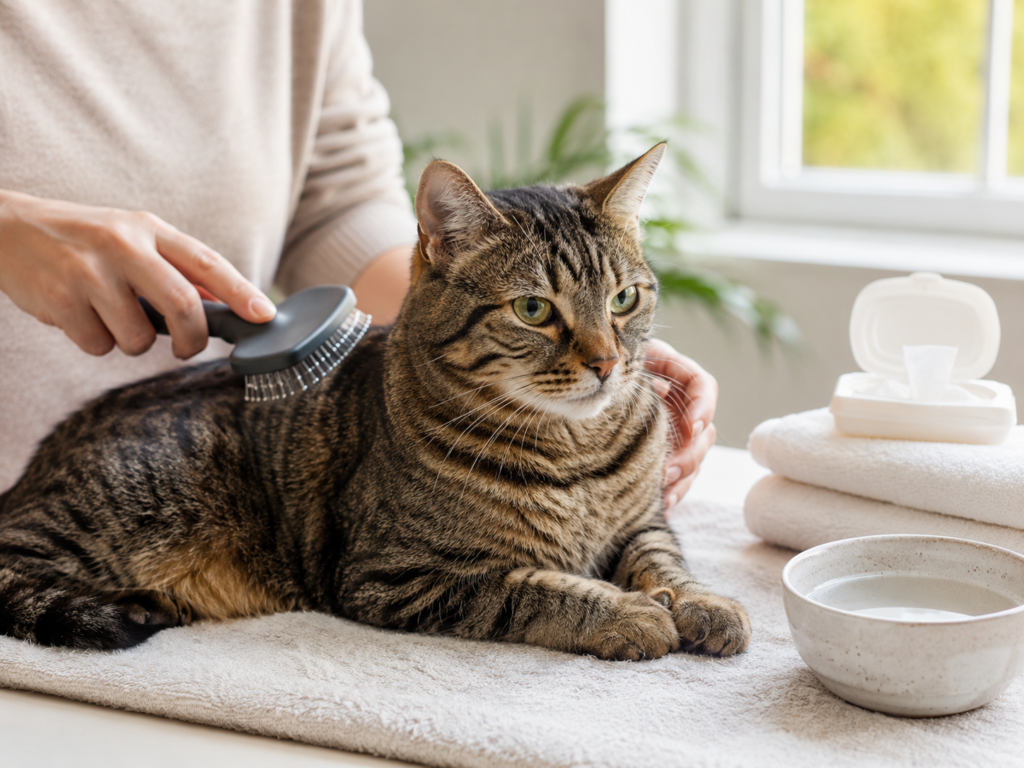
Daily grooming doesn’t need to take long. A short, consistent routine is far more effective than an occasional deep clean.
1. Quick Coat Check and Brush (Short-Haired Cats: Every Other Day is Fine)
For most cats, a quick daily brush removes loose hair and prevents mats before they start. A soft-bristle or rubber grooming brush works well for short-haired cats, while long-haired cats benefit from a slicker brush that reaches the undercoat.
👉 A good starting point is a self-cleaning slicker brush, which pulls loose fur off the brush with the push of a button — a huge time-saver. 🔗 Check price on Amazon – https://link.amazon/B0eWlwxPB
2. Eye Wipe (If Needed)
Some breeds, like Persians and other flat-faced cats, develop tear stains daily. Use a damp, soft cloth or specially made pet eye wipes to gently clean the corners of the eyes.
🔗 View Cat Eye Wipes on Amazon–https://link.amazon/B0f7Kplus
3. Litter Box Paw Check
While not strictly “grooming,” checking your cat’s paws after litter box use helps prevent litter tracking and paw irritation. Wipe paws gently with a pet-safe wipe if you notice buildup.
4. Fresh Water and Diet Check
Hydration and a balanced diet directly affect coat health. A cat that’s dehydrated or eating a poor-quality diet will have a dull, brittle coat no matter how much you brush it. Consider a high-quality, skin-and-coat-support cat food or a fish-oil supplement.
🔗 Explore Omega-3 Skin & Coat Supplements for Cats–https://link.amazon/B0dpk1M13
Weekly Cat Grooming Checklist (20–30 Minutes Once a Week)
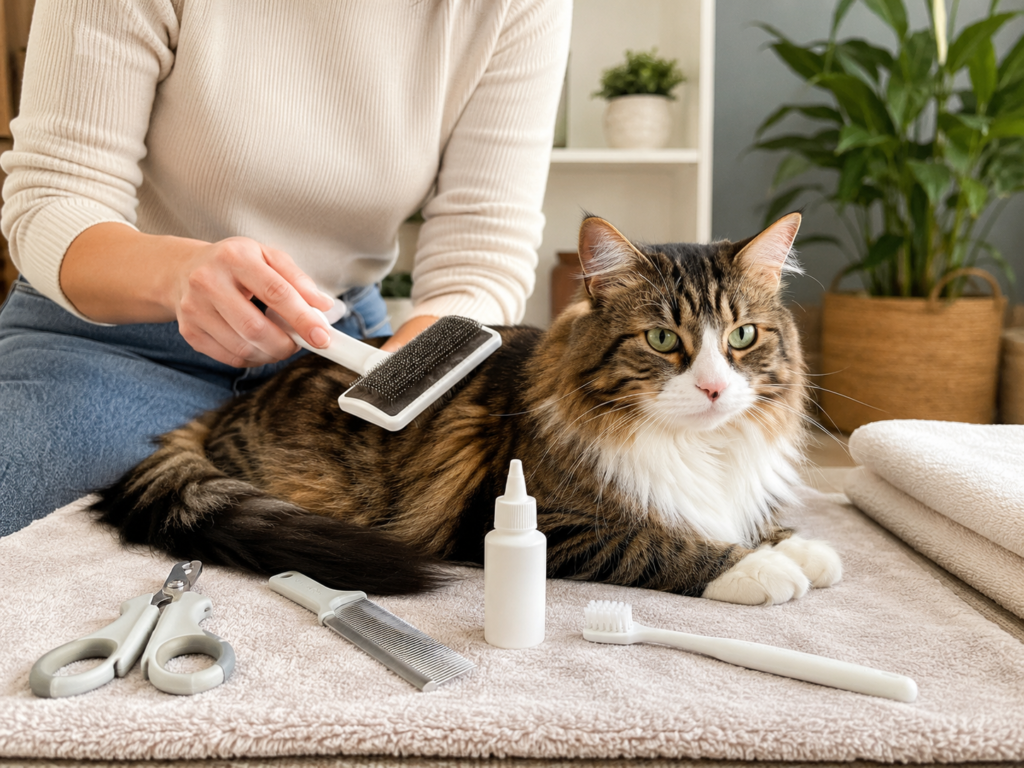
Weekly grooming sessions go a little deeper than the daily quick brush. Set aside a calm, quiet time — many owners find that right after a meal, when cats are relaxed, works best.
1. Deep Brushing Session
Once a week, do a more thorough brushing session, working through the coat in sections. This is especially important during shedding season (spring and fall), when a good deshedding tool can remove pounds of loose undercoat.
🔗 Check Deshedding Tool Reviews on Amazon–https://link.amazon/B01Ii5a17
2. Nail Trim Check
Cats’ nails grow continuously, and overly long nails can curl into the paw pad, causing pain and infection. Check nails weekly and trim every 2–3 weeks as needed using a cat-specific nail clipper.
🔗 Browse Cat Nail Clippers on Amazon–https://link.amazon/B0iFMv4eH
Tip: If your cat is nervous about nail trims, try trimming just one or two nails at a time and rewarding with a treat after each session.
3. Ear Cleaning Check
Look inside your cat’s ears for redness, odor, or excess wax. If needed, use a vet-approved ear cleaning solution and a cotton ball (never a cotton swab deep in the ear canal).
🔗 View Cat Ear Cleaning Solutions–https://link.amazon/B0hqEWwRz
4. Flea and Tick Check
Run a flea comb through your cat’s fur, especially around the neck, tail base, and belly. This is your first line of defense against fleas before they become a bigger infestation.
🔗 Check Flea Combs for Cats–https://link.amazon/B0f8IuYeV
5. Dental Care
Weekly (ideally daily) tooth brushing with a cat-safe enzymatic toothpaste helps prevent tartar buildup and gum disease — one of the most common health issues in adult cats.
🔗 Browse Cat Dental Care Kits-https://link.amazon/B0awREDqN
Monthly Cat Grooming Checklist (Once a Month or As Needed)
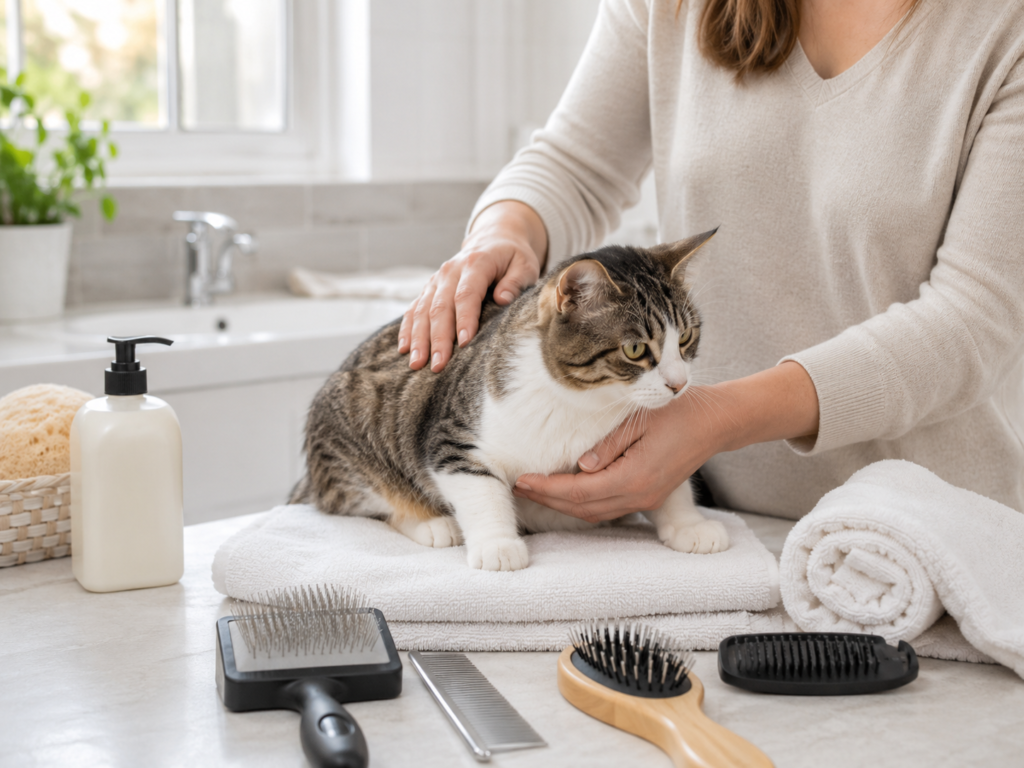
Monthly tasks are a bit more involved but don’t need to happen as often. Think of this as your “deep maintenance” routine.
1. Bath Time (Only If Necessary)
Most cats rarely need baths since they self-groom effectively. However, long-haired breeds, senior cats who can’t groom well, or cats that get into something sticky or dirty may need an occasional bath. Use a gentle, cat-specific shampoo — never human shampoo, which can irritate their skin.
🔗 Shop Gentle Cat Shampoos on Amazon-https://link.amazon/B0a0NjAx6
2. Full-Body Skin and Coat Inspection
Once a month, run your hands over your cat’s entire body, feeling for lumps, bumps, scabs, or unusual sensitivity. This simple habit can help you catch tumors, abscesses, or skin infections early — often before they’re visible.
3. Grooming Tool Deep Clean
Your brushes, combs, and clippers collect hair, oil, and bacteria over time. Once a month, wash and disinfect your grooming tools so they stay effective and hygienic.
4. Weight and Body Condition Check
Run your hands along your cat’s ribs and spine. You should be able to feel the ribs without pressing hard, but they shouldn’t be visibly sharp. Sudden weight gain or loss is often one of the first signs of an underlying health issue and is worth mentioning to your vet.
5. Litter Box and Grooming Area Deep Clean
A clean environment supports good hygiene overall. Deep clean the litter box and wash any grooming mats or towels you use regularly.
🔗 Browse Cat Grooming Mats and Towels–https://link.amazon/B021SWe53
Grooming by Coat Type: What Changes?
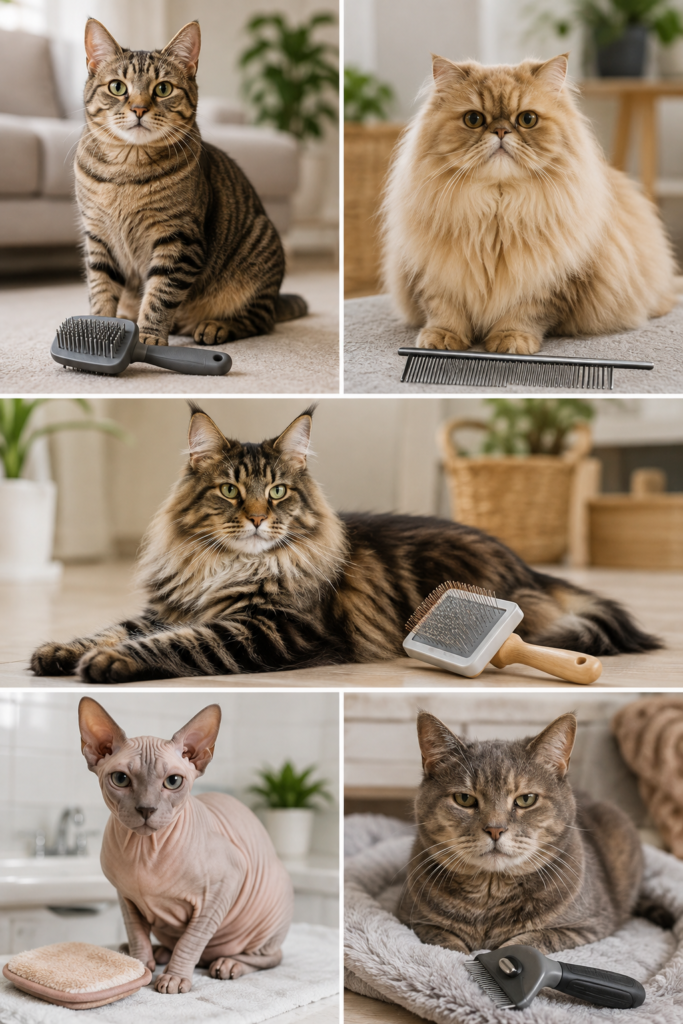
Not every cat needs the exact same routine. Here’s how to adjust based on coat type:
| Coat Type | Brushing Frequency | Extra Notes |
|---|---|---|
| Short-haired (e.g., Domestic Shorthair, Siamese) | 2–3 times a week | Rubber brush works well; less shedding overall |
| Long-haired (e.g., Persian, Maine Coon) | Daily | Prone to matting, especially behind ears and armpits |
| Double-coated (e.g., Norwegian Forest Cat) | 3–4 times a week, daily during shedding season | Undercoat rakes help remove loose fur |
| Hairless (e.g., Sphynx) | Weekly bathing instead of brushing | Skin oils build up without fur to absorb them |
| Senior cats (any coat) | Daily, gentle brushing | Arthritis can limit self-grooming ability |
Common Grooming Mistakes to Avoid
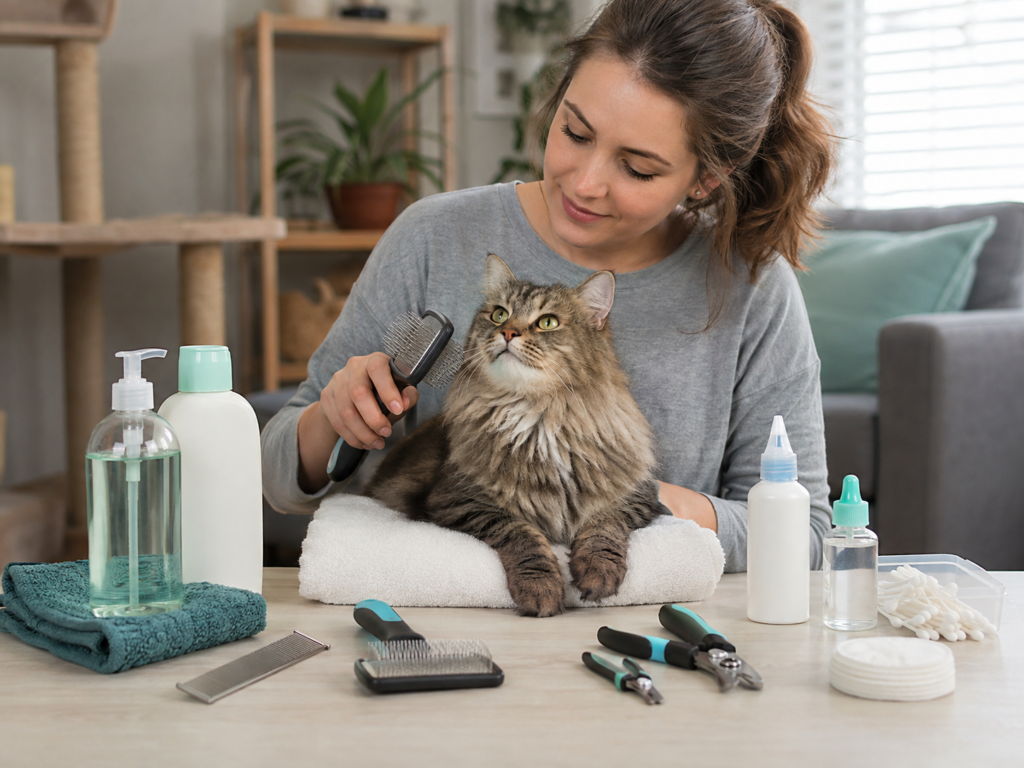
Even well-meaning owners make these mistakes. Avoid them for a smoother grooming experience:
- Using human shampoo or wipes – Cat skin has a different pH balance and can react badly to human products.
- Cutting nails too short – This can hit the quick, causing pain and bleeding. Trim just the sharp tip.
- Skipping ear and dental care – These are often overlooked but crucial to long-term health.
- Forcing a stressed cat into a long session – Short, positive sessions build trust; long forced ones create fear.
- Ignoring lumps or skin changes – Always follow up with a vet if something feels unusual.
- Brushing too hard on mats – Instead, gently work through mats with a detangling spray or ask a groomer for help with severe matting.
🔗 Check Cat Detangling Spray Options-https://link.amazon/B01uNGw9s
How to Make Grooming Stress-Free for Your Cat
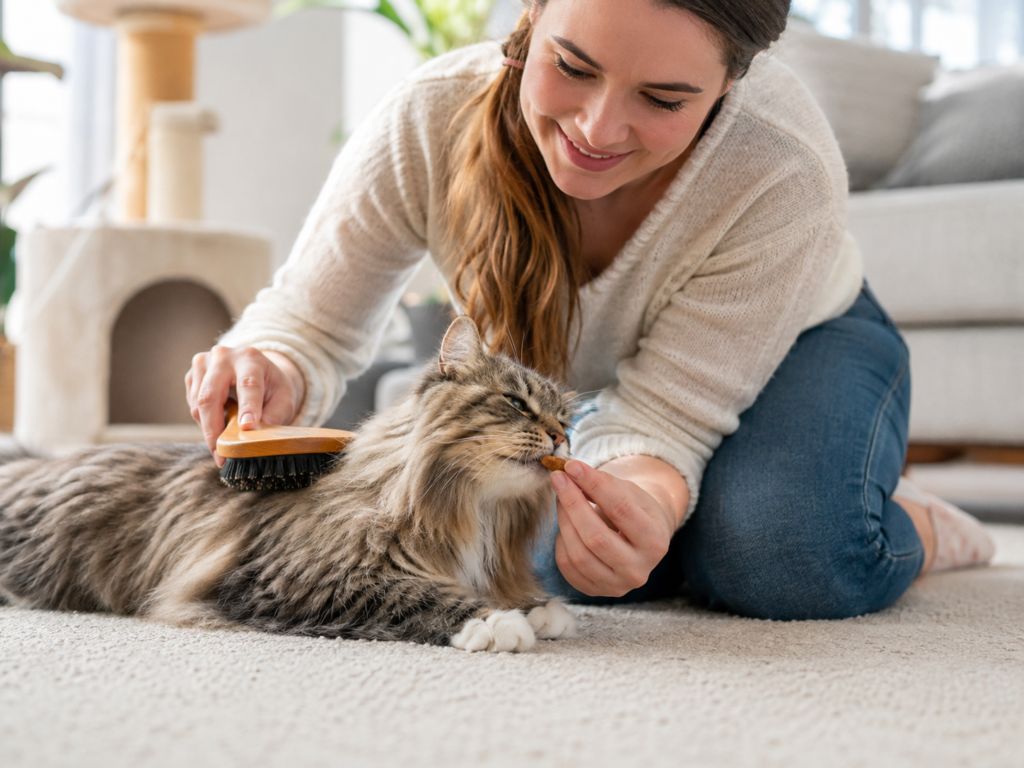
Many cats resist grooming simply because it feels unfamiliar or uncomfortable. Here’s how to make it a positive experience:
- Start young, if possible. Kittens who get used to brushing and nail trims early tend to tolerate grooming much better as adults.
- Use treats and praise. Reward calm behavior during and after each session.
- Keep sessions short at first. Even 2–3 minutes is enough to start building comfort.
- Watch your cat’s body language. Flattened ears, tail flicking, or growling are signs to pause and try again later.
- Groom at the right time. After playtime or a meal, when your cat is naturally more relaxed, works best.
- Invest in the right tools. A comfortable, well-designed brush or clipper makes the process faster and less stressful for both of you.
Sample Weekly Grooming Calendar
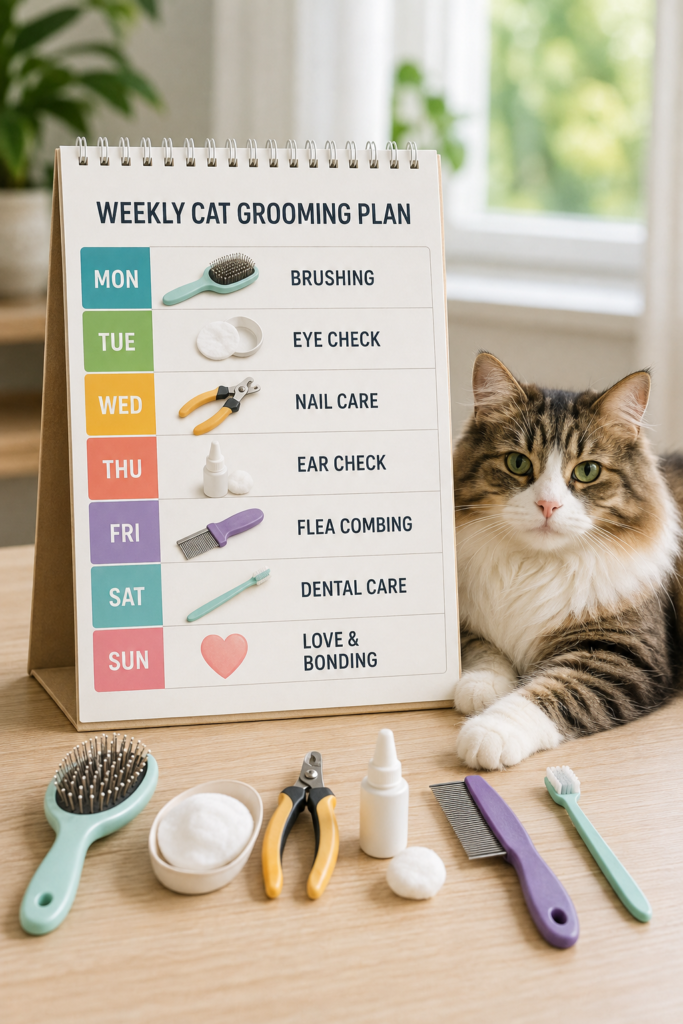
Here’s a simple way to spread grooming tasks across the week so it never feels like too much at once:
- Monday: Deep brushing session
- Tuesday: Quick daily brush + eye check
- Wednesday: Nail check/trim
- Thursday: Quick daily brush
- Friday: Ear cleaning check
- Saturday: Flea comb + dental brushing
- Sunday: Rest day (light daily brush only)
Repeat this cycle weekly, and slot in the monthly tasks (bath, full-body check, tool cleaning) on the first weekend of each month.
Frequently Asked Questions (FAQ)
How often should I groom my cat? Most cats need a quick daily brush, a deeper weekly session, and monthly maintenance tasks like nail trims, ear checks, and occasional baths. Long-haired cats need daily brushing to prevent mats.
Do indoor cats need grooming too? Yes. Indoor cats still shed, develop tartar, and need nail trims. In fact, since they don’t wear down their nails on rough outdoor surfaces, indoor cats often need more frequent nail trims.
How do I know if my cat needs a bath? Most cats rarely need baths. Signs it’s time include a greasy or matted coat, a strong odor, or visible dirt or stickiness that self-grooming hasn’t removed.
What’s the best age to start grooming a kitten? As early as 8 weeks old. Short, gentle sessions help kittens get comfortable with brushing, nail trims, and handling before they’re old enough to resist.
My cat hates being brushed. What should I do? Start with very short sessions (1–2 minutes), use high-value treats, and choose a soft brush designed for sensitive cats. Gradually increase the time as your cat becomes more comfortable.
Can grooming help detect health problems early? Absolutely. Regular hands-on grooming lets you notice lumps, skin changes, weight fluctuations, and parasites much earlier than you would otherwise — often before symptoms become obvious.
Final Thoughts: Consistency Is the Secret
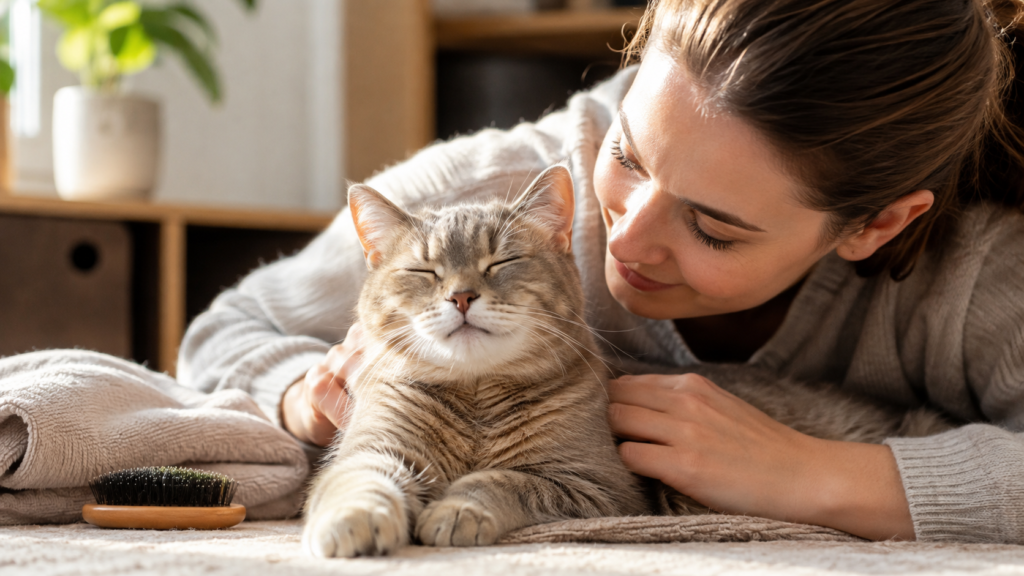
You don’t need to be a professional groomer to keep your cat healthy and happy. The secret is consistency — a few minutes each day, a slightly longer session each week, and a thorough check once a month. Over time, this simple rhythm becomes second nature for both you and your cat, and it turns grooming into a bonding ritual rather than a chore.
Start small if your cat is new to grooming, be patient, and use tools designed specifically for cats to make each session smoother. Your cat’s coat, skin, and overall health will thank you for it.
Disclosure: This post contains affiliate links. If you purchase through these links, we may earn a small commission at no extra cost to you. We only recommend products we believe genuinely help cat owners.