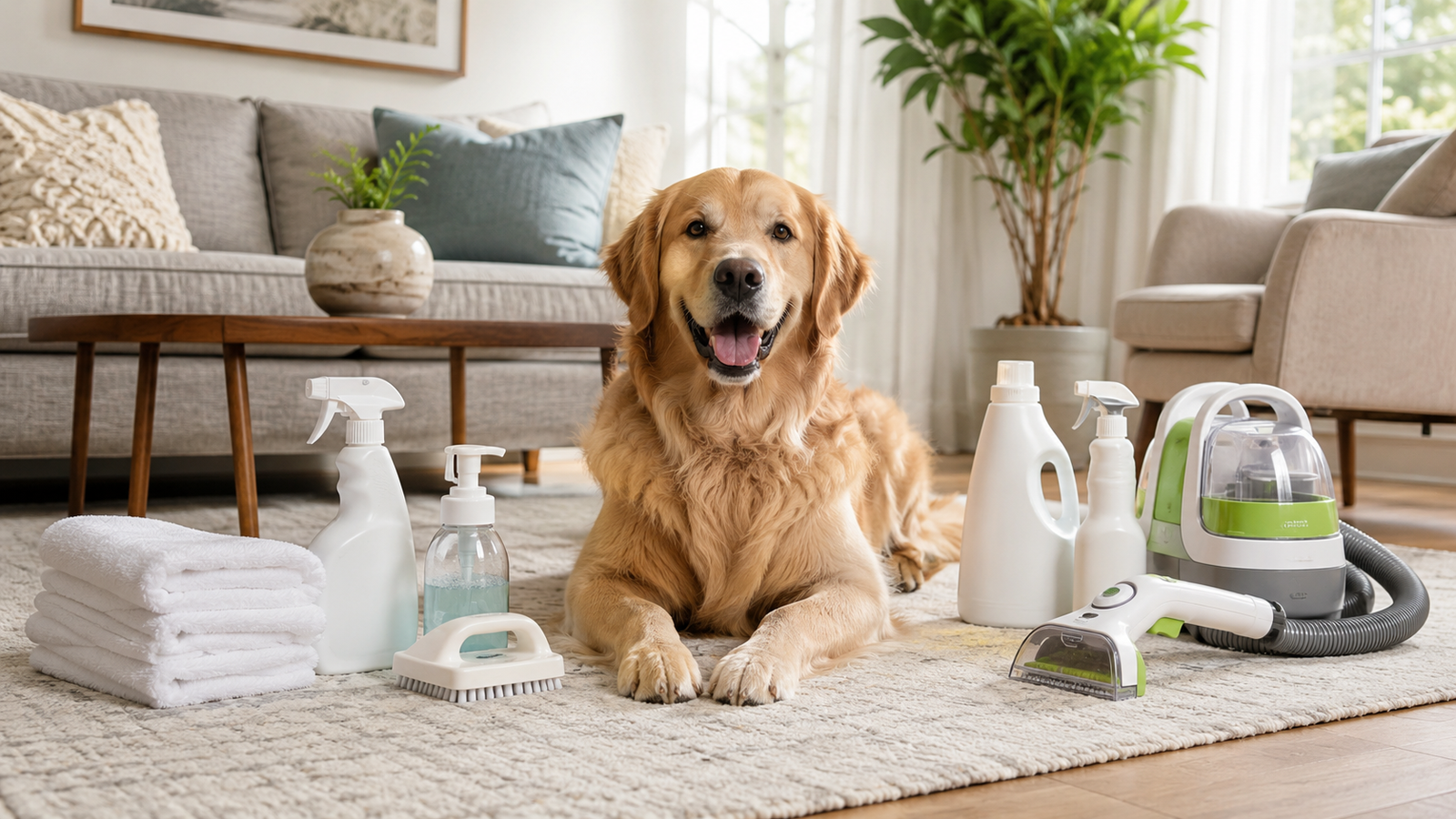
If you share your home with a dog, cat, puppy, kitten, or any furry friend, you already know the truth: accidents happen. Whether it’s a puddle on the carpet, a mystery stain on the couch, or that stubborn smell that just won’t go away no matter how many times you scrub, pet stains are one of the most frustrating parts of pet ownership.
The good news? You don’t have to live with stains, odors, or the embarrassment of guests noticing “that pet smell” the moment they walk in. In this guide, we’ll walk you through everything you need to know about pet stain removers — how they work, what to look for, and which products are worth adding to your cleaning cabinet. This guide is written for pet owners everywhere, whether you have carpets, hardwood floors, rugs, or upholstery to protect.
By the end of this article, you’ll know exactly how to choose the right stain remover for your situation and have a shortlist of trusted products to try.
Why Regular Cleaners Don’t Work on Pet Stains
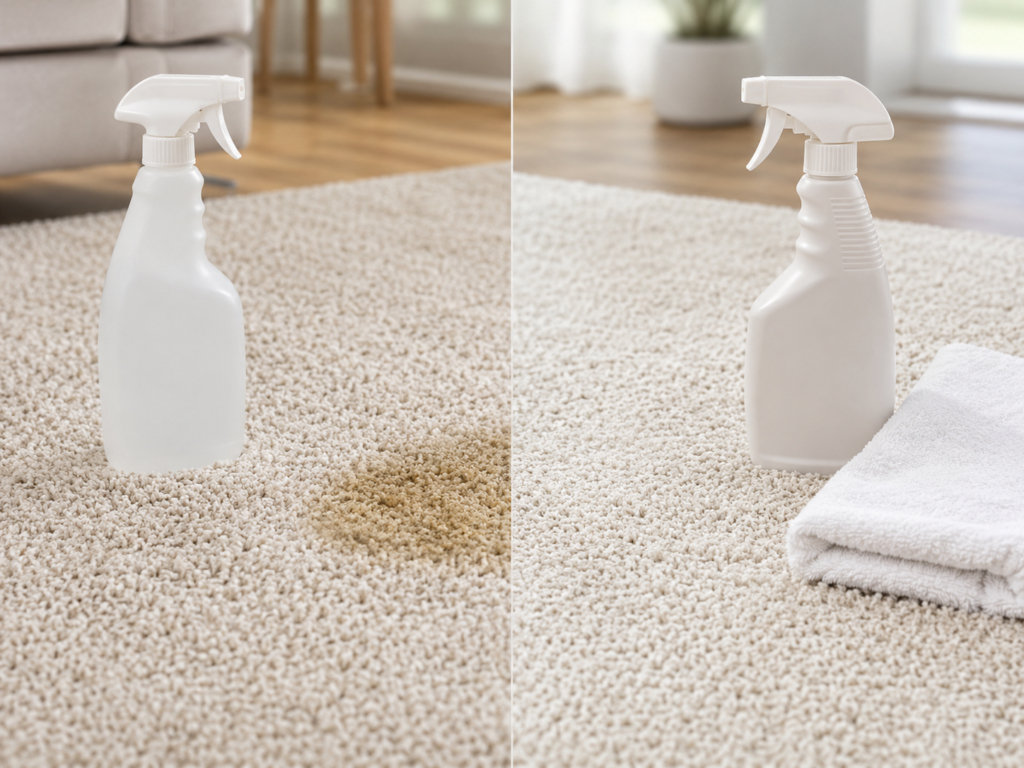
Many pet owners make the mistake of reaching for an all-purpose household cleaner or a splash of soap and water when an accident happens. Unfortunately, this often makes things worse.
Here’s why: pet urine, feces, and vomit contain organic compounds like uric acid, proteins, and bacteria. Regular cleaners can remove the visible stain, but they don’t break down these compounds at a molecular level. That means the odor-causing residue stays trapped in your carpet fibers, hardwood cracks, or fabric — and it comes right back, especially when humidity rises.
This is also why pets often return to the same spot to relieve themselves again. They can still smell the residue, even if you can’t.
The solution is an enzymatic cleaner — a specially formulated product designed to break down organic waste completely, eliminating both the stain and the odor at the source instead of just masking it.
What Makes a Great Pet Stain Remover?
Before jumping into product recommendations, it helps to understand what separates a good pet stain remover from a mediocre one. Here are the key factors to look for:
1. Enzymatic Formula
Look for cleaners that use natural enzymes or bacteria cultures to digest organic waste. This is the gold standard for eliminating both stains and smells permanently.
2. Safe for Pets and Children
Since pets (and sometimes toddlers) spend a lot of time close to the floor, choose a formula that’s non-toxic and free from harsh chemicals like bleach or ammonia.
3. Works on Multiple Surfaces
The best products work on carpet, upholstery, hardwood, tile, and even car interiors, so you don’t need a separate cleaner for every surface in your home.
4. Fast Acting
A good stain remover should start working within minutes, not hours. Fast-acting formulas prevent the stain from setting deeper into fibers.
5. Long-Lasting Odor Control
Cheap sprays might mask smell temporarily with fragrance. Quality enzymatic cleaners neutralize the odor completely so it doesn’t return once the fragrance fades.
6. Easy Application
Spray bottles, foam formulas, and pour-on treatments each have their place depending on the size and type of stain. Consider what’s easiest for your lifestyle.
Types of Pet Stains You’ll Encounter
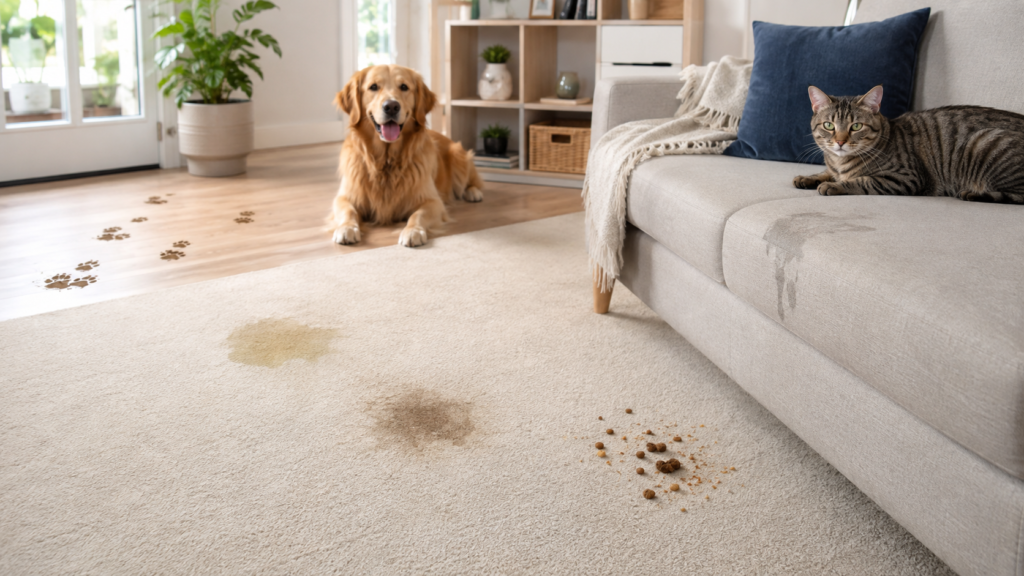
Understanding the type of stain helps you pick the most effective remover:
- Fresh urine stains – Easiest to treat if caught early with an enzymatic spray.
- Old, set-in urine stains – Require a deeper soak treatment and sometimes UV light detection since dried urine crystals aren’t always visible.
- Vomit stains – Often contain bile and food particles; enzymatic cleaners with added surfactants work best.
- Feces stains – Best treated after removing solid waste, followed by a full enzymatic soak.
- Muddy paw prints – Usually need a general pet-safe multi-surface cleaner rather than enzymatic treatment.
- Drool and saliva stains – Common on furniture and often overlooked but still benefit from enzymatic formulas.
Top Pet Stain Remover Categories to Consider
Rather than pushing a single “best” product (because the right choice depends on your specific needs), here are the top categories and highly-rated options within each, so you can pick what fits your home.
1. Best Overall Enzymatic Cleaner
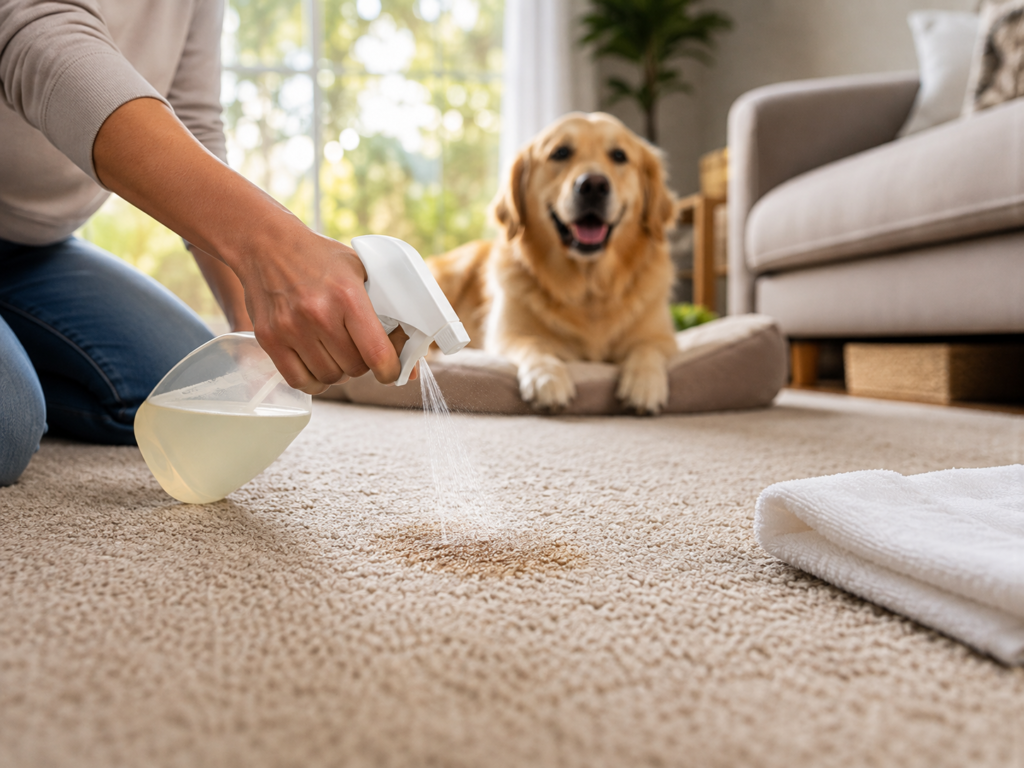
For everyday accidents on carpet and upholstery, an enzymatic spray is your best all-around investment. These are formulated to tackle both fresh and set-in stains while neutralizing odor at the source.
🛒 Check current price and availability here: [ Enzymatic Pet Stain & Odor Remover]
https://link.amazon/B0gmu5hHa
2. Best for Set-In, Old Stains
If you’ve moved into a new home or inherited old stains from a previous pet, you’ll want a deep-penetrating formula designed specifically for dried, set-in urine stains.
🛒 See this deep-stain treatment option: [ Deep Stain & Odor Eliminator]
https://link.amazon/B09THMVJk
3. Best UV Flashlight for Stain Detection
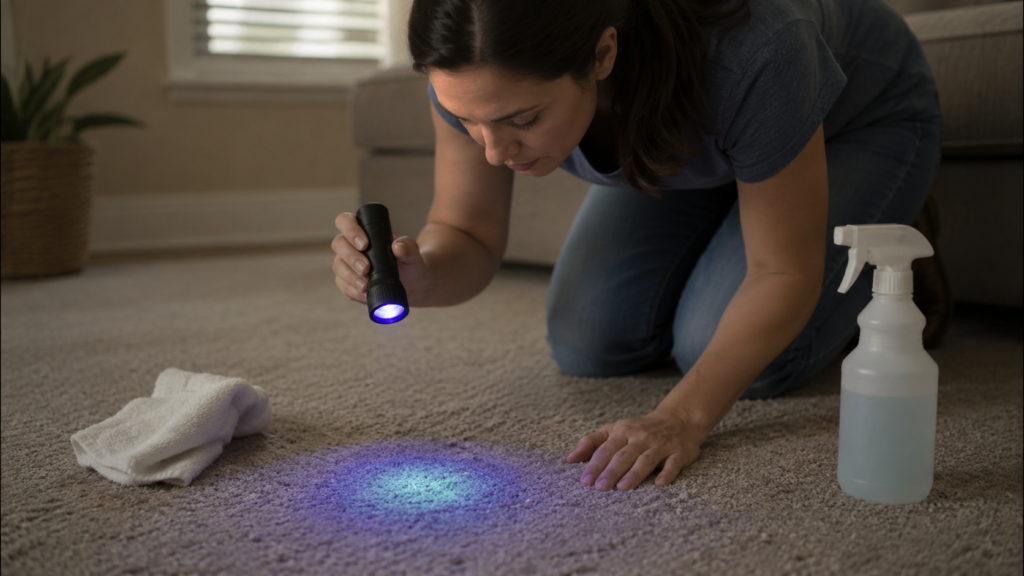
Not all stains are visible to the naked eye once dried. A UV blacklight flashlight helps you locate hidden urine spots so you can treat them before they cause lingering smells.
🛒 View this pet urine detector flashlight: [ UV Pet Stain Detector Light]
https://link.amazon/B0cZwW2rP
4. Best for Carpets and Rugs
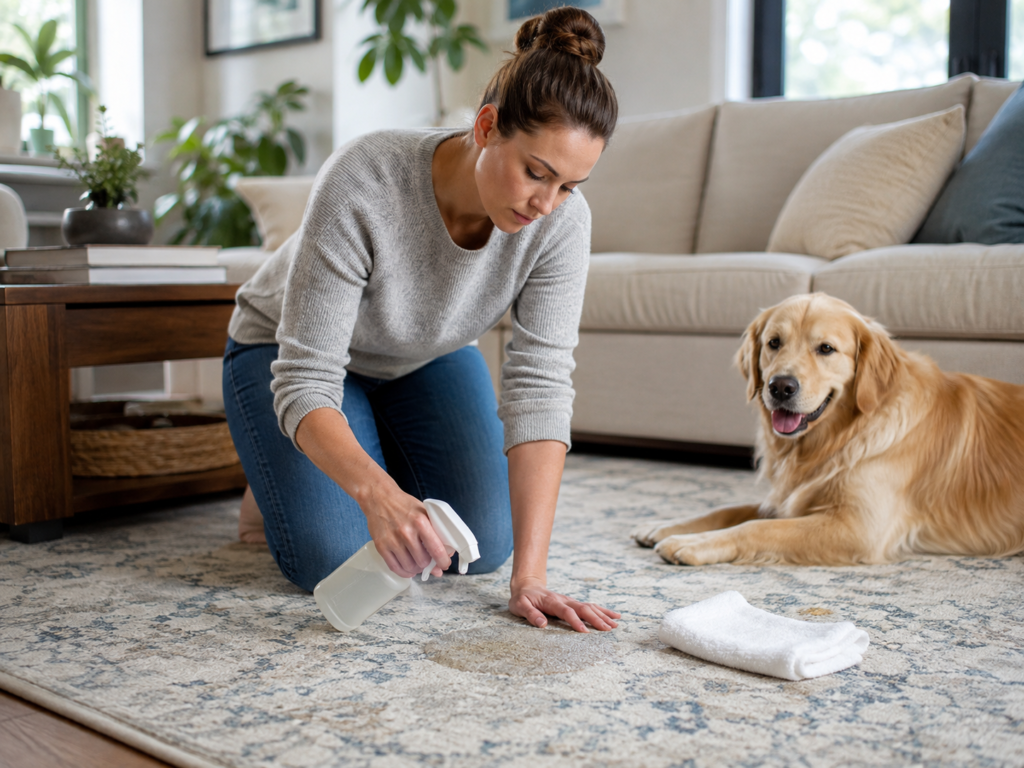
Carpets absorb liquid quickly, making them one of the hardest surfaces to fully clean. Look for a carpet-specific formula with deep-fiber penetration.
🛒 Explore this top-rated carpet cleaner: [ Carpet & Rug Pet Stain Remover]
https://link.amazon/B06xMD7cK
5. Best for Upholstery and Furniture
Sofas, mattresses, and fabric chairs need a gentler formula that won’t damage fibers or leave watermarks.
🛒 Check this upholstery-safe stain remover: [ Upholstery & Furniture Pet Stain Spray]
https://link.amazon/B0dmVA4BN
6. Best for Hardwood and Tile Floors
Hard surfaces need a different approach since liquid can seep into cracks and seams. A pH-balanced cleaner protects the finish while still eliminating bacteria and odor.
🛒 See this hard floor-safe cleaner: [ Hardwood & Tile Pet-Safe Cleaner]
https://link.amazon/B0eFV7R0A
7. Best Portable Stain Remover for Travel and Car Rides
If you travel with pets often, a compact stain-remover pen or travel-size spray is a smart addition to your car or travel bag.
🛒 Check out this travel-size cleaner: [ Travel Size Pet Stain Remover]
https://link.amazon/B06qzLBGN
8. Best Wet/Dry Vacuum for Pet Messes
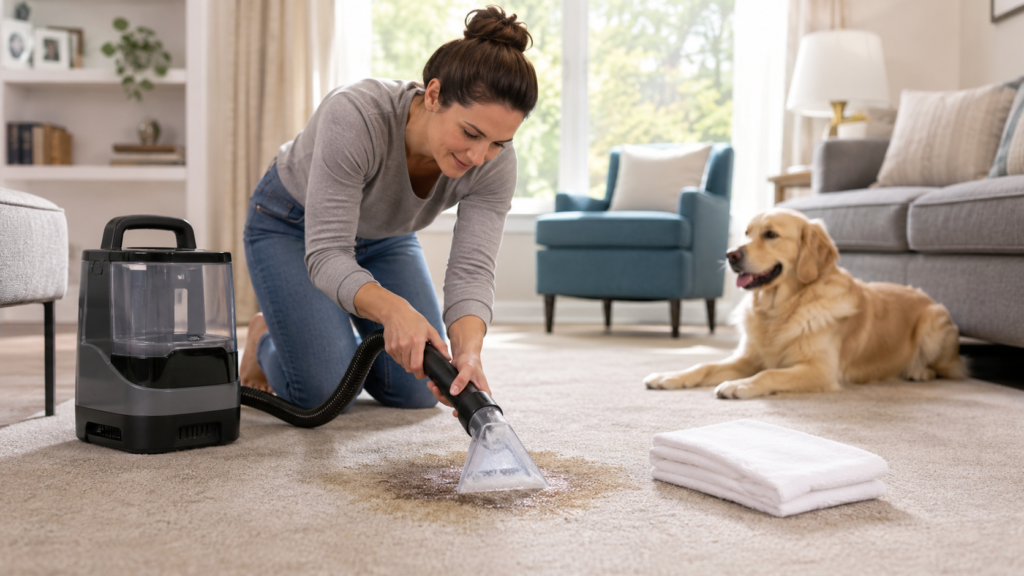
For serious accidents or multi-pet households, a dedicated wet/dry spot cleaner vacuum can extract liquid and cleaning solution simultaneously for a deeper clean.
🛒 View this pet-specific spot cleaner vacuum: [ Pet Spot Cleaner Vacuum Machine]
https://link.amazon/B02CDbKPQ
9. Best Odor-Neutralizing Spray for Ongoing Freshness
Even after removing a stain, some homes benefit from a daily odor-neutralizing spray to maintain a fresh-smelling space between deep cleans.
🛒 Check this daily odor neutralizer: [Daily Pet Odor Neutralizing Spray]
https://link.amazon/B03EgMvrG
Step-by-Step: How to Remove a Fresh Pet Stain
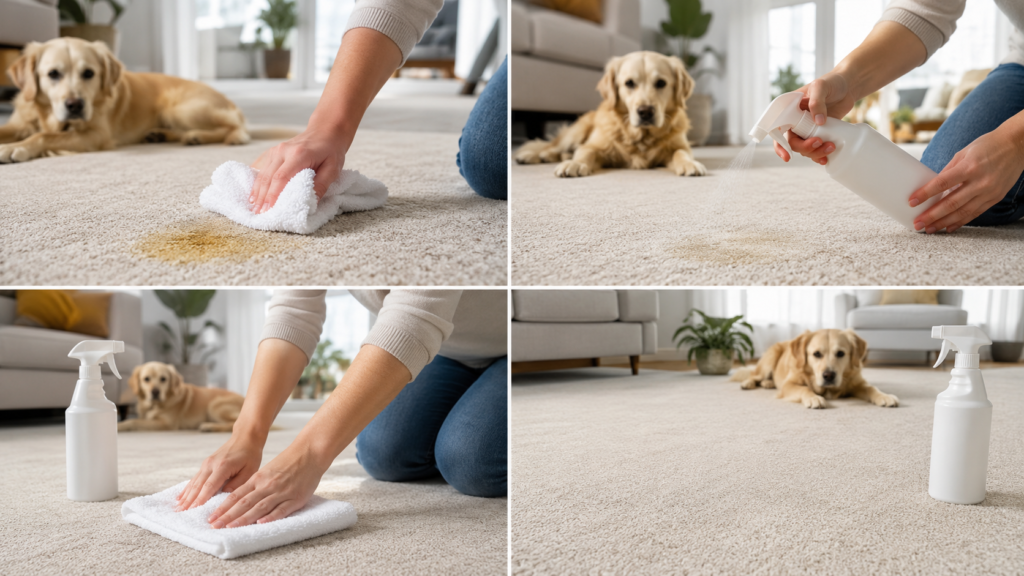
- Blot, don’t rub. Use a paper towel or clean cloth to soak up as much liquid as possible. Rubbing pushes the stain deeper into fibers.
- Apply the enzymatic cleaner generously. Make sure it fully saturates the area, not just the surface.
- Let it sit. Most products need 5–15 minutes to allow enzymes to break down the organic material. Check the product label for exact timing.
- Blot again. Remove excess moisture with a fresh towel.
- Air dry or use a fan. Avoid walking on the area or letting pets near it until fully dry.
- Repeat if necessary. For older or heavily soiled stains, a second treatment may be required.
How to Treat Old, Set-In Stains
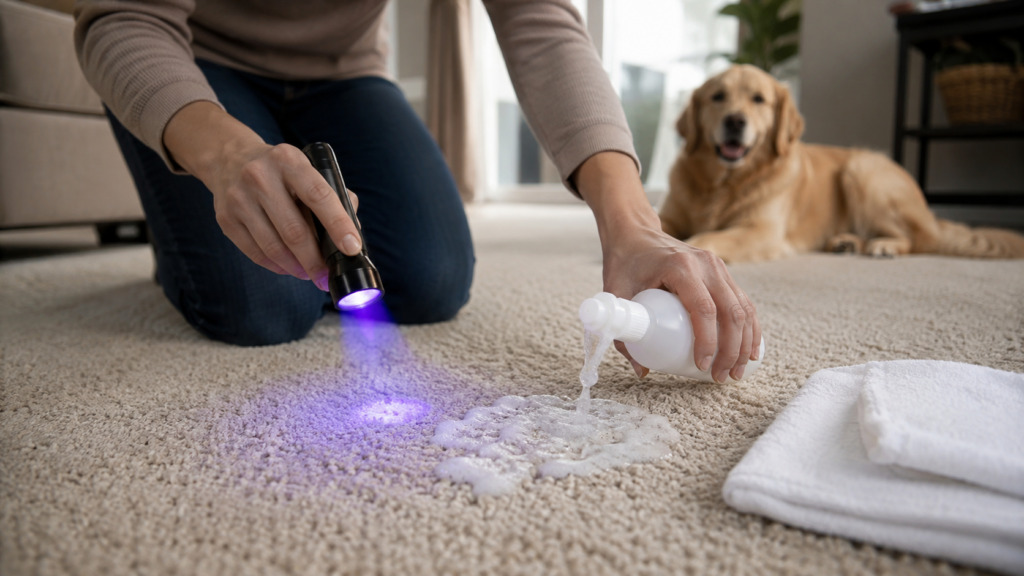
- Use a UV flashlight in a dark room to identify all affected areas — old stains often glow under UV light even if invisible otherwise.
- Saturate the entire stained area with an enzymatic deep-stain treatment, not just the visible spot.
- Cover with plastic wrap to slow evaporation, allowing enzymes more time to work (follow product instructions).
- Leave for several hours or overnight if the label allows.
- Blot dry and vacuum once completely dry.
Common Mistakes to Avoid
- Using vinegar or baking soda mixed with commercial cleaners. This can cause unwanted chemical reactions and reduce cleaner effectiveness.
- Steam cleaning before removing the stain fully. Heat can set protein stains permanently, making them much harder to remove.
- Skipping the “letting it sit” step. Enzymes need time to work; wiping too soon reduces effectiveness.
- Using ammonia-based cleaners. Ammonia smells similar to urine to pets, which can encourage repeat marking in the same spot.
- Not treating the padding under carpets. Liquid often seeps through to the carpet pad, which can continue causing odor if untreated.
How to Prevent Future Pet Stains
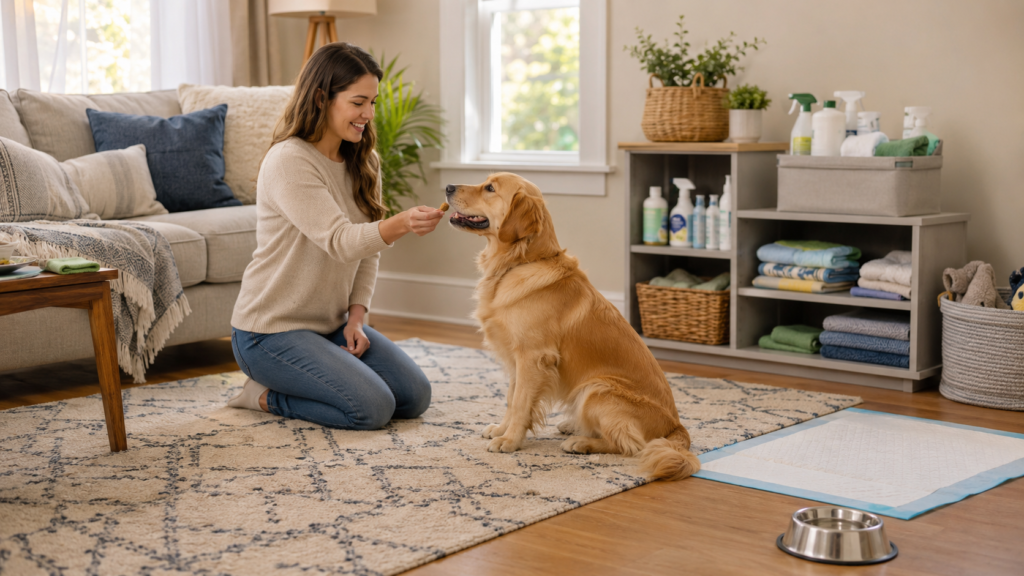
While no home is 100% accident-proof, these tips can significantly reduce the frequency of stains:
- Maintain a consistent bathroom schedule for your pet.
- Use puppy pads or litter boxes strategically placed in accessible areas.
- Reward and reinforce good bathroom habits with positive training.
- Keep a stain remover on hand at all times so accidents are treated immediately, before they set in.
- Consider washable, pet-friendly rugs or slipcovers in high-traffic areas.
- Schedule regular vet checkups, since sudden changes in bathroom habits can sometimes indicate a health issue.
Frequently Asked Questions
Q: Can I make a homemade pet stain remover? Simple homemade solutions using dish soap, water, and hydrogen peroxide can help with fresh stains, but they generally don’t fully break down odor-causing enzymes the way commercial enzymatic cleaners do. For long-term results, a dedicated enzymatic product is usually more effective.
Q: Are enzymatic cleaners safe for all pets? Most enzymatic cleaners are safe once fully dried, but it’s always best to keep pets away from the area until the product has completely dried and ventilated, and to check the label for species-specific guidance.
Q: How long does it take for a stain remover to work? Most fresh stains show visible improvement within 15–30 minutes, though full odor elimination can take a few hours as enzymes finish breaking down the organic matter.
Q: Will stain removers damage my carpet or furniture? Reputable, pH-balanced formulas are designed to be safe for most carpets, rugs, and upholstery. It’s still a good idea to test on a hidden area first, especially with delicate or natural fiber materials.
Q: What’s the difference between a stain remover and an odor eliminator? Some products focus purely on lifting visible stains, while others focus on neutralizing smell. The best all-around products, especially enzymatic ones, do both simultaneously.
Final Thoughts
Pet stains are a normal part of life with animals, but they don’t have to be a permanent headache. With the right enzymatic cleaner, a bit of know-how, and some preventive habits, you can keep your home smelling fresh and looking clean no matter how many paws are running around.
Whether you’re dealing with a brand-new puppy still learning the ropes, an aging pet with occasional accidents, or simply want to be prepared for the unexpected, having a reliable stain remover on hand is one of the smartest investments any pet owner can make.
We hope this guide helps you find the right products for your home. Bookmark this page so you can come back to it whenever you need a refresher — and here’s to a cleaner, fresher home for you and your furry companions.
Disclosure: This post may contain affiliate links. If you purchase through one of these links, we may earn a small commission at no additional cost to you. We only recommend products we believe can genuinely help pet owners.