
Introduction
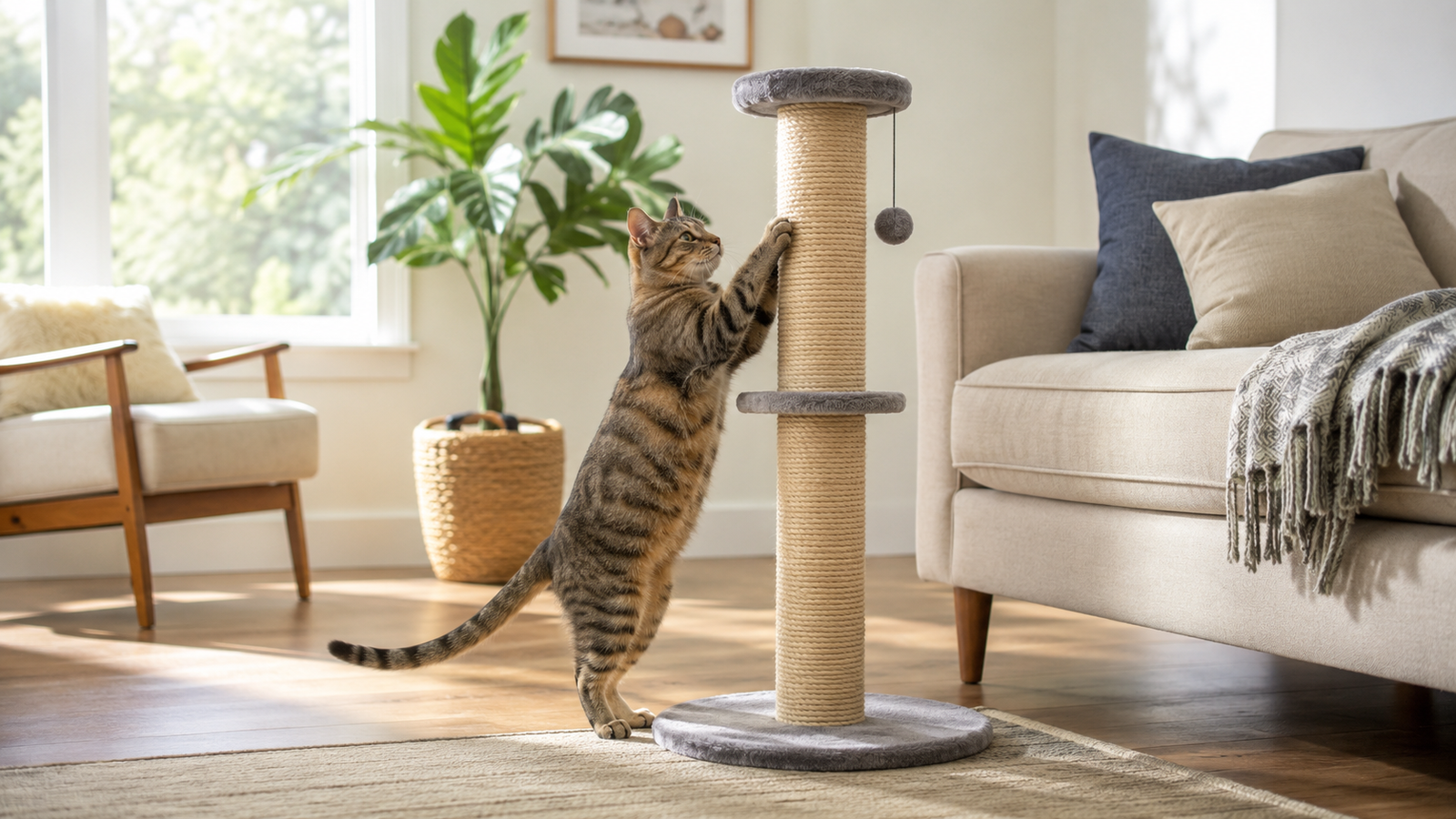
If you own a cat, you already know the struggle. One moment your sofa looks perfectly fine, and the next, it has claw marks running down the side. Cats scratch. It’s not bad behavior — it’s biology. But that doesn’t mean you have to sacrifice your favorite armchair to keep your cat happy.
The good news? A well-chosen cat scratching post can completely change the game. It protects your furniture, keeps your cat’s claws healthy, and gives your feline friend a way to express natural instincts without destroying your home.
In this guide, we’ll walk you through everything you need to know — why cats scratch, what makes a great scratching post, and our top picks for 2026 that cat owners around the world are loving. Whether you have a playful kitten, a senior cat, or a household with multiple cats, there’s a perfect scratching post waiting for you on this list.
Let’s dive in.
Why Do Cats Scratch? Understanding the Behavior
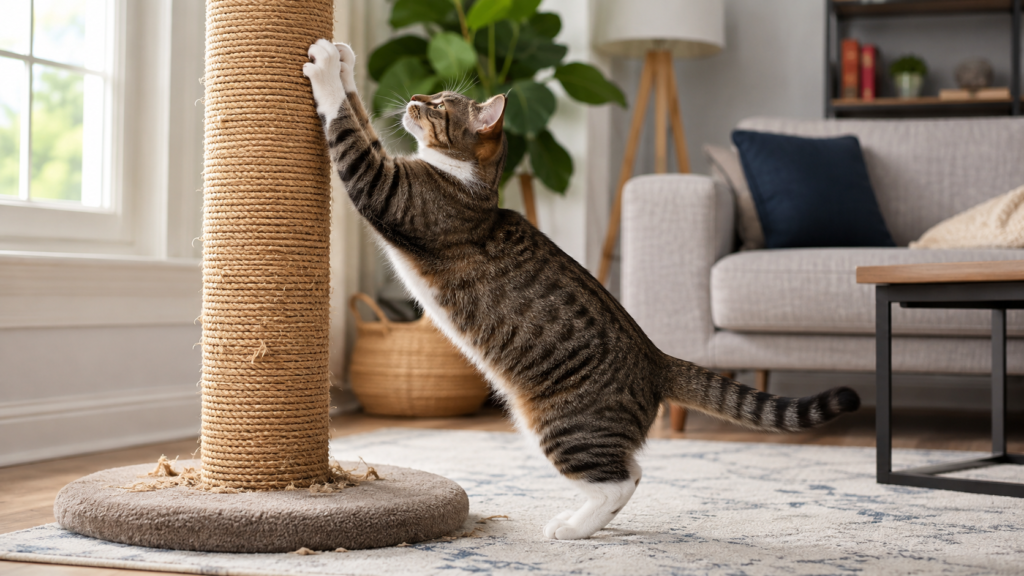
Before buying anything, it helps to understand why cats scratch in the first place. This isn’t just a random habit — it serves several important purposes for your cat:
- Claw maintenance – Scratching helps cats shed the outer layer of their claws, keeping them sharp and healthy.
- Stretching muscles – When a cat scratches, it stretches its back, shoulders, and legs, similar to how humans stretch after waking up.
- Marking territory – Cats have scent glands in their paws. Scratching leaves both a visual mark and a scent mark, which is their way of saying “this is my space.”
- Stress relief – Just like humans might tap a pen or bite nails when anxious, scratching can help cats release pent-up energy or stress.
Since scratching is a natural, healthy behavior, the goal isn’t to stop it — it’s to redirect it to something appropriate, like a good-quality scratching post.
Why Every Cat Owner Needs a Good Scratching Post
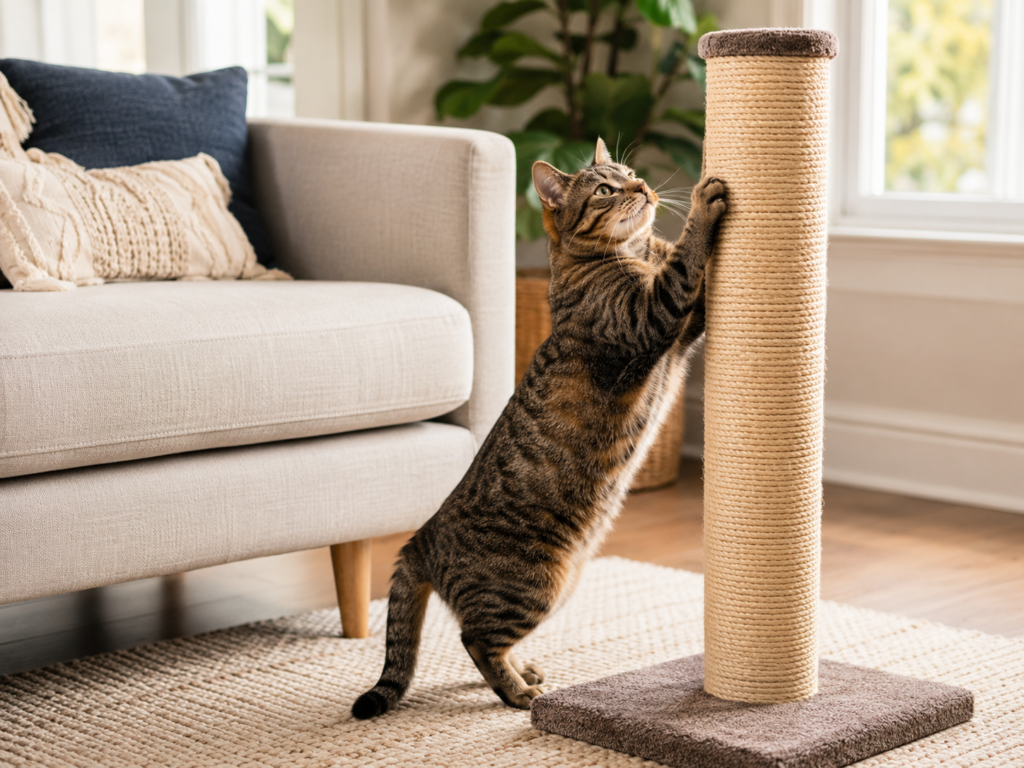
A high-quality scratching post isn’t a luxury item — it’s a necessity for any home with a cat. Here’s why:
- Saves your furniture from claw damage
- Reduces stress for both you and your cat
- Encourages exercise through stretching and climbing
- Prevents overgrown claws, which can cause pain or infection
- Gives indoor cats mental stimulation, especially with cat trees that include perches and toys
Investing in the right scratcher early on can save you hundreds of dollars in furniture repair or replacement costs down the road.
Types of Cat Scratching Posts
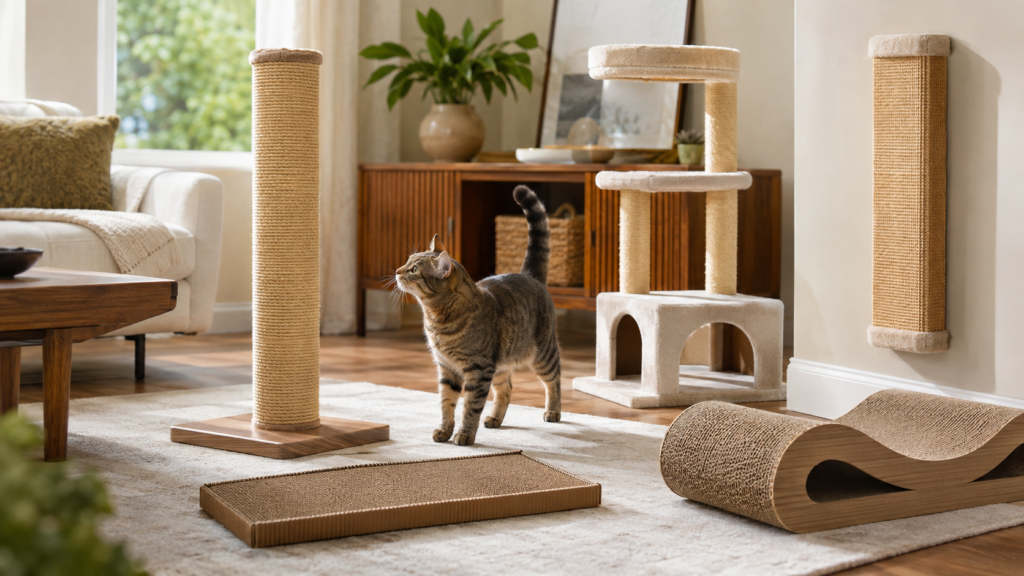
Not all scratching posts are the same. Understanding the different types will help you pick the one that fits your cat’s personality and your living space.
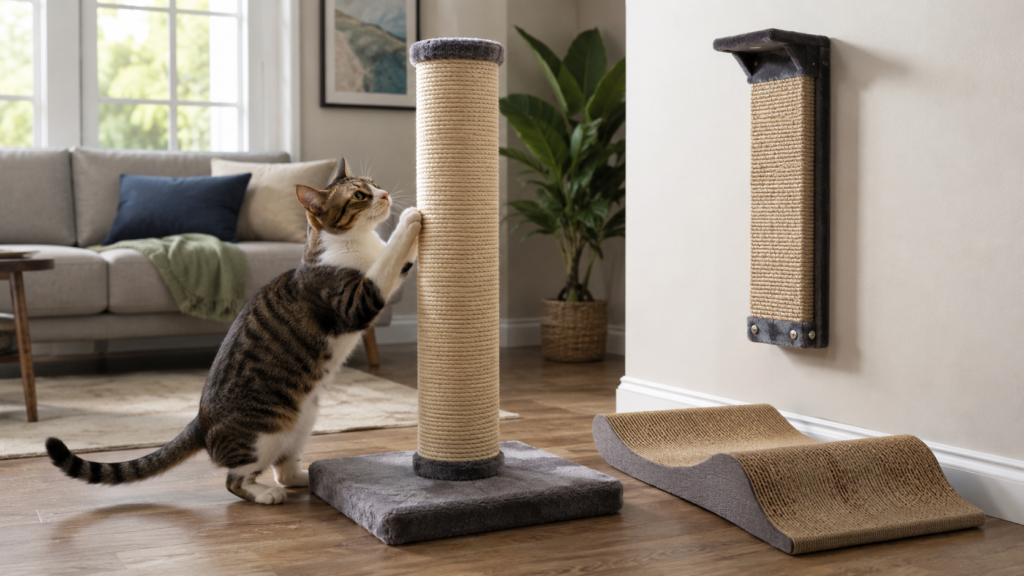
1. Vertical Scratching Posts
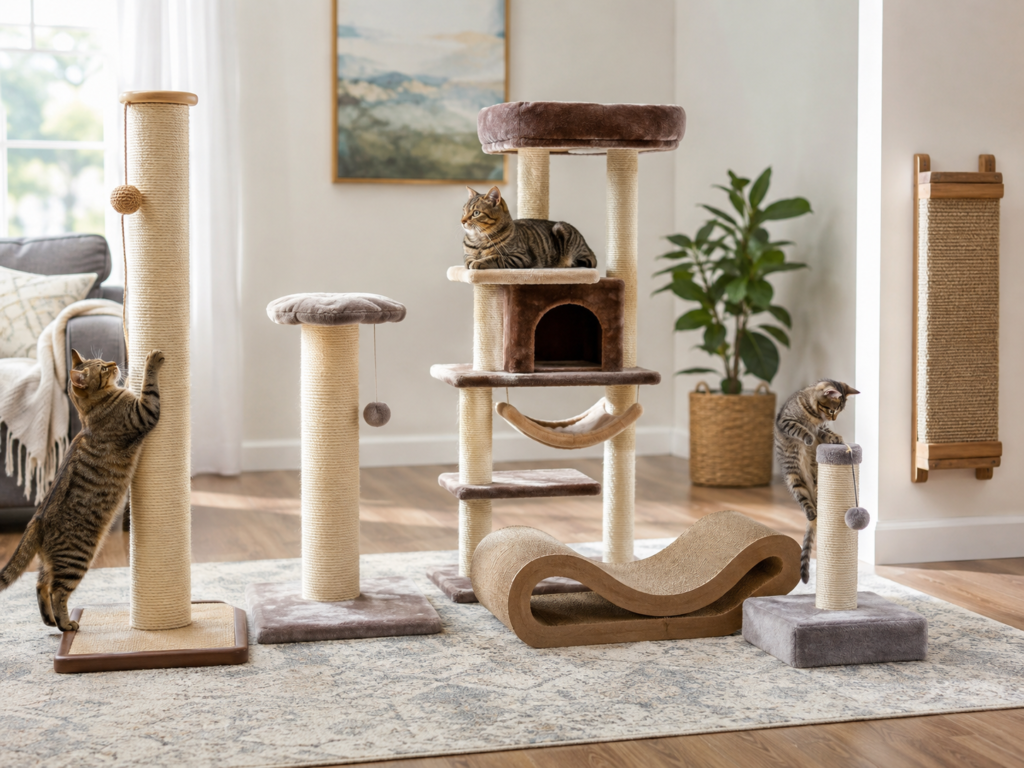
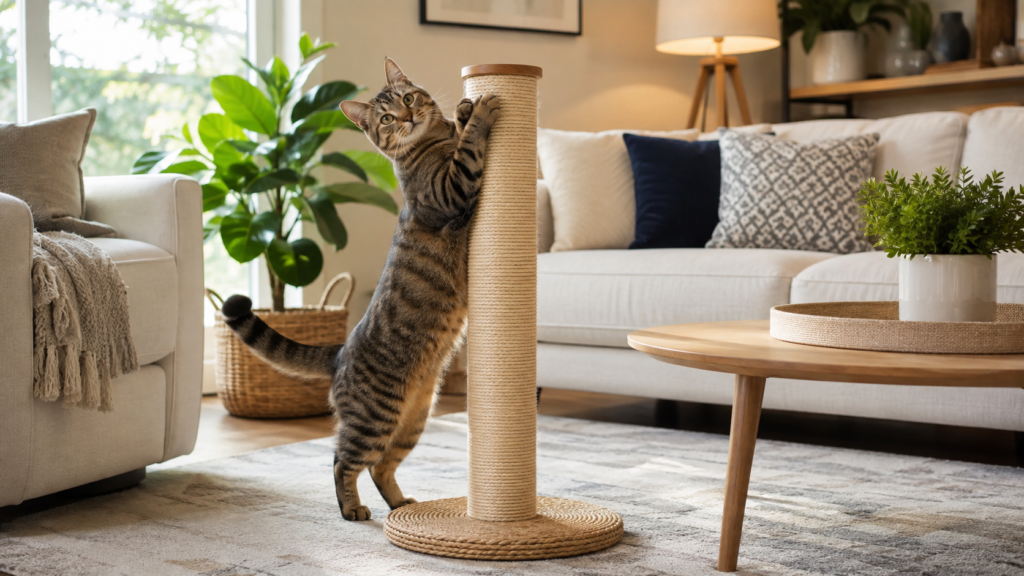
The classic design — a tall post, usually wrapped in sisal rope or carpet, standing upright on a base. Great for cats who like to stretch fully upward.
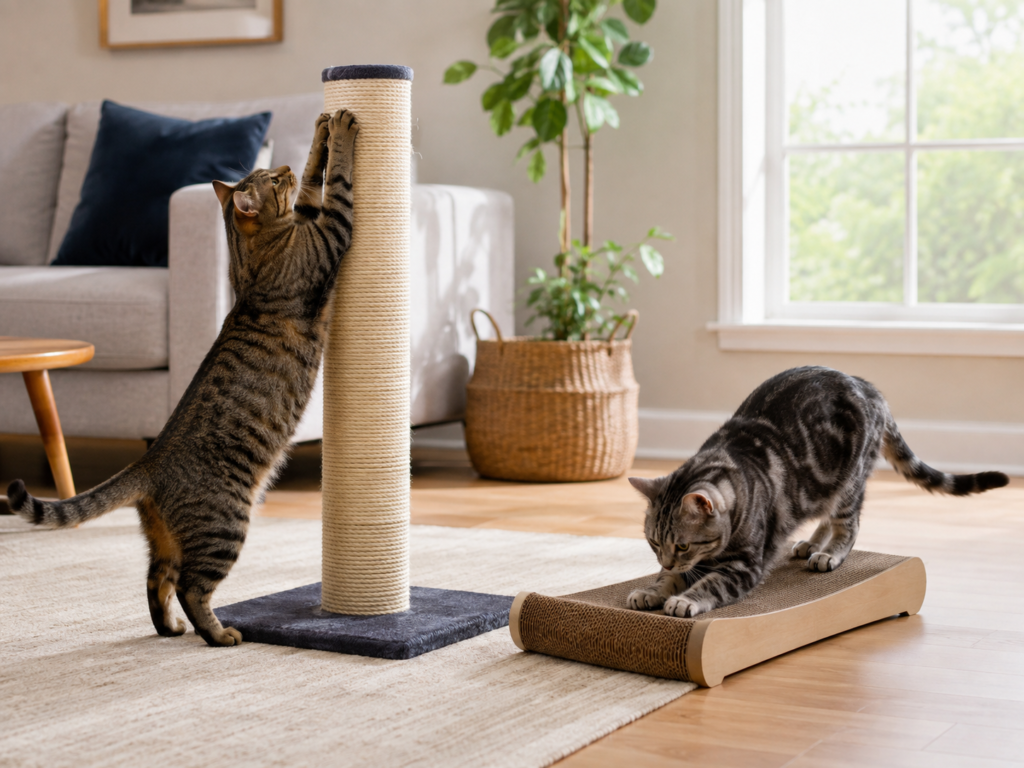
2. Horizontal Scratching Pads
Flat pads made of cardboard or sisal that lie on the floor. Ideal for cats who prefer scratching sideways or for households with limited space.
3. Cat Trees / Scratching Towers
Multi-level structures combining scratching posts with perches, hideouts, and dangling toys. Perfect for multi-cat homes or cats that love to climb.
4. Wall-Mounted Scratchers
Space-saving options that attach directly to the wall — great for small apartments.
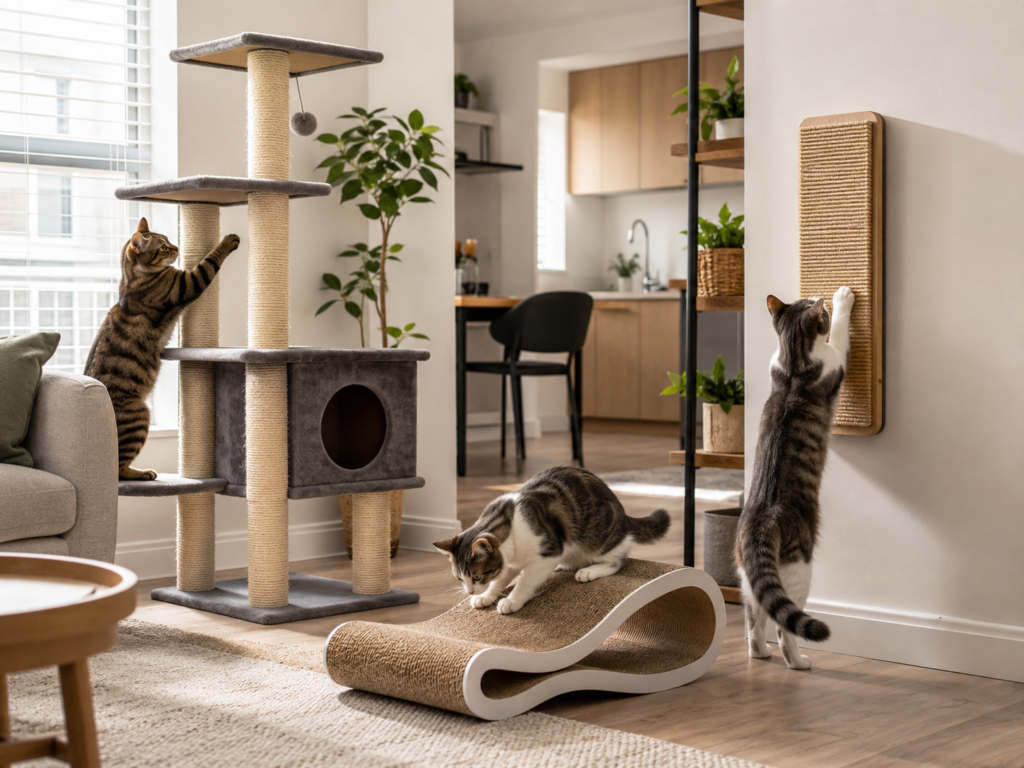
5. Cardboard Scratchers
Affordable, lightweight, and often shaped like waves or lounges. These are popular for cats who enjoy scratching while lying down.
How to Choose the Best Cat Scratching Post: A Buying Guide
Here are the key factors to consider before you buy:
1. Material
Sisal rope and sisal fabric are the most durable and cat-approved materials. Carpet-covered posts are softer but wear out faster and may confuse cats into thinking carpet at home is also fair game.
2. Height and Stability
Cats love to stretch fully when scratching. Look for a post that’s at least 28–32 inches tall, with a wide, heavy base so it doesn’t tip over during enthusiastic scratching sessions.
3. Your Cat’s Preference
Some cats scratch vertically, others horizontally. Watch your cat’s current scratching habits (on furniture or carpet) to determine which orientation they prefer.
4. Space Available
If you live in a small apartment, a wall-mounted or compact scratcher may work better than a large multi-level cat tree.
5. Number of Cats
Multi-cat households benefit from cat trees with multiple scratching surfaces and perches to avoid territorial conflicts.
6. Easy to Clean and Replace
Look for posts with replaceable sisal sleeves or removable pads, so you don’t need to buy an entirely new unit once it wears out.
Top Best Cat Scratching Posts in 2026 (Reviewed)
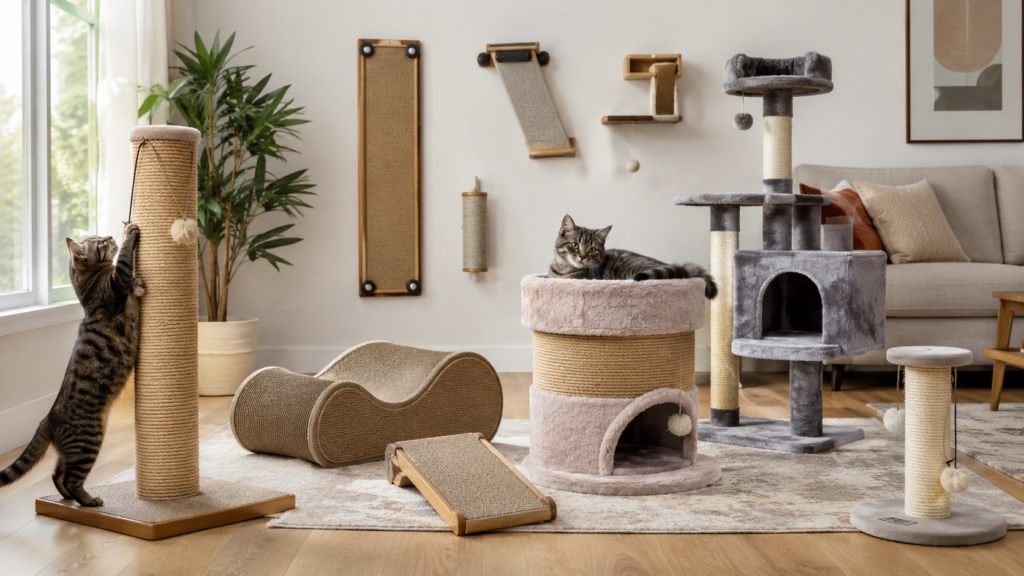
Below are our top picks, chosen based on durability, cat approval ratings, value for money, and customer reviews. (Affiliate disclosure: Some links below are affiliate links. If you purchase through them, we may earn a small commission at no extra cost to you.)
1. SmartCat Ultimate Scratching Post
A tall, sturdy sisal post that’s a favorite among vets and cat behaviorists for its 32-inch height and heavy base.
Why we love it: Extremely stable, tall enough for full-body stretches, and built to last for years.
👉-https://link.amazon/B04ruboV9
2. Frisco 32-Inch Cat Scratching Post
An affordable, budget-friendly option with a sisal-wrapped post and a soft plush top perch for lounging.
Why we love it: Great combination of function and comfort at a low price point.
👉-https://link.amazon/B0dx8sdis
3. Go Pet Club Cat Tree Condo
A multi-level cat tree with scratching posts, hideouts, and hammocks — perfect for multi-cat households.
Why we love it: Keeps multiple cats entertained and reduces furniture scratching significantly.
4. Catit Style Scratcher with Cardboard Insert
An affordable horizontal cardboard scratcher shaped like a lounge — great for cats who scratch while lying flat.
Why we love it: Doubles as a bed and a scratcher, ideal for laid-back cats.
5. PetFusion Ultimate Cat Scratcher Lounge
A curved cardboard scratcher with a stylish, modern design that fits well in any living room.
Why we love it: Eco-friendly, recyclable materials with a sleek aesthetic that doesn’t look like a “pet product.”
6. Trixie Baza Scratching Post
A tall, sisal-wrapped post with a plush top platform, ideal for cats who like to survey their territory from a height.
Why we love it: Combines scratching, resting, and observing in one compact unit.
👉-https://link.amazon/B0cPYK43C
7. Wall-Mounted Sisal Cat Scratcher Set
A set of 2–3 wall-mounted scratching planks, ideal for small apartments or homes with multiple cats.
Why we love it: Saves floor space while offering vertical scratching in multiple room corners.
8. Feandrea Cat Tree with Scratching Posts
A large, feature-packed cat tree with several sisal posts, cozy caves, and dangling toys, ideal for playful and active cats.
Why we love it: Excellent value for the number of features included; a favorite among long-term reviewers.
9. Tower Pet Sisal Scratching Post with Ball Toy
A compact scratching post with an attached hanging ball toy — great for kittens who need extra stimulation.
Why we love it: Combines play and scratching, keeping young cats engaged for longer.
10. Amazon Basics Cat Scratching Post
A simple, no-frills sisal post that’s budget-friendly and works well as a starter scratcher for new cat owners.
Why we love it: Reliable, affordable, and a great entry point if you’re not sure what your cat prefers yet.
👉-https://link.amazon/B0ewJ2lPg
How to Train Your Cat to Use a Scratching Post
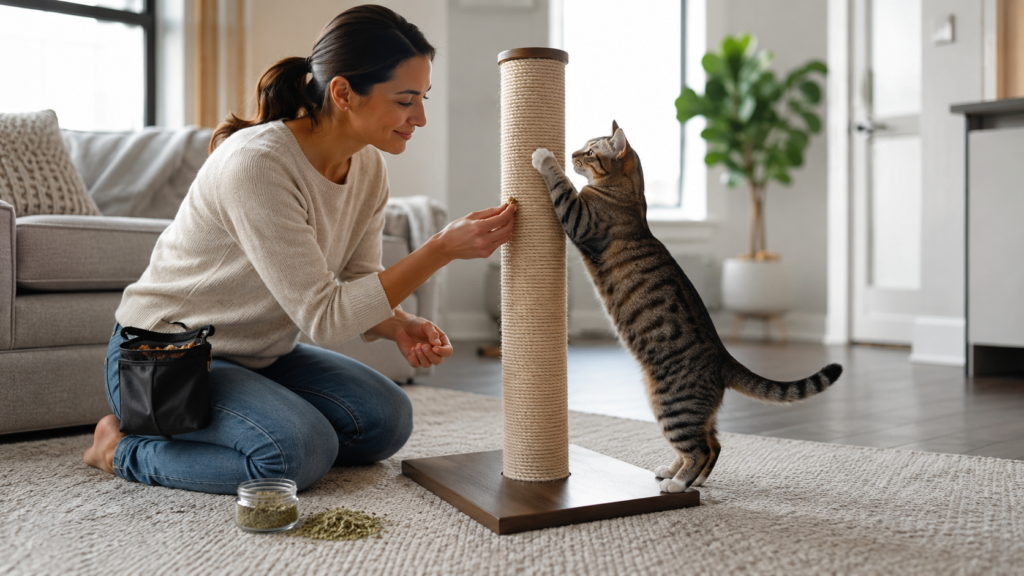
Buying the post is only half the job — you also need to encourage your cat to actually use it. Here are some simple, proven tips:
- Placement matters – Place the scratcher near furniture your cat already scratches, or in a spot they frequent often.
- Use catnip or treats – Sprinkle catnip on the post or reward your cat with treats when they use it.
- Avoid punishment – Never scold or physically punish your cat for scratching furniture; it can create fear and anxiety.
- Trim nails regularly – Combine scratching posts with regular nail trims to reduce damage.
- Provide multiple options – Cats often prefer variety, so having both vertical and horizontal scratchers can help.
- Be patient – It may take a few weeks for your cat to fully adopt the new scratching post as their go-to spot.
Common Mistakes Cat Owners Make
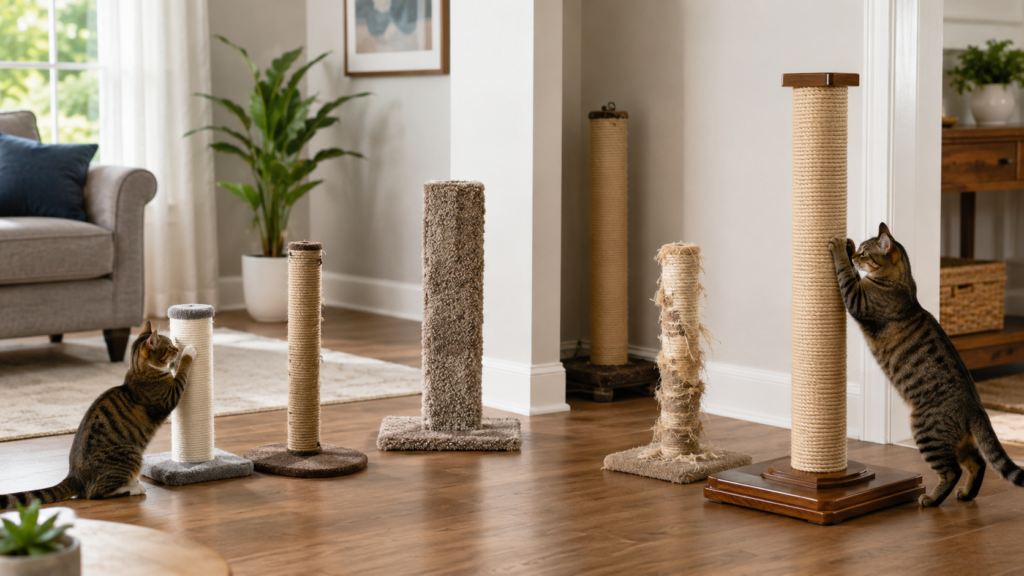
- Choosing a post that’s too short – Cats need full-body stretch room.
- Picking carpet-covered posts – This can confuse cats into thinking your carpet at home is fair game too.
- Placing the post in a hidden corner – Cats prefer scratching in visible, high-traffic areas to mark territory.
- Giving up too soon – Some cats take time to adjust to a new scratcher; don’t remove it after just a few days.
- Not replacing worn-out posts – A frayed, fully-shredded post loses its appeal; consider replacing sisal wrap periodically.
Frequently Asked Questions (FAQ)
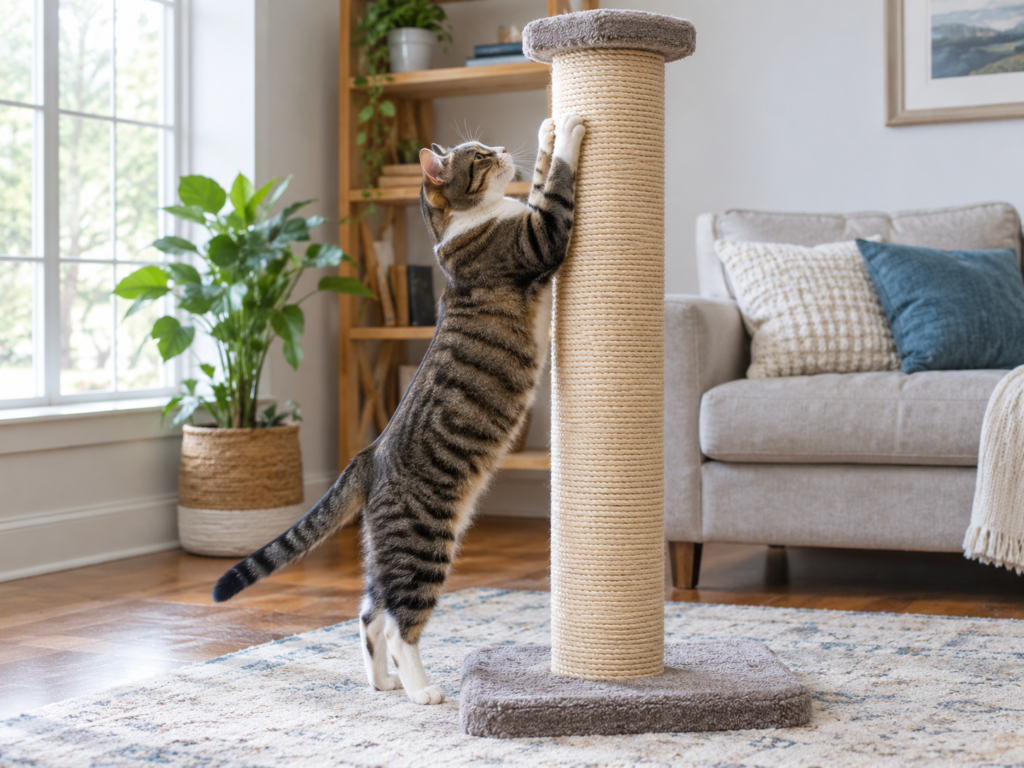
Q1: How tall should a cat scratching post be? Ideally, at least 28 to 32 inches tall, so your cat can fully stretch its body while scratching.
Q2: What material do cats prefer for scratching posts? Most cats prefer sisal rope or sisal fabric due to its rough texture, which closely mimics tree bark.
Q3: How many scratching posts do I need for multiple cats? As a general rule, provide at least one scratching post per cat, plus one extra, placed in different areas of your home.
Q4: Can a scratching post stop my cat from scratching furniture completely? Yes, in most cases — once your cat is trained to use the post and it’s placed strategically, furniture scratching drops dramatically.
Q5: How often should I replace a cat scratching post? Depending on usage, sisal wraps typically need replacing every 6–12 months, while the base structure can last for years.
Final Thoughts
A good cat scratching post is one of the smartest investments you can make as a cat owner. It protects your furniture, supports your cat’s physical and emotional health, and creates a happier home for everyone — humans and felines alike.
Whether you go for a simple sisal post, a stylish cardboard lounge, or a full-blown multi-level cat tree, the key is choosing something that matches your cat’s habits and your living space. Start with one of the top picks above, be patient during the training phase, and you’ll likely see a big difference within just a few weeks.
Your furniture — and your cat — will thank you.
Disclosure: This post contains affiliate links. We may earn a small commission from qualifying purchases made through these links, at no additional cost to you. We only recommend products we believe offer genuine value to cat owners.