
Affiliate Disclosure: As an Amazon Associate and affiliate partner for other retailers, we earn from qualifying purchases made through links in this article. This comes at no additional cost to you and helps support the free content we create.
Disclaimer: This article is for informational purposes only. Product details and recommendations may change. For pet health concerns, consult a veterinarian.
Introduction
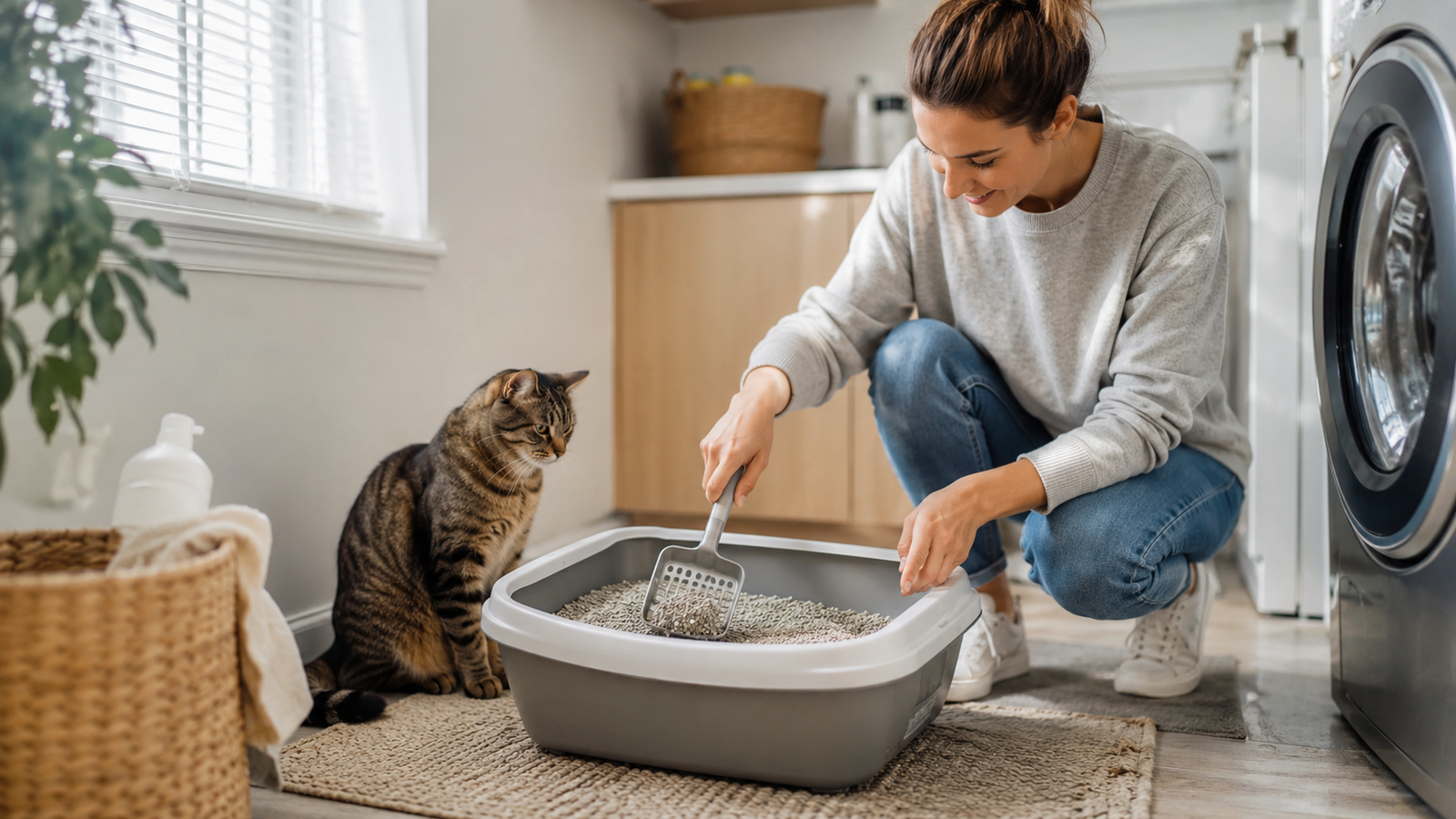
If you share your home with a cat, you already know that the litter box is not exactly the most glamorous part of pet ownership. But here’s the truth: how often you clean your cat’s litter box directly affects your cat’s health, your home’s cleanliness, and your own peace of mind.
A dirty litter box isn’t just unpleasant to smell — it can lead to serious behavioral and medical problems in cats, including inappropriate elimination (peeing outside the box), urinary tract infections, and stress-related illnesses. On the flip side, an over-cleaned box (yes, that’s a thing) can also confuse or stress out a cat who relies on scent markers to feel secure.
So how do you strike the right balance?
In this guide, we’ll walk you through a simple, practical litter box cleaning schedule that works whether you have one cat or multiple cats, live in a small apartment or a large house, and whether you’re a first-time cat parent or a seasoned multi-cat household manager. We’ll also share the tools and products that make this daily chore fast, easy, and far less smelly.
Let’s dig in (pun fully intended).
Why a Litter Box Cleaning Schedule Actually Matters
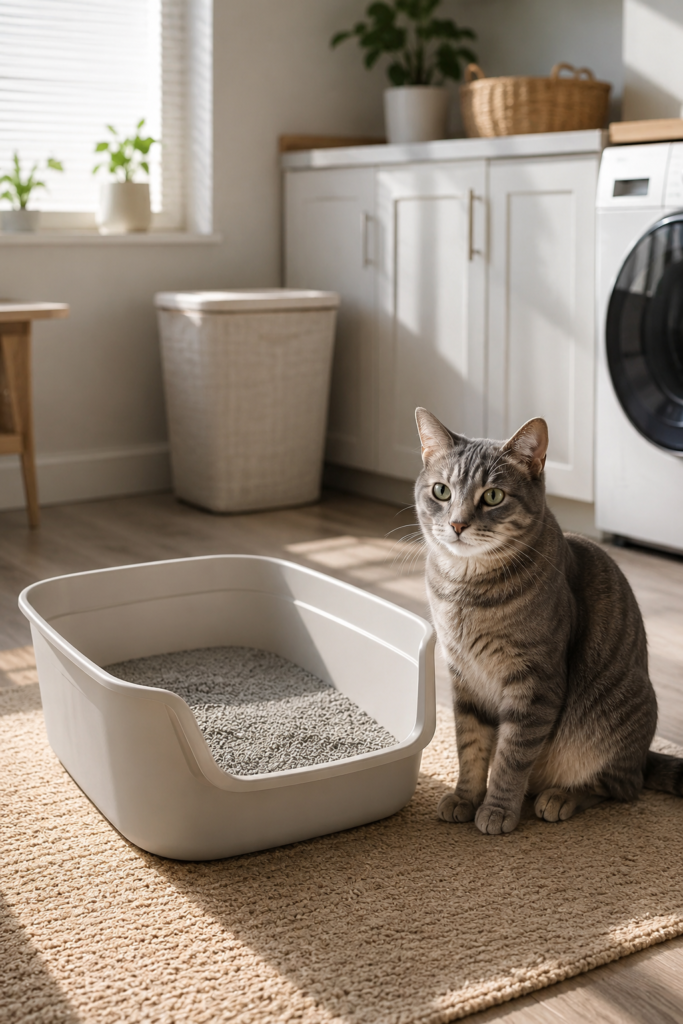
Cats are famously clean animals. In the wild, felines bury their waste to hide their scent from predators and to avoid attracting attention. This instinct hasn’t disappeared just because your cat now lives on your sofa. When a litter box becomes too dirty, your cat’s natural instinct is to look for a cleaner spot — and that spot might be your carpet, your laundry basket, or a quiet corner of your bedroom.
Here’s why staying on top of litter box cleanliness is so important:
- Prevents house-soiling. The number one reason cats stop using their litter box is a dirty box.
- Reduces odor. Regular cleaning keeps your home smelling fresh, which matters even more in small apartments.
- Protects your cat’s health. Ammonia buildup from urine can irritate a cat’s respiratory system and encourage bacterial growth.
- Helps you catch health issues early. Scooping daily lets you notice changes in your cat’s urine or stool, which can be an early warning sign of illness.
- Keeps multi-cat households peaceful. Cats can be territorial about litter boxes, and a clean, well-maintained box reduces conflict between cats.
Now let’s break down exactly what “clean” should look like, and how often each task needs to happen.
Factors That Affect How Often You Should Clean
Before we get into the schedule, it helps to understand that there’s no single “one size fits all” answer. A few factors change how often you’ll need to clean:
1. Number of Cats
The general veterinary guideline is one litter box per cat, plus one extra. So if you have two cats, you should ideally have three boxes. More cats using fewer boxes means faster buildup and more frequent cleaning.
2. Type of Litter
Clumping litter is generally easier to maintain because waste can be scooped out daily without disturbing the rest of the litter. Non-clumping litter often requires a full change more frequently since waste can’t be isolated as easily. A high-quality clumping litter like the Dr. Elsey’s Ultra Premium Clumping Cat Litter can make daily scooping noticeably faster.
https://link.amazon/B03j7wLf7
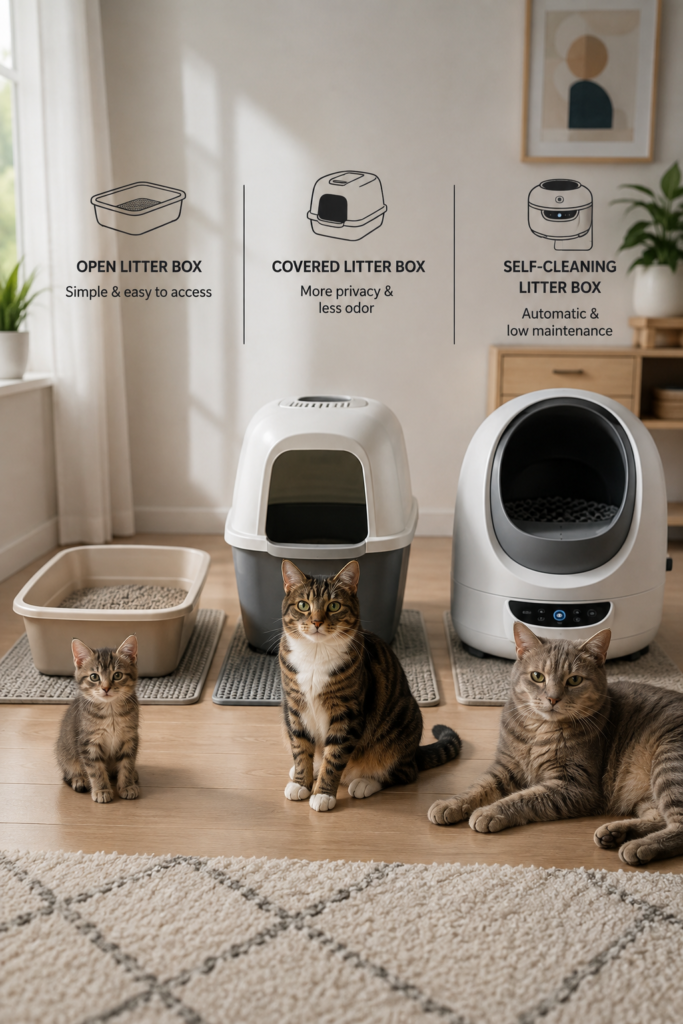
3. Type of Litter Box
- Open/standard boxes need more frequent scooping since odor isn’t contained.
- Covered/hooded boxes trap odor, which can make the box feel cleaner to you but dirtier to your cat.
- Automatic self-cleaning litter boxes like the Litter-Robot 4 scoop waste automatically after each use, drastically cutting down your manual cleaning workload.
4. Your Cat’s Age and Health
Kittens, senior cats, and cats with medical conditions (like kidney disease or diabetes) often urinate more frequently and may need more frequent box checks.
5. Household Size and Space
Smaller living spaces (apartments, studios) tend to make litter box odor more noticeable, so more frequent maintenance is usually appreciated by everyone in the home — cats and humans alike.
The Simple Cat Litter Box Cleaning Schedule
Here’s an easy-to-follow breakdown you can actually stick to.
For a complete setup checklist, see our Cat Litter Box Setup Guide.
🗓️ Daily Tasks (Once or Twice a Day)
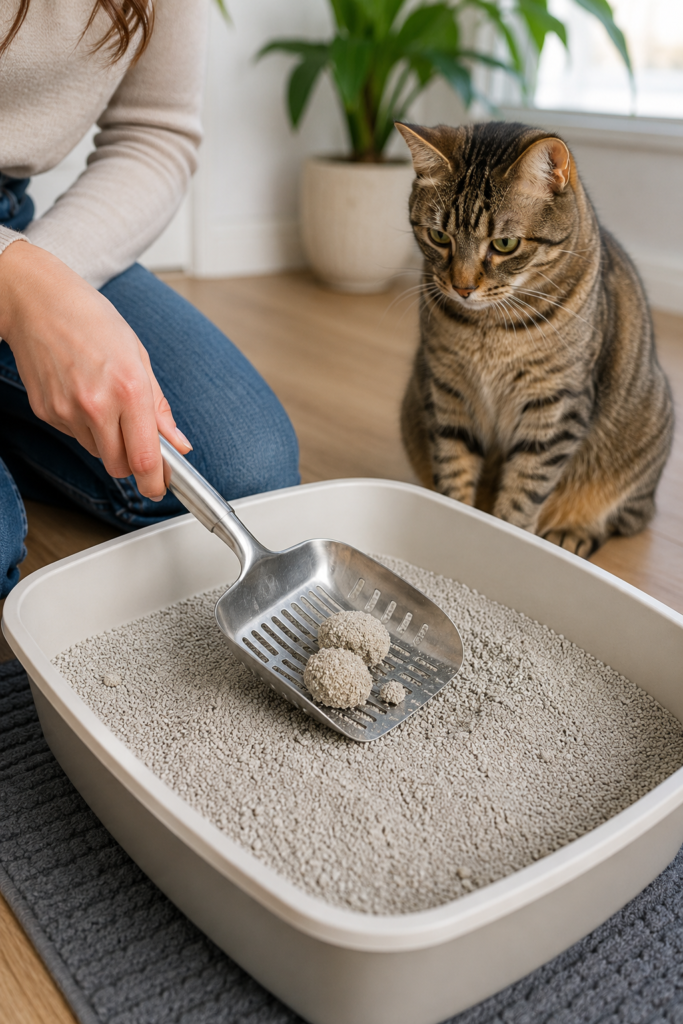
Scoop solid waste and clumps. This is the single most important habit for litter box maintenance. Scooping daily prevents odor buildup and keeps the box inviting for your cat. A sturdy, well-designed scoop like the DuraScoop Cat Litter Scoop makes this a 30-second task.
Top off litter if needed. After scooping, check the litter depth. Most cats prefer about 2–3 inches of litter. Top it off if it’s looking low.
Quick visual and odor check. While scooping, glance for anything unusual — diarrhea, blood, or a strong ammonia smell can be early signs of a health issue worth mentioning to your vet.
🗓️ Weekly Tasks
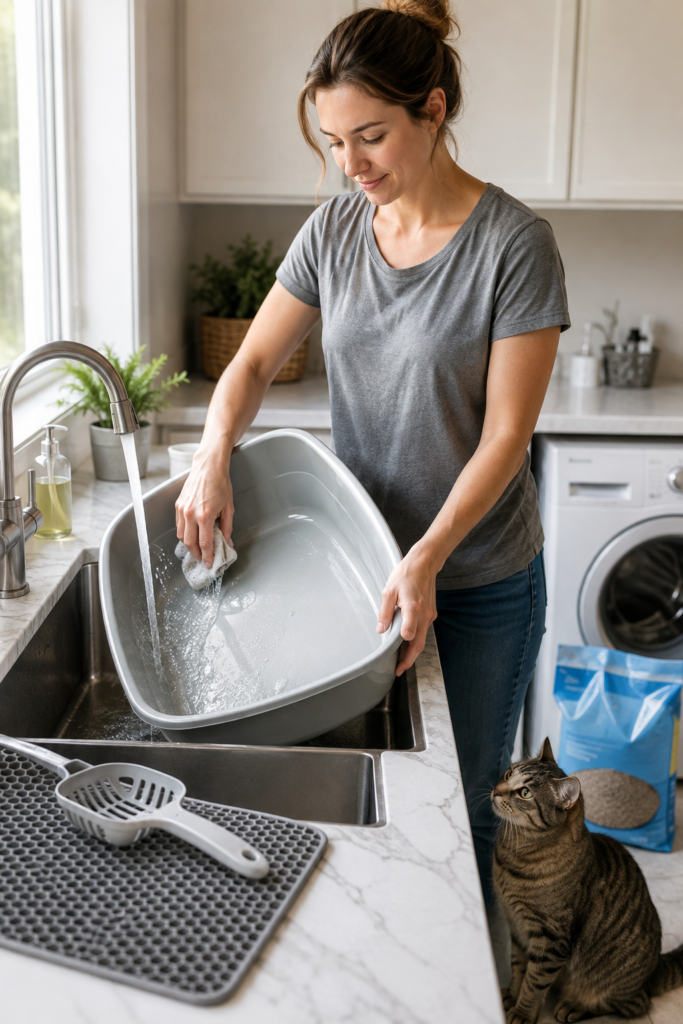
Full litter change and box wash (for standard litter). Once a week, empty the entire box, wash it with mild, unscented soap and warm water, dry it completely, and refill with fresh litter. Avoid harsh chemical cleaners — the strong scent can drive cats away from the box, and residue can be irritating to their paws.
A dedicated cleaning spray designed for pet areas, such asNature’s Miracle Litter Box Odor Destroyer helps break down odor-causing bacteria without leaving harsh residues behind.
https://link.amazon/B0debBWUh
Wash or replace the litter mat. Litter mats trap tracked litter and prevent your cat from spreading it across the house. A textured trapping mat like theiPrimio Cat Litter Trapper Mat should be shaken out or vacuumed weekly.
Inspect the litter box for cracks or scratches. Over time, litter boxes develop tiny scratches that trap bacteria and odor, even after washing. If yours is looking worn, weekly is a good time to check whether it’s due for replacement.
🗓️ Monthly Tasks
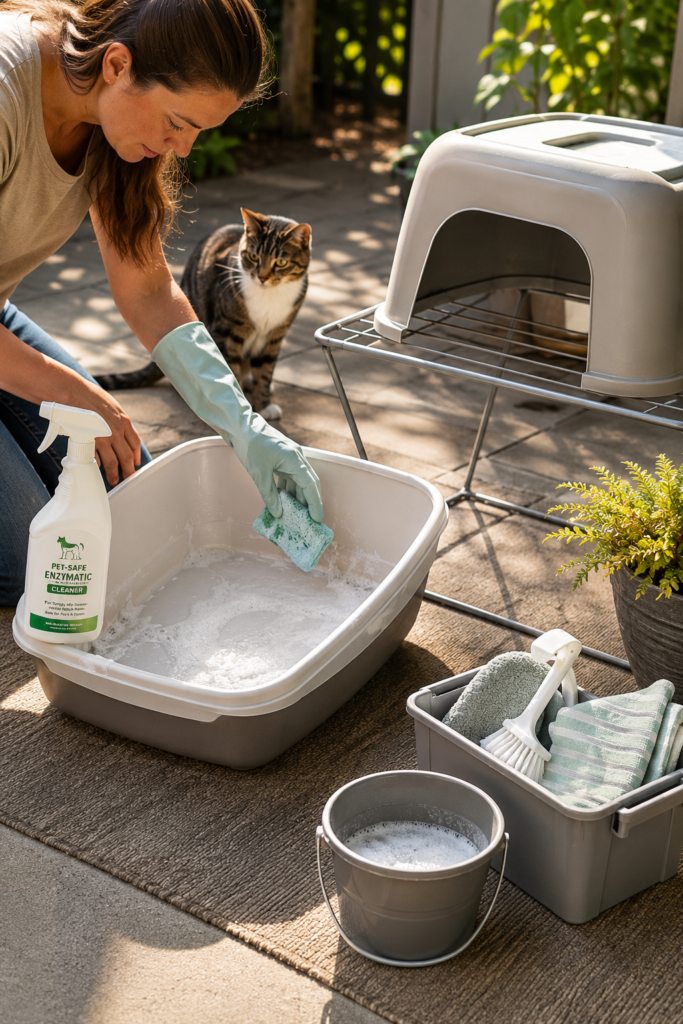
Deep clean the box. Even with regular washing, plastic litter boxes can absorb odor over time. Once a month, do a deeper clean using a pet-safe enzymatic cleaner, and let the box air-dry in sunlight if possible — sunlight naturally helps neutralize odor.
Evaluate your litter box setup. Ask yourself: Is the box still the right size for your cat? Is it in a low-traffic, easily accessible location? Would a second box help reduce buildup? Monthly is a great time for this bigger-picture check-in.
Replace the litter box (every 6–12 months). Plastic is porous, and no amount of washing fully removes trapped bacteria and odor after months of use. Replacing your litter box every 6–12 months is a simple way to keep things genuinely fresh. A budget-friendly, easy-to-clean option like theIRIS USA High-Sided Cat Litter Box is a great replacement pick.
https://link.amazon/B0eO7vLqd
Quick Reference Table
| Task | Frequency |
|---|---|
| Scoop solid waste | 1–2 times daily |
| Top off litter | Daily, as needed |
| Full litter change & box wash | Weekly |
| Clean/shake out litter mat | Weekly |
| Deep clean with enzymatic cleaner | Monthly |
| Replace litter box entirely | Every 6–12 months |
Signs Your Litter Box Isn’t Being Cleaned Often Enough
Even with the best intentions, life gets busy. Here are clear signs your cat is telling you the box needs more attention:
- Your cat is urinating or defecating outside the box. This is the most common and most telling sign.
- Strong ammonia smell within a day or two of cleaning.
- Your cat hesitates or paces near the box without going in.
- Litter tracking increases because your cat is trying to cover waste more aggressively, kicking litter everywhere.
- Visible clumps or waste sitting for more than a day.
If you notice any of these signs, tightening up your schedule — or adding an extra box — usually solves the problem quickly.
Tools That Make Litter Box Cleaning Easier (and Less Gross)
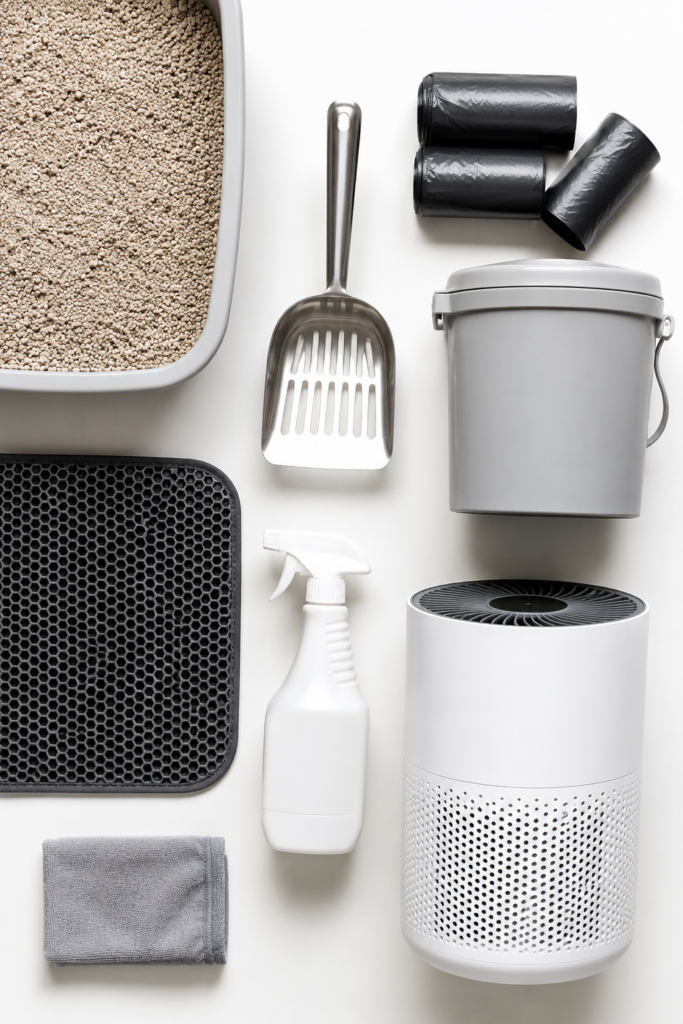
Cleaning a litter box doesn’t have to be a dreaded daily chore. The right tools can turn it into a genuinely quick task.
1. A Good Scoop Look for a metal or sturdy plastic scoop with fine slots that sift litter efficiently. The DuraScoop Cat Litter Scoop is a favorite among cat owners for its durability.
2. Odor-Proof Disposal Bags Regular trash bags let odor escape. Odor-sealing bags likeLitter Genie Refill Bags trap smell far more effectively.
3. A Litter Disposal System A dedicated litter disposal pail, such as theLitter Genie Plus Cat Litter Disposal System, seals waste away between trash days — a lifesaver for apartment living.
4. An Automatic Litter Box If daily scooping isn’t realistic for your schedule, a self-cleaning box like the Litter-Robot 4 automatically sifts and seals waste after each use, cutting your hands-on time dramatically.
5. A Quality Air Purifier For multi-cat households or smaller apartments, an air purifier designed for pet odors, like the LEVOIT Core 300 Air Purifier can noticeably improve air freshness between cleanings.
Common Litter Box Cleaning Mistakes to Avoid
Avoid more common problems with our guide to Cat Litter Box Mistakes.
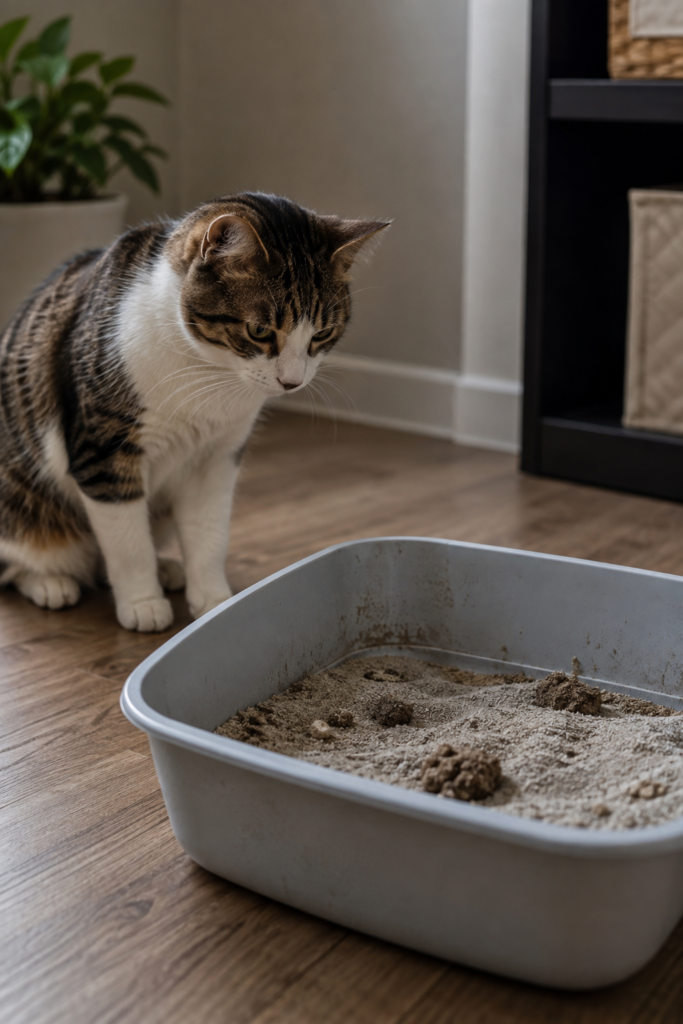
Using scented litter or harsh cleaning chemicals. Cats have a much stronger sense of smell than humans. Heavily scented litters or cleaners can actually discourage box use rather than encourage it.
Not having enough boxes for multiple cats. Remember the “one per cat, plus one” rule. Skipping this often leads to accidents even when you’re cleaning frequently.
Placing the box in a high-traffic or hard-to-reach area. Cats want privacy and easy access. A box tucked in a loud, busy hallway (or up several flights of stairs for a senior cat) discourages regular use, no matter how clean it is.
Waiting too long between full litter changes. Topping off litter is not a substitute for a full change. Old litter, even clumping litter, gradually loses its odor-absorbing power.
Skipping the box wash. Bacteria builds up on the surface of the box itself, not just in the litter. Washing the box weekly is just as important as changing the litter.
Frequently Asked Questions
How often should I completely change cat litter? For most households, a full litter change once a week is ideal, combined with daily scooping. Automatic litter boxes can sometimes stretch this to every two weeks since waste is removed after each use.
Is it bad to clean the litter box every day? No — daily scooping is actually recommended and considered a best practice. What you want to avoid is fully washing the box with harsh chemicals every single day, which can strip away your cat’s scent markers and cause stress.
How many litter boxes should I have for two cats? The standard rule is one box per cat plus one extra, so three boxes for two cats is ideal, especially in a multi-level home.
Why does my litter box smell even after cleaning? This is usually due to buildup in the porous plastic itself. If odor persists after a full wash, it may be time to replace the box, which is recommended every 6–12 months.
Can a dirty litter box make my cat sick? Yes. Prolonged exposure to ammonia and bacteria in a dirty box can contribute to urinary tract infections and respiratory irritation. If you notice straining, frequent trips to the box, or blood in the urine, contact your veterinarian promptly.
What’s the best litter for easy cleaning? Clumping, low-tracking litters tend to be the easiest to maintain daily. Many owners find unscented clumping litter, like Dr. Elsey’s Ultra Premium Clumping Cat Litter, strikes a good balance between odor control and ease of scooping.
Final Thoughts
A consistent litter box cleaning schedule isn’t just about keeping your home smelling fresh — it’s one of the simplest ways to support your cat’s physical health and emotional wellbeing. The good news is that once you build the habit, it takes just a few minutes a day.
To recap the simple schedule:
- Daily: Scoop waste, top off litter
- Weekly: Full litter change, wash the box, clean the mat
- Monthly: Deep clean, evaluate your setup
- Every 6–12 months: Replace the litter box
With the right tools — a good scoop, quality litter, and maybe even an automatic litter box — this daily task becomes second nature rather than a dreaded chore. Your cat (and your nose) will thank you.