Disclosure: This post contains affiliate links. If you purchase through these links, we may earn a small commission at no extra cost to you. We only recommend products we believe genuinely help solve the problem discussed.
Disclaimer: This article is for general informational and educational purposes only and is not a substitute for professional veterinary advice, diagnosis, or treatment. Every dog is different, so consult a qualified veterinarian if your dog has paw pain, injuries, skin problems, mobility issues, or other health concerns. Some product links in this article are affiliate links, which means we may earn a small commission at no extra cost to you.
Meta Description: Tired of muddy paw prints on your floors? Learn 15 proven, vet-approved ways to stop your dog from tracking mud into the house — including product picks that actually work
Introduction: The Muddy Paw Problem Every Dog Owner Knows
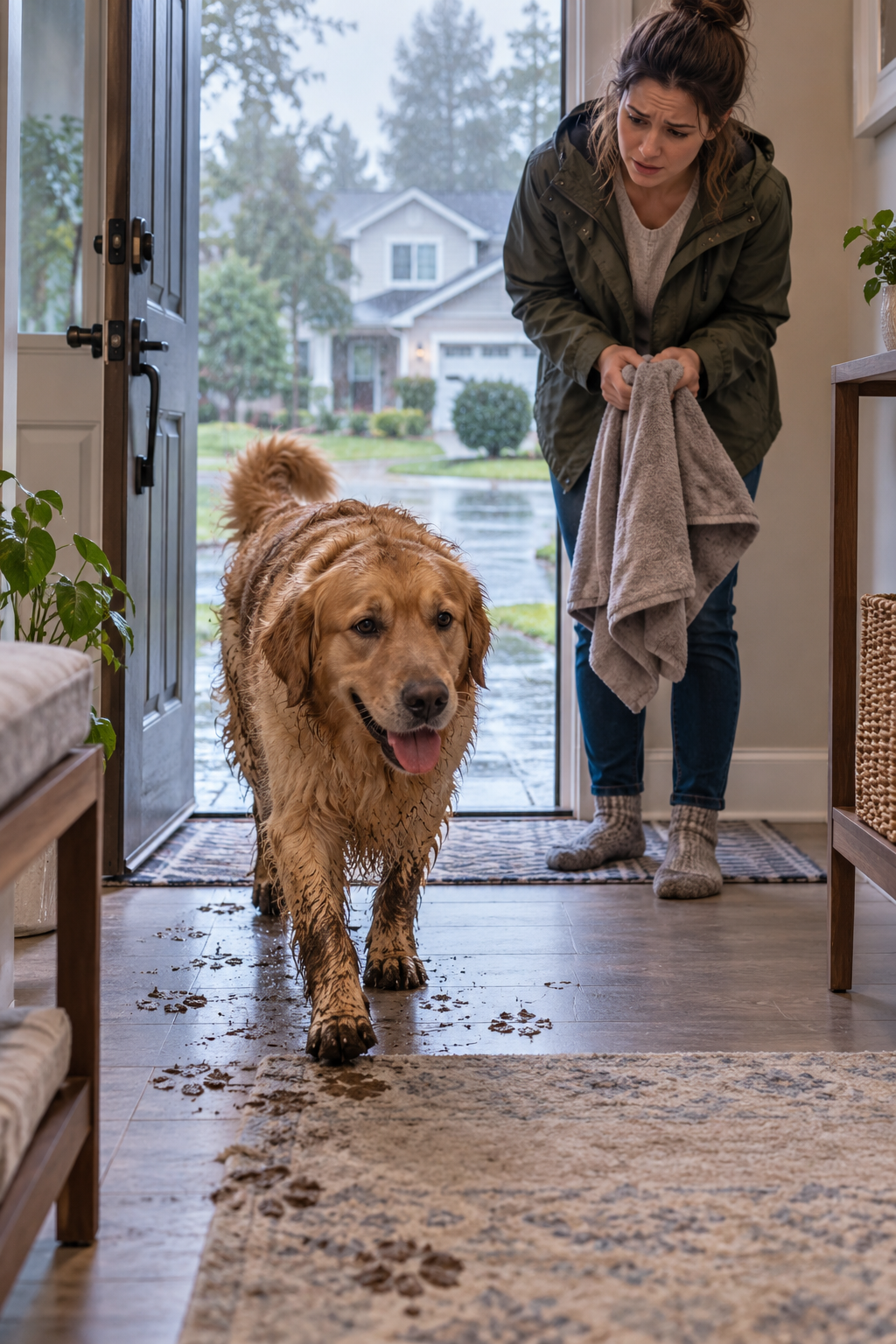
If you own a dog, you already know the drill. It rains for one afternoon, your backyard turns into a swamp, and within seconds your dog transforms into a four-legged mud delivery service — sprinting straight from the yard to your favorite rug.
You are not alone. Millions of dog owners around the world deal with this exact problem every single day, regardless of climate, breed, or house size. The good news? Muddy paw prints are almost always preventable with the right combination of habits, training, and a few smart products.
In this guide, we’ll walk through 15 practical, easy-to-follow methods to stop your dog from tracking mud into your home — from simple daily habits to tools that make the job almost automatic. Whether you have a tiny apartment balcony or acres of backyard, there’s something here for you.
Let’s get those floors clean again.
Why Do Dogs Track So Much Mud Anyway?
Before jumping into solutions, it helps to understand why this happens. Dogs have paw pads with grooves and fur between the toes (especially in breeds like Golden Retrievers, Labradors, and Bernese Mountain Dogs) that naturally trap dirt, mud, and moisture. Add an energetic dash back into the house after playtime, and that mud gets distributed across every surface it touches.
Some key reasons mud tracking gets worse:
Long fur between paw pads collects and holds mud like a sponge
Uncut or overgrown nails create extra grip points where dirt sticks
Excited dogs run faster, meaning more paw contact and smearing
Wet or muddy yards after rain, snow melt, or gardening
No transition zone between outdoor and indoor spaces
Once you understand the “why,” the “how to fix it” becomes much simpler.
1. Set Up a Dedicated Paw-Cleaning Station Near the Door
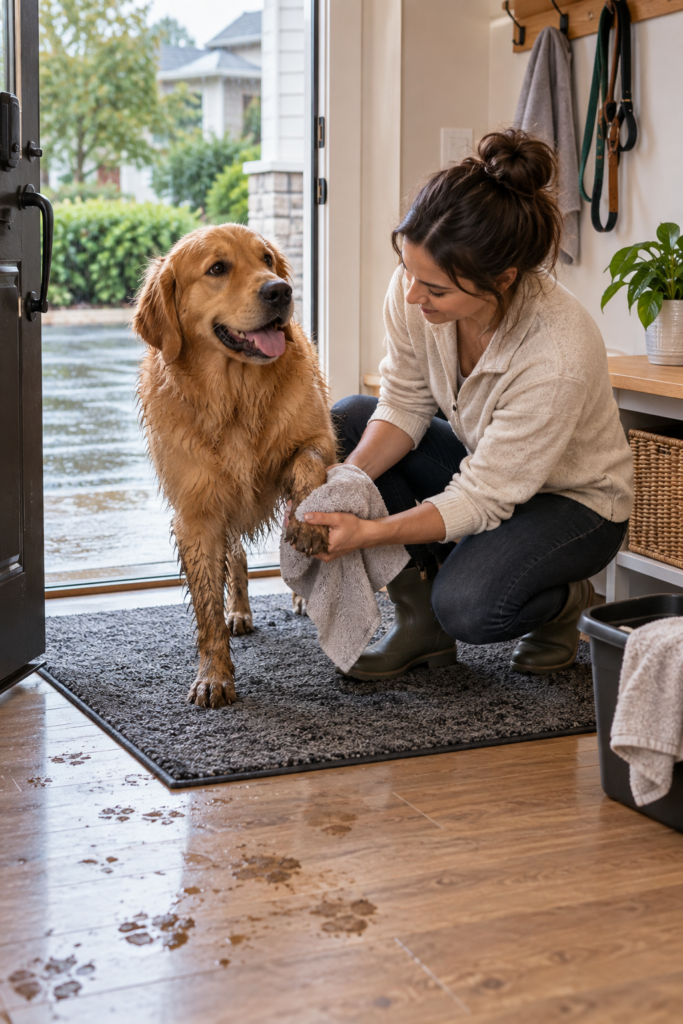
The single most effective fix is creating a mud-stopping checkpoint right at your entryway. This doesn’t need to be fancy — a mat, a towel, and a paw-cleaning tool are enough to catch 80% of the mess before it spreads.
A great starting point is a super-absorbent door mat designed specifically for pets. Look for microfiber mats with deep grooves that trap dirt and moisture from the paw before your dog steps further inside.
👉 Check out this highly-rated absorbent pet door mat here
https://link.amazon/B05HhnqE9
2. Use a Paw Washer Cup
Paw washer cups are silicone cups filled with water and soft bristles inside. You simply dip each paw in for a few seconds, and the bristles gently loosen mud and dirt without you needing to bend over or use a towel. These have become one of the most popular pet gadgets in recent years because they’re fast, portable, and mess-contained.
👉 This best-selling silicone paw cleaner cup is a game changer
https://link.amazon/B0dVKmKq9
3. Keep a Microfiber Towel by Every Entry Point
Simple, cheap, and effective. Keep a dedicated quick-dry microfiber towel hanging near your back door, front door, and garage entrance. Microfiber absorbs significantly more moisture than regular cotton towels and dries faster between uses.
👉 Grab a pack of ultra-absorbent microfiber pet towels here
https://link.amazon/B0c2nUhNr
Train your dog to associate stopping at the door with a quick paw wipe using positive reinforcement (see Section 9 below for training tips).
4. Trim the Fur Between Paw Pads Regularly
For fluffy or long-haired breeds, the fur between the toes is often the biggest mud magnet. Trimming this fur short (without cutting the pad itself) dramatically reduces how much mud clings to each paw.
A cordless pet grooming clipper designed for paw and sanitary trims makes this a five-minute job at home.
👉 See this quiet, cordless paw-trimming clipper set
https://link.amazon/B0eCi77BE
If you’re not comfortable trimming near the paw yourself, ask your groomer to do a “paw pad trim” during regular visits — most groomers offer this as a quick add-on.
5. Create an Outdoor Muddy-Zone Barrier
If your dog has a favorite muddy corner of the yard (near a fence line, under a tree, or by a gate), consider blocking access to that specific area with decorative garden fencing or gravel. Redirecting your dog’s path away from problem zones prevents the mud from forming in the first place.
6. Lay Down Outdoor Turf or Gravel Pathways
If your dog has a regular potty spot or walking path that turns into a mud pit, installing artificial pet turf or a gravel walkway along that route solves the problem at the source. Many pet owners install a small turf patch just outside the door specifically for bathroom breaks, which stays far cleaner than natural grass or dirt.
7. Use Dog Boots or Paw Protectors
It may look a little silly at first, but dog boots are one of the most effective tools for muddy-season walks. They completely block mud from reaching the paw in the first place. Look for boots with adjustable straps and non-slip soles so your dog stays comfortable and safe on wet surfaces.
Most dogs need a short adjustment period to get used to boots — give treats and short practice sessions indoors before heading outside.
8. Install a Washable Runner Rug in High-Traffic Areas
Even with the best paw-cleaning routine, some residual dirt will make it inside. Protect your floors with a machine-washable runner rug placed along your dog’s usual path from the door to their bed or favorite spot.
👉 This durable, machine–washable entryway runner rug is perfect for pet homes
https://link.amazon/B02WBJa9u
Unlike traditional rugs, washable runners can be tossed straight into the laundry, saving you from deep-cleaning stains every week.
9. Train a “Wait” or “Paws Up” Command at the Door
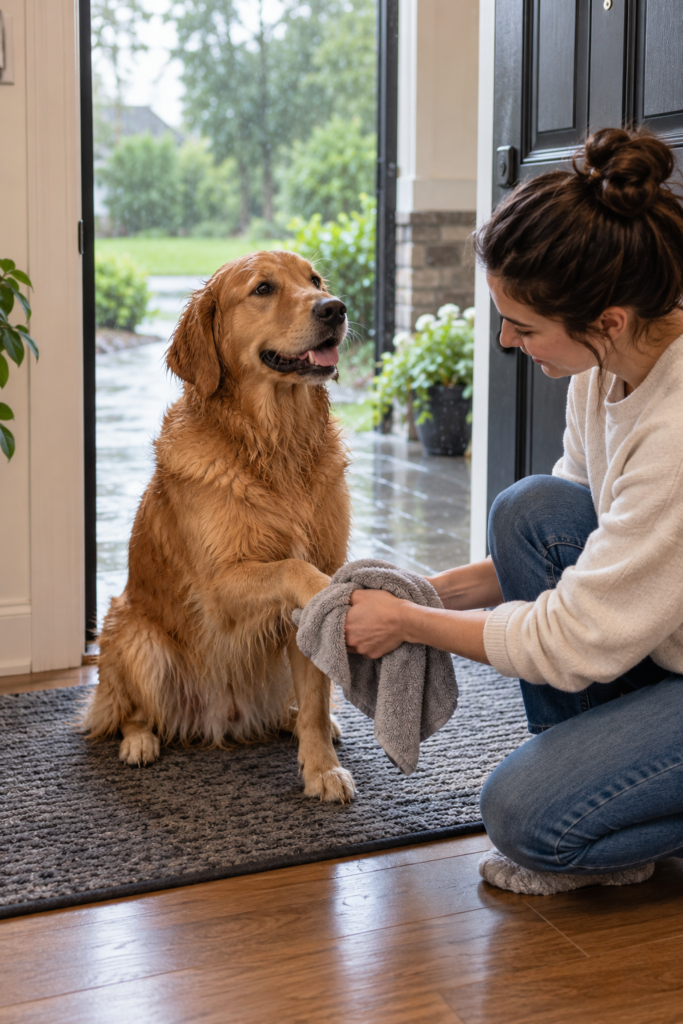
Training is one of the most underrated mud-prevention tools. Teaching your dog to sit or “wait” at the door before entering gives you a few extra seconds to wipe their paws every single time.
Quick training steps:
- Ask your dog to sit at the door before opening it
- Reward calm waiting behavior with a treat
- Wipe paws while they’re seated
- Release them inside only after cleaning is done
- Repeat consistently until it becomes automatic
Consistency is everything here — most dogs learn this routine within 1–2 weeks of daily repetition.
10. Time Outdoor Play Around Weather and Yard Conditions
If heavy rain just passed, wait 20–30 minutes before letting your dog into the yard. Standing water and fresh mud are far worse than semi-dried, settled ground. This alone can cut mud tracking significantly during rainy seasons.
11. Improve Yard Drainage
If your yard consistently turns swampy after rain, the long-term fix is improving drainage. This could mean:
- Adding a layer of mulch or gravel in low-lying areas
- Installing a French drain along the fence line
- Regrading soil slightly away from the house
- Planting ground cover in bare dirt patches
This is more of an investment, but for homes with chronic mud problems, it solves the issue at the root instead of managing it daily.
12. Use a Dog Bathing Station or Outdoor Shower Attachment
For dogs that come back seriously muddy (think lake days or off-leash trails), a portable outdoor dog shower attachment connected to your garden hose lets you rinse legs and paws before they even reach the door.
13. Keep Nails Trimmed
Overgrown nails increase surface area and grip, meaning more dirt gets picked up and carried. Regular nail trims (every 3–4 weeks for most dogs) reduce this naturally while also supporting healthy joint alignment.
14. Set Up a “No Paws Past This Line” Zone With Baby Gates
For homes with carpeted living rooms or bedrooms, a simple pet safety gate placed at the hallway entrance creates a buffer zone. This keeps muddy zones contained to tile, hardwood, or easily-cleaned flooring near the entrance.
👉 This freestanding pet gate is great for creating a mud-free zone
https://link.amazon/B046w1pzc
15. Stay Consistent — Habits Beat One-Time Fixes
The biggest secret to a mud-free home isn’t a single product — it’s consistency. Dogs thrive on routine, and once paw-wiping becomes a normal part of coming inside (just like leash-on before walks), it stops feeling like extra work.
Quick Comparison: Best Mud-Prevention Tools at a Glance
| Product Type | Best For | Effort Level |
|---|---|---|
| Absorbent door mat | Daily light mud | Low |
| Paw washer cup | Medium-to-heavy mud | Low |
| Dog boots | Rainy season walks | Medium |
| Artificial turf pathway | Chronic yard mud | High (one-time setup) |
| Washable runner rug | Floor protection | Low |
Frequently Asked Questions
Q: Why does my dog always run inside with muddy paws no matter what I do? This is usually a training gap, not a “bad dog” issue. Dogs repeat behavior that gets rewarded — if running inside gets them to their favorite spot faster, they’ll keep doing it. Teaching a calm “wait at the door” routine (Section 9) is the fastest fix.
Q: Are dog boots actually effective, or just for looks? When properly fitted, dog boots are genuinely effective at blocking mud and are commonly used by hunting and working dog owners in wet terrain. The key is proper sizing and a short training period.
Q: How often should I trim the fur between my dog’s paw pads? Every 3–4 weeks for long-haired breeds, or whenever you notice mud clumping and sticking between toes.
Q: What’s the fastest way to clean a muddy dog with no time to spare? A paw washer cup combined with a quick microfiber towel dry-off takes under two minutes and handles most everyday mud situations.
Q: Will artificial turf really stop mud completely? Not 100%, but it drastically reduces it by eliminating the soil surface dogs would otherwise dig into and stand on when wet.
Final Thoughts
Muddy paw prints are one of the most common — and most fixable — challenges of dog ownership. With a simple combination of the right products, a consistent door-side routine, and a little bit of training, you can keep your floors clean without giving up playtime, walks, or trips to the yard.
Start with just one or two changes from this list — a door mat and a paw-wipe habit are a great place to begin — and build from there. Your floors (and your mop) will thank you.