
Affiliate disclosure: This post contains affiliate links. If you buy through them, we may earn a small commission at no extra cost to you. We only recommend products we believe are useful for pet owners.
Medical note: This article is for education only. It is not veterinary advice. If your dog’s night barking started suddenly, or your dog seems sick, hurt or confused, please talk to your vet.
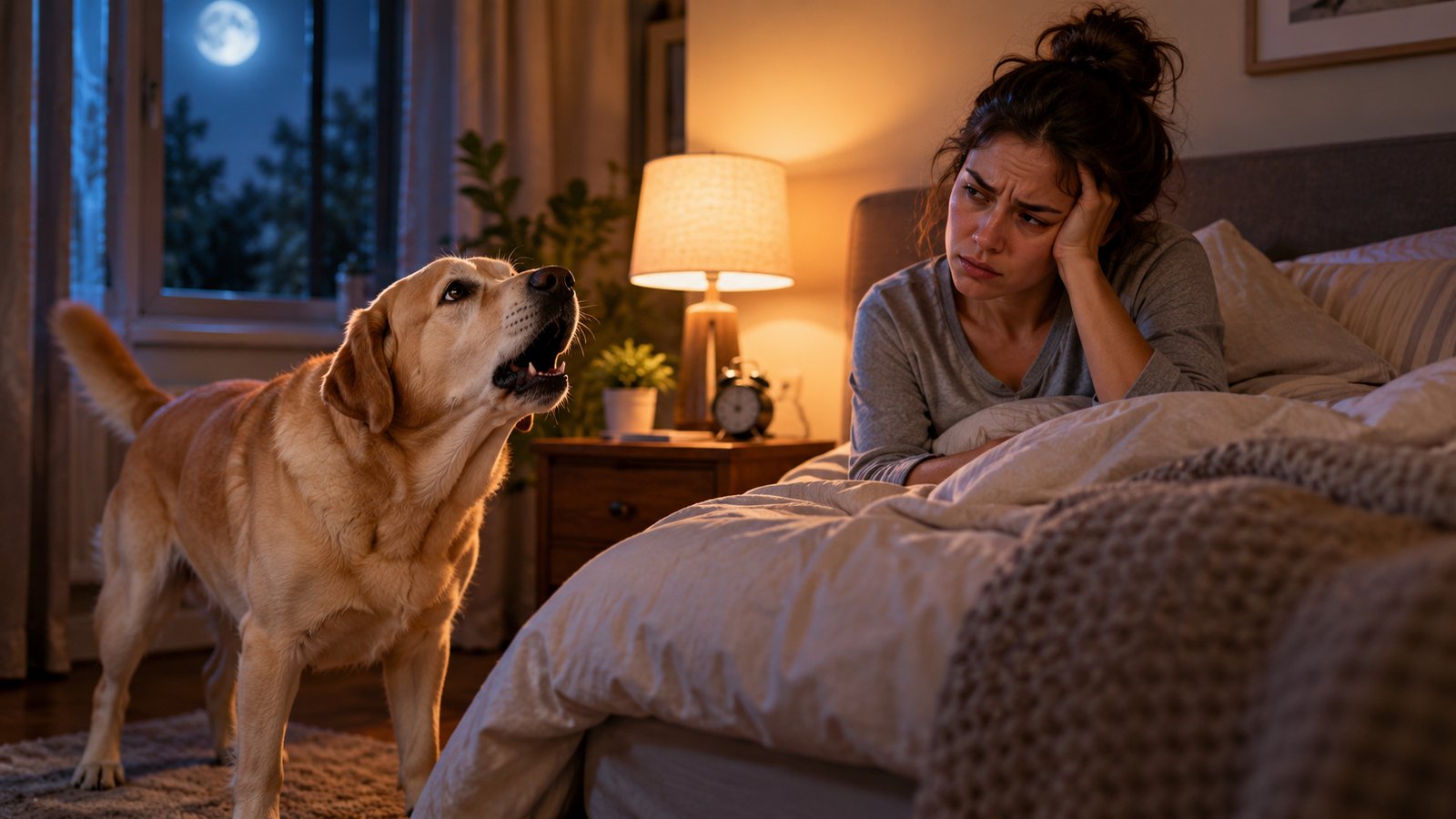
It is 2 a.m. You are tired. Your dog is barking again.
You have tried talking to him. You have tried ignoring him. You may even have tried hiding under the pillow. And now you are worried about your sleep, your neighbors, and whether this will ever stop.
Take a deep breath. You are not alone, and it is fixable. Night barking is one of the most common problems dog owners face, and in most cases there is a clear reason behind it. Once you find the reason, the solution gets much easier.
This guide shares simple, practical tips based on advice commonly given by veterinarians and professional dog trainers. You will learn why dogs bark at night, how to fix it step by step, which products can help, and when to call a professional.
In this guide, you will learn:
- The most common reasons dogs bark at night
- How to rule out health problems first
- 10 simple tips to stop night barking
- Helpful products for calmer nights
- What NOT to do (these mistakes make barking worse)
- A simple 7-day plan you can start tonight
Let’s get started.
Why Does My Dog Bark at Night?
Barking is how dogs talk. At night, when the house is quiet, your dog may be trying to tell you something. Here are the most common reasons.
1. Boredom and Extra Energy
A dog that did not get enough exercise or mental activity during the day may still have energy to burn at night. This is very common in young, active breeds.
2. Noises and Movement Outside
Dogs hear much better than people. A passing car, a raccoon, a neighbor’s cat, wind, or a far-away siren can set off barking. Many dogs also bark to “guard” the house.
3. Loneliness or Separation Anxiety
Some dogs feel worried when they are away from their family, even at night. They may bark, whine, pace or scratch at the door. Dogs that sleep in another room often struggle the most.
4. Needing the Bathroom
Puppies and senior dogs cannot always hold it all night. Barking may be your dog’s way of saying, “I need to go out.”
5. Hunger, Thirst or Being Too Hot or Cold
A dog that is uncomfortable will often speak up. Check the room temperature, water bowl and bedding.
6. Attention-Seeking
If barking at night has worked before (you got up, talked, or gave a treat), your dog may have learned that barking gets a reward. Dogs are smart. They repeat what works.
7. Pain or Illness
Older dogs with sore joints may find it hard to get comfortable at night. Some senior dogs also develop age-related confusion, which can cause restlessness and barking after dark. Other health problems can cause discomfort too.
8. Fear
Thunder, fireworks, or a new environment can make a dog scared. A frightened dog may bark, shake or hide.
Step 1: Rule Out Health Problems First
Before you try any training, ask yourself one question: Is this new?
If your dog never barked at night before and suddenly started, please call your vet. Sudden changes in behavior can be a sign of pain, an upset stomach, hearing or vision changes, or other medical issues.
Call your vet if your dog also:
- Seems confused, stares at walls, or gets “lost” in a familiar room
- Paces or cannot settle down
- Drinks or urinates much more than usual
- Limps, licks a sore spot or cries when touched
- Has vomiting, diarrhea or a change in appetite
If your senior dog is stiff and sore, joint pain may be part of the problem. You can read our guide on to learn more about supporting older joints, and always check with your vet first.
10 Simple Tips to Stop Your Dog from Barking at Night
Tip 1: Give More Exercise During the Day
A tired dog is a quiet dog. Most adult dogs need at least 30 to 60 minutes of activity every day, and some breeds need much more. Try to include a walk in the early evening, so your dog has time to relax before bed.
But do not overdo exercise right before bedtime. Very exciting play can leave your dog wired instead of sleepy. Aim for a calm walk with lots of sniffing, since sniffing is naturally calming for dogs.
Tip 2: Add Mental Exercise
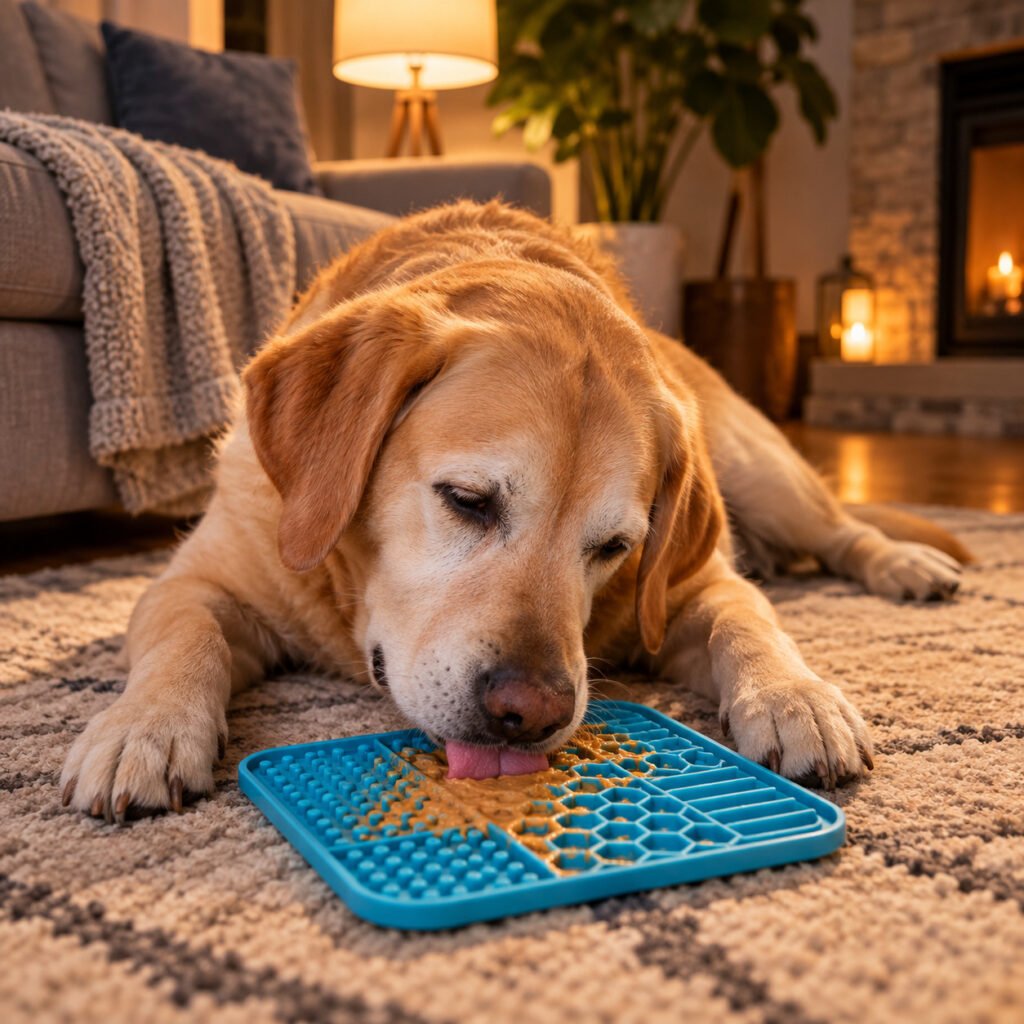
Mental work tires dogs out just as much as running. Try a few of these in the evening:
- Puzzle feeders instead of a regular food bowl
- Lick mats spread with dog-safe food
- Snuffle mats with hidden treats
- Short training games (sit, stay, “find it”)
Even 10 to 15 minutes of brain games can make a big difference.
👉PRODUCT: LICK MAT OR PUZZLE FEEDER – https://link.amazon/B01U3HEQ8
Tip 3: Create a Calm Bedtime Routine
Dogs love routine. A simple, repeated pattern tells your dog, “It is time to sleep.” For example:
- Dinner at the same time each night
- Calm evening walk
- Last bathroom trip right before bed
- Dim the lights and lower the noise
- Same bed, same spot, same goodnight phrase
After a week or two, your dog will start to relax the moment the routine begins.
Tip 4: Always Do a Last Potty Break
Take your dog out right before you go to bed, even if it is cold or late. For puppies, you may also need a middle-of-the-night trip. Keep it quiet and boring: no play, no talking, and no big excitement. Then straight back to bed.
Also, try to avoid giving a big drink of water or a large meal right before bedtime.
Tip 5: Make the Sleeping Spot Comfortable
A comfortable dog is a calmer dog. Check these things:
- Bed: Is it soft enough and big enough? Older dogs often sleep better on orthopedic memory foam.
- Temperature: Not too hot, not too cold.
- Location: Many dogs settle best when they can sleep in or close to their owner’s bedroom.
- Familiar smell: An old T-shirt you have worn can be comforting.
👉PRODUCT: CALMING OR ORTHOPEDIC DOG BED – https://link.amazon/B08YDOTeg
Tip 6: Block or Cover Outside Noise
If your dog barks at sounds and shadows outside, you can reduce what he hears and sees.
- Use a white noise machine or fan. Steady background sound hides sudden noises.
- Close curtains or blinds in the room where your dog sleeps.
- Move the bed away from windows and doors.
- Bring the dog inside. Dogs left outside at night often bark much more, and it is safer inside.
Soft background music made for dogs can also help some pets relax.
Tip 7: Try Crate Training (the Right Way)
For many dogs, a crate is a safe, cozy den. It works best when your dog has learned to love it slowly. Never use a crate as punishment.
- Choose a crate that is big enough to stand, turn and lie down in.
- Put a soft bed and a safe chew toy inside.
- Feed meals inside the crate so it feels like a happy place.
- Cover part of the crate with a light blanket or crate cover to make it darker and calmer. Leave one side open for airflow.
Puppies should never be left in a crate for longer than they can hold their bladder. If your dog panics in the crate, stop and talk to a trainer or vet. Crates are not right for every dog.
Tip 8: Do Not Reward the Barking
This is the hardest tip, and the most important one for attention-seeking barking.
If you get up, talk, shout or give treats when your dog barks, he learns that barking works. Instead:
- Wait for quiet. Even a few seconds of silence is your chance.
- Reward calm. Quietly say “good” and give a small treat when your dog is quiet.
- Stay consistent. Everyone in the house needs to follow the same rules.
Be ready for the “extinction burst.” Barking often gets worse for a few nights before it gets better, because your dog is trying harder to get your attention. Stay calm and keep going. This phase is normal.
Important: Only use this method if you are sure your dog does not need the bathroom, is not in pain, and is not scared. If barking looks like fear or distress, comfort your dog instead.
Tip 9: Use Calming Aids (With Your Vet’s Advice)
Some dogs need extra help to relax, especially those who are anxious. There are many calming products on the market, such as:
- Calming chews with ingredients like L-theanine, chamomile or melatonin
- Pheromone diffusers and collars that give off a scent similar to a calming mother-dog scent
- Anxiety wraps that give gentle, steady pressure
These products are designed to support calm behavior. They do not work for every dog, and they are not a replacement for training or vet care. Talk to your vet before giving any supplement, especially if your dog takes medicine or has health problems.
👉PRODUCT: CALMING CHEWS OR PHEROMONE DIFFUSER – https://link.amazon/B0gVIhltV
Tip 10: Get Professional Help if Needed
If you have tried everything and the barking continues, a certified professional dog trainer or veterinary behaviorist can help. Look for trainers who use positive, reward-based methods. If your dog has true separation anxiety, professional support is often the best step.
Special Cases: Puppies, Senior Dogs and Anxious Dogs
Puppies
Puppies bark and cry at night because everything is new. They miss their mother and siblings, and their bladders are small.
- Keep the crate close to your bed for the first few weeks.
- Plan a potty break during the night.
- A warm (not hot) snuggle toy can help.
- Be patient. Most puppies settle down within a few weeks.
Senior Dogs
Older dogs often bark at night because of pain, confusion, poor eyesight or hearing, or needing the bathroom more often.
- Talk to your vet first, as new night barking in an older dog can be a sign of a health problem.
- Use a soft orthopedic bed and non-slip flooring.
- Keep a small night-light on so your dog can see.
- Add an extra short bathroom trip in the evening.
Anxious Dogs
If your dog barks, paces, drools or destroys things when left alone, it may be separation anxiety. Do not punish anxious dogs, as this makes the fear worse. Build confidence with short, calm separations, and get help from a trainer or vet.
What NOT to Do
Some common “fixes” make the problem worse. Please avoid these:
- Do not yell or punish. It scares your dog and can raise stress and barking.
- Do not use shock, spray or vibration collars. Many vets and trainers advise against them, because they can cause fear and pain and may not solve the reason for barking.
- Do not lock your dog in a small room or crate as punishment.
- Do not ignore a dog that seems sick, hurt or afraid.
- Do not leave your dog outside overnight. It is unsafe and usually increases barking.
- Do not give human sleep medicine. Many human medicines are dangerous for dogs.
Best Products to Help Your Dog Sleep Quietly at Night

Products cannot fix the root cause of barking, but the right tools can make your training work much faster. Below are the types of products we recommend looking at. Prices and availability change often, so please check the current details on Amazon.
1. Best for Boredom: Lick Mat or Puzzle Feeder
Licking releases calming hormones in dogs and keeps them busy. A lick mat with a thin layer of dog-safe peanut butter (no xylitol!), plain yogurt or wet food is a simple evening ritual that helps your dog wind down.
Why we like this type:
- Keeps your dog busy and relaxed
- Easy to clean and reuse
- Works for most sizes and ages
Keep in mind:
- Always supervise your dog
- Count the extra food in your dog’s daily calories
2. Best for Comfort: Calming or Orthopedic Dog Bed
A cozy bed with raised edges gives dogs a safe, nest-like feeling. For older dogs or big breeds, orthopedic memory foam supports sore joints so they can rest deeply.
Why we like this type:
- Helps dogs feel safe and secure
- Supports joints and muscles
- Many have washable covers
Keep in mind:
- Measure your dog before buying
- Some dogs chew beds, so supervise puppies
3. Best for Noise: White Noise Machine or Fan
If outside sounds set your dog off, steady background noise can mask them. Choose a machine with a soft, steady sound and keep the volume low.
Why we like this type:
- Helps cover sudden sounds like cars and footsteps
- Also helps humans sleep better
- Small and simple to use
Keep in mind:
- Keep the volume low, since dogs have sensitive hearing
- It works best when combined with a bedtime routine
4. Best for Anxious Dogs: Calming Chews or Pheromone Diffuser
Calming chews and diffusers are popular with owners of nervous dogs. They are meant to support relaxation, and work best together with training and a good routine.
Why we like this type:
- Easy to add to your routine
- A diffuser works quietly in the background all night
- Can help during thunderstorms or new situations
Keep in mind:
- Results vary from dog to dog
- Check ingredients with your vet, especially if your dog takes medicine
5. Best for Crate Dogs: Crate Cover
PRODUCT NAME – Explore Land Dog Crate Cover, 42 inches, Black | Heavy Duty Polyester, Pet Kennel Sunshade, Universal Fit for Wire Cage
A crate cover makes the crate darker and quieter, which feels like a cozy den. It can also block visual triggers that make your dog bark.
Why we like this type:
- Creates a calm, dark space
- Blocks distracting movement
- Usually machine washable
Keep in mind:
- Leave at least one side open for airflow
- Make sure your dog cannot pull the cover inside and chew it
👉CHECK PRICE ON AMAZON – https://link.amazon/B09elkame
Quick Comparison Table
| Problem | What Can Help | Ease of Use |
|---|---|---|
| Boredom and extra energy | Exercise, lick mat, puzzle feeder | Very easy |
| Outside noises | White noise machine, curtains | Very easy |
| Poor sleeping comfort | Orthopedic or calming bed | Easy |
| Anxiety or fear | Calming chews, diffuser, trainer | Medium |
| Crate barking | Crate cover, slow crate training | Medium |
| Attention-seeking | Reward quiet, ignore barking | Hard (but works) |
A Simple 7-Day Plan to Start Tonight
Here is an easy plan you can follow. Adjust it to fit your dog.
Day 1: Check the basics. Look for health issues, check the sleeping area, and make sure your dog gets a last potty break. Note when and why the barking happens.
Day 2: Add exercise. Give a longer walk earlier in the evening and a brain game before bed.
Day 3: Build the routine. Follow the same bedtime steps at the same time every night.
Day 4: Cut the noise. Turn on a white noise machine, close the curtains and move the bed away from windows.
Day 5: Reward the quiet. When your dog is calm, quietly reward him. Do not respond to attention-seeking barking.
Day 6: Stay consistent. Expect a few tough moments. Keep going and do not give in.
Day 7: Review. Look at your notes. Is barking less frequent or shorter? If not, talk to your vet or a trainer.
Most dogs show improvement in one to two weeks with consistent effort. Some need longer, and that is okay.
When to See a Vet or Trainer
Please get professional help if:
- The barking started suddenly or is getting worse
- Your dog seems to be in pain, confused or very scared
- Your dog is destructive, drooling heavily or trying to escape
- You have tried for several weeks with no change
- Your dog is a senior and has started waking at night
Frequently Asked Questions
Why does my dog bark at night for no reason?
There is almost always a reason, even if you cannot see it. Dogs hear sounds we cannot, and they may be bored, anxious, uncomfortable or needing the bathroom. Start by ruling out health issues and checking your dog’s daily exercise and routine.
Should I ignore my dog barking at night?
It depends on the cause. If your dog is barking for attention and you know all needs are met, ignoring and rewarding quiet can work. But never ignore barking if your dog may need the bathroom, is in pain, or is frightened.
Can I give my dog melatonin to sleep?
Some vets do recommend melatonin for certain dogs, but the right dose depends on your dog’s size and health. Never give human supplements without asking your vet first, because some products contain ingredients that are unsafe for dogs, such as xylitol.
How long does it take to stop night barking?
Many dogs improve in one to two weeks with a consistent routine, but it can take longer for anxiety or long-standing habits. Barking may get worse for a few days before it gets better.
Why does my puppy bark all night?
Puppies are in a new place, may miss their litter, and cannot hold their bladder for long. Keep the crate near your bed, plan a night potty trip, and follow a calm bedtime routine.
Why is my old dog barking at night all of a sudden?
Sudden night barking in a senior dog can be linked to pain, confusion, poor sight or hearing, or needing to go out more often. Please book a vet visit to check for health problems.
Do anti-bark collars work?
They may stop barking for a short time, but they do not fix the cause and can increase fear and stress. Many vets and trainers recommend positive, reward-based training instead.
Should my dog sleep in my bedroom?
Many dogs, especially puppies and anxious dogs, settle better when they sleep close to their owners. If your dog barks when sleeping alone, try placing the bed or crate in your bedroom.
Final Thoughts
Night barking is stressful, but it is not a sign of a “bad dog.” It is your dog’s way of communicating. Once you find the cause, whether that is boredom, noise, anxiety, discomfort or a health problem, the fix is usually simple.
Start with the basics: more exercise, a steady routine, a comfortable bed and a quiet space. Add helpful tools like a lick mat, a white noise machine or calming aids if your dog needs extra help. Be patient and consistent, and involve your vet or a trainer if the problem does not improve.
Better nights are possible, for you and for your best friend.
As an Amazon Associate, we earn from qualifying purchases. This article is for information only and does not replace professional veterinary advice.