
Disclosure: This post contains affiliate links. If you purchase through these links, we may earn a small commission at no extra cost to you. We only recommend products we believe genuinely help pet owners maintain a cleaner home.
Disclaimer: This article is for general informational and educational purposes only and is not a substitute for professional veterinary advice, diagnosis, or treatment. Every pet is different, so consult a qualified veterinarian if your pet has health, behavioral, allergy, or other medical concerns. Some product links in this article are affiliate links, which means we may earn a small commission at no extra cost to you.
If you share your home with more than one dog, cat, or a mix of furry friends, you already know the truth: love multiplies, but so does the mess. Fur on the couch, muddy paw prints on the floor, litter scattered across the bathroom tile, and that unmistakable “pet smell” that creeps in no matter how often you clean — sound familiar?
The good news is that keeping a spotless, fresh-smelling home with multiple pets is absolutely possible. It just takes the right system, the right habits, and a few smart products that do the heavy lifting for you. In this guide, we’ll walk through a complete, easy-to-follow cleaning routine designed specifically for multi-pet households, along with product recommendations that make the job faster and easier.
Whether you have two cats, three dogs, or a full house of mixed pets, this guide will help you build a cleaner, healthier, and more peaceful home.
Why Multi-Pet Homes Get Messy Faster Than You Think
Before diving into solutions, it helps to understand why cleaning demands increase so quickly once you add a second or third pet.
Shedding doubles or triples. Each additional pet adds its own layer of fur, dander, and loose hair to your floors, furniture, and clothing.
Odor compounds. Multiple litter boxes, food bowls, and pet beds mean more sources of smell working together, which can quickly overwhelm a room.
Waste management becomes more frequent. More pets mean more trips outside, more litter box scooping, and more accidents to clean up, especially with puppies or kittens still learning routines.
Wear and tear increases. Scratches on furniture, chewed corners, and stained carpets happen faster when several animals share the same space.
Allergens build up. Pet dander is one of the most common indoor allergens, and it multiplies with every extra pet in the house.
None of this means multiple pets are a problem — it simply means your cleaning routine needs to be smarter, not harder.
Step 1: Build a Daily Cleaning Routine
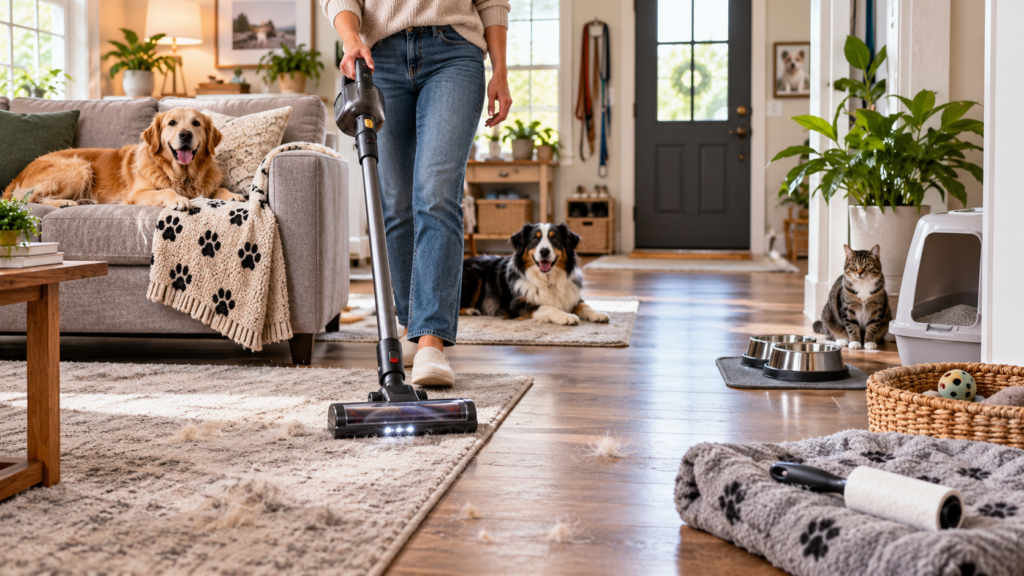
The secret to a clean multi-pet home isn’t one big weekly cleaning marathon. It’s small, consistent habits done daily. Here’s a simple daily checklist that takes less than 20 minutes total.
- Quick floor sweep or vacuum in high-traffic areas like the entryway, kitchen, and living room.
- Scoop litter boxes at least once a day, twice if you have more than one cat.
- Wipe down food and water bowls to prevent bacteria buildup and slobber residue.
- Shake out or lint-roll pet beds and blankets to remove loose fur before it spreads.
- Spot-clean any accidents immediately using an enzyme-based cleaner so odors don’t set into fabric or flooring.
A good cordless stick vacuum designed for pet hair makes this daily step almost effortless. If you don’t already have one dedicated to pet cleanup, this is one of the best investments you can make for a multi-pet home.
[👉 Cordless Pet Hair Vacuum –https://link.amazon/B03YwuW5o]
Step 2: Set a Weekly Deep-Clean Schedule
Once your daily habits are in place, add a weekly deep clean to tackle the things that build up gradually.
Weekly checklist:
- Wash pet beds, blankets, and removable furniture covers
- Deep clean litter boxes with soap and water (not just scooping)
- Vacuum upholstery, curtains, and under furniture where hair collects
- Mop hard floors with a pet-safe cleaner
- Wash food and water bowls with hot, soapy water
- Empty and disinfect trash cans used for waste disposal
- Run an air purifier filter check or replacement if needed
A washable, waterproof pet bed cover saves enormous time here, since you can just toss it in the machine instead of scrubbing stains by hand.
[👉 Waterproof Washable Pet Bed Cover ]
https://link.amazon/B0i3u1POi
Step 3: Tackle Pet Hair the Smart Way
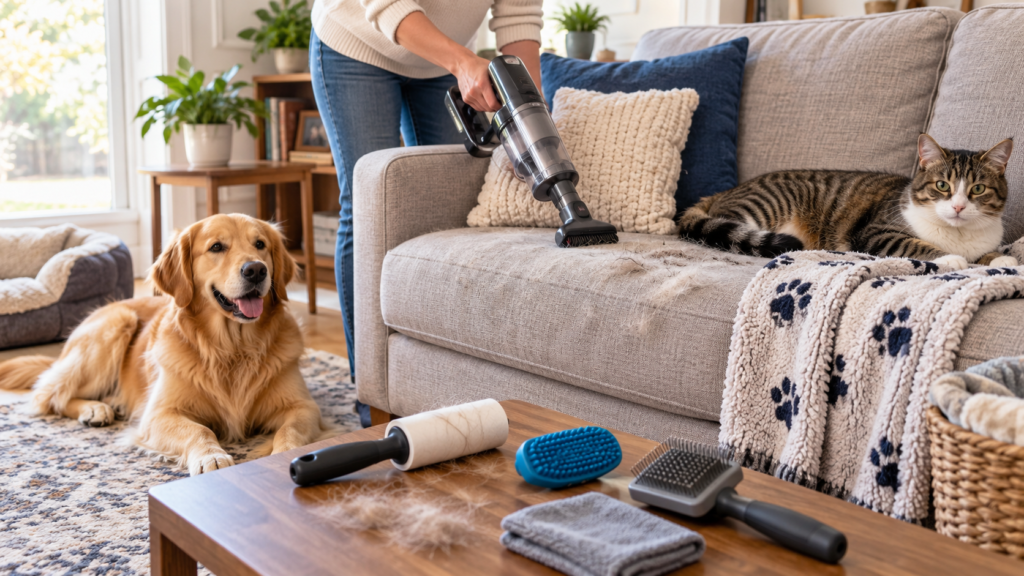
Pet hair is often the number one complaint in multi-pet households. Here’s how to get ahead of it instead of constantly chasing it.
Invest in the right vacuum
Not all vacuums are created equal when it comes to pet hair. Look for one with strong suction, a HEPA filter (great for allergens), and a brush roll designed specifically to lift embedded hair from carpets and upholstery.
[👉 High-Suction HEPA Pet Vacuum ]
https://link.amazon/B0dYB7NAL
Add a robot vacuum for daily maintenance
A robot vacuum won’t replace deep cleaning, but it’s excellent for daily upkeep, especially in homes with multiple pets shedding constantly. Set it to run once a day in high-traffic zones, and you’ll notice a dramatic difference in loose fur buildup.
[👉 Robot Vacuum for Pet Hair]
https://link.amazon/B0b1QYXNQ
Use furniture and clothing hair removers
Keep a reusable pet hair remover roller near your couch and in your car. A quick swipe before guests arrive (or before you sit down in work clothes) saves a lot of frustration.
[👉 Reusable Pet Hair Remover Roller]
https://link.amazon/B01wIqEyo
Brush your pets regularly
Grooming isn’t just for your pet’s comfort, it’s one of the most effective ways to reduce shedding around the house. Brushing 2 to 3 times a week (daily during shedding season) removes loose fur before it ends up on your floors and furniture.
[👉 Deshedding Pet Brush – https://link.amazon/B05fPCDy2]
Step 4: Control Pet Odor Before It Controls Your Home
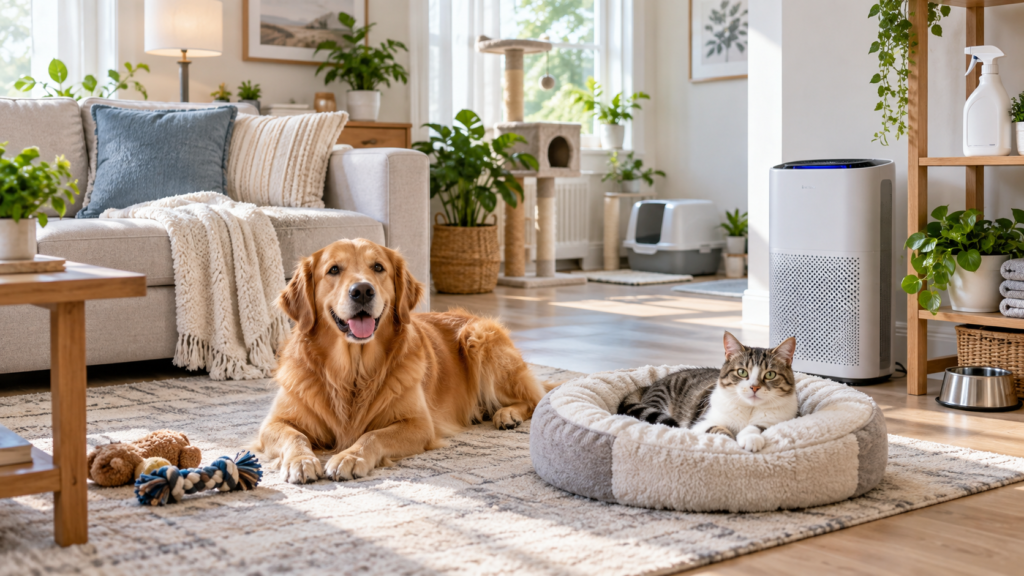
Odor is often the hardest thing to manage in multi-pet homes, mostly because it builds up gradually and you stop noticing it yourself, even though guests do.
Use enzyme-based cleaners for accidents
Regular cleaners mask smells temporarily, but enzyme cleaners actually break down the organic compounds causing the odor. This is essential for carpets, rugs, and upholstery where accidents happen.
[👉 Enzyme Odor Eliminator Spray – https://link.amazon/B01WbGerh]
Add an air purifier to key rooms
An air purifier with a HEPA and activated carbon filter can dramatically reduce pet odor, dander, and allergens circulating in the air, especially in bedrooms and living rooms where pets spend the most time.
[👉 Air Purifier for Pet Odor & Dander – https://link.amazon/B0dUEVmHa]
Keep litter areas fresh
Litter boxes are one of the biggest odor sources in multi-pet homes. A high-quality clumping, odor-controlling litter combined with a covered or self-cleaning litter box can make a huge difference.
[👉 Odor-Control Cat Litter – https://link.amazon/B09xdqjt0]
Wash fabric regularly
Curtains, couch cushions, and pet beds absorb odor over time. Washing them monthly (or using fabric refreshers between washes) keeps smells from settling in permanently.
Step 5: Protect Your Floors and Furniture
With multiple pets, floors and furniture take a beating from claws, paws, and accidents. A few protective steps can save you money and stress long-term.
- Use washable rugs in high-traffic areas instead of expensive carpets that are hard to clean.
- Add furniture covers on couches and chairs your pets frequently use.
- Place mats at entry points to catch dirt, mud, and moisture from paws before they spread inside.
- Trim nails regularly to reduce scratches on floors and furniture.
- Use pet-safe floor cleaners that won’t leave residue harmful to paws or curious noses.
A durable, absorbent door mat placed at every entrance is one of the simplest ways to cut down on dirt tracked into your home.
[👉 Absorbent Pet Door Mat – https://link.amazon/B0gVskwRM]
Step 6: Manage Multiple Litter Boxes and Waste Areas
If you have cats, the general rule is one litter box per cat, plus one extra. This prevents territorial issues and reduces accidents outside the box.
Tips for managing multiple litter boxes:
- Spread litter boxes across different areas of the home rather than clustering them together
- Scoop at least once daily, ideally twice
- Fully replace litter and wash the box weekly
- Use a litter mat underneath to catch stray litter and reduce tracking
For dog owners, a dedicated waste disposal system for backyard cleanup keeps odors contained and makes daily pickup fast and mess-free.
[👉 Pet Waste Disposal System – https://link.amazon/B02w5ybun]
Step 7: Create a Pet-Friendly Laundry Routine
With multiple pets, laundry adds up faster than most people expect, blankets, beds, towels used for muddy paws, and your own clothing covered in fur.
- Keep a designated hamper just for pet items so they don’t mix with regular laundry
- Use a pet-hair-specific laundry booster or dryer balls to catch loose fur during washing
- Wash pet bedding on hot water weekly to kill bacteria and reduce allergens
- Air dry when possible to extend the life of waterproof or padded pet beds
Step 8: Room-by-Room Cleaning Guide
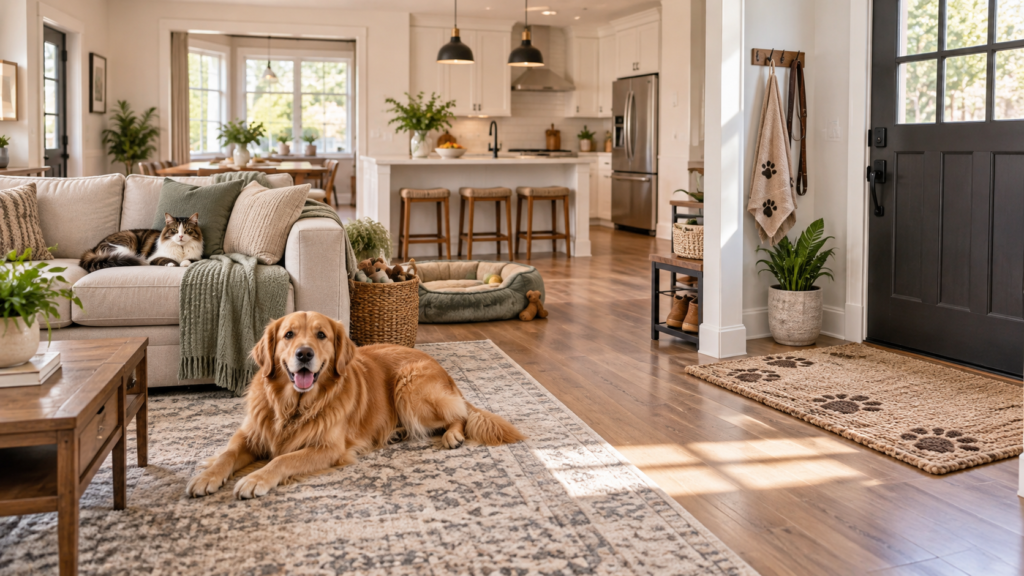
Living Room: Vacuum daily if pets lounge on furniture, use washable throws on couches, and keep a lint roller within reach.
Kitchen: Wipe feeding areas after every meal, sweep up spilled food and water immediately to avoid attracting pests.
Bedroom: Wash bedding weekly if pets sleep with you, and consider a washable mattress protector for extra hygiene.
Bathroom: Keep litter boxes well-ventilated, and clean the surrounding floor area at least twice a week to prevent litter tracking.
Entryway: Use mats and a designated towel to wipe paws before pets come inside, especially after walks in wet or muddy weather.
Quick Reference: Daily vs Weekly Tasks
| Task | Daily | Weekly |
|---|---|---|
| Sweep/vacuum floors | ✅ | ✅ (deep clean) |
| Scoop litter box | ✅ | — |
| Wipe food bowls | ✅ | — |
| Wash pet bedding | — | ✅ |
| Deep clean litter box | — | ✅ |
| Brush pets | 2–3x/week | ✅ |
| Wash fabric/curtains | — | Monthly |
Frequently Asked Questions
How often should I clean with multiple pets in the house? A short daily routine of 15 to 20 minutes, combined with one weekly deep clean, is usually enough to keep a multi-pet home fresh and manageable.
What’s the best way to control pet odor long-term? Combining enzyme cleaners for accidents, regular fabric washing, and an air purifier with activated carbon tends to give the best long-term results.
Do robot vacuums actually work for pet hair? Yes, especially as a daily maintenance tool. They won’t replace a deep clean but significantly reduce loose fur buildup between full vacuum sessions.
How many litter boxes do I need for multiple cats? The general recommendation is one litter box per cat, plus one additional box, placed in separate areas of the home.
Is it safe to use regular cleaning products around pets? Not always. Many common cleaners contain chemicals that are harmful if pets walk on treated surfaces or ingest residue. Always choose pet-safe, non-toxic cleaning products, especially for floors and litter areas.
Final Thoughts
Keeping a clean home with multiple pets isn’t about perfection, it’s about consistency. A short daily routine, a dedicated weekly deep clean, and a few smart tools designed specifically for pet messes can transform your home from constantly chaotic to comfortably clean.
Start small: pick one or two habits from this guide, add the right products to support them, and build from there. Within a few weeks, you’ll notice less fur on your clothes, fresher-smelling rooms, and a home that feels clean even with a full house of pets running around.
Your pets bring you joy every single day. With the right system in place, keeping your home clean shouldn’t take away from that joy, it should support it.