
Meta Description: Tired of your home smelling like a dog? Discover 15 simple, science-backed tips to eliminate pet odor for good — from grooming hacks to the best air purifiers and cleaning products.
Disclosure: This post contains affiliate links. If you purchase through these links, we may earn a small commission at no additional cost to you. We only recommend products we believe genuinely help solve the problem discussed in this article.
Disclaimer: This article is for general informational purposes only and is not a substitute for professional veterinary advice. If your dog has persistent odor or health concerns, consult a qualified veterinarian. Some links are affiliate links, and we may earn a small commission at no extra cost to you.
If you’re a dog owner, you already know the drill: you love your furry best friend with your whole heart, but the moment a guest walks through your front door, you catch that split-second look on their face. That “oh, I can smell the dog” look.
You’re not alone. Millions of pet parents around the world deal with this exact problem every single day. The good news? A dog-smelling house is not something you have to live with forever. With the right habits, products, and a little consistency, you can have a home that smells fresh, clean, and welcoming — even with a four-legged shedding machine running around it.
In this guide, we’re breaking down exactly why your house smells like dog in the first place, and more importantly, how to fix it — step by step, room by room, product by product. Let’s dive in.
Why Does My House Smell Like Dog? (Understanding the Root Cause)
Before we jump into solutions, it helps to understand where that odor actually comes from. Dog smell isn’t one single thing — it’s usually a combination of:
- Natural skin oils and bacteria on your dog’s coat and skin
- Saliva and drool left on furniture, floors, and toys
- Dander (dead skin cells) that settles into carpets, curtains, and upholstery
- Urine and fecal residue, even from potty-trained dogs having small accidents
- Wet fur odor, especially after walks in the rain
- Ear and dental bacteria, which can contribute to a musty smell
- Fabric absorption — beds, sofas, carpets, and curtains soak up and hold onto odor molecules over time
The key insight here is that odor isn’t just “in the air” — it’s embedded in fabrics, trapped in carpet fibers, and constantly being replenished by your dog’s daily activities. That’s why simply spraying air freshener never actually solves the problem long-term. You need a layered approach that tackles the source, the surfaces, and the air itself.
Let’s go through each layer.
1. Bathe Your Dog Regularly (But Not Too Often)
This might sound obvious, but the frequency and the products you use matter a lot. Bathing your dog too often can strip natural oils from their skin, leading to dryness, which paradoxically causes the body to overproduce oil — making the smell worse.
The sweet spot: Most dogs do well with a bath every 4-6 weeks, though breeds with oily coats (like Basset Hounds or Cocker Spaniels) may need it more often.
Use a gentle, odor-neutralizing shampoo formulated specifically for dogs — never human shampoo, which can irritate their skin and actually intensify odor over time.
👉 Recommended Product:– https://link.amazon/B05W88P92
2. Brush Your Dog’s Coat Daily
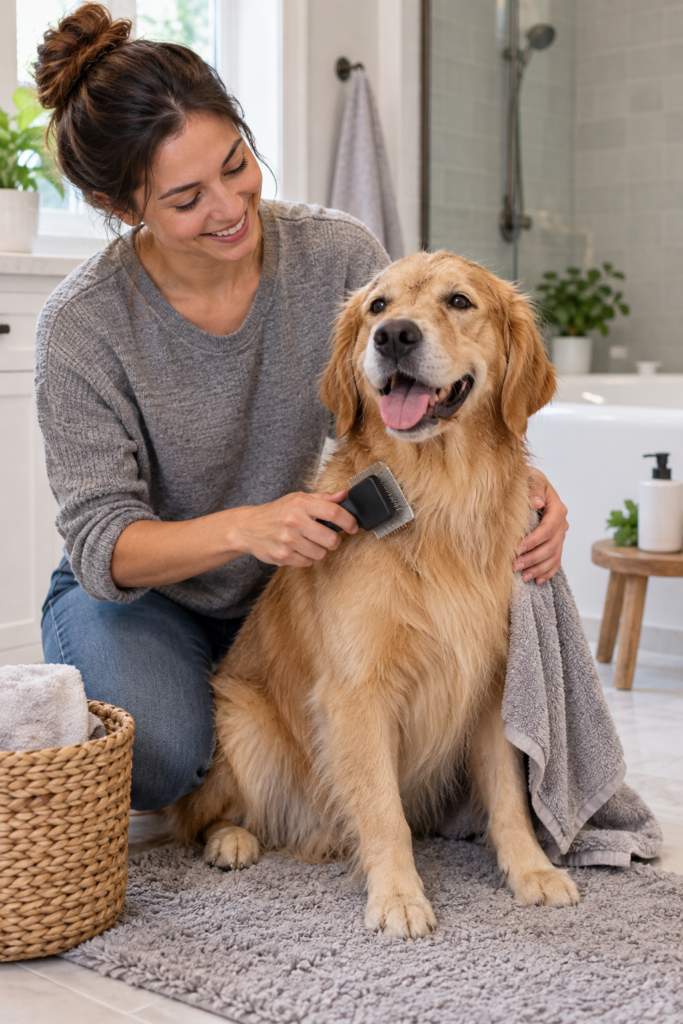
Brushing does more than just reduce shedding — it distributes natural oils evenly across the coat, removes loose dander before it settles into your furniture, and prevents matting (which traps odor and bacteria close to the skin).
For short-haired breeds, a rubber grooming glove works wonders. For long-haired or double-coated breeds, a slicker brush or deshedding tool is essential.
👉 Recommended Product: – https://link.amazon/B0h9K9rj6
3. Wash Dog Bedding Weekly
Your dog’s bed is basically odor headquarters. It absorbs oils, drool, dander, and whatever your dog rolled in on their last walk. Washing it once a week in hot water with a pet-safe, fragrance-free detergent can make an enormous difference to your overall home smell.
Pro tip: choose a dog bed with a removable, machine-washable cover so you’re not stuck hauling the entire bed to the laundromat.
👉 Recommended Product: –https://link.amazon/B0167Isjp
4. Invest in a High-Quality Air Purifier
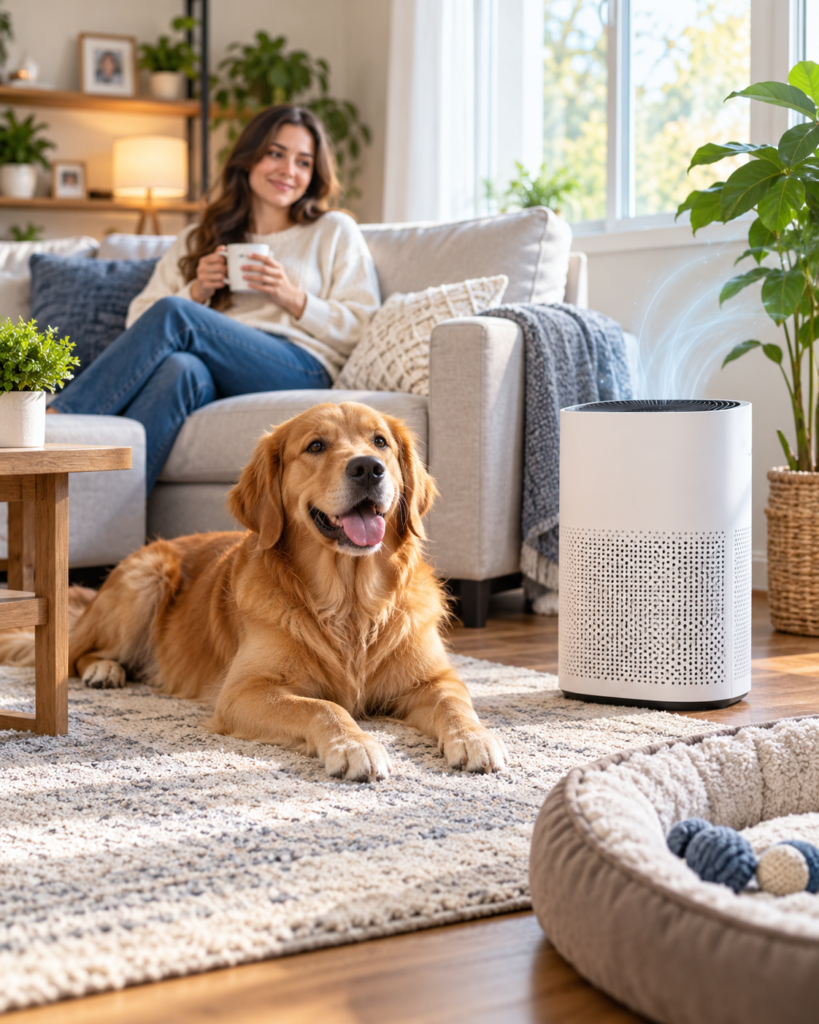
This is one of the single most effective upgrades you can make. A good air purifier with a True HEPA filter and an activated carbon layer captures pet dander, hair particles, and odor-causing gases circulating through your home’s air — something candles and sprays simply cannot do.
Place one in the room where your dog spends the most time (usually the living room or bedroom) and run it continuously for best results.
👉 Recommended Product:–https://link.amazon/B0bBsocCs
5. Use an Enzyme-Based Cleaner on Carpets and Furniture
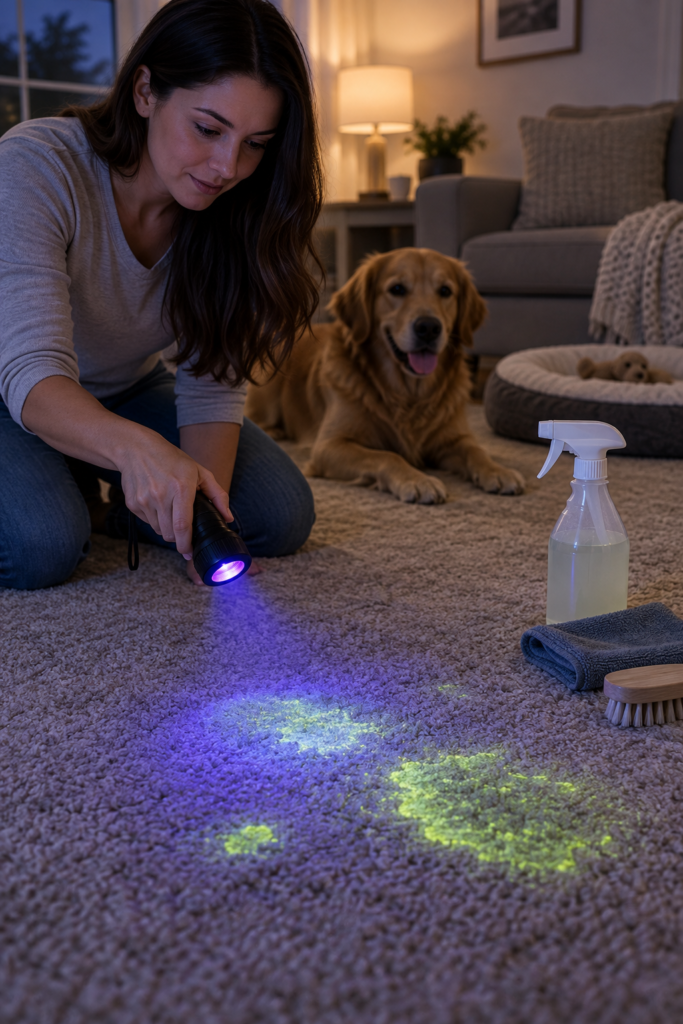
Regular carpet cleaners mask odor. Enzyme cleaners destroy it at the molecular level by breaking down the organic compounds in urine, drool, and dander that cause smell in the first place. This is non-negotiable if your dog has ever had an accident indoors — even one you cleaned up months ago can still be releasing odor that your nose has simply gotten used to.
Use a blacklight flashlight in a dark room to spot old urine stains you might have missed (they’ll glow yellow-green), then treat each spot with enzyme cleaner.
👉 Recommended Product: – https://link.amazon/B0dZUVNFH
6. Vacuum With a Pet-Specific Vacuum Cleaner
Standard vacuums often just push fine dander and hair back into the air instead of capturing it. A vacuum designed specifically for pet hair — with strong suction, a sealed HEPA filtration system, and a motorized brush roll for embedded hair — will pull far more allergens and odor-causing particles out of your carpets and upholstery.
Aim to vacuum high-traffic areas at least 3 times a week, and don’t forget furniture and stairs.
👉 Recommended Product:– https://link.amazon/B0gbMP0jl
7. Clean Up Waste Immediately (Indoors and Outdoors)
This one seems obvious, but it’s often overlooked in the yard. If you have a backyard, leftover waste doesn’t just smell bad outside — the odor can drift indoors through open windows and get tracked in on paws. Use a scented, sealed waste disposal system indoors, and a consistent yard pickup schedule outdoors.
👉 Recommended Product: – https://link.amazon/B09YG1Vip
8. Support Your Dog’s Gut Health From the Inside Out
Here’s something a lot of pet owners don’t realize: diet directly affects body odor and flatulence. Poor-quality food, food sensitivities, or an imbalanced gut microbiome can lead to smellier gas, oilier skin, and even bad breath. A high-quality probiotic supplement designed for dogs can improve digestion, reduce gas, and support healthier skin and coat from the inside.
9. Wash Your Own Bedding and Fabrics More Often
If your dog is allowed on the bed or couch (no judgment — most of us let them up there), your sheets, blankets, and cushion covers are absorbing just as much odor as the dog bed. Wash these at least once a week, and consider a fabric-safe pet odor eliminator spray for furniture that can’t go in the washing machine.
10. Improve Ventilation Throughout Your Home
Odor molecules thrive in stagnant air. Open your windows for at least 15-20 minutes a day (weather permitting) to let fresh air circulate and push stale, odor-heavy air out. If you live somewhere humid, a dehumidifier can help too, since damp air tends to trap and intensify smells, especially “wet dog” odor.
11. Clean Your Dog’s Ears and Teeth Regularly
Ear infections and dental bacteria are sneaky, often-overlooked sources of household odor. A musty, yeasty smell coming from your dog (even when freshly bathed) is often traced back to dirty ears. Clean ears weekly with a vet-approved ear cleaning solution, and brush your dog’s teeth several times a week to prevent bad breath from lingering in the air.
12. Use Baking Soda as a Natural Deodorizer
Before vacuuming carpets or furniture, sprinkle a light, even layer of baking soda and let it sit for 15-20 minutes. Baking soda naturally absorbs odor molecules rather than masking them, and it’s completely pet-safe when vacuumed up thoroughly afterward.
13. Rotate and Refresh Toys Regularly
Chew toys, plush toys, and tennis balls soak up saliva and can develop a sour smell over time. Wash washable toys weekly, and rotate out old, worn toys that have absorbed odor too deeply to be cleaned effectively.
14. Groom Paws After Every Walk
Paws track in dirt, allergens, and outdoor odors every single time your dog comes back inside. Keep a simple paw-cleaning routine — a damp microfiber towel or pet-safe paw wipes by the door — to catch this before it spreads through your home.
15. Steam Clean Carpets and Upholstery Seasonally
Even with regular vacuuming, deep-set odor and bacteria can linger in carpet fibers and cushions. A seasonal deep clean with a steam cleaner (ideally one with a pet-odor-specific solution) resets your home’s baseline smell and tackles buildup that everyday cleaning misses.
👉 Recommended Product: –https://link.amazon/B06HAYvMA
A Simple Weekly Routine to Keep Odor Away for Good
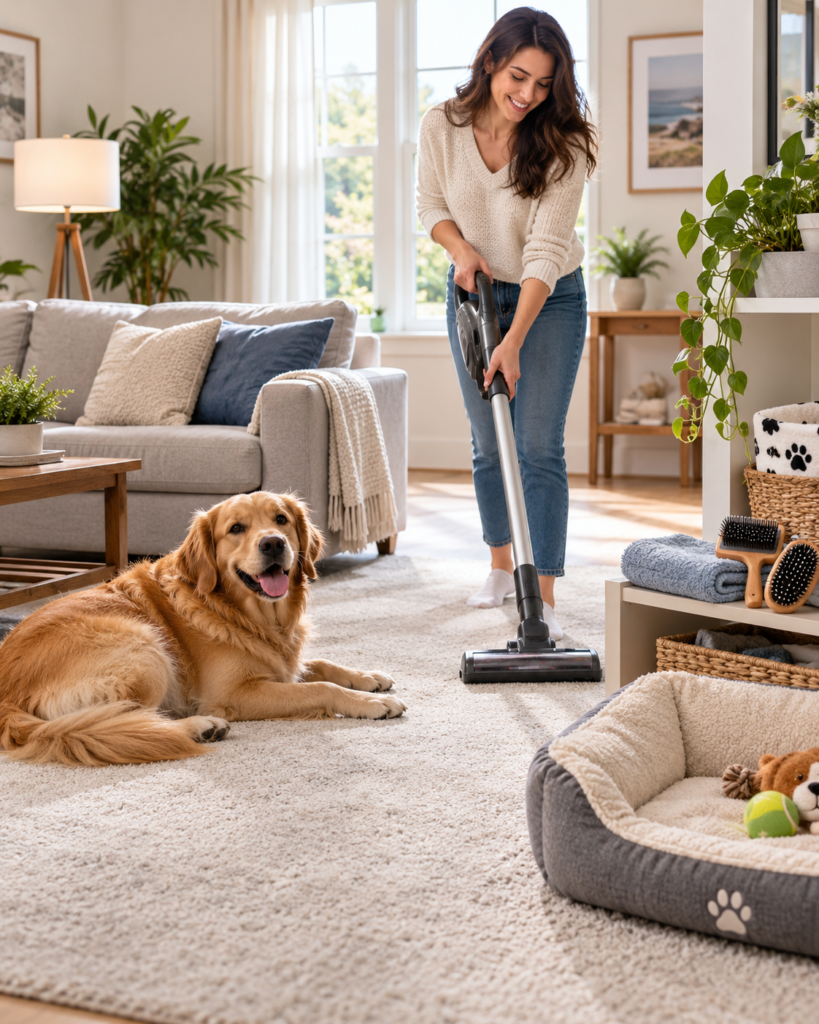
To make this easier, here’s a simple checklist you can follow:
- Daily: Brush your dog, wipe paws after walks, spot-clean any accidents immediately
- 2-3x per week: Vacuum high-traffic areas and furniture
- Weekly: Wash dog bedding, your own bedding, and toys; clean ears
- Every 4-6 weeks: Bathe your dog with an odor-neutralizing shampoo
- Seasonally: Deep clean carpets and upholstery with a steam cleaner
Consistency matters far more than intensity here. A few small habits done regularly will outperform one big deep-clean done occasionally.
Frequently Asked Questions
Q: Why does my house smell like dog even right after cleaning? This usually means odor has settled into porous surfaces like carpets, curtains, or upholstery. Air fresheners only mask this temporarily — an enzyme cleaner and a HEPA air purifier address the actual source.
Q: Is it normal for a healthy dog to have a strong odor? A mild, natural “doggy smell” is normal. A strong, persistent, or sour odor can indicate skin issues, ear infections, dental problems, or diet-related concerns, and is worth mentioning to your veterinarian.
Q: What’s the fastest way to get rid of dog smell before guests arrive? Run your air purifier on high, do a quick vacuum pass, spot-treat any noticeable smells with a fabric-safe odor eliminator, and crack a window for fresh airflow. This combination works far faster than candles or sprays alone.
Q: Can certain dog foods reduce body odor? Yes. High-quality, easily digestible food with good-quality protein sources tends to produce less gas and oilier skin buildup than low-quality fillers. A probiotic supplement can also help balance digestion.
Final Thoughts
A dog-smell-free home isn’t about loving your dog any less — it’s about building a few simple, sustainable habits that keep your space feeling fresh for you, your family, and anyone who walks through your door. Start with one or two changes from this list, layer in the right products, and stay consistent. Within a few weeks, you’ll likely notice a dramatic difference — and your guests will too.
Your dog gets to keep being the good boy or girl they are. Your house just gets to smell a little better while they do it.