
Disclosure: This post contains affiliate links. If you purchase through one of these links, we may earn a small commission at no extra cost to you. This helps support the free content we create. We only recommend products we believe genuinely benefit cats and their owners.
Introduction: Why Every Indoor Cat Needs a Cat Tree
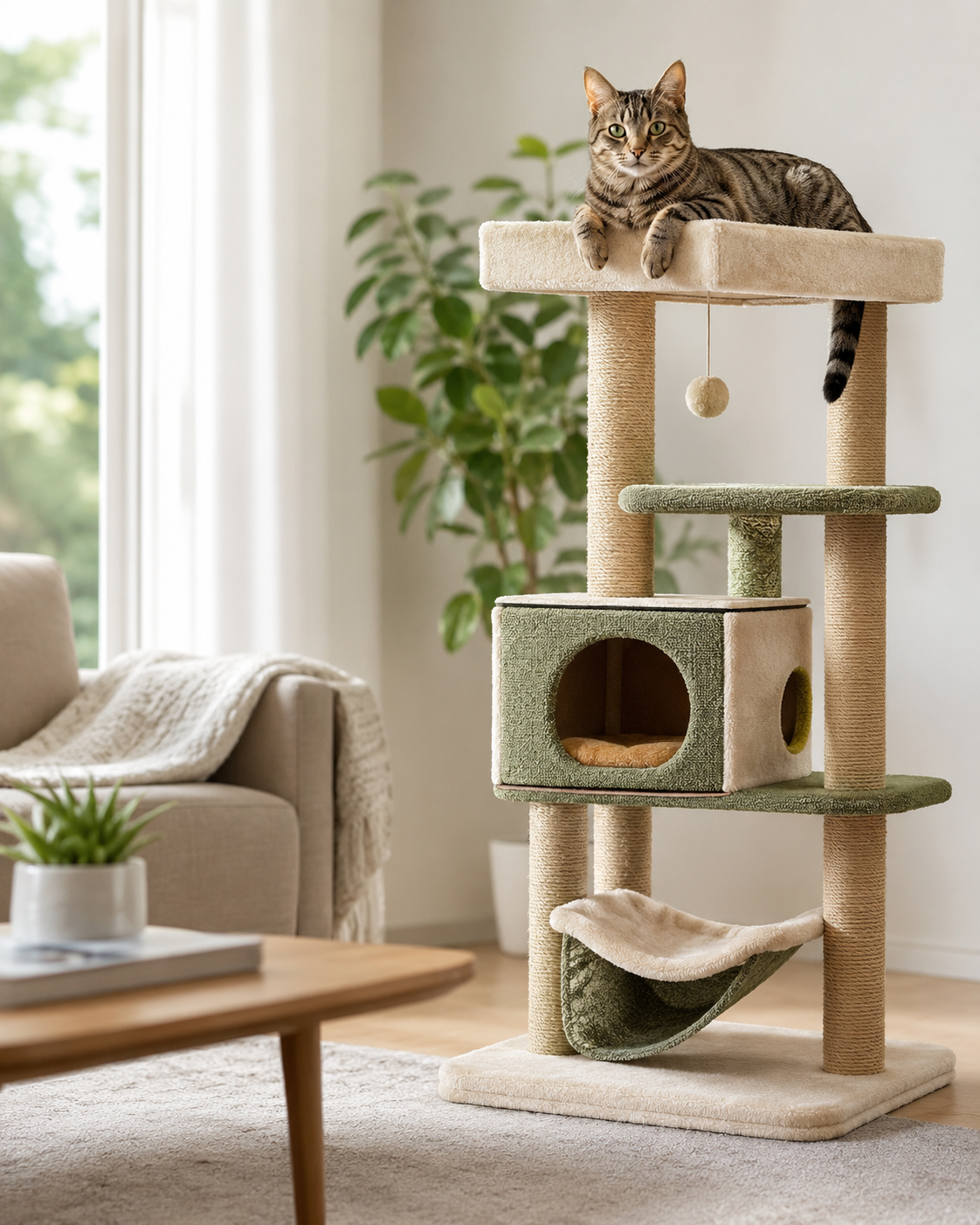
If you share your home with a cat, you already know they love to climb, scratch, hide, and survey their kingdom from up high. For indoor cats especially, a good cat tree isn’t a luxury — it’s a necessity. Cats are natural climbers, and without vertical space to explore, they can become bored, stressed, or even destructive toward your furniture and curtains.
A well-designed cat tree gives your feline friend a dedicated space to stretch, scratch, nap, and play, while also protecting your couch and curtains from claw marks. Whether you live in a tiny studio apartment or a spacious house, there’s a perfect cat tree out there for your cat’s personality, size, and energy level.
In this guide, we’ll walk you through everything you need to know before buying a cat tree, plus our hand-picked list of the best cat trees for indoor cats in every category — compact options for small spaces, sturdy towers for large breeds, budget-friendly picks, and premium models built to last for years.
Let’s dive in.
Why Cat Trees Matter So Much for Indoor Cats
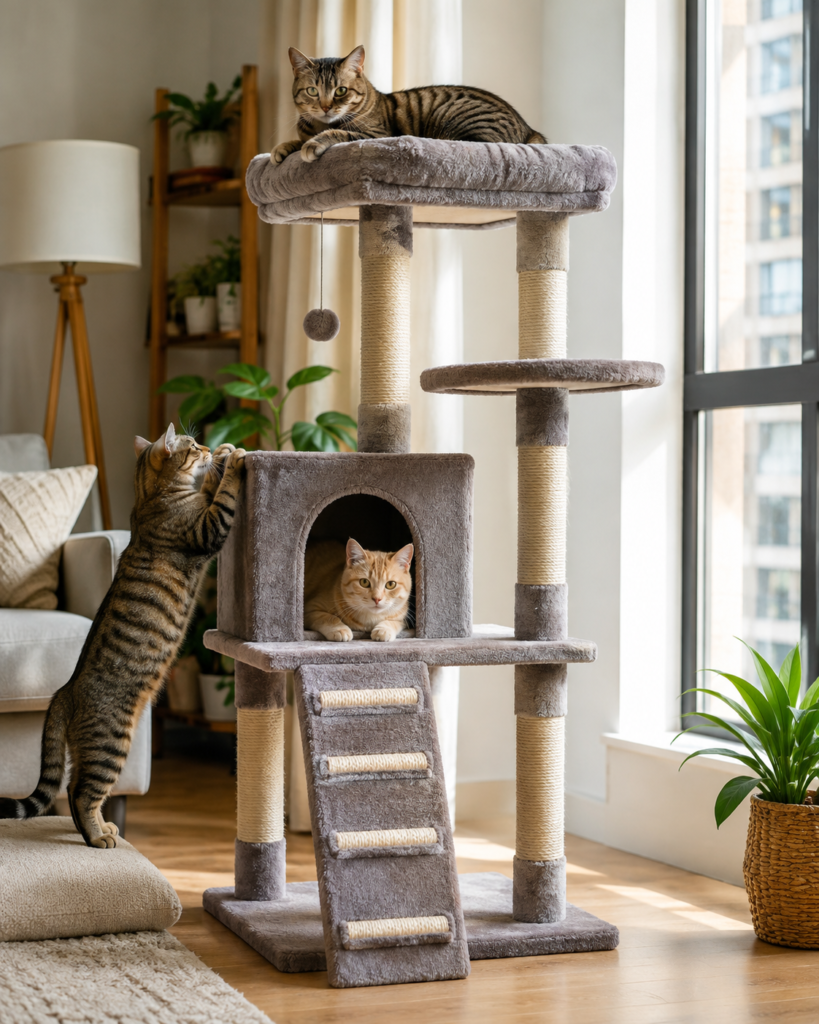
Indoor cats don’t get the same natural stimulation that outdoor cats experience — no trees to climb, no birds to chase, no fences to patrol. This makes environmental enrichment inside the home incredibly important for their physical and mental health.
Here’s why a cat tree makes such a big difference:
- Vertical territory: Cats feel safer and less stressed when they can observe their surroundings from a height.
- Scratching outlet: Built-in scratching posts protect your furniture while satisfying your cat’s natural instinct to scratch and mark territory.
- Exercise: Climbing and jumping keep your cat active, which helps prevent obesity — a common problem in indoor cats.
- Mental stimulation: Perches, tunnels, and hideaways give cats something to explore, reducing boredom-related behavior issues.
- Multi-cat harmony: In homes with more than one cat, a tall cat tree offers separate resting spots, reducing territorial conflict.
Simply put, a cat tree isn’t just a toy — it’s an investment in your cat’s happiness and your home’s furniture.
What to Look for When Buying a Cat Tree
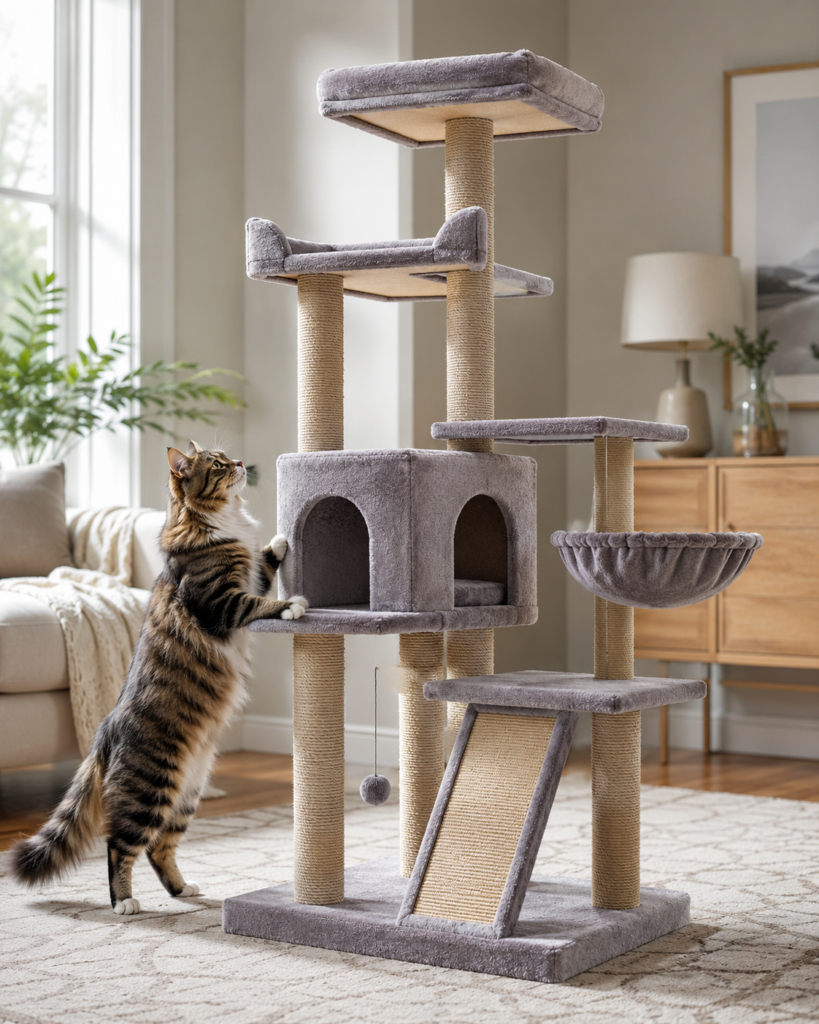
Before jumping into our top picks, here’s a quick checklist of factors to consider so you choose the right cat tree for your space and your cat.
1. Size of Your Living Space
Measure your available floor space and ceiling height. Compact cat trees (under 30 inches) work well in apartments, while floor-to-ceiling towers suit larger rooms with high ceilings.
2. Number of Cats
If you have multiple cats, look for a tree with several perches and platforms so each cat has its own space to relax without feeling crowded.
3. Your Cat’s Age and Activity Level
Kittens and younger cats usually love tall, adventurous trees with lots of climbing opportunities. Senior cats or cats with joint issues do better with shorter trees that have wide, easy-to-reach platforms.
4. Build Quality and Stability
A wobbly cat tree can scare your cat away from using it entirely. Look for a wide, weighted base and sturdy construction, especially if you have a larger cat breed like a Maine Coon or Ragdoll.
5. Material of the Scratching Posts
Sisal rope is the most popular and cat-friendly option because it holds up well to scratching and doesn’t fray as quickly as carpet-wrapped posts.
6. Easy to Clean
Look for removable, washable covers or plush fabric that resists odors, especially if you have multiple cats or a cat prone to shedding.
7. Style and Aesthetics
Many modern cat trees now come in neutral tones and minimalist designs that blend into your home decor instead of looking like a jungle gym in the corner of your living room.
The 10 Best Cat Trees for Indoor Cats
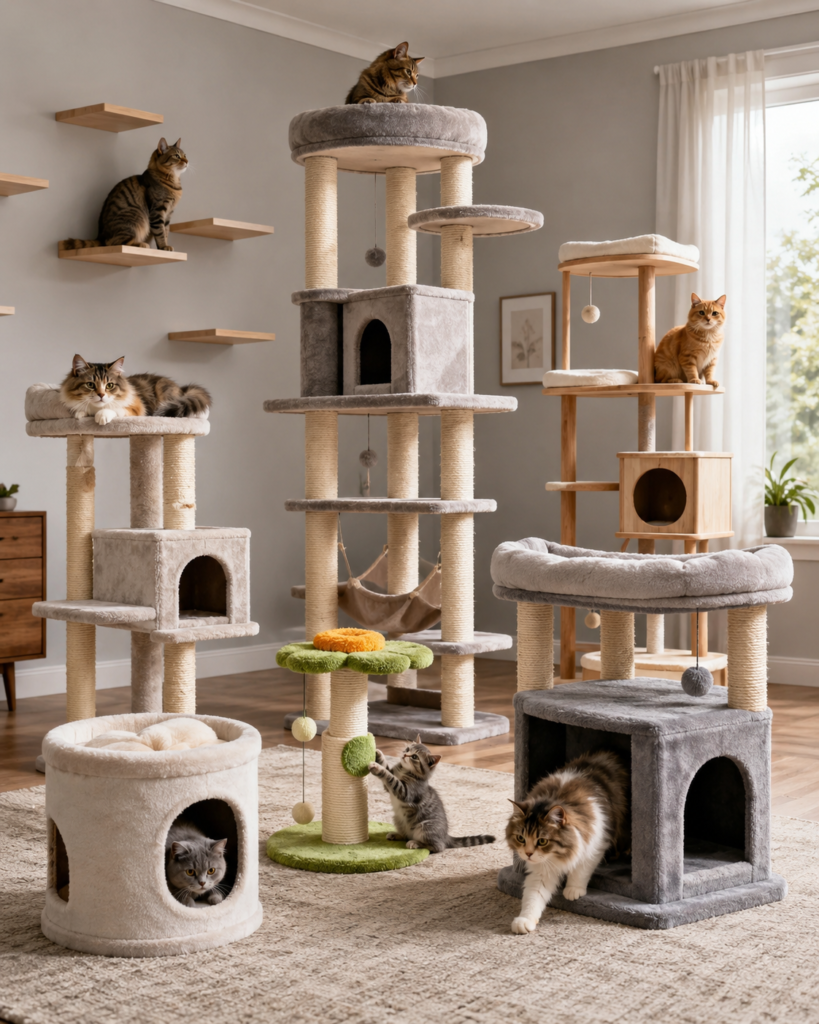
Below are our top picks across different categories — compact, large, budget, premium, and modern designs — so you can find the perfect fit for your home and your cat’s personality.
1. Best Overall: Multi-Level Cat Tree Tower with Condo and Scratching Posts
This all-around favorite offers the perfect balance of height, stability, and enrichment features. With multiple perches, a cozy enclosed condo, dangling toys, and thick sisal-wrapped posts, it checks every box for an indoor cat’s needs. It’s a great choice for single-cat and multi-cat households alike.
Why we love it: Sturdy base, generous scratching surface, and a napping condo cats genuinely use (not just ignore).
👉Current Price –https://link.amazon/B02e6Vtn5
2. Best for Small Apartments: Compact Cat Tree with Scratching Post
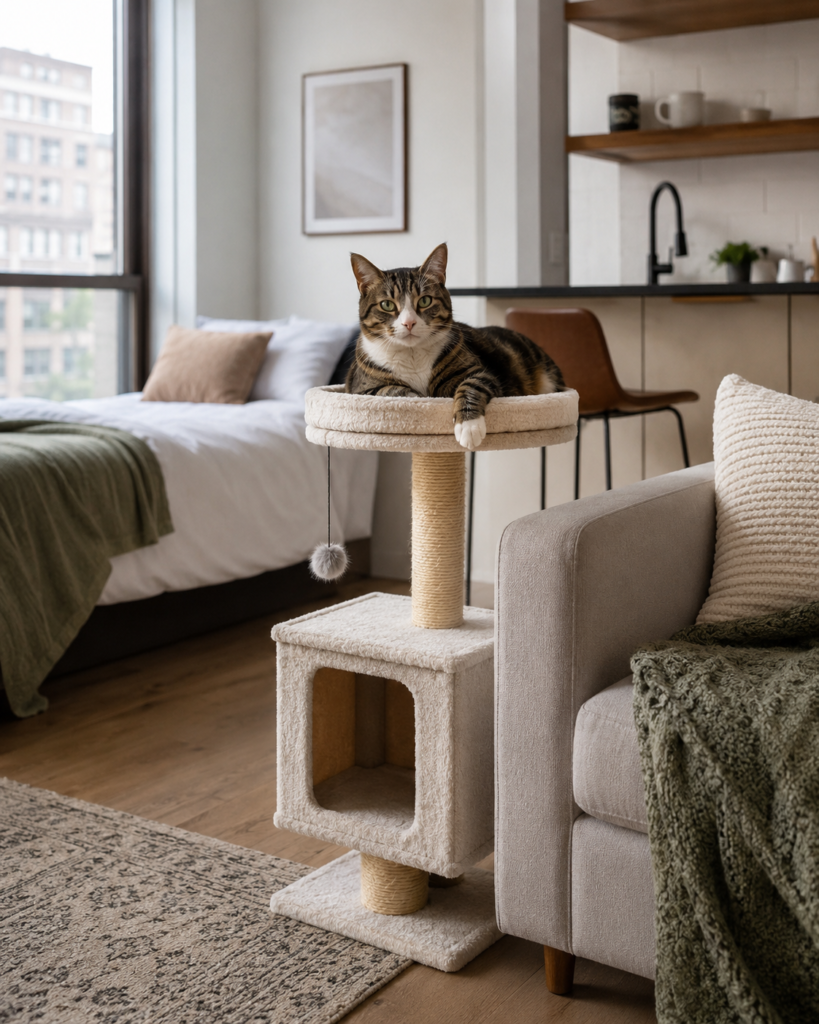
If floor space is tight, this compact tower is designed to give your cat a perch, a scratching post, and a dangling toy without taking up half your living room. It’s ideal for studio apartments or homes with limited square footage.
Why we love it: Small footprint, still offers a full scratching post and a raised perch for lounging.
3. Best for Large Cats and Multi-Cat Homes: Extra-Large Cat Tree Tower
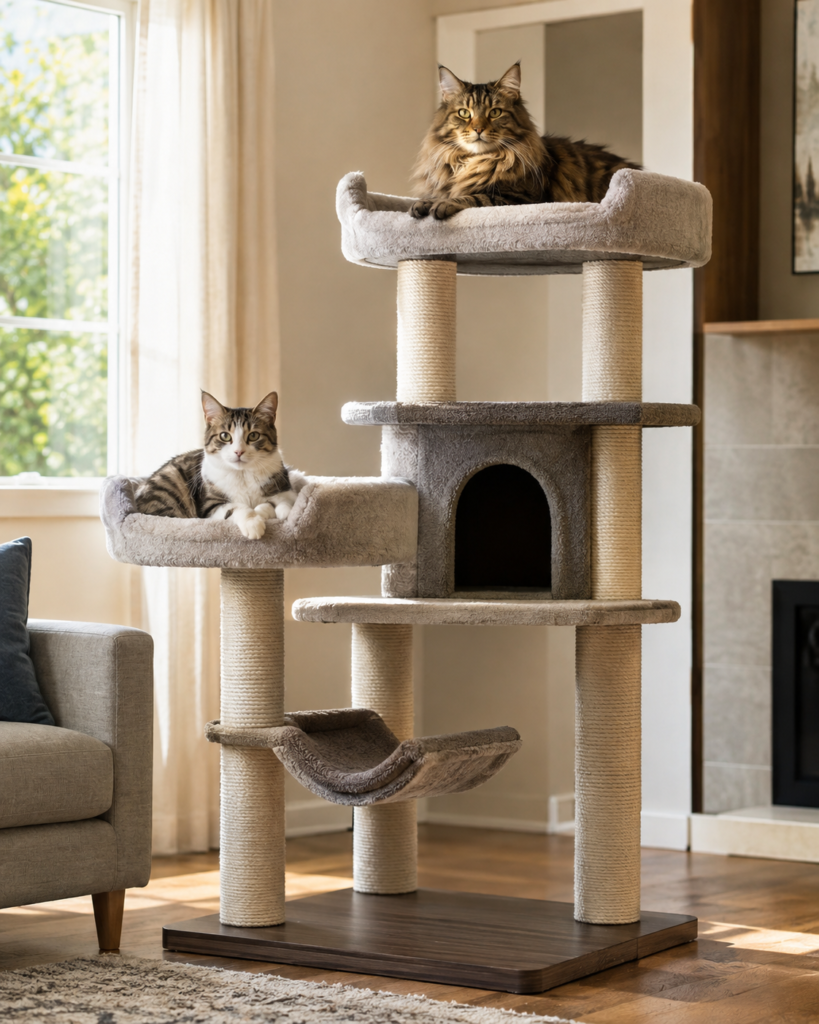
Built with a reinforced base and thick support posts, this extra-large tree is designed to comfortably support bigger breeds like Maine Coons and Ragdolls. With multiple wide platforms, it also works beautifully in households with two or more cats.
Why we love it: Extra-wide platforms and a heavy base that won’t tip even with a big cat jumping on and off.
4. Best Budget Pick: Affordable Cat Tree with Hammock and Scratching Post
You don’t need to spend a fortune to keep your cat entertained. This budget-friendly option includes a cozy hammock, a sisal scratching post, and a small perch — all at a price point that won’t break the bank.
Why we love it: Great entry-level option for first-time cat owners or a second tree in another room.
👉Current Price –https://link.amazon/B02t9Nujo
5. Best Floor-to-Ceiling Design: Tension Rod Cat Tree Tower
For homes with high ceilings, a floor-to-ceiling cat tree maximizes vertical space without taking up much floor area. This tension-rod design mounts securely between your floor and ceiling, giving your cat multiple levels to climb.
Why we love it: Maximizes height without sacrificing stability, and takes up minimal floor space.
6. Best Modern Design: Minimalist Wooden Cat Tree
If you care about how your furniture looks, this minimalist cat tree combines natural wood tones with neutral fabric, blending seamlessly into modern home decor. It still offers a sturdy scratching post and a comfortable perch.
Why we love it: Looks like a piece of furniture, not a cat toy — perfect for design-conscious pet owners.
👉Current Price –https://link.amazon/B0iTlyYK3
7. Best for Kittens: Small Multi-Level Kitten Activity Tree
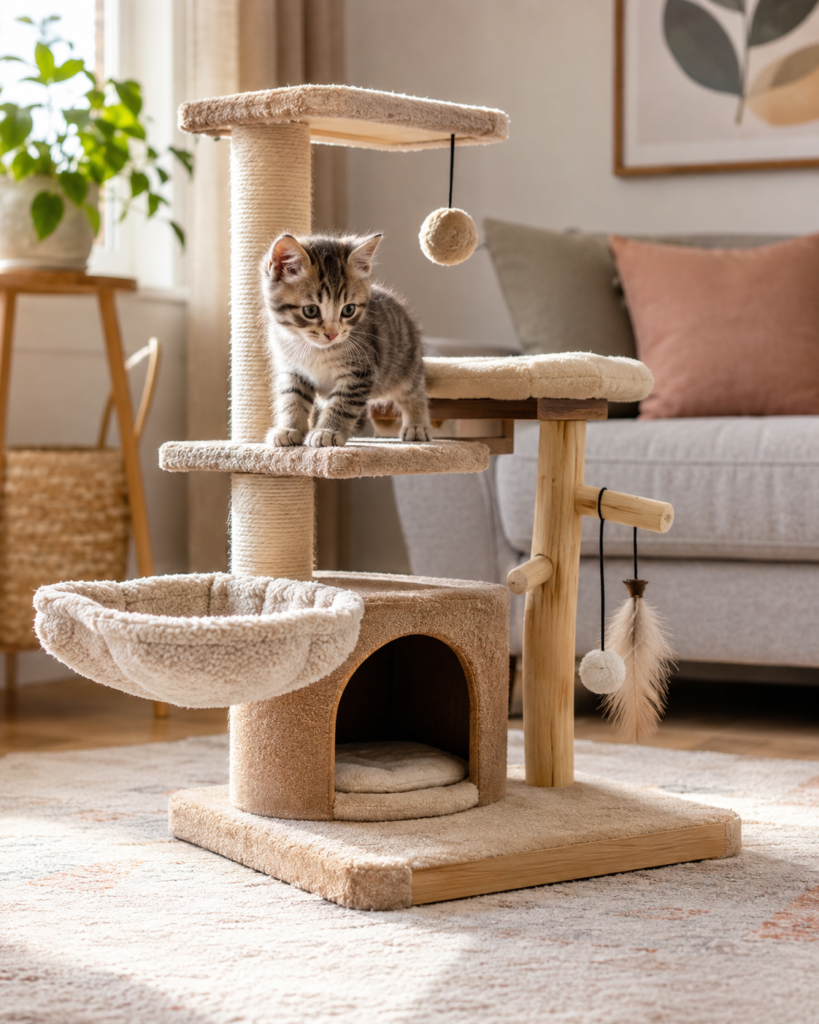
Kittens need shorter, safer climbing structures while they’re still building coordination. This kitten-friendly tree has lower platforms, dangling toys, and a small scratching post scaled to a young cat’s size.
Why we love it: Safe height for kittens, with plenty of interactive elements to burn off kitten energy.
8. Best with Enclosed Hideaway: Cat Tree with Plush Condo and Perch
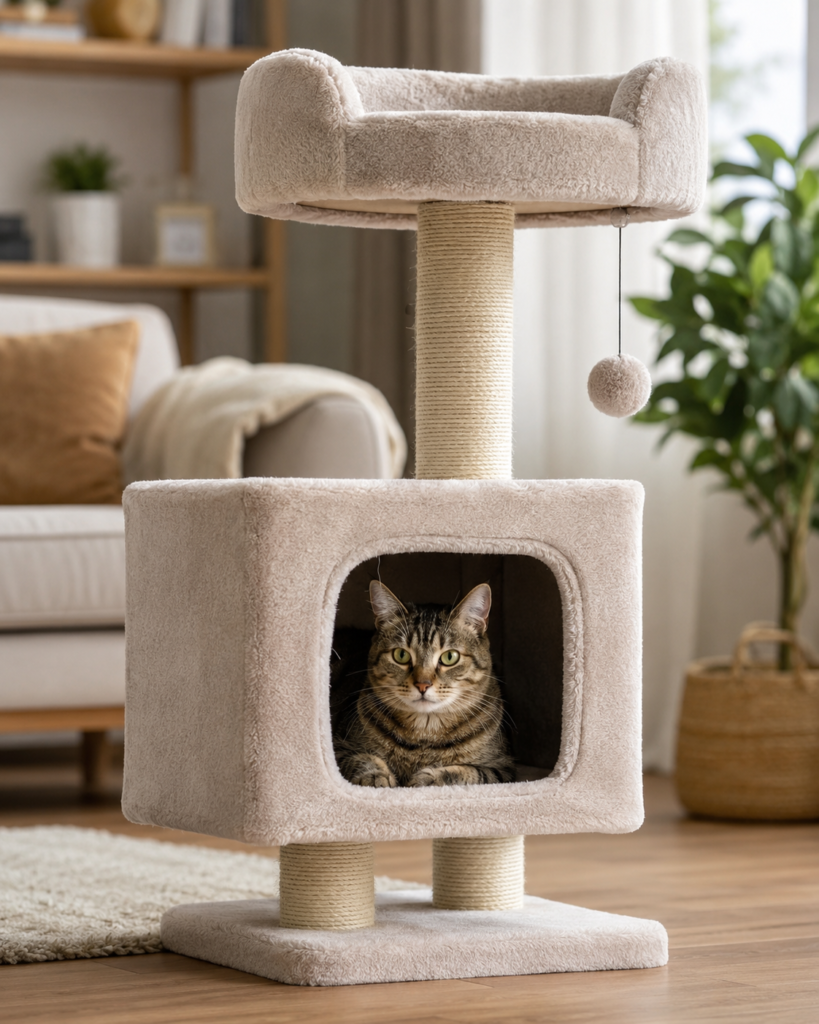
Some cats prefer to nap somewhere enclosed and cozy rather than out in the open. This model includes a plush, enclosed condo along with an open-top perch, giving your cat the choice between hiding away or people-watching from above.
Why we love it: Great for shy or anxious cats who like a secure hiding spot.
👉Current Price –https://link.amazon/B08unO4Pf
9. Best Premium Option: Luxury Cat Tree with Multiple Condos and Ramps
For cat owners who want to go all out, this premium tower features multiple enclosed condos, connecting ramps, several scratching posts, and dangling toys spread across multiple levels. It’s ideal for larger households with two or more cats.
Why we love it: Feels like a cat theme park — perfect for very active or multi-cat homes.
10. Best Wall-Mounted Option: Cat Wall Shelf and Climbing Steps Set
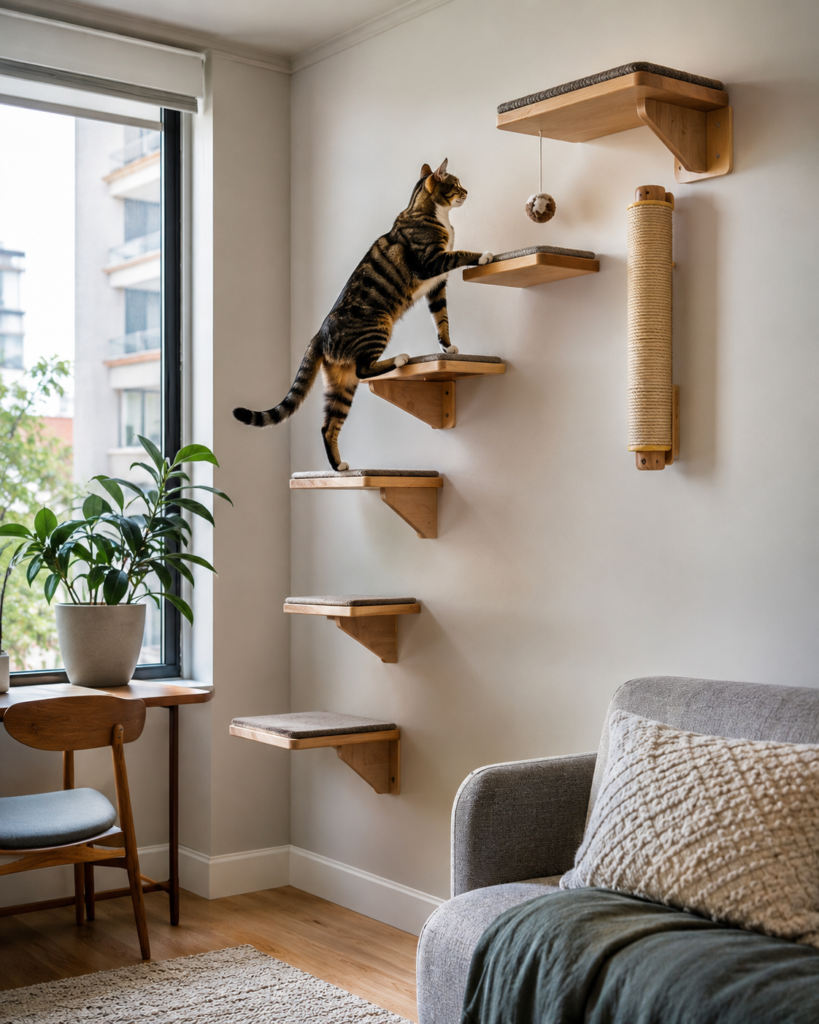
For homes where floor space is truly limited, wall-mounted cat shelves and steps offer a creative alternative to a traditional cat tree. Cats can climb, perch, and walk along the wall, freeing up your entire floor.
Why we love it: Doesn’t take up any floor space and creates a fun climbing “cat highway” along your wall.
👉Current Price –https://link.amazon/B0dUszsag
How to Introduce Your Cat to a New Cat Tree
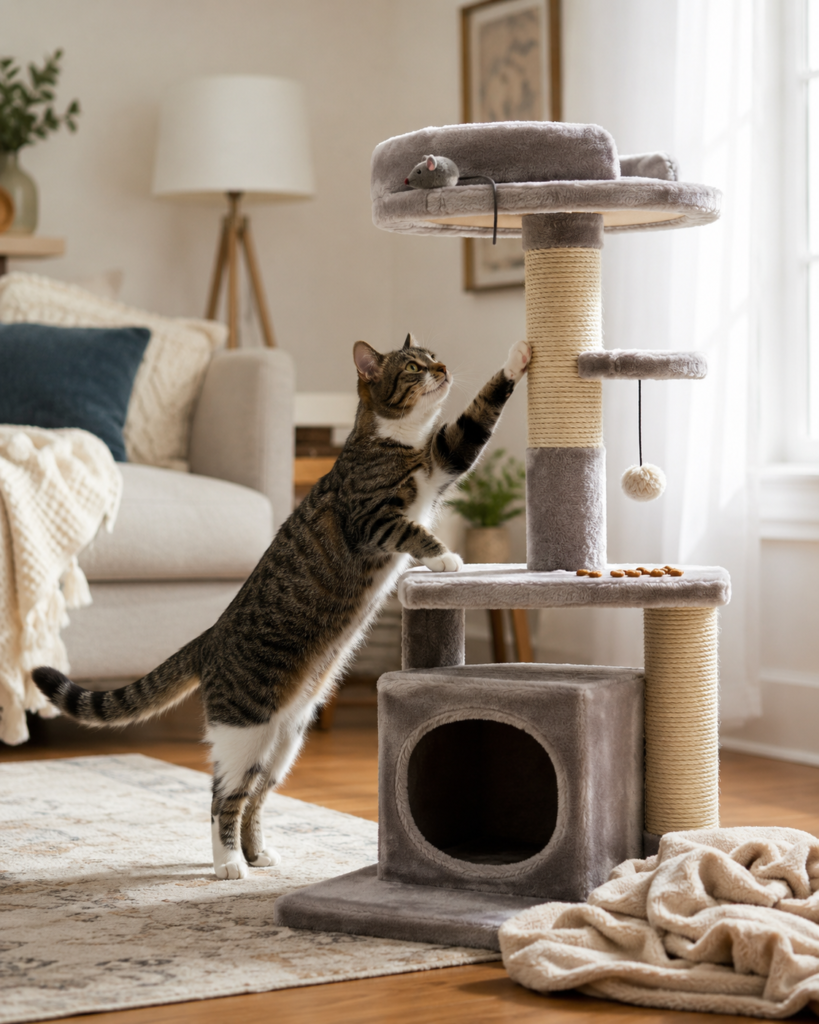
Bought a cat tree but your cat won’t touch it? This is a common issue, and it usually comes down to a lack of familiarity. Here are a few tips to help your cat warm up to their new furniture:
- Place it in a favorite spot. Put the tree near a window, in a room your cat spends the most time in, or close to their favorite napping area.
- Add familiar scents. Rub a bit of catnip on the scratching posts or place one of your cat’s favorite toys on a perch to encourage exploration.
- Use treats as encouragement. Place a few treats on the lower platforms to entice your cat to climb up and investigate.
- Be patient. Some cats take days or even weeks to fully accept a new piece of furniture. Avoid forcing your cat onto the tree — let them explore at their own pace.
- Keep the old scratching post nearby (at first). Gradually moving the old post closer to the new tree can help ease the transition.
Cat Tree Placement Tips for Small Homes
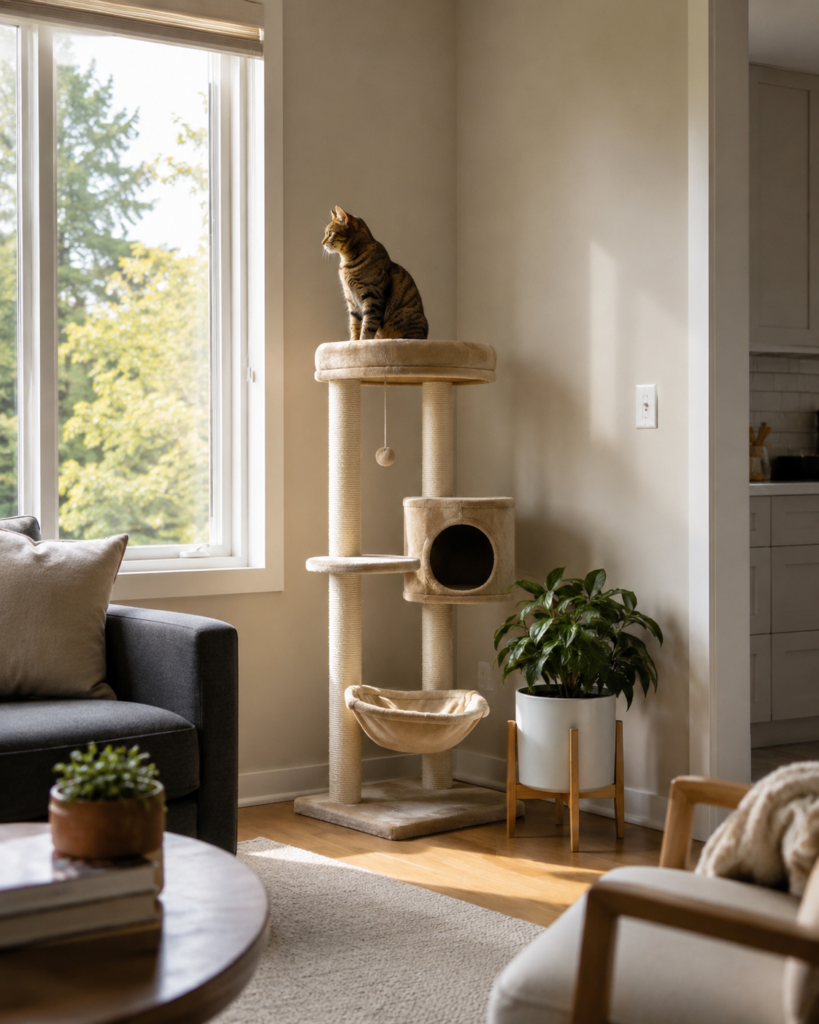
Not sure where to put your new cat tree? Here are some practical placement ideas, especially if you’re working with limited space:
- By a window: Cats love watching birds, people, and the outdoors — a cat tree near a window doubles as prime entertainment.
- In a corner: Corner placement saves floor space while still giving your cat a great vantage point.
- Near (but not blocking) walkways: Avoid placing the tree somewhere it will constantly be bumped or knocked, which can make your cat feel unsafe using it.
- Away from loud appliances: Cats prefer calm areas, so keep trees away from washing machines, TVs, or high-traffic zones.
Frequently Asked Questions (FAQs)
1. How tall should a cat tree be for an indoor cat? It depends on your space and your cat’s confidence level. A tree between 30–50 inches works well for most homes, while confident, active cats often enjoy trees over 60 inches tall.
2. Do cats actually use cat trees? Yes — most cats naturally gravitate toward vertical space once they discover it. Placement, scent, and gradual introduction all help increase usage.
3. How do I keep my cat tree stable? Choose a model with a wide, weighted base, and always assemble it on a flat, even surface. Avoid placing it on thick carpet without a stable base underneath.
4. Can I use a cat tree for multiple cats? Absolutely. Look for models with multiple perches and platforms so each cat has their own space, reducing the chance of territorial disputes.
5. How often should I replace a cat tree? A well-built cat tree can last several years. Replace it once the scratching posts become too worn to be effective, or if the structure becomes unstable.
6. Is sisal rope better than carpet for scratching posts? Most veterinarians and cat behaviorists recommend sisal rope because it’s more durable and satisfies a cat’s scratching instinct better than carpet, which can fray and get stuck in claws.
7. Where’s the best place to put a cat tree in a small apartment? Corners and window areas tend to work best, since they maximize vertical space without interfering with walkways.
Final Thoughts: Choosing the Right Cat Tree for Your Home
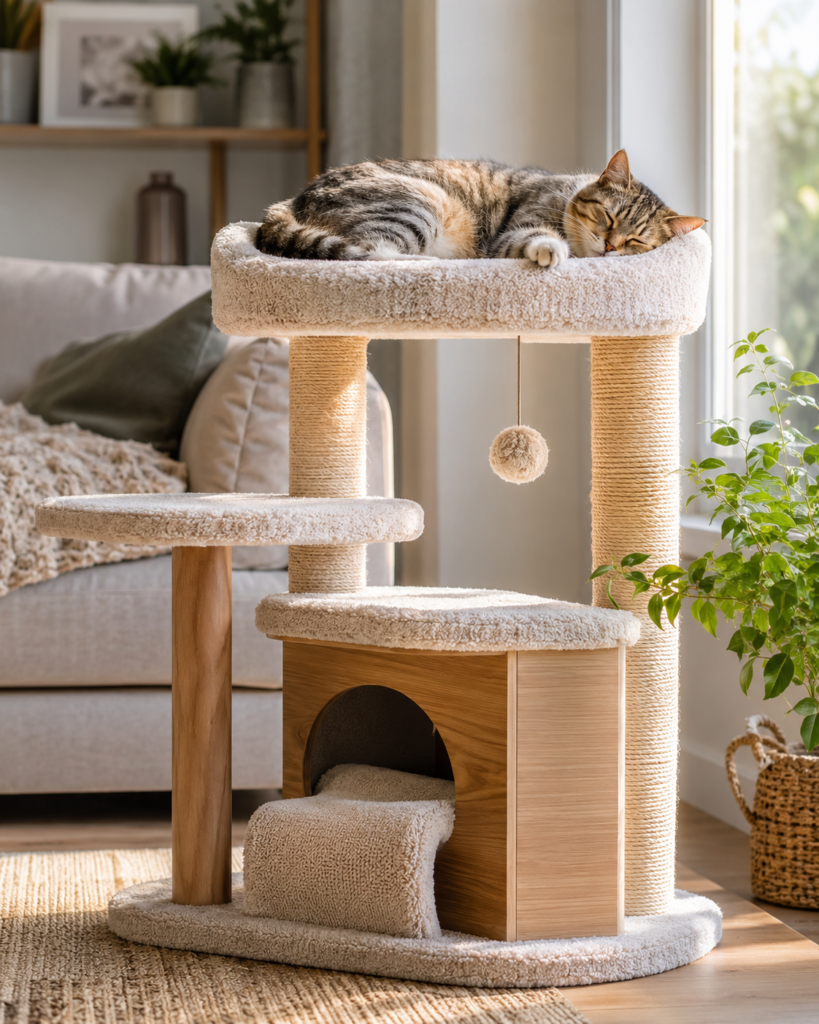
There’s no single “best” cat tree that works for every home — the right choice depends on your cat’s size, age, and personality, along with how much space you have available. A playful kitten might thrive with a tall, adventurous tower, while a senior cat may prefer a shorter tree with wide, easy-access platforms.
Whatever you choose, investing in a quality cat tree pays off in the long run — happier cats, healthier scratching habits, and furniture that stays intact. Use the buying guide above to narrow down your options, and don’t be afraid to try a couple of styles if your cat is picky about what they like.
Your cat will thank you with hours of climbing, scratching, and cozy naps in their new favorite spot.