Affiliate disclosure: This post contains affiliate links. If you buy through them, we may earn a small commission at no extra cost to you. We only recommend products we believe are useful for pet safety.
Disclaimer: This article is for educational purposes only and does not replace professional veterinary advice, diagnosis, or treatment. If your pet is in danger, contact a licensed veterinarian or animal poison control immediately.
⚠️ Emergency? If your dog just ate sugar-free gum, do not wait for symptoms. Call your emergency vet or a pet poison hotline right away.
ASPCA Animal Poison Control (US): (888) 426-4435
Pet Poison Helpline (US): (855) 764-7661
Outside the US? Call your nearest emergency vet or local animal poison service. (Hotlines may charge a consultation fee.)
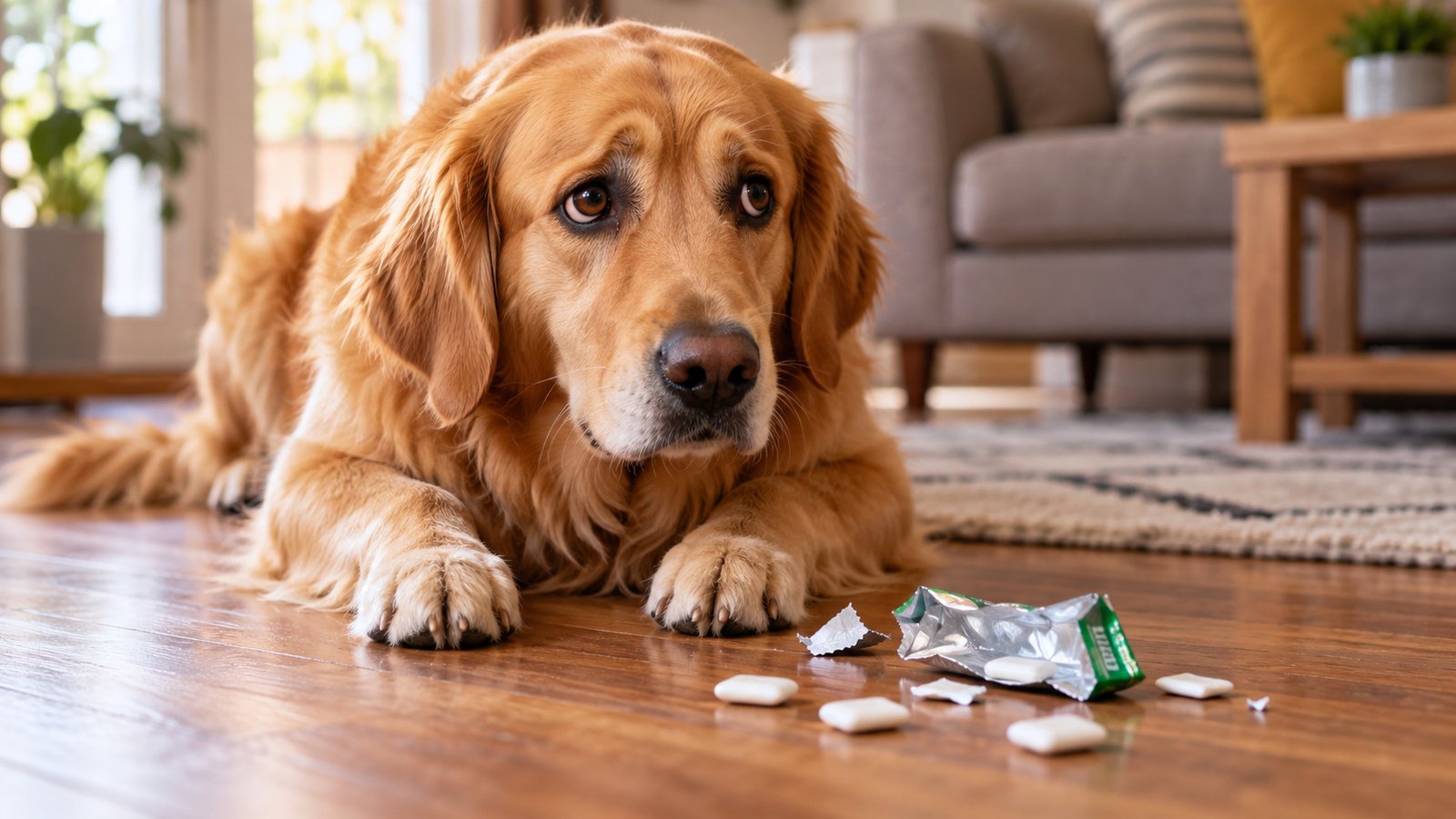
You turn around for one minute. You come back, and there it is: an empty gum wrapper on the floor, and your dog looking very guilty.
Your heart drops. Is it dangerous? Do you need to rush to the vet? How much is too much?
Here is the short answer: if the gum was sugar-free, treat it as an emergency. Many sugar-free gums contain xylitol, a sweetener that is safe for humans but highly toxic to dogs. It can cause a dangerous drop in blood sugar within minutes and, in serious cases, liver damage.
The good news is that when dogs get treatment fast, many recover well. This guide will show you exactly what to do, how much xylitol is dangerous, what symptoms to watch for, and how to prevent this from happening again.
Quick note: this article is for information only. It is not a substitute for advice from a licensed veterinarian. When in doubt, call a vet.
Table of Contents
- Why sugar-free gum is dangerous for dogs
- What is xylitol?
- What to do right now (step by step)
- How much xylitol is toxic to dogs?
- Symptoms of xylitol poisoning
- What the vet will do
- How much does treatment cost?
- Products that may contain xylitol
- How to prevent xylitol poisoning
- FAQ
Why Is Sugar-Free Gum Dangerous for Dogs?
Most sugar-free gum is sweetened with xylitol. Dogs’ bodies react to xylitol very differently from human bodies.
In humans, xylitol is absorbed slowly and barely affects blood sugar. In dogs, it is absorbed fast. The dog’s pancreas thinks a large amount of sugar has arrived and releases a lot of insulin. That insulin pulls sugar out of the blood too quickly.
The result is hypoglycemia, meaning dangerously low blood sugar. This can happen in as little as 10 to 60 minutes after eating.
In higher doses, xylitol can also damage the liver. Liver problems may show up 8 to 72 hours later, which is why you should never take a “wait and see” approach.
Regular sugar gum (with real sugar) is not toxic in the same way, though it can still cause stomach upset or a blockage. The main danger comes from sugar-free gum.
What Is Xylitol?
Xylitol is a natural sugar alcohol found in small amounts in fruits and vegetables. Food makers use it as a sugar substitute because it tastes sweet, has fewer calories, and is gentle on human teeth.
You can find it in:
- Sugar-free gum and mints
- Some peanut butters
- Toothpaste and mouthwash
- Sugar-free candy
- Some baked goods and puddings
- Vitamins and gummy supplements
- Some medicines, including melt-away tablets
Xylitol may appear on labels under other names, such as birch sugar or wood sugar. Always check the ingredient list.
What to Do Right Now: Step by Step
Stay calm and move quickly. Follow these steps.
Step 1: Remove any remaining gum
Take away any gum or wrapper your dog can still reach. Check your dog’s mouth gently and remove any gum you can see. Do not put your fingers deep into the mouth, as you could get bitten or push the gum further in.
Step 2: Find the package
Grab the gum package. You need to know:
- The brand and flavor
- Whether xylitol is in the ingredients
- How many pieces were in the pack, and how many are missing
- The amount of xylitol per piece, if it is listed
Take a photo of the label or bring the package with you.
Step 3: Know your dog’s weight
The vet will ask for your dog’s weight. If you do not know it exactly, give your best estimate.
Step 4: Call a vet or poison hotline immediately
Call your nearest emergency vet, or one of these hotlines:
- ASPCA Animal Poison Control: (888) 426-4435
- Pet Poison Helpline: (855) 764-7661
Do this even if your dog looks completely normal. Symptoms may not appear right away, and by the time they do, the situation can be serious.
Step 5: Do NOT try home remedies without vet advice
Do not induce vomiting or give your dog any food, drink, or medicine unless a vet tells you to. Some home remedies can make things worse, especially if your dog is already weak or low on blood sugar. A vet will decide if vomiting is safe based on how long ago your dog ate the gum and how your dog is acting.
Step 6: Head to the clinic if told to
If the vet says to come in, go right away. Bring the gum package. If your dog seems weak, wobbly, or is having seizures, keep your dog calm and warm during the trip and tell the clinic you are on your way.
Being prepared makes these moments easier. A good pet first aid kit and a saved emergency contact list can save valuable time. Here is one option worth considering:
How Much Xylitol Is Toxic to Dogs?
Poison experts generally use these rough guidelines:
- About 0.1 grams per kilogram (0.045 g per pound) of body weight can cause low blood sugar.
- About 0.5 grams per kilogram (0.23 g per pound) or more can lead to liver damage.
It does not take much. Because gum is small and dogs are often small too, a few pieces can be enough to cause trouble.
The amount of xylitol in each piece of gum varies a lot by brand. Some pieces contain about 0.3 grams, others up to 1 gram or more. Here is a rough estimate using a low-end figure of 0.3 g per piece:
| Dog Weight | Xylitol That Can Cause Low Blood Sugar | Approx. Pieces of Gum (at 0.3 g each) |
|---|---|---|
| 5 lb (2.3 kg) | ~0.23 g | Less than 1 piece |
| 10 lb (4.5 kg) | ~0.45 g | About 1.5 pieces |
| 20 lb (9 kg) | ~0.9 g | About 3 pieces |
| 40 lb (18 kg) | ~1.8 g | About 6 pieces |
| 70 lb (32 kg) | ~3.2 g | About 10 pieces |
| 100 lb (45 kg) | ~4.5 g | About 15 pieces |
Important: This chart is only a rough guide. Many gums have much more xylitol per piece, which means far fewer pieces are needed to cause harm. Never use this table to decide that your dog is “safe.” If your dog ate any gum containing xylitol, call a vet.
Symptoms of Xylitol Poisoning in Dogs
Symptoms often start within 10 to 60 minutes, but can sometimes take up to 12 hours, especially with slower-release products.
Early signs (low blood sugar)
- Vomiting
- Sudden weakness or tiredness
- Wobbling or trouble walking (like being drunk)
- Trembling or shaking
- Collapsing
- Seizures
- Drooling more than usual
Later signs (liver problems, 8 to 72 hours after)
- Ongoing vomiting
- Loss of appetite
- Yellow gums, skin, or eyes (jaundice)
- Dark urine
- Unusual bleeding or bruising
- Extreme sleepiness
If you notice any of these signs, get to a vet immediately. Some dogs show no signs at first, but that does not mean they are safe.
What Will the Vet Do?
Treatment depends on how much your dog ate, how long ago, and how your dog is doing. A vet may:
- Induce vomiting if the gum was eaten recently and it is safe to do so
- Check blood sugar and monitor it regularly
- Give IV fluids with dextrose (sugar) to fix low blood sugar
- Run blood tests to check liver function
- Give liver-protecting medications if needed
- Keep your dog for observation, often 12 to 48 hours or longer
Dogs who get treatment quickly, before liver damage begins, usually have a good chance of recovery. If liver failure develops, the outlook is more serious. This is why speed matters so much.
How Much Does Treatment Cost?
Costs vary by country, clinic, and the severity of the case. As a rough idea in the US:
- Phone consultation with a poison hotline: often around $75 to $100
- Basic emergency visit with treatment to induce vomiting: several hundred dollars
- Hospitalization with IV fluids, blood monitoring, and liver support: often $1,000 to $3,000 or more
Costs can add up fast in emergencies. Many pet owners find that pet insurance helps them make decisions based on their dog’s health rather than the bill. If you do not have coverage yet, it may be worth comparing plans:
Products That May Contain Xylitol
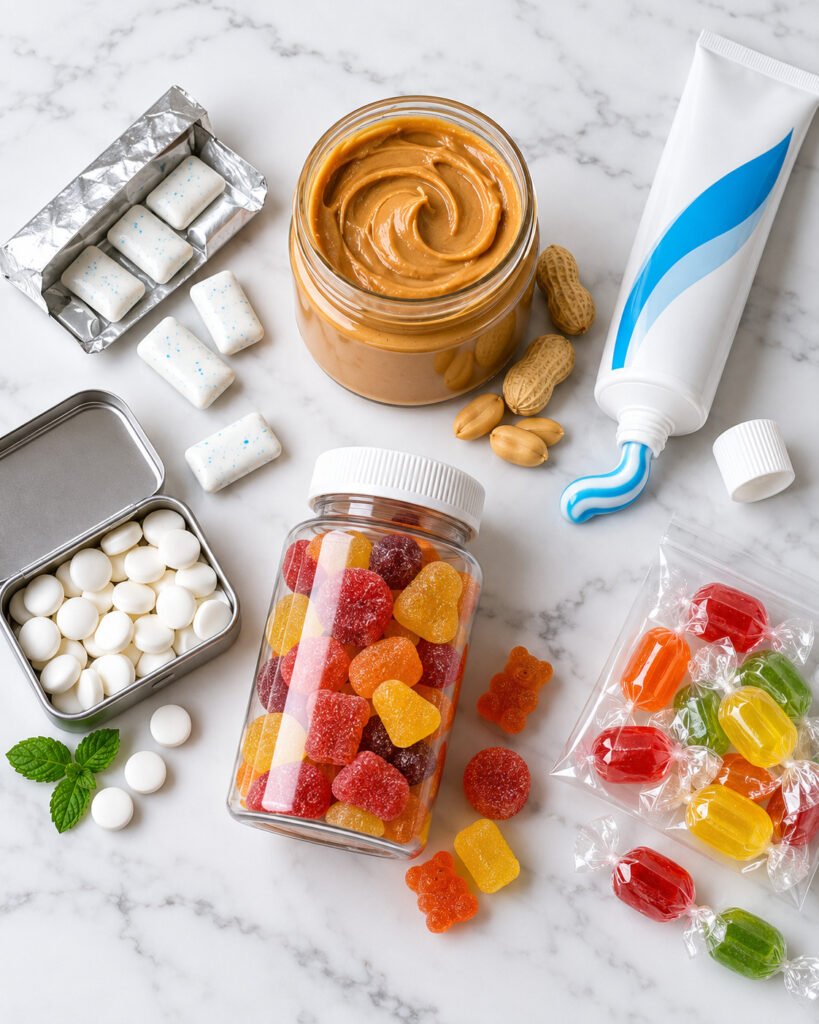
Gum gets most of the attention, but xylitol hides in many everyday items. Check labels on:
- Sugar-free gum and mints
- Peanut butter and other nut butters (some “low sugar” or “natural” brands)
- Sugar-free candy, gummies, and chocolate
- Toothpaste and mouthwash
- Chewable vitamins and supplements
- Sugar-free baked goods, jam, syrup, and puddings
- Some nasal sprays and medications
- Protein bars and drink mixes
If you love sharing peanut butter with your dog, always choose a brand that clearly states no xylitol. Here is a safe option many dog owners look for:
👉 Xylitol-Free Dog-Safe Peanut Butter –https://link.amazon/B0bJExiUf
How to Prevent Xylitol Poisoning

Most cases happen at home, often from a purse, backpack, or car cup holder. These simple habits help a lot.
1. Keep gum out of reach. Store gum in closed drawers or high cabinets, not in open bags or on low tables.
2. Watch your bags. Dogs are great at finding treats in handbags, gym bags, and backpacks. Hang bags up high or keep them in a closed room.
3. Tell guests and kids. Visitors often leave gum in bags or coat pockets. Kindly ask them to keep bags off the floor. Teach children never to share gum with pets.
4. Use a secure trash can. Dogs also raid trash for used gum wrappers and chewed gum. A can with a tight lid keeps your dog out.
👉 Pet-Proof Trash Can with Locking Lid–https://link.amazon/B0bviaAl2
5. Read every label. Before giving your dog any human food, check for xylitol. Never assume a product is safe because it is “natural.”
6. Save emergency numbers. Put your vet’s number, the closest 24-hour emergency clinic, and a poison hotline in your phone and on your fridge.
7. Train a strong “leave it.” A reliable “leave it” command can stop your dog from grabbing dangerous items. Practice it daily with treats.
Common Mistakes to Avoid
- Waiting to see if symptoms appear. By then, your dog may already be in danger.
- Trusting a chart alone. Amounts vary widely between brands.
- Using home remedies without advice. Wrong steps can cause harm.
- Assuming “just one piece” is fine. For small dogs, one piece can be enough.
- Not bringing the package. The label helps the vet make fast decisions.
Frequently Asked Questions
How long does it take for a dog to show signs after eating sugar-free gum?
Signs of low blood sugar usually appear within 10 to 60 minutes, though some dogs may take up to 12 hours. Liver problems can appear 8 to 72 hours later. Do not wait for symptoms before calling a vet.
How many pieces of gum are toxic to a dog?
It depends on your dog’s weight and how much xylitol is in each piece. For a small dog, even one or two pieces can be dangerous. For larger dogs, several pieces may be needed, but brands vary. Always call a vet.
Can dogs die from eating xylitol?
Yes. Severe xylitol poisoning can cause seizures and liver failure, which can be fatal. However, dogs treated early have a much better outlook.
Is regular gum (with sugar) safe for dogs?
Regular gum is not toxic in the same way, but it is not safe either. It can cause an upset stomach, and swallowed gum can occasionally cause a blockage. It’s best to keep all gum away from dogs.
My dog seems fine after eating gum. Do I still need a vet?
Yes. A dog can look normal at first and still be at risk. Call a vet or poison hotline right away, even if your dog acts healthy.
Is xylitol dangerous to cats too?
Xylitol has been studied mostly in dogs. Cats appear to be less affected, but you should still keep it away from cats and call a vet if your cat eats a xylitol product.
What should I give my dog after eating gum?
Do not give food, milk, or medicine unless a vet tells you to. Your vet will decide what your dog needs.
Can I make my dog vomit at home?
Only if a vet or poison hotline specifically tells you to. Making a dog vomit at the wrong time or in the wrong way can be dangerous.
Final Thoughts
Finding out that your dog ate sugar-free gum is scary, but quick action makes a huge difference. Remember the key points:
- Sugar-free gum often contains xylitol, which is toxic to dogs.
- Call a vet or poison hotline immediately, even if your dog looks fine.
- Bring the package and know your dog’s weight.
- Symptoms can start in minutes, and liver damage can appear days later.
- Prevention is simple: store gum safely and check labels.
Every dog owner should be prepared for an emergency. Keep a first aid kit ready, choose dog-safe treats, and save emergency numbers where you can find them fast.
If you found this guide helpful, share it with a friend who has a dog. It might save a life.