
(Disclosure: This post may contain affiliate links. If you purchase through these links, we may earn a small commission at no extra cost to you. We only recommend products we believe genuinely help pet owners.)
SEO Title Tag: Toxic Foods for Dogs vs Cats: Why Some Foods Affect Them Differently (2026 Guide) Meta Description: Not all toxic foods affect dogs and cats the same way. Learn which foods are more dangerous for cats, which are worse for dogs, and what to do in an emergency. Focus Keyword: toxic foods for dogs and cats
If you share your home with both a dog and a cat, you’ve probably assumed that “pet-safe” rules apply equally to both. A little bit of onion in the gravy, a square of chocolate that fell on the floor, a splash of milk in a saucer surely if it’s risky for one, it’s risky for the other, right?
Not exactly.
Dogs and cats are built differently on the inside, and that difference changes how their bodies react to the same food. A food that causes mild stomach upset in your dog could send your cat into liver failure. Something your cat licks off her paw without a problem could put your dog in the emergency room. Understanding why this happens — not just memorizing a list — is what actually keeps your pets safe.
In this guide, we’ll break down the biological reasons dogs and cats react differently to toxins, compare the danger levels of common foods side by side, and walk through exactly what to do if your pet eats something they shouldn’t have.
(Note: This article is for general education and is not a substitute for veterinary advice. If you suspect your pet has eaten something toxic, contact your vet or a pet poison hotline immediately.)
Why Dogs and Cats React Differently to the Same Food
To understand why toxicity varies between species, you need to understand two things: metabolism and diet biology.
1. Cats Are Obligate Carnivores — Dogs Are Not
Dogs are technically omnivores. Their digestive systems have adapted over thousands of years of living alongside humans to process a wider range of foods, including some plant matter, grains, and cooked table scraps in small amounts.
Cats, on the other hand, are obligate carnivores. Their bodies are built almost exclusively to process meat. They lack certain enzymes that break down plant compounds and sugars efficiently, which means their livers process many substances — including toxins — much more slowly than a dog’s liver does.
2. Cats Have a Slower Liver Detox Pathway
One of the biggest differences comes down to a liver enzyme called glucuronyl transferase. Dogs (and humans) have plenty of it. Cats have very little.
This enzyme is responsible for breaking down and flushing out many toxins, drugs, and food compounds from the body. Without enough of it, toxic substances stay in a cat’s bloodstream longer and at higher concentrations — which is a major reason cats can be poisoned by things dogs shuffle off relatively easily, like certain pain medications, essential oils, and specific foods.
3. Body Size Isn’t the Only Factor
It’s tempting to assume small size is why cats are more sensitive, but that’s only part of the picture. Toxicity isn’t just about body weight — it’s about how efficiently the body can process and eliminate a substance. A 10-pound cat and a 10-pound small dog breed can have very different reactions to the exact same food, purely because of these internal biological differences.
4. Hemoglobin Sensitivity
Cats’ red blood cells are also more vulnerable to oxidative damage from certain compounds (found in onions, garlic, and related plants) than dogs’ red blood cells are. This is why onion and garlic poisoning tends to hit cats harder and faster than it hits dogs, even in smaller amounts.
Toxic Foods for Dogs vs Cats: Side-by-Side Danger Comparison
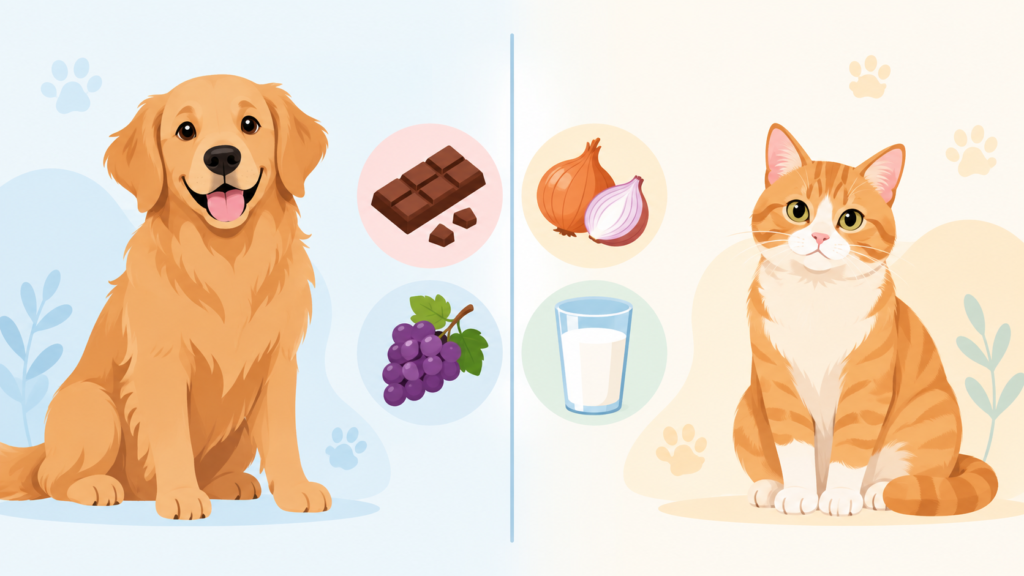
Here’s a breakdown of common toxic foods and how their danger level compares between the two species.
| Food | Danger to Dogs | Danger to Cats | Why |
|---|---|---|---|
| Chocolate | High | Very High | Cats are more sensitive to theobromine and caffeine, though they rarely eat chocolate voluntarily |
| Onions & Garlic | Moderate–High | Very High | Cats’ red blood cells are more easily damaged by sulfur compounds |
| Grapes & Raisins | Very High (kidney failure risk) | Unclear/Reported but less documented | Toxic mechanism still not fully understood; both species should avoid entirely |
| Xylitol (sugar-free gum, candy) | Extremely High (rapid insulin spike) | Lower documented risk, but avoid | Dogs’ insulin response to xylitol is dramatic and fast |
| Alcohol | High | Very High | Cats’ smaller liver capacity processes alcohol much slower |
| Caffeine | High | Very High | Same theobromine/caffeine sensitivity as chocolate |
| Macadamia Nuts | High (dogs only, well documented) | Not well documented | Mechanism specific to canine physiology |
| Raw Fish (tuna, in excess) | Low risk | Moderate–High (thiamine deficiency) | Cats fed excess raw tuna can develop steatitis and thiamine deficiency |
| Cow’s Milk & Dairy | Mild (lactose intolerance varies) | Moderate (most adult cats are lactose intolerant) | Cats lose the enzyme lactase after kittenhood |
| Raw Bread Dough | High (alcohol + expansion risk) | High | Yeast ferments in the stomach in both species |
Key takeaway: Some foods (chocolate, xylitol, onions, alcohol) are dangerous to both — but cats generally need a much smaller amount to be seriously affected. Other foods (grapes, macadamia nuts) have strong documented danger in dogs specifically, with less clinical data available for cats, which doesn’t mean cats are safe — it often just means fewer recorded cases.
Foods That Are More Dangerous to Cats Specifically
Onions, Garlic, Leeks, and Chives
Even small, repeated amounts (like broth or seasoning powder) can cause hemolytic anemia in cats — a condition where red blood cells rupture faster than the body can replace them. Symptoms include lethargy, pale gums, rapid breathing, and orange or dark urine.
Raw or Excess Tuna
An occasional small bite of cooked fish is generally fine, but a diet heavy in raw tuna can lead to thiamine (vitamin B1) deficiency and a painful condition called steatitis (yellow fat disease). This is a slower, cumulative danger rather than an instant emergency.
Dairy Products
Kittens can digest milk because they produce lactase. Most adult cats lose much of this enzyme, meaning milk, cheese, and cream can cause diarrhea and digestive upset — not usually life-threatening, but uncomfortable and best avoided.
Lily Plants (Not a Food, But a Critical Mention)
This isn’t a food, but it’s one of the most important cat-specific dangers to know: lilies are severely toxic to cats and essentially harmless to dogs. Even pollen brushing against a cat’s fur, which is later licked off during grooming, can cause fatal kidney failure within days. If you have cats, treat lilies as a strict no in your home.
Foods That Are More Dangerous to Dogs Specifically
Grapes and Raisins
Even a small handful can trigger sudden kidney failure in some dogs, though vets still don’t fully understand why some dogs are affected and others aren’t. Because the risk is unpredictable, zero grapes or raisins is the only safe rule for dogs.
Xylitol
Found in sugar-free gum, some peanut butter brands, and various “diet” or “keto” products, xylitol causes a massive, rapid insulin release in dogs, leading to dangerous drops in blood sugar and potential liver damage within hours. This is one of the fastest-acting food emergencies in dogs.
Macadamia Nuts
Dogs can develop weakness, tremors, and elevated body temperature after eating macadamia nuts, even in small quantities. The exact toxic compound is still unknown, but the pattern in dogs is well documented in veterinary literature.
Signs of Food Toxicity to Watch For
Symptoms can appear within minutes or take up to 24–48 hours, depending on the toxin. Watch for:
- Vomiting or diarrhea
- Lethargy or sudden weakness
- Loss of coordination or tremors
- Rapid or difficult breathing
- Pale or yellow-tinted gums
- Excessive drooling
- Loss of appetite
- Unusual urine color
If you notice any of these after your pet has had access to a potentially toxic food, don’t wait for symptoms to worsen — early treatment dramatically improves the outcome.
What to Do If Your Pet Eats Something Toxic
- Stay calm and act fast. Time matters more than panic.
- Identify what was eaten and roughly how much. This helps your vet determine urgency and treatment.
- Do not induce vomiting unless a vet or poison control specifically tells you to. Some substances cause more damage coming back up.
- Call your vet, an emergency animal hospital, or a pet poison hotline immediately.
- Keep the packaging or a sample of the food if possible, in case the vet needs to identify the exact ingredient.
- Follow instructions exactly — vets may ask you to monitor at home or bring your pet in right away depending on the substance and amount.
Prevention: Building a Pet-Safe Kitchen and Home
The best toxicity treatment is the one you never need. A few practical habits go a long way:
- Store food out of reach — cats are excellent counter-jumpers, and dogs are surprisingly good at counter-surfing too.
- Use pet-proof trash cans with locking lids, especially in kitchens where food scraps and packaging pile up.
- Keep a pet first aid kit on hand so you’re not scrambling during an emergency.
- Save the ASPCA Animal Poison Control number in your phone.
- Educate every household member, including kids and guests, about what not to feed your pets — “just one bite” is how most accidents happen.
Here are a couple of products that genuinely make this easier day to day:
👉Pet-Proof Kitchen Trash Can with Locking Lid-https://link.amazon/B05A5xw55
👉 Complete Pet First Aid Kit for Dogs & Cats- https://link.amazon/B024IHL6N
Frequently Asked Questions
Is it true that cats are more sensitive to toxins than dogs? In many cases, yes. Cats have a slower liver detox pathway (less of the enzyme glucuronyl transferase), which means toxins stay in their system longer and at higher concentrations compared to dogs.
Can dogs eat foods that are toxic to cats? Not necessarily. Some foods, like onions and garlic, are dangerous to both, just at different thresholds. Always check a food’s safety for the specific species before sharing.
What is the most common food toxicity emergency for dogs? Chocolate and xylitol ingestion are among the most common food-related emergency vet visits for dogs, due to how quickly and severely they can affect the body.
What is the most common food toxicity emergency for cats? Lily plant exposure (not a food, but frequently grouped with poisoning cases) and onion/garlic ingestion are among the most reported toxic exposures for cats.
Should I induce vomiting if my pet eats something toxic? Only if a veterinarian or poison control specialist tells you to. Some substances cause more harm if vomited back up, and timing matters.
Final Thoughts
Dogs and cats may share a home, a couch, and sometimes even a food bowl, but their bodies process food — and toxins — in fundamentally different ways. Knowing these differences isn’t about memorizing a scary list; it’s about understanding why certain foods matter more for one pet than the other, so you can make faster, smarter decisions when it counts.
Keep toxic foods out of reach, keep emergency numbers saved, and when in doubt, always call your vet. A few minutes of caution can save your pet’s life.