Meta Description: Struggling with pet hair stuck on your couch? Discover simple, safe, and proven methods to remove pet hair from any sofa fabric without damaging it — plus the best tools to make the job effortless.
Disclosure: This post contains affiliate links. If you click on a link and make a purchase, we may earn a small commission at no extra cost to you. We only recommend products we genuinely believe can help you.
Disclaimer: This article is for general informational purposes only. Always follow your couch manufacturer’s care instructions and consult a veterinarian for pet health concerns. Some links are affiliate links, and we may earn a small commission at no extra cost to you.
If you share your home with a dog or cat, you already know the struggle. You vacuum your couch, fluff the cushions, maybe even wipe it down — and within an hour, it looks like your pet has been sitting there all day again. Pet hair has a sneaky way of weaving itself deep into fabric fibers, and using the wrong tool or technique can leave you with a couch that looks worse than before you started.
The good news? Removing pet hair from your couch doesn’t have to mean scrubbing for hours or risking damage to your favorite piece of furniture. With the right approach — and a few affordable tools — you can get your couch looking fresh again in just minutes, without harming the fabric, leather, or stitching.
In this guide, we’ll walk through exactly why pet hair sticks so stubbornly, the safest methods for every type of couch material, the best tools to buy, and simple habits that will keep your furniture hair-free for good.
Table of Contents
- Why Pet Hair Sticks to Couches
- What You’ll Need Before You Start
- Step-by-Step Methods to Remove Pet Hair Safely
- Best Techniques by Couch Fabric Type
- Mistakes That Can Damage Your Couch
- How to Prevent Pet Hair Buildup Long-Term
- Frequently Asked Questions
- Final Thoughts
1. Why Pet Hair Sticks to Couches
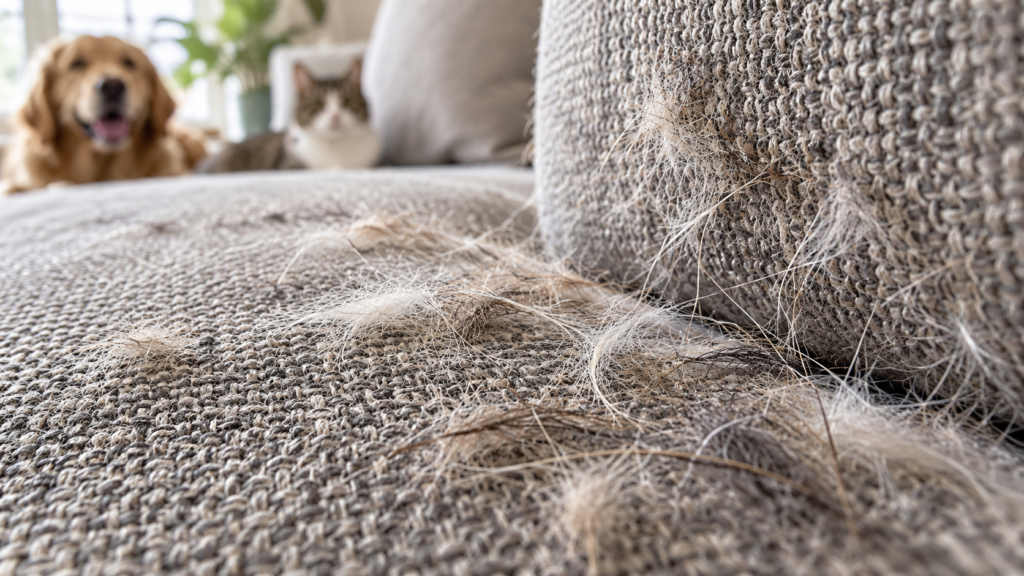
Before jumping into solutions, it helps to understand the problem. Pet hair isn’t just “sitting” on top of your couch fabric — it’s actually anchored into it. Here’s why:
- Static electricity: Fur picks up a static charge from friction (your pet moving around, changing temperatures, or dry indoor air), which causes it to cling tightly to fabric fibers.
- Fiber structure: Fabrics like microfiber, chenille, and velvet have a woven texture that acts almost like tiny hooks, trapping hair strands the same way Velcro works.
- Oil and moisture: Natural oils from your pet’s skin help hair adhere even more firmly to upholstery.
This is why simply brushing your hand across the cushion or using a standard broom rarely works. You need tools and techniques designed specifically to break that static and fiber grip — without damaging the material underneath.
2. What You’ll Need Before You Start
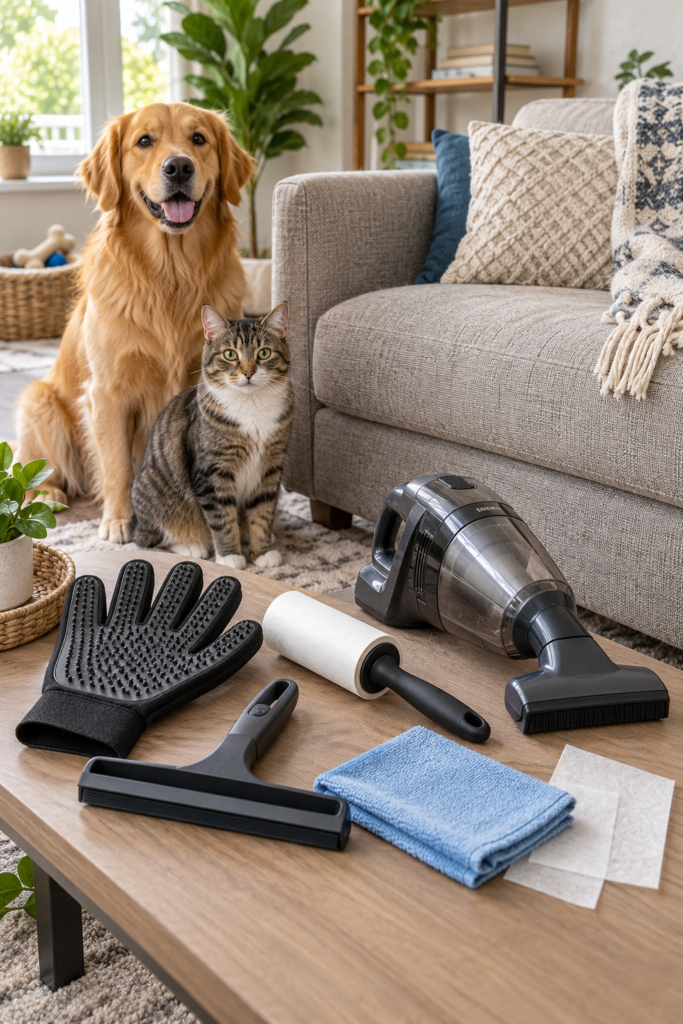
You don’t need a professional cleaning kit to tackle pet hair. Most of these tools are inexpensive, reusable, and gentle on fabric. Here are the essentials worth having on hand:
- A rubber pet hair removal glove or brush
- A squeegee (yes, the window-cleaning kind works wonders)
- A lint roller with strong adhesive sheets
- A handheld vacuum with a pet hair attachment
- Dryer sheets for a quick static-reducing wipe-down
- A fabric-safe fabric softener spray
- A silicone bristle upholstery brush
- A robot vacuum for ongoing daily maintenance
Here are some highly-rated options you can check out:
👉Rubber Pet Hair Removal Brush – See Current Price
https://link.amazon/B0aZQG3NX
👉Handheld Vacuum for Pet Hair – Compare Models
https://link.amazon/B04bxRkyP
We’ll link a few more tool-specific recommendations throughout the guide as we go through each method.
3. Step-by-Step Methods to Remove Pet Hair Safely
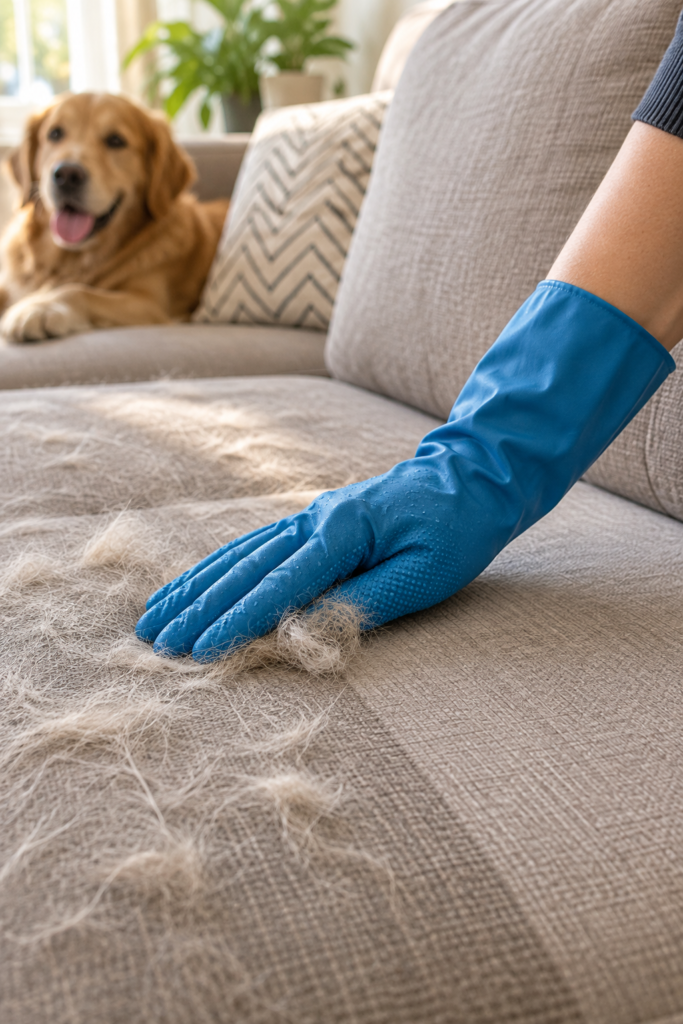
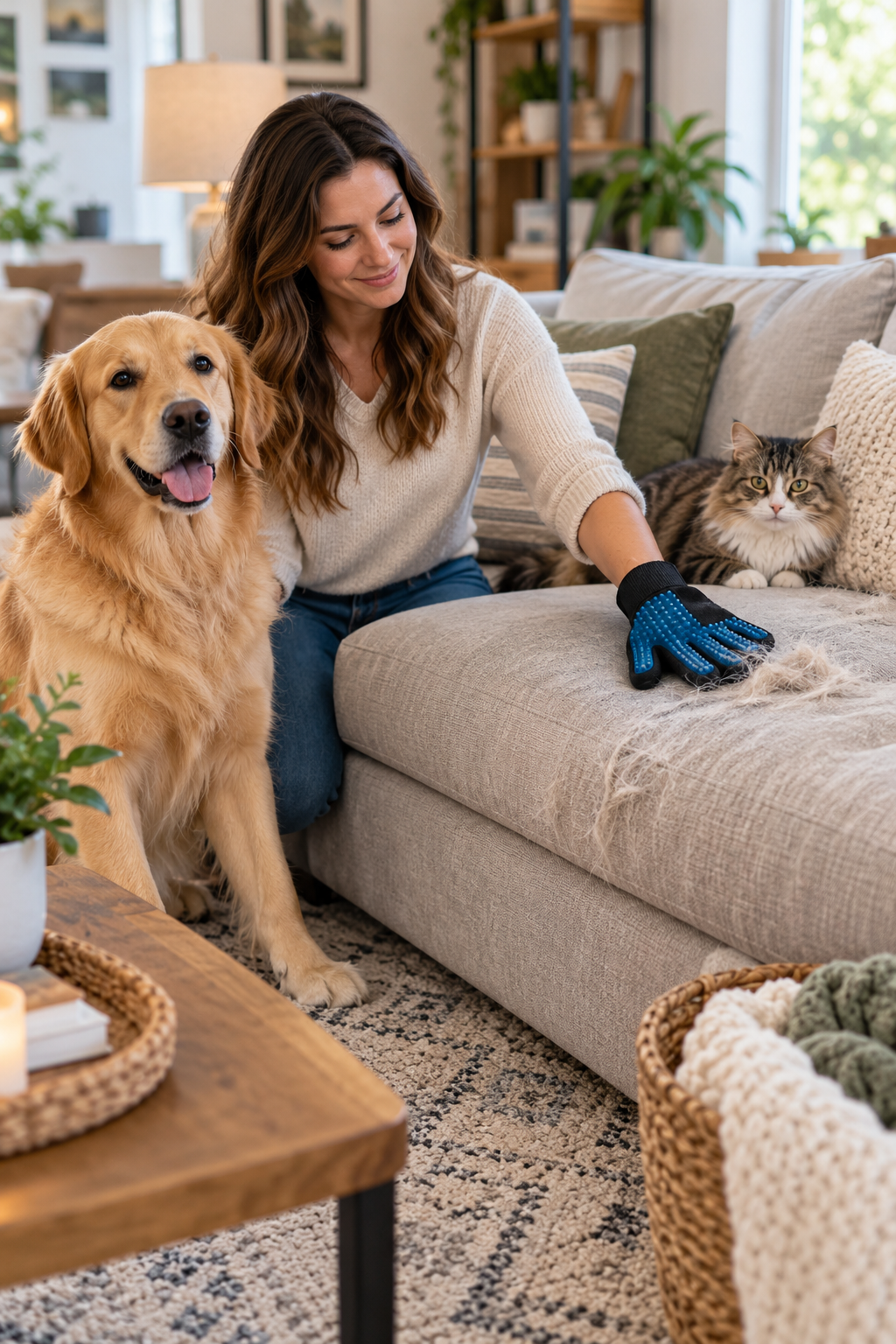
Method 1: The Rubber Glove Trick
This is the fastest and safest method for almost any fabric type.
- Dampen a rubber glove slightly with water.
- Put it on and run your hand across the couch in one direction, applying light pressure.
- Watch the hair ball up as it lifts away from the fibers.
- Rinse the glove periodically and repeat until the surface is clear.
The rubber creates friction that gently pulls hair up without tugging on the fabric weave, making it one of the gentlest options available.
Method 2: The Squeegee Method
A rubber-edged squeegee works almost like magic on upholstery.
- Hold the squeegee at a slight angle against the fabric.
- Drag it across the cushion in short, firm strokes.
- Hair will roll into small clumps you can pick up by hand or vacuum away.
This method is excellent for larger surfaces like sofa backs and seat cushions since it covers more area per stroke than a glove.
👉Pet Hair Removal Squeegee Tool – See Options
https://link.amazon/B0apFpvJM
Method 3: Lint Roller for Finishing Touches
Once the bulk of the hair is removed, a lint roller helps pick up any remaining stray strands, especially in seams and corners.
Method 4: Dryer Sheets for Static Control
Rub a dryer sheet gently across the couch before or after other methods. It reduces static cling, making it easier for remaining hair to lift away and helping prevent new hair from sticking as quickly.
Method 5: Vacuum With a Pet Hair Attachment
For deep cleaning, use a vacuum with a motorized brush or rubber-bristle upholstery attachment specifically designed for pet hair. Go over the couch slowly, working in overlapping strokes.
👉Vacuum With Pet Hair Attachment – Compare Models
https://link.amazon/B05yMj7MB
Method 6: Fabric Softener Spray
Mix a small amount of fabric softener with water in a spray bottle, lightly mist the couch (test on a hidden spot first), and wipe with a microfiber cloth. This reduces static and makes future hair removal easier.
4. Best Techniques by Couch Fabric Type
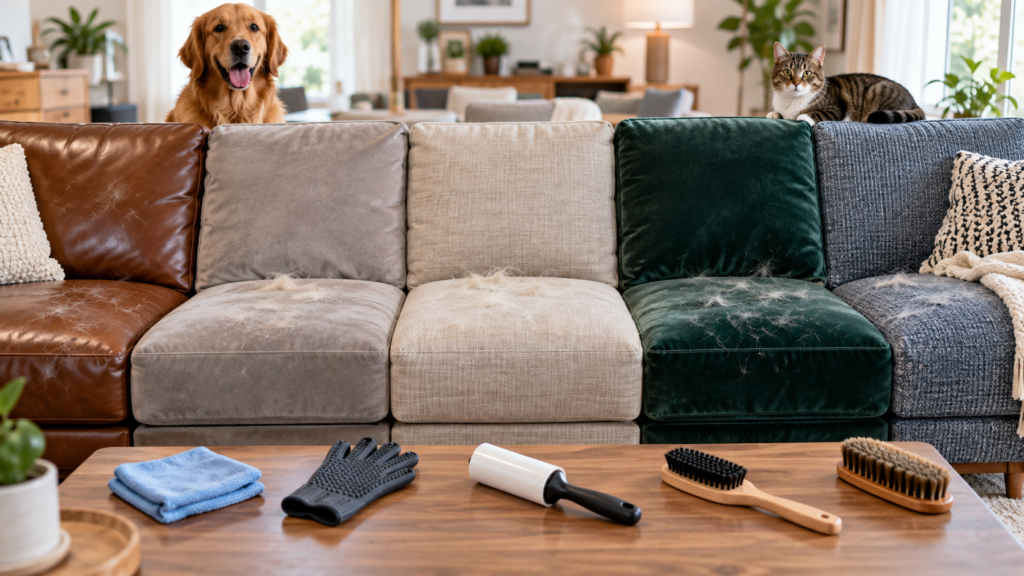
Different upholstery materials require slightly different care to avoid damage.
Leather or Faux Leather Couches
- Use a soft, slightly damp microfiber cloth instead of rubber tools, which can scratch the surface.
- Wipe in gentle circular motions, then dry immediately to prevent moisture damage.
- Avoid vacuum brush attachments with stiff bristles.
Microfiber and Suede-Style Fabric
- Rubber gloves and squeegees work exceptionally well here since microfiber has a tight weave that traps hair.
- Always test any spray or liquid on a hidden area first, as some microfibers can water-stain.
Cotton and Linen Blend Couches
- Lint rollers and vacuum attachments are usually safest.
- Avoid excessive scrubbing, which can pill or fray natural fiber blends.
Velvet or Chenille Couches
- Use a soft-bristle brush moving in the direction of the nap (the fabric’s natural texture direction) to avoid crushing or flattening the pile.
- Follow up with a fabric steamer on a low setting to help the fabric spring back to its original texture.
5. Mistakes That Can Damage Your Couch
Removing pet hair the wrong way can wear down fabric, dull leather, or leave permanent marks. Avoid these common mistakes:
- Using a stiff-bristle brush on delicate fabric — this can fray or pill the material over time.
- Scrubbing too hard — aggressive scrubbing pushes hair deeper into the weave instead of lifting it out.
- Skipping the patch test — always test sprays, softeners, or steamers on a hidden area first.
- Using too much water — excess moisture on fabric couches can lead to mold, mildew, or watermarks.
- Ignoring the manufacturer’s care tag — most couches have a cleaning code (W, S, or WS) that tells you which cleaning products are safe to use.
6. How to Prevent Pet Hair Buildup Long-Term
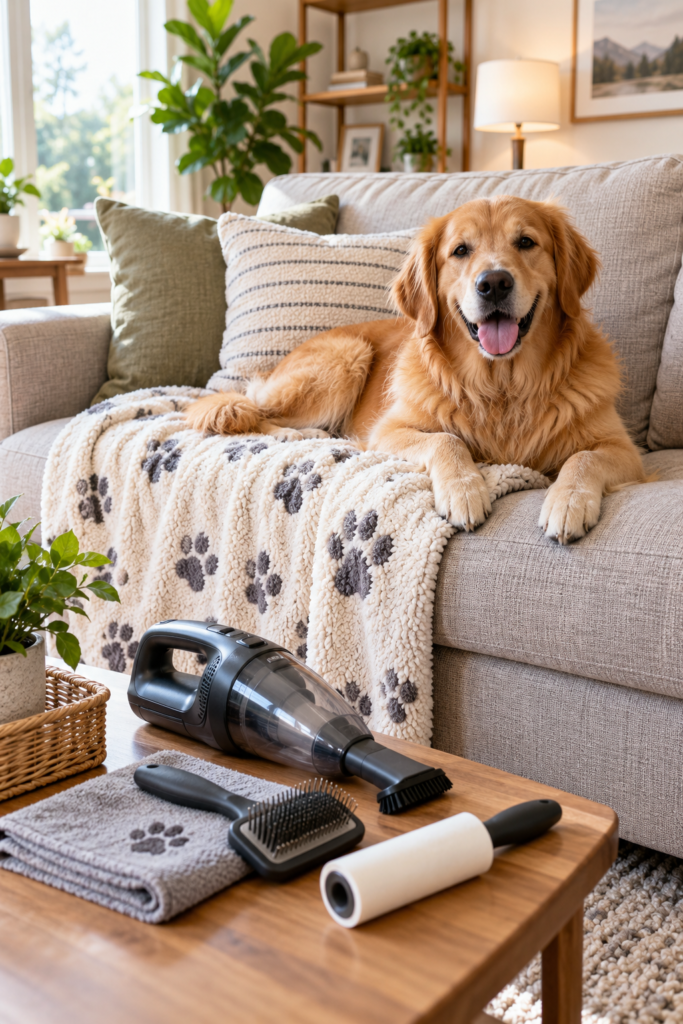
Removing hair is only half the battle — keeping it from piling back up is what really saves you time. Here are simple habits that make a big difference:
- Brush your pet regularly. Reducing loose hair at the source is the single most effective way to cut down on furniture shedding.
- Add a washable throw blanket to your pet’s favorite couch spot, so you can just toss it in the wash instead of cleaning the couch itself.
- Run a robot vacuum daily to catch loose hair before it settles into the fabric.
👉Robot Vacuum for Pet Hair – Compare Options
https://link.amazon/B04V70Ynb
- Use a fabric protector spray designed for pet owners, which can reduce how easily hair and dander stick to fibers.
- Vacuum weekly, even if the couch looks clean, since a portion of shed hair settles below the visible surface.
- Keep a lint roller near the couch for quick daily touch-ups instead of letting hair accumulate over a week.
7. Frequently Asked Questions
Q: What removes pet hair from a couch the fastest? A rubber glove or squeegee tends to work fastest for most fabric types, since the friction lifts large amounts of hair in just a few strokes.
Q: Can I use a lint roller on leather couches? Yes, lint rollers are generally safe on leather since they don’t require scrubbing or moisture, though a soft cloth is usually more effective for leather surfaces.
Q: Will vacuuming damage my couch fabric? Not if you use the correct attachment. Motorized brush heads work well on sturdy fabrics, but for delicate materials like velvet, switch to a soft upholstery brush attachment instead.
Q: How often should I clean pet hair off my couch? For homes with pets that shed heavily, a quick clean every 2–3 days keeps buildup manageable, with a deeper clean weekly.
Q: Do fabric softener sprays actually help with pet hair? Yes, they reduce static, which is one of the main reasons hair clings so stubbornly to fabric in the first place.
Q: Is it safe to use dryer sheets directly on couch fabric? Yes, for most fabrics. Choose an unscented, dye-free option if you have sensitive skin or allergies.
8. Final Thoughts
A couch covered in pet hair doesn’t have to be a permanent part of pet ownership. With the right combination of tools — a rubber glove, a squeegee, a good vacuum attachment, and a few preventive habits — you can keep your furniture looking clean and fresh without ever risking damage to the fabric or leather underneath.
Start with the gentlest method suited to your couch material, build a quick daily or weekly routine, and invest in one or two of the tools mentioned above. Your couch (and your allergies) will thank you.
Found this guide helpful? Bookmark it for the next time your couch needs a refresh, and check out the linked tools above to build your own pet hair removal kit.