Affiliate Disclosure: This article contains affiliate links. If you purchase a product through one of these links, we may earn a small commission at no additional cost to you. We only recommend products that may be useful for pet owners.
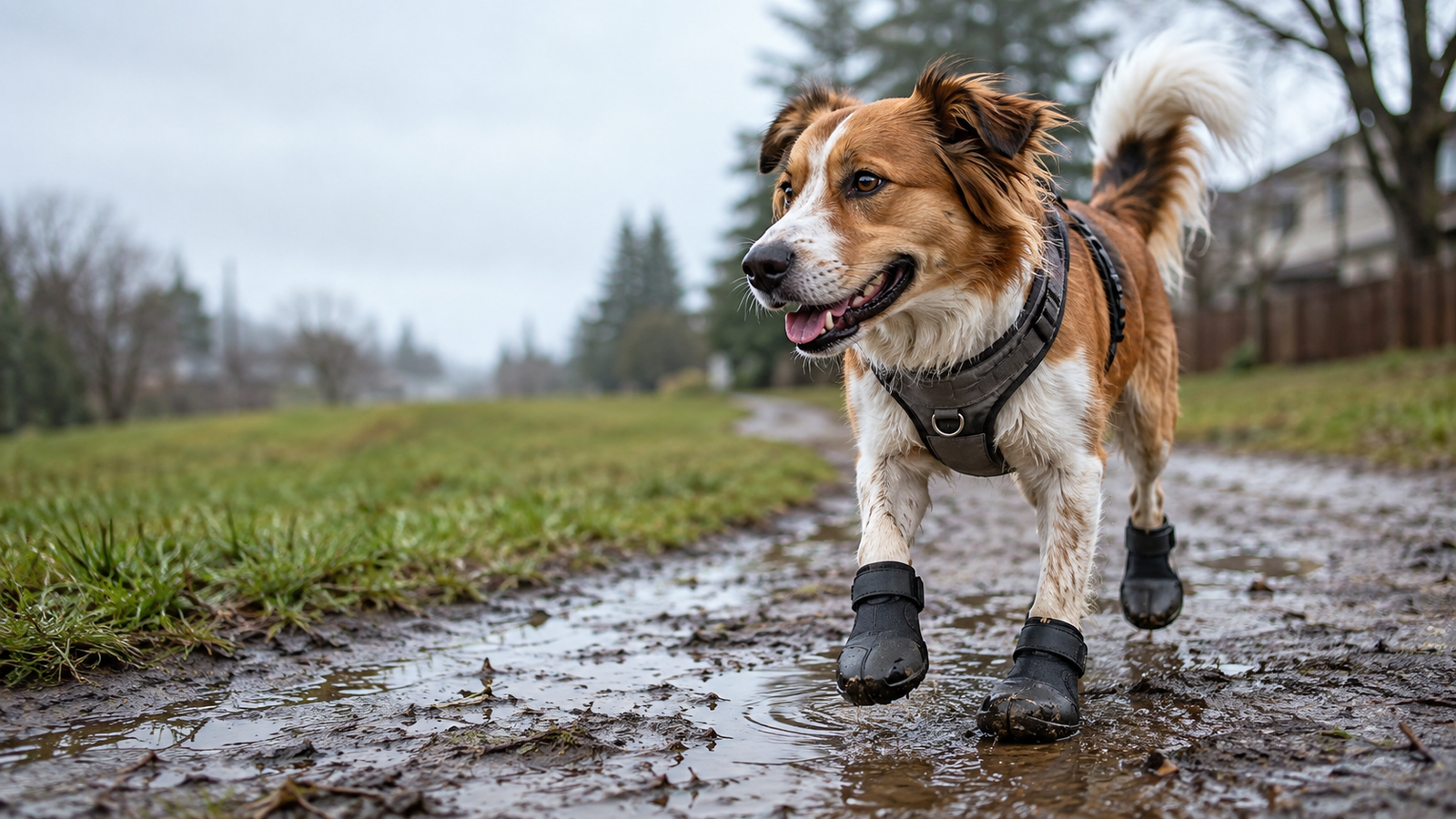
If you’ve ever tried to towel off four muddy paws after a rainy walk, you already know why dog boots exist. Wet, muddy paws don’t just mean a dirty floor — they can lead to cracked paw pads, fungal infections, ice-melt chemical burns, and a dog who tracks mud through every room in the house.
The good news?A well-fitted pair of dog boots can help protect your dog’s paws from wet, muddy, or rough conditions while reducing the amount of mud tracked into the house. The tricky part is picking the right pair, because not all dog boots are built for the same conditions. A boot designed for light drizzle on a paved sidewalk will fall apart in ankle-deep mud, and a heavy-duty mud boot might be overkill (and uncomfortable) for a small breed on a rainy afternoon walk.
In this guide, we’ll break down exactly what makes a great rain-and-mud dog boot, review 10 of the best options available in 2026, and answer the most common questions dog owners have about getting their pups to actually wear them.
Table of Contents
- Why Your Dog Needs Rain & Mud Boots
- What to Look for Before You Buy
- The 10 Best Dog Boots for Rain & Mud in 2026
- How to Measure Your Dog’s Paw for the Perfect Fit
- Tips to Get Your Dog Used to Wearing Boots
- Cleaning & Care Tips
- Frequently Asked Questions
1. Why Your Dog Needs Rain & Mud Boots
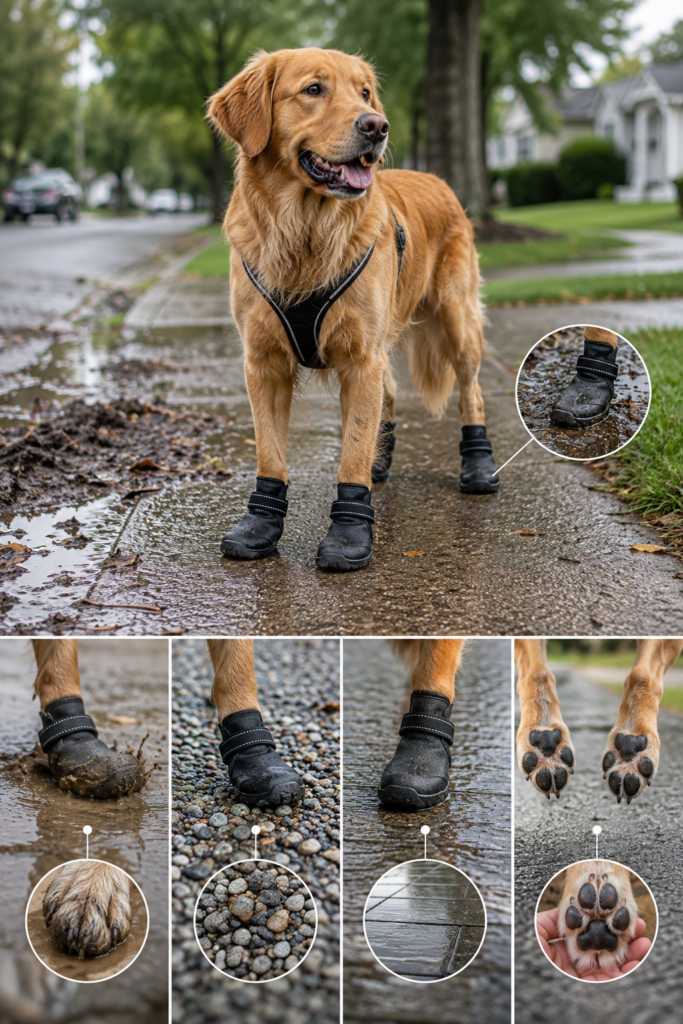
Dogs’ paws are tougher than human feet, but they’re not invincible. Here’s what regular exposure to rain and mud can actually do:
- Paw pad cracking and dryness — Constant wet-to-dry cycles strip natural oils from paw pads, leading to painful cracks.
- Fungal and bacterial infections — Damp fur between the toes is a breeding ground for yeast and bacteria, especially in warm climates.
- Mud and debris buildup — Small stones, thorns, and grit hidden in mud can get lodged between toes and cause irritation or injury.
- Slippery surfaces — Rain-slicked pavement, tile, and hardwood floors are hard on senior dogs or breeds prone to joint issues.
- A muddy house — Not a health issue, but definitely a real one for most dog owners.
A well-fitted pair of boots can help protect your dog’s paws from moisture, mud, and debris while providing additional traction on some wet surfaces.
2. What to Look for Before You Buy
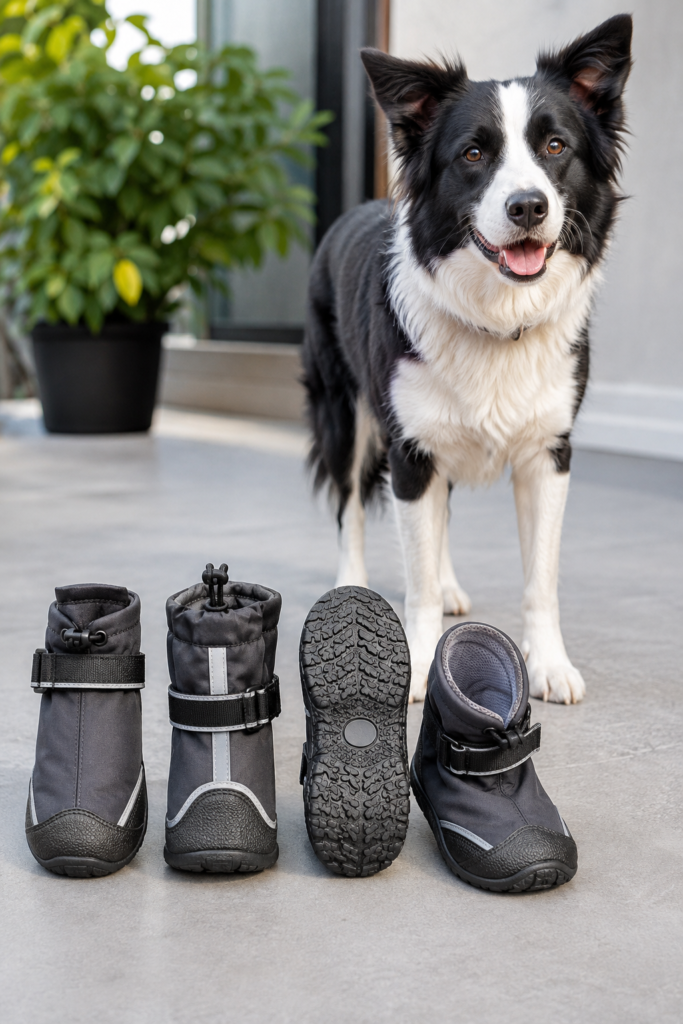
Not every “waterproof” dog boot lives up to the name. Here’s what actually matters when shopping for rain-and-mud-specific boots.
Waterproof (Not Just Water-Resistant)
Look for sealed seams and a genuinely waterproof outer shell —For wet conditions, look for sealed seams and waterproof materials such as coated nylon, TPU, or rubber. Water-resistant boots will soak through in a real downpour or deep puddle.
Grippy, Durable Outsoles
Mud and wet pavement are both slippery. A rubber outsole with a deep tread pattern gives your dog confidence and prevents slipping, especially on stairs or tile once you’re back inside.
Secure, Adjustable Straps
Boots that slip off in mud are worse than no boots at all — you’ll lose them in the muck. Look for wide velcro straps or drawstring closures that wrap around the ankle for a locked-in fit.
Breathable Lining
Waterproofing keeps water out, but a good lining keeps sweat and moisture from building up inside the boot, which can be just as irritating to paws.
Flexible Sole
Dogs need to feel the ground somewhat to walk naturally. Overly stiff soles can cause an awkward, high-stepping gait, especially in puppies or small breeds.
Reflective Trim
A nice bonus for early morning or evening walks in rainy, low-visibility weather.
3. The 10 Best Dog Boots for Rain & Mud in 2026
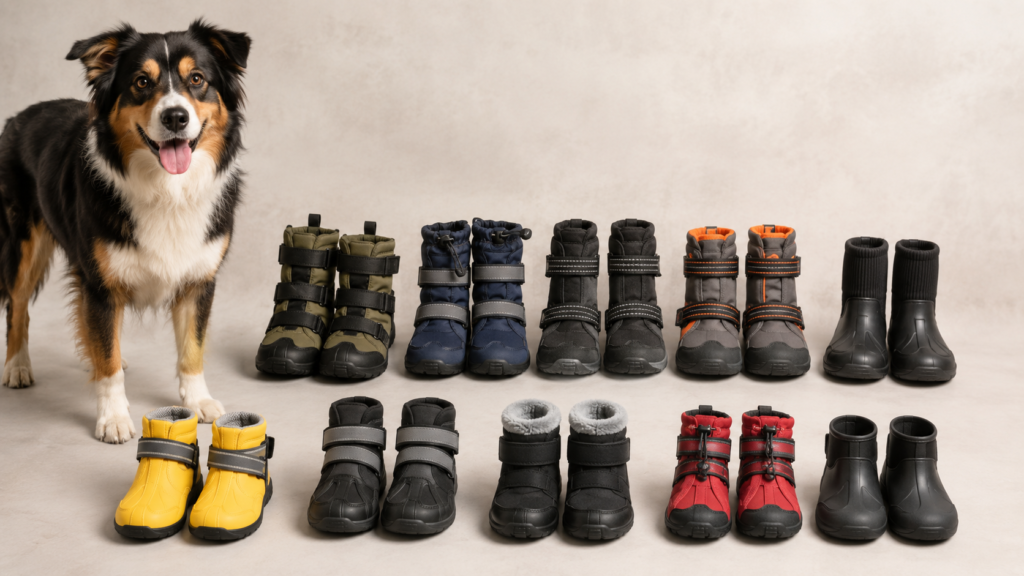
Below are our top picks across different needs — from serious mud-hikers to small breeds who just need light rain protection.
1. Ruffwear Polar Trex Boots — Best Overall
These are a favorite among hikers and trail runners for good reason. The Polar Trex boots feature a fully waterproof, breathable membrane, a grippy Vibram-style outsole, and a wide hook-and-loop closure that stays put even in deep mud. Check the manufacturer’s sizing guide before purchasing, and choose the size that best matches your dog’s paw measurements.
Best for: Medium to large active dogs who hike or walk in variable terrain.
🔗 https://link.amazon/B0h4ay5q7
2. Kurgo Blaze Cross Country Boots — Best for Deep Mud
Built with a higher ankle cuff than most competitors, the Kurgo Blaze boots are excellent at keeping mud out even in ankle-deep conditions. The reinforced toe cap resists tearing on rocky, root-covered trails.
Best for: Dogs who regularly walk through thick, deep mud or off-trail terrain.
🔗 https://link.amazon/B0cU2iYGa
3. QUMY Dog Boots — Best Budget Pick
QUMY boots offer a lower-cost option for wet-weather walks, with features such as rubber soles and adjustable straps. The rubber sole and reflective straps make them a great entry-level option for owners who aren’t sure their dog will tolerate boots yet.
Best for: First-time boot buyers and budget-conscious shoppers.
🔗 https://link.amazon/B029950z3
4. Muttluks Original Dog Boots — Best for Small Breeds
Muttluks are designed with a soft, flexible sole that’s gentle enough for small and toy breeds, while still offering solid water protection. The fleece-lined version is a nice touch for cooler rainy days.
Best for: Small breeds like Chihuahuas, Pomeranians, and Dachshunds.
🔗 https://link.amazon/B0iIBISId
5. Non-Stop Dogwear Trekking Boots — Best for Serious Adventurers
These are heavy-duty, purpose-built boots developed for working and sled dogs,These boots are designed for active outdoor use and may suit owners looking for a more rugged option. They’re pricier, but built to survive terrain that would destroy a basic boot in one outing.
Best for: Working dogs, sled dogs, and serious backcountry hikers.
🔗 https://link.amazon/B0bpktNr3
6. Expawlorer Waterproof Dog Boots — Best Value for Multi-Dog Households
If you have more than one dog, cost adds up fast. Expawlorer boots offer solid waterproofing and grip at a price point that makes outfitting the whole pack more affordable, without a major drop in quality.
Best for: Multi-dog households on a budget.
🔗 https://link.amazon/B0bZOAHT5
7. Canada Pooch Slush Boots — Best for Cold, Wet Weather
Slush and cold rain call for a bit of insulation as well as waterproofing. Canada Pooch’s Slush Boots add a thermal lining that keeps paws warm without sacrificing flexibility.
Best for: Rainy, cold-weather climates where slush and puddles mix.
🔗 https://link.amazon/B08arhbA5
8. Walkee Paws Dog Rain Boots — Best Easy-On Design
Unlike traditional boots with straps, Walkee Paws boots use a stretchy, sock-like design that’s quick to slip on and off — a huge time-saver if your dog hates the boot-putting-on process.
Best for: Dogs who resist traditional strap-on boots.
🔗 https://link.amazon/B09Tzo3ld
9. Grip Trex by Ruffwear — Best for Grip on Wet Surfaces
A close cousin to the Polar Trex, the Grip Trex trades some insulation for an even more aggressive, sticky-rubber outsole. If your main concern is slipping on wet tile, stone paths, or boat decks, this is the pick.
Best for: Dogs who need maximum traction on slick, wet surfaces.
🔗 https://link.amazon/B02SZu769
10. Pawz Rubber Dog Boots — Best Disposable Option
Pawz boots are thin, biodegradable rubber “balloons” that stretch over the paw. They’re not built for long hikes, but for quick trips outside during muddy weather, they’re inexpensive, reusable a handful of times, and Because fit still matters, check the manufacturer’s sizing guide and your dog’s paw measurements before purchasing.
Best for: Quick potty breaks and light rain without committing to a full boot set.
🔗 https://link.amazon/B05itFj2u
4. How to Measure Your Dog’s Paw for the Perfect Fit
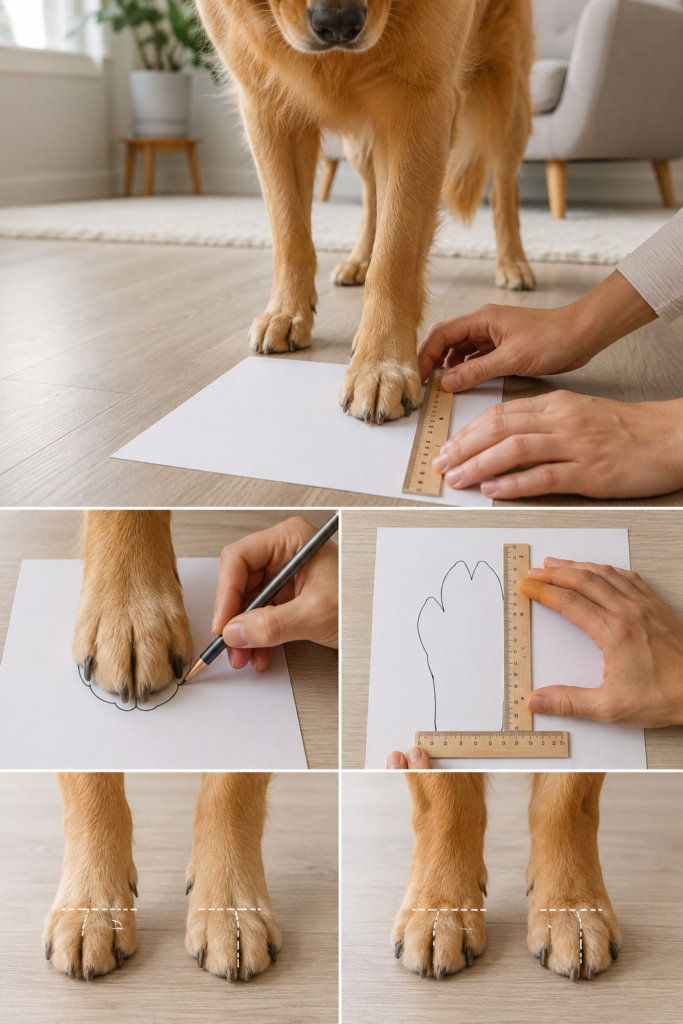
Sizing is the single biggest reason dog boots fail. A boot that’s too loose will fall off in mud; one that’s too tight will cause your dog to refuse to walk. Here’s a simple way to get it right:
- Trace the paw. Have your dog stand naturally on a piece of paper and trace around the paw (this works best right after a walk, when the paw is slightly spread).
- Measure width and length. Use a ruler to measure the widest point of the paw and the length from heel to the tip of the longest nail.
- Check the brand’s size chart. Every brand sizes slightly differently — don’t assume your dog’s “medium” from one brand matches another.
- Measure all four paws. Front and back paws are often different sizes, especially in larger breeds.
- When in doubt, size up slightly. A little extra room is easier to fix with a thicker sock than a boot that’s too tight.
5. Tips to Get Your Dog Used to Wearing Boots
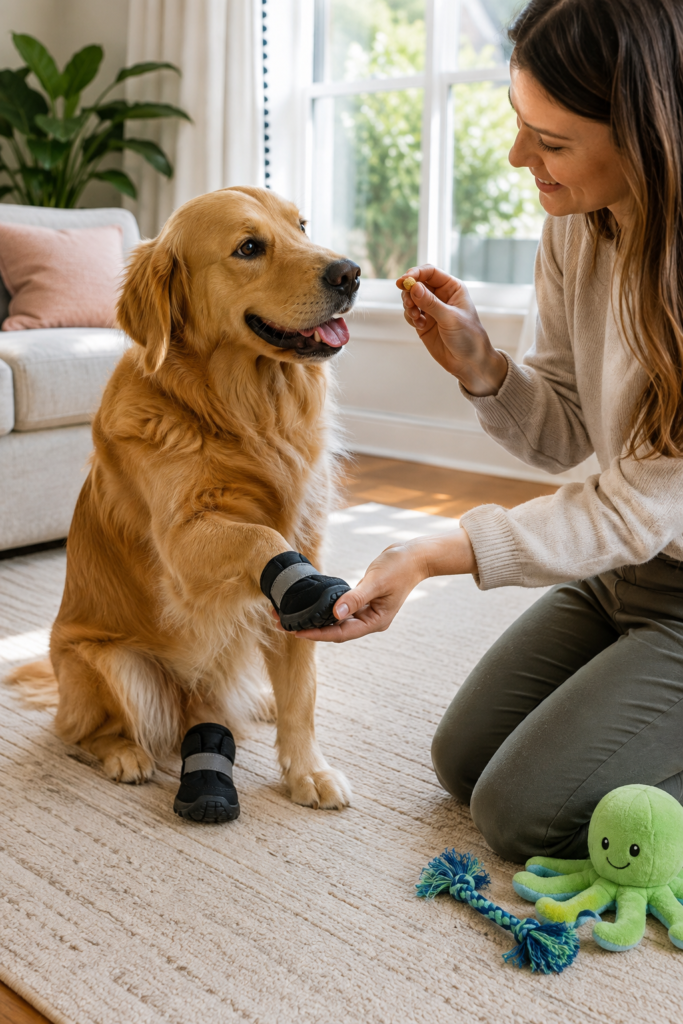
Most dogs look a little confused (or do the classic “boot shuffle”) the first time they wear boots. That’s completely normal. Here’s how to make the transition smoother:
- Start indoors. Let your dog wear the boots around the house for a few minutes at a time before heading outside.
- Use treats and praise. Reward calm behavior while the boots are on to build a positive association.
- One boot at a time. Introduce boots gradually — one paw today, two tomorrow — rather than all four at once.
- Distract with play. A short game of fetch or tug right after putting boots on helps your dog forget they’re wearing them.
- Be patient. Some dogs adjust in minutes; others take a few sessions. Consistency matters more than speed.
6. Cleaning & Care Tips
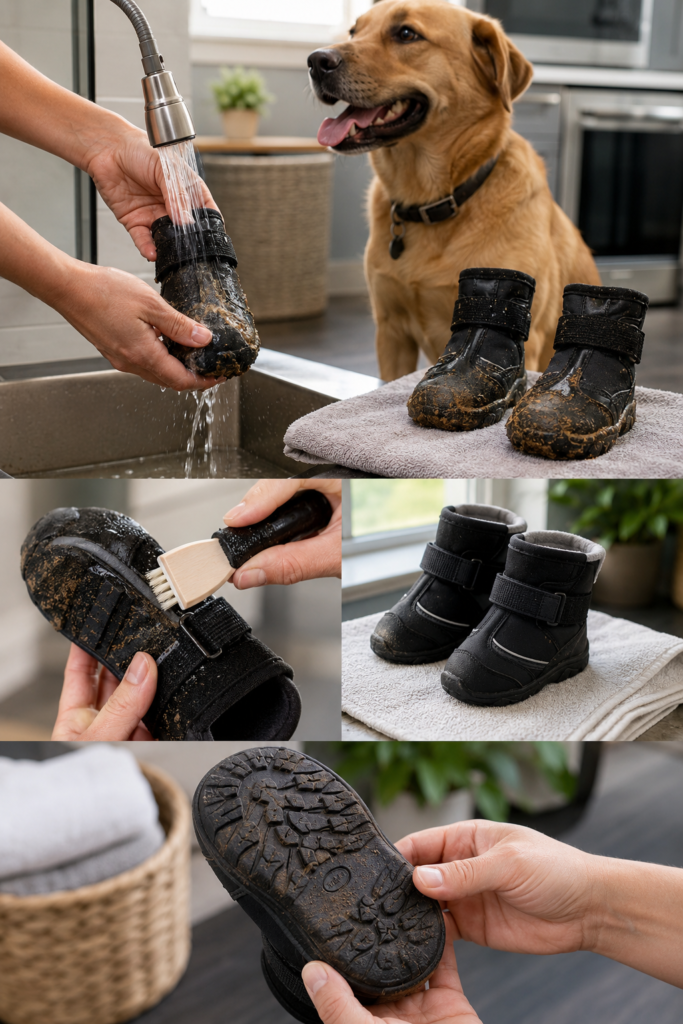
To get the most life out of your dog’s boots:
- Rinse mud off with plain water after each muddy walk — don’t let it dry and cake into the fabric or straps.
- Air dry boots fully before storing them; trapped moisture can cause odor and mildew.
- Check velcro straps regularly for trapped debris, which reduces grip strength over time.
- Rotate between two pairs if your dog wears boots daily, so each pair gets a full chance to dry out.
- Inspect soles periodically for wear — replace boots once the tread starts to smooth out, as this is when slipping becomes more likely.
7. Frequently Asked Questions
Do dogs actually need boots for rain and mud, or is it just for looks? While plenty of dogs go their whole lives without boots,Dog boots may help protect your dog’s paws from wet, muddy, rough, or chemically treated surfaces while also reducing mess at home. — especially for dogs with sensitive skin, senior dogs, or those who walk on rough or contaminated terrain (like roads treated with de-icing chemicals).
Why does my dog keep trying to shake the boots off? This is a normal reaction to the unfamiliar feeling of something on their paws. Gradual introduction (see the tips above) usually resolves it within a few short sessions.
How do I know if the boots fit correctly? A properly fitted boot should be snug enough that it doesn’t slide around, butA properly fitted boot should feel secure without being too tight, allowing your dog to walk comfortably without slipping or restricting movement.. Your dog should walk close to normally within a few minutes.
Can I leave boots on my dog all day? It’s best to remove boots after walks or outdoor time. Extended wear can cause moisture buildup inside the boot and may affect circulation if straps are too tight.
What’s the difference between rain boots and mud/hiking boots? Rain boots are typically lighter and more flexible, designed for short walks on pavement. Mud and hiking boots usually have thicker soles, higher ankle coverage, and more rugged materials to handle rough or deep terrain.
Are all dog boots waterproof? No — many are only water-resistant. Check the product description for a fully sealed, waterproof outer material if that’s your main priority.
Final Thoughts
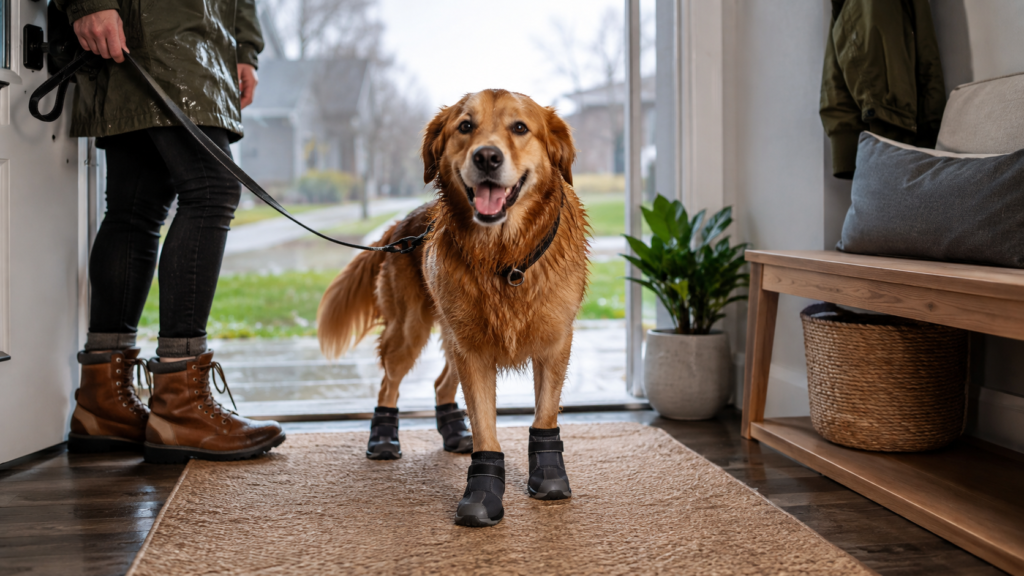
The right pair of dog boots can make rainy and muddy walks far more pleasant for both you and your dog — protecting sensitive paws, reducing mess at home, and improving traction on slippery surfaces. Whether you need heavy-duty trekking boots for serious trail conditions or a simple, easy-on option for quick walks around the block, there’s a solid choice on this list for every dog and every budget.
Take the time to measure your dog’s paws properly, introduce the boots gradually, and you’ll likely find that “boot time” becomes just another normal part of your walk routine — mud-free floors included.
Disclaimer: This article provides general pet-care information and is not a substitute for professional veterinary advice. If your dog has a paw injury, persistent discomfort, or another concerning symptom, consult a licensed veterinarian