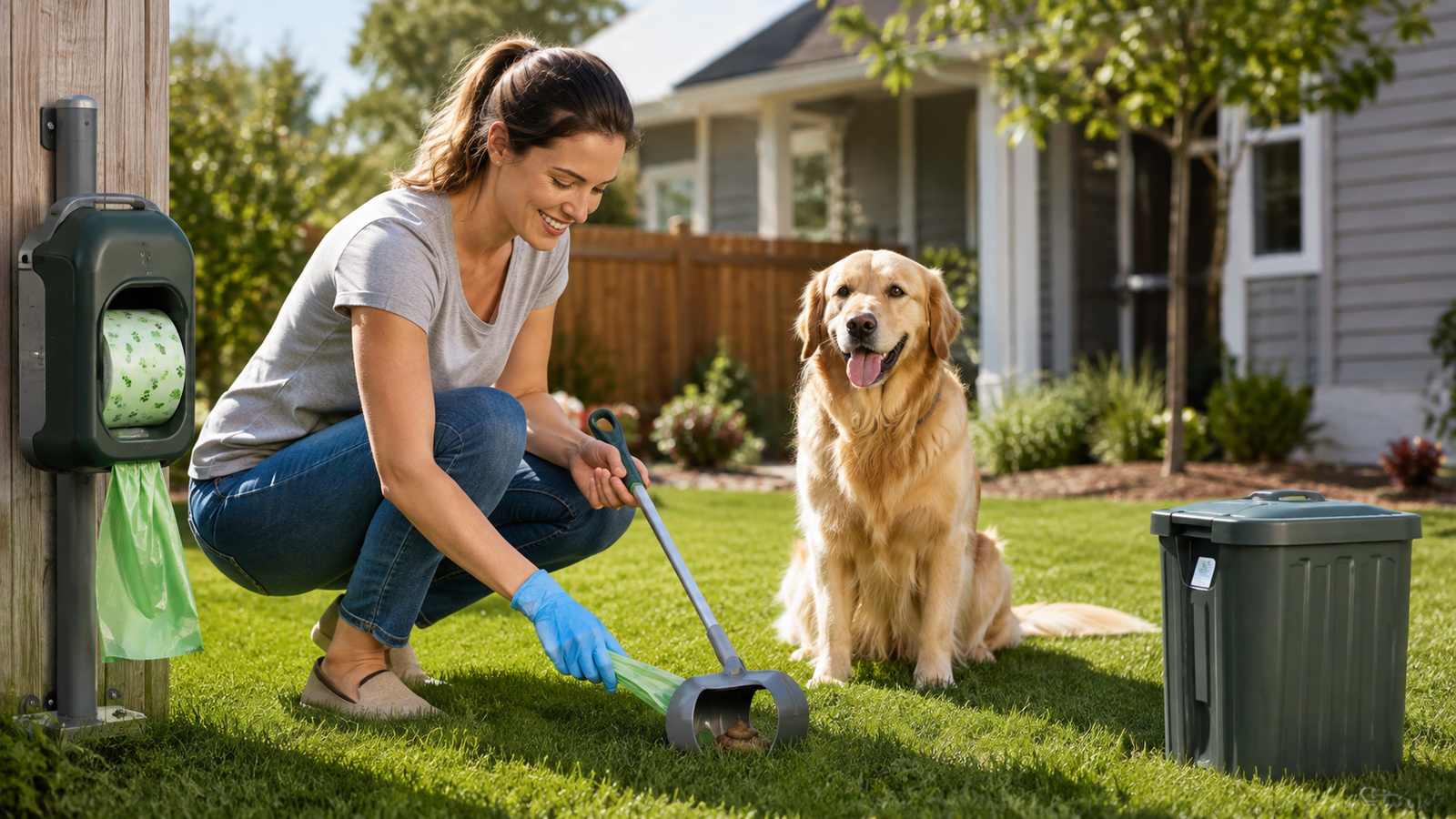
Disclosure: This post may contain affiliate links. If you purchase through these links, we may earn a small commission at no additional cost to you. We only recommend products we believe add real value for dog owners.
Disclaimer
For informational purposes only. Product details and prices may change. Always follow manufacturer instructions and consult a veterinarian for pet health concerns.
Introduction
If you own a dog, you already know the truth nobody puts on the adoption papers: cleaning up poop is a daily job. It doesn’t matter if you have a tiny apartment dog or a big backyard Labrador — waste management is part of the deal.
The good news is that dog poop cleanup has come a long way. You’re no longer stuck with a flimsy plastic bag and a wince. Today there are biodegradable bags, spring-loaded scoopers, self-cleaning litter-style systems, in-ground septic tanks, and even enzyme-based digesters that break waste down naturally in your yard.
This guide walks you through every major type of dog poop cleanup product on the market, compares their pros and cons, and helps you figure out exactly what fits your lifestyle — whether you’re a daily dog-walker in a city, a suburban pet parent with a fenced yard, or someone managing multiple dogs on acreage.
We’ll cover:
- Why proper poop cleanup actually matters (health and environment)
- Poop bags: standard, biodegradable, and scented
- Manual and long-handled scoopers
- Backyard waste disposal systems
- Odor control and sanitizing products
- A simple comparison table
- A buyer’s guide based on your situation
- Frequently asked questions
Let’s get into it.
Why Dog Poop Cleanup Actually Matters
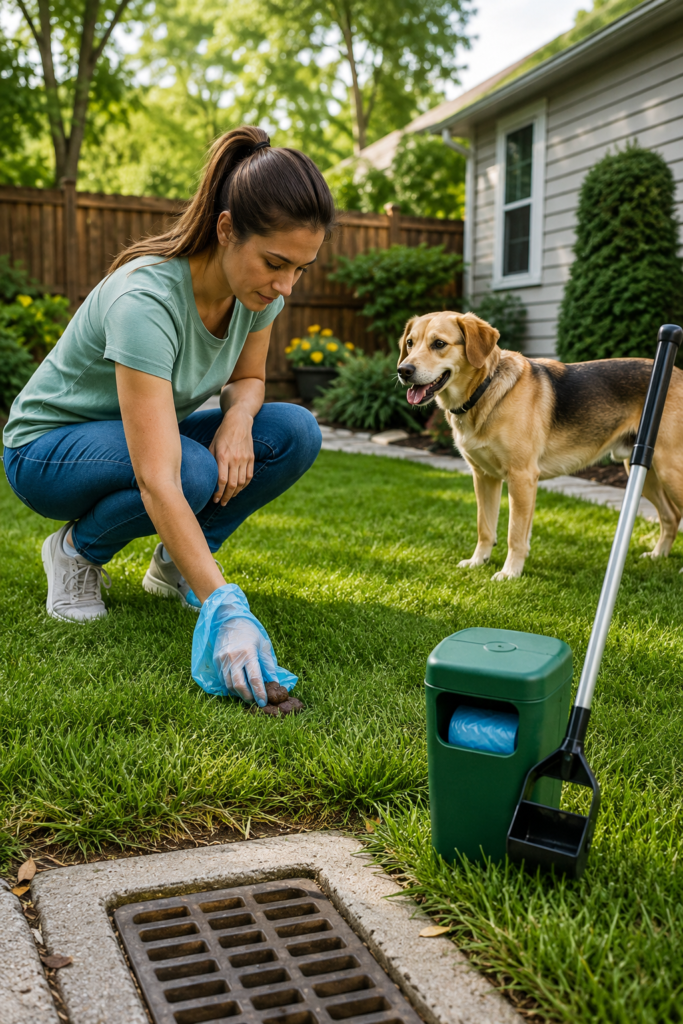
It’s easy to think of pet waste as just an unpleasant chore, but there are real reasons to take it seriously.
1. Health risks. Dog waste can carry parasites like roundworms, hookworms, and giardia, along with bacteria such as E. coli and salmonella. These can spread to humans, especially children who play in yards or parks, and to other pets.
2. Water contamination. Rain washes uncollected waste into storm drains, which often lead directly to local streams and rivers without treatment. This is one reason many cities have “pooper scooper” laws with real fines attached.
3. Lawn damage. Dog waste is highly acidic. Left on grass, it can burn patches into your lawn, leaving yellow or brown spots that take time to recover.
4. Neighborhood and rental relationships. Nothing sours a relationship with neighbors — or risks your security deposit — faster than an unmanaged yard.
The takeaway: this isn’t just about smell. It’s about health, property, and being a responsible pet owner. Let’s look at the tools that make it easier.
Category 1: Dog Poop Bags
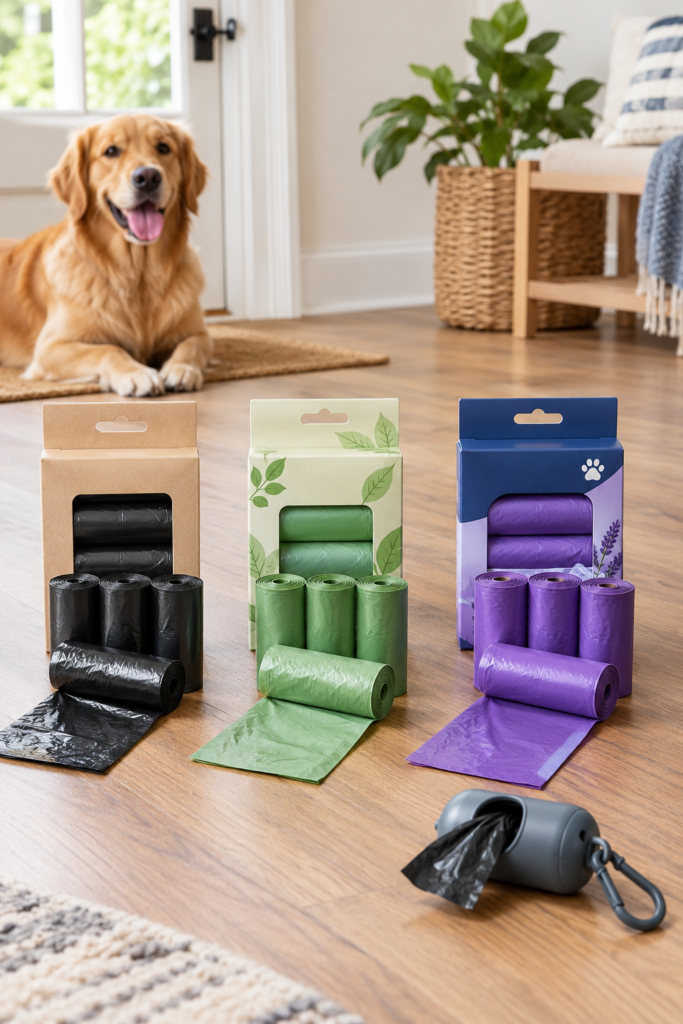
Poop bags are the most basic tool every dog owner needs, whether for walks or scooping the backyard.
Standard Plastic Poop Bags
These are the classic thin, roll-based bags, often sold in bulk with a dispenser. They’re cheap and easy to find, and most clip right onto a leash.
Pros: Inexpensive, widely available, lightweight for walks. Cons: Not biodegradable, thin bags can tear, environmental concerns.
👉 A reliable everyday option is a bulk pack with an attached dispenser clip: https://link.amazon/B07hHFLKH
Biodegradable / Compostable Poop Bags
These bags are made from plant-based materials like cornstarch instead of standard plastic. They break down significantly faster in landfill or compost conditions.
Pros: Better for the environment, often just as strong as regular bags, guilt-free disposal. Cons: Slightly more expensive, some “biodegradable” claims vary by brand — look for certification.
Scented / Extra-Thick Bags
These add a light fragrance and thicker material, ideal for owners who are sensitive to smell or walk larger dogs.
Pros: Reduces odor while carrying, extra puncture resistance. Cons: Scent can be strong for some users, slightly pricier per bag.
👉 A popular thick, lavender-scented option: https://link.amazon/B03ojNHOM
Bag Dispensers and Holders
A separate but essential accessory — a dispenser that clips to a leash or belt keeps bags accessible and prevents you from ever being caught without one.
Category 2: Poop Scoopers
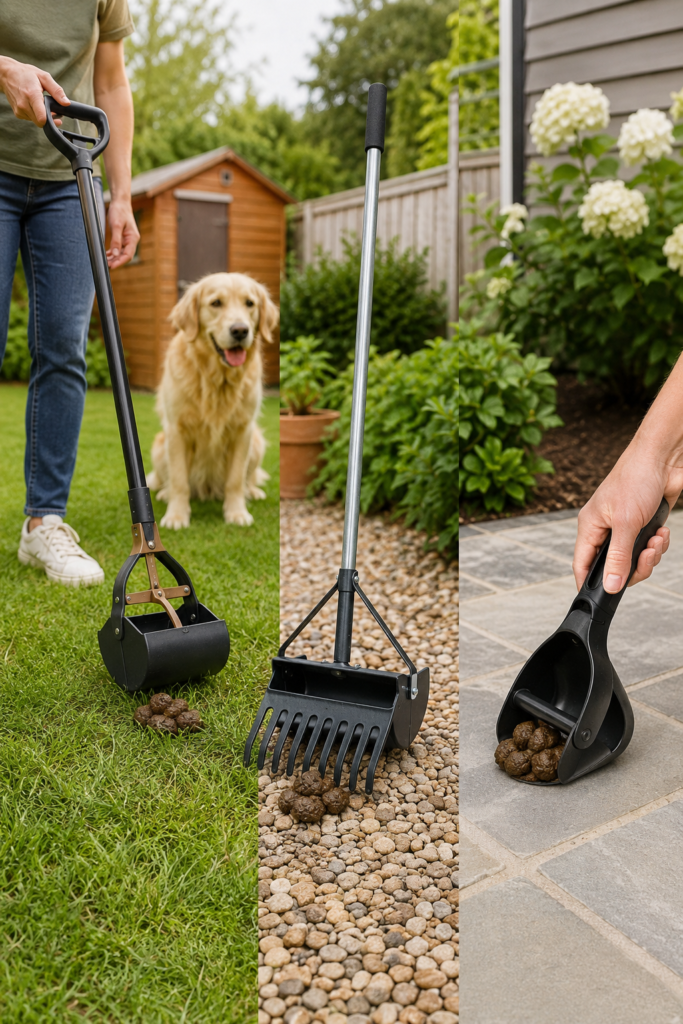
If bags are for walks, scoopers are for backyards. A good scooper saves your back and your hands from ever touching waste directly.
Spring-Loaded Jaw Scoopers
These work like a claw grabber — you position the jaws over the waste, squeeze the handle, and it clamps shut. Great for grass and gravel.
Pros: No bending over, works on multiple surfaces, easy one-hand use. Cons: Can be less effective on very soft or mushy waste.
Rake-and-Tray (Two-Piece) Scoopers
This style uses a small rake to push waste into a tray-like scoop. It’s especially good for uneven or rocky yards where a jaw scooper might miss.
Pros: Great for tricky terrain, sturdy design, good for larger dog waste. Cons: Requires two hands, slightly bulkier to store.
Handheld Scoopers (Small Yard or Travel Size)
Compact versions designed for small yards, patios, or travel. Some fold down for easy storage in a car or camper.
Pros: Portable, affordable, good for small dogs or small spaces. Cons: Less efficient for large yards or bigger dog waste.
Category 3: Backyard Waste Disposal Solutions
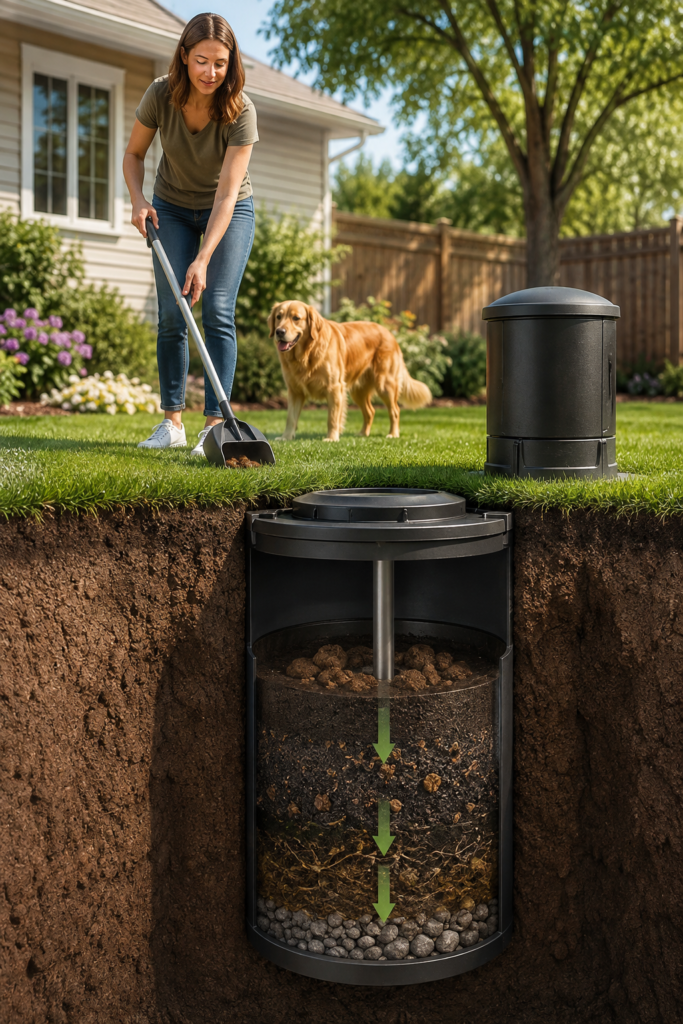
If you have a yard, you’ll eventually want something better than bagging every single pile and putting it in the trash. These systems are designed for ongoing, low-effort waste management.
In-Ground Dog Waste Disposal Systems (Septic-Style)
These work like a mini septic tank. You dig a hole, insert the unit below ground, and drop waste inside along with a digestive enzyme powder that breaks it down over time. Rainwater helps the process along.
Pros: “Set it and forget it,” no smell above ground, environmentally friendly. Cons: Requires initial setup and digging, not ideal for very small yards or heavy clay soil.
👉 A top-rated in-ground waste disposal system: https://link.amazon/B0gdonde9
Waste Digester Powder / Enzyme Treatments
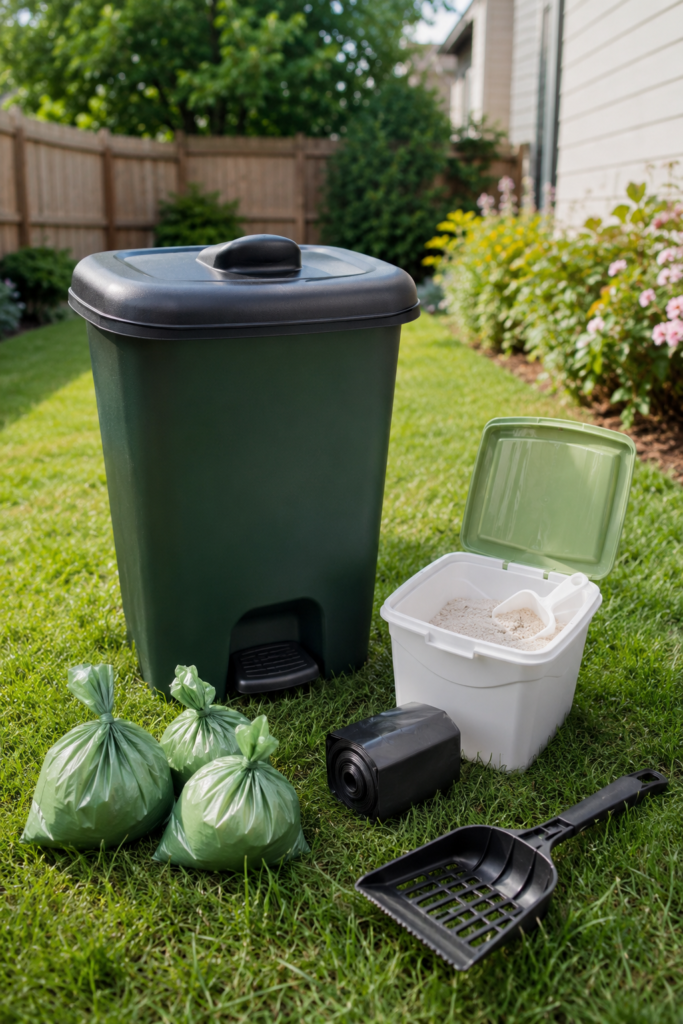
These powders contain natural bacteria that accelerate the breakdown of waste, whether used with an in-ground system or sprinkled directly where waste tends to accumulate.
Pros: Speeds up decomposition, reduces odor, eco-friendly. Cons: Needs occasional reapplication, works best paired with a disposal system.
Outdoor Waste Bins with Odor-Lock Lids
These are heavy-duty bins designed to sit in your yard and hold bagged waste between full trash pickups, using a sealed lid system to keep odor contained.
Pros: Keeps smell away from the house, good for multi-dog households, weatherproof designs available. Cons: Bin still needs regular emptying, takes up yard space.
👉 A durable odor-sealing outdoor waste bin: : https://link.amazon/B0c884tdr
Category 4: Odor Control & Yard Care Add-Ons
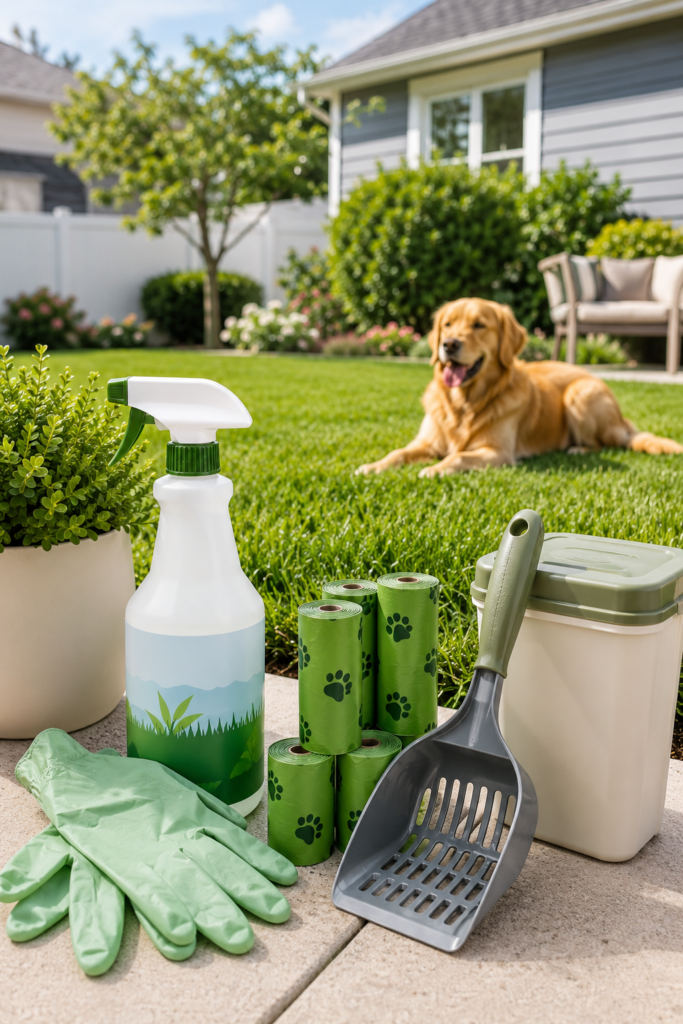
Beyond the core tools, a few extra products can make a big difference in keeping your yard fresh and your lawn healthy.
Pet-Safe Lawn Neutralizing Spray
These sprays are designed to neutralize the acidity in dog urine and residual waste odor, helping protect grass from burn spots.
Disposable Gloves for Cleanup
For anyone who prefers a barrier between hands and waste bags, especially useful for larger dogs or multiple-pet households.
👉 A budget-friendly disposable glove pack: https://link.amazon/B04pLvQpS
Quick Comparison Table
| Product Type | Best For | Effort Level | Eco-Friendliness | Approx. Cost |
|---|---|---|---|---|
| Standard Plastic Bags | Daily walks | Low | Low | $ |
| Biodegradable Bags | Eco-conscious walkers | Low | High | $$ |
| Scented Thick Bags | Sensitive noses, big dogs | Low | Medium | $$ |
| Spring-Loaded Scooper | Grass/gravel yards | Low-Medium | Medium | $$ |
| Rake-and-Tray Scooper | Uneven/rocky yards | Medium | Medium | $$ |
| Handheld Scooper | Small yards, travel | Low | Medium | $ |
| In-Ground Disposal System | Large yards, long-term use | Medium (setup), Low (upkeep) | High | $$$ |
| Enzyme Digester Powder | Speeding up breakdown | Low | High | $ |
| Odor-Lock Outdoor Bin | Multi-dog households | Low-Medium | Medium | $$$ |
(Pricing symbols are relative: $ = budget, $$ = mid-range, $$$ = investment-level.)
How to Choose the Right Products for Your Situation
Everyone’s setup is different, so here’s a simple way to think about it based on common lifestyles.
If You Live in an Apartment or Walk Your Dog Daily
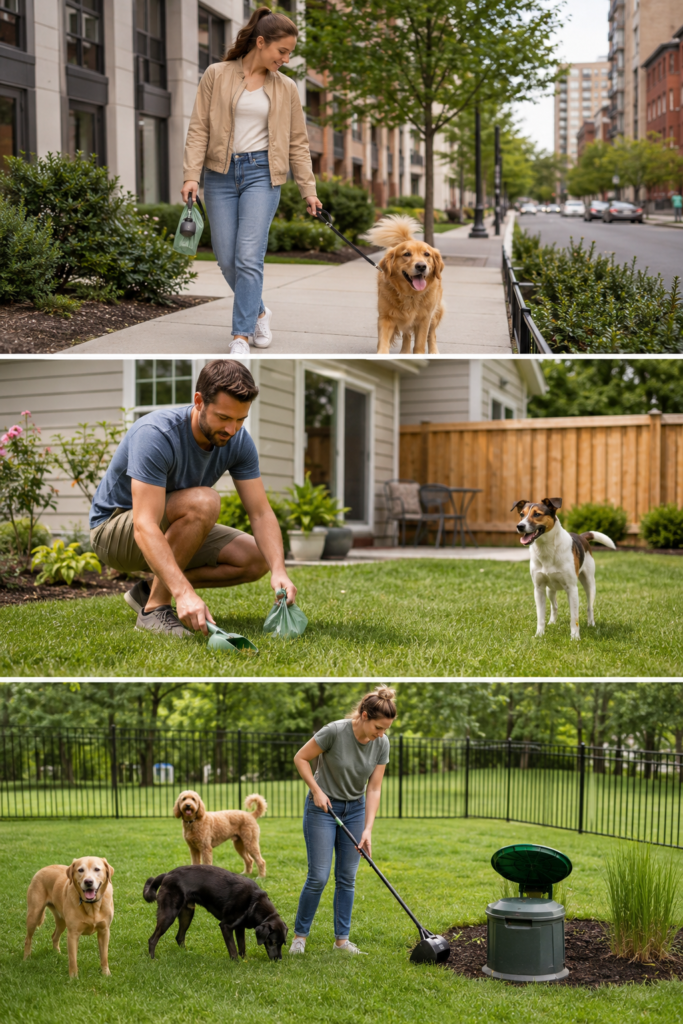
Focus on poop bags and a dispenser. A biodegradable bag paired with a leash-clip dispenser is usually enough. You likely don’t need a scooper or in-ground system since you’re not managing a private yard.
If You Have a Small to Medium Backyard
A handheld or spring-loaded scooper paired with standard or biodegradable bags is the sweet spot. You get quick daily cleanup without needing to dig anything into the ground.
If You Have a Large Yard or Multiple Dogs
This is where an in-ground waste disposal system or odor-lock outdoor bin really pays off. Combined with a rake-and-tray scooper for larger waste and an enzyme digester, you can manage waste with minimal daily effort.
If Odor and Lawn Health Are Your Main Concerns
Add a pet-safe lawn neutralizing spray to your routine and consider an enzyme digester powder, which breaks down residue faster and reduces smell at the source.
Simple Daily and Weekly Routine
A clear routine makes cleanup feel far less like a chore. Here’s a simple structure many pet owners use:
- Daily: Scoop visible waste from the yard using your scooper of choice, bagging it or placing it into your in-ground system.
- On Walks: Always carry at least two bags — one for backup — clipped to the leash.
- Weekly: Empty and rinse your outdoor bin if you use one, and check enzyme digester levels in your in-ground system.
- Monthly: Apply a pet-safe lawn spray to problem areas showing signs of burn spots.
Sticking to a light routine like this prevents waste from building up and keeps your yard smelling fresh.
Frequently Asked Questions
1. Are biodegradable poop bags actually better for the environment? Generally, yes — especially if certified compostable. They break down faster than standard plastic, though actual decomposition still depends on local waste processing conditions.
2. Can I just leave dog poop in my yard to decompose naturally? It’s not recommended. Untreated waste can take months to break down, poses health risks from bacteria and parasites, and can damage your lawn in the meantime.
3. How often should I empty an in-ground dog waste disposal system? Most systems are designed to hold waste that breaks down continuously, so they rarely need full emptying — just occasional enzyme powder refills, usually every few weeks depending on usage.
4. What’s the most efficient tool for a large yard with multiple dogs? A rake-and-tray scooper for quick collection combined with either an in-ground system or an odor-lock bin tends to work best for higher waste volume.
5. Do scented poop bags actually help with odor? Yes, to a degree. They’re helpful while carrying a bag on a walk, though they aren’t a substitute for proper backyard odor control if you’re dealing with a larger waste volume.
6. Is it worth buying a poop scooper if I only have a small dog? It depends on your yard. For small patios or apartments with limited outdoor space, a handheld bag-and-glove approach may be all you need. For anyone with grass to maintain, even a compact scooper saves time and effort.
Final Thoughts
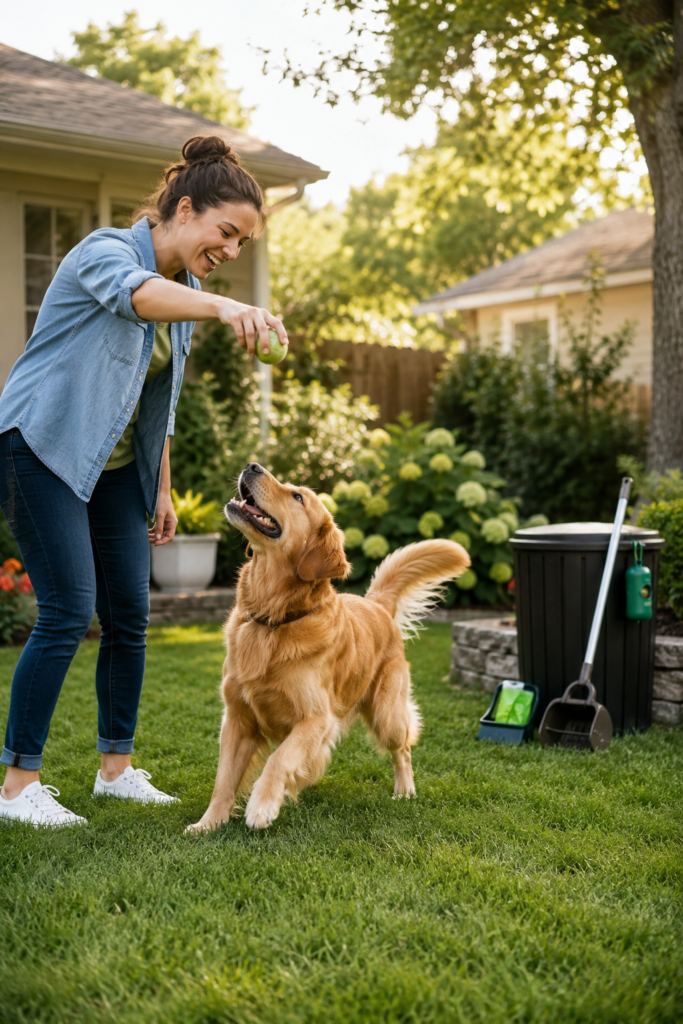
Dog poop cleanup will never be anyone’s favorite task, but the right products make it fast, low-mess, and honestly kind of forgettable — which is exactly what you want from a daily chore. Start with the basics (a good bag and dispenser), then build up to a scooper and, if you have the yard space, an in-ground disposal system or enzyme digester for long-term ease.
Whatever combination you choose, your dog, your lawn, and your neighbors will thank you.