Affiliate Disclosure
This article contains affiliate links. If you purchase a product through one of these links, we may earn a small commission at no additional cost to you. We only recommend products that may be useful for pet owners.
This article contains affiliate links. If you purchase a product through one of these links, we may earn a small commission at no additional cost to you. We only recommend products that may be useful for pet owners.
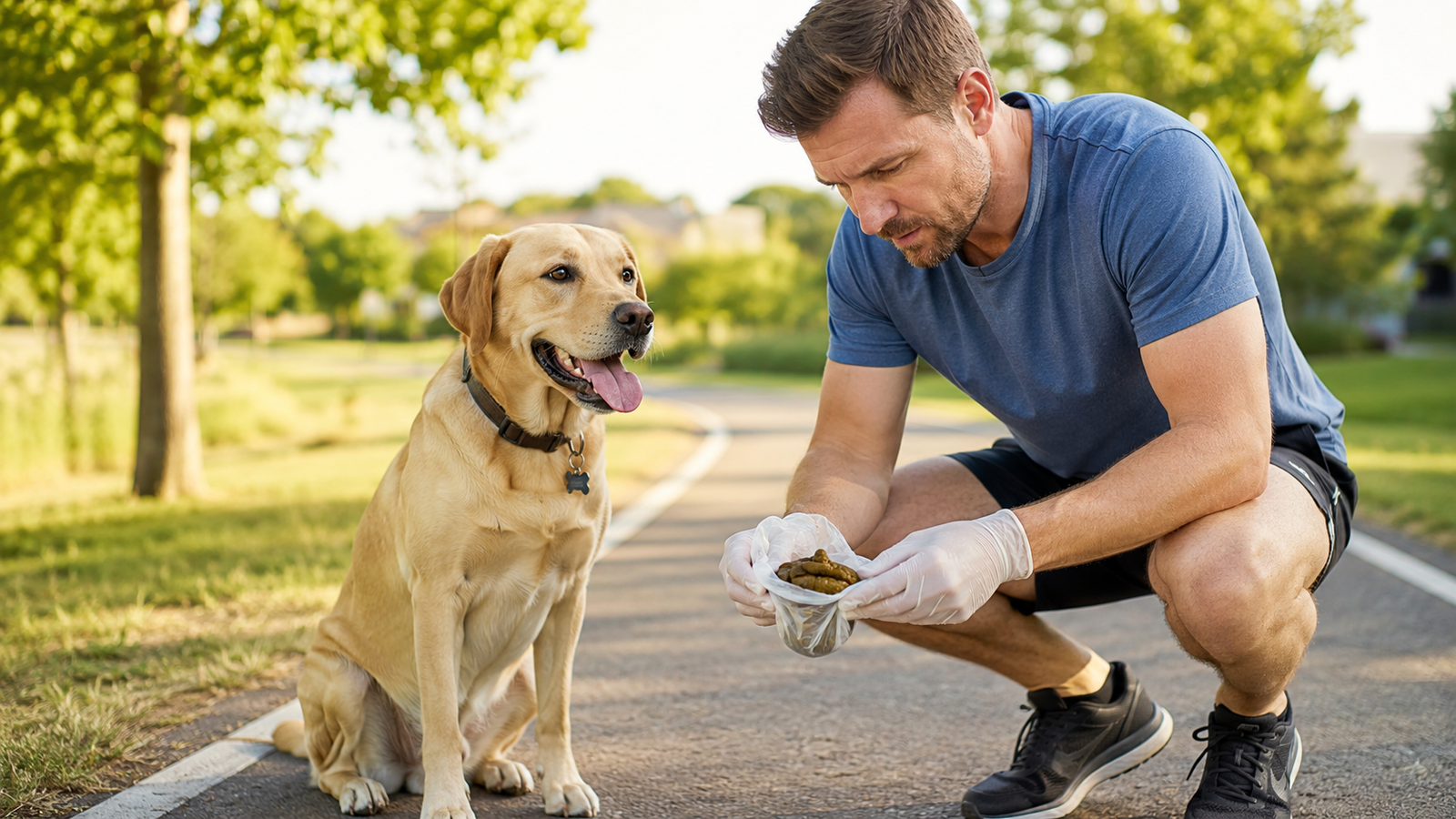
Nobody grows up dreaming of becoming an expert in dog poop. And yet, here you are — bag in hand, squinting at something on the sidewalk, wondering if that color is normal or a sign that something is wrong.
The truth is, your dog’s poop is one of the best free health reports you’ll ever get. It’s produced almost every day, it reflects what’s happening inside your dog’s digestive system, and — unlike blood tests — you don’t need an appointment to check it.
This guide breaks down exactly what each color of dog poop can mean, when it’s harmless, and when it’s time to pick up the phone and call your veterinarian. We’ll also cover texture, consistency, frequency, and a few simple products that can help you keep your dog’s digestive health on track
Why Dog Poop Color Actually Matters
Your dog’s stool passes through the entire digestive tract — mouth, stomach, small intestine, large intestine, and colon — picking up information along the way. Bile from the liver, enzymes from the pancreas, bacteria from the gut, and whatever your dog ate all show up in the final result.
A sudden color change can be as simple as “my dog ate something colorful yesterday,” or it can point to something more serious like a liver issue, internal bleeding, or a parasite infection.Changes in stool color, consistency, or frequency can sometimes provide useful clues about your dog’s digestive health, but stool appearance alone cannot diagnose a medical condition.
That’s why learning this simple color guide is genuinely useful pet-parenting knowledge — not just something to gross out your friends with.
The Quick Reference: Dog Poop Color Chart
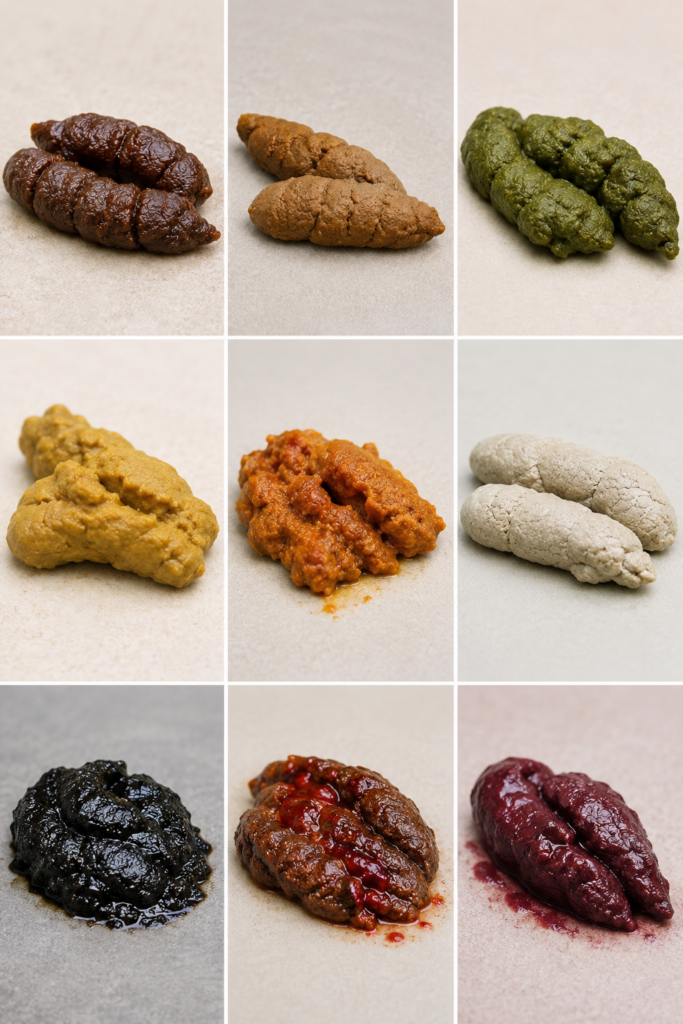
| Color | What It Usually Means | Urgency |
|---|---|---|
| Chocolate brown | Healthy, normal digestion | None |
| Light brown/tan | Fast transit time, diet change | Low |
| Green | Grass eating, bile issue, parasites | Monitor |
| Yellow | Diet changes orpossible digestive issues | Monitor–Moderate |
| Orange | Diet, food pigments ordigestive/bile-flow issues | Moderate |
| White or grey | Diet-related changes orpossible bile-flow issues | Moderate |
| Black or tarry | Bleeding in upper digestive tract | Emergency |
| Red streaks | Bleeding in lower digestive tract | Moderate–Urgent |
| Purple or maroon | Significant intestinal inflammation or bleeding | Emergency |
Now let’s go through each one in detail.
1. Brown Poop: The Gold Standard
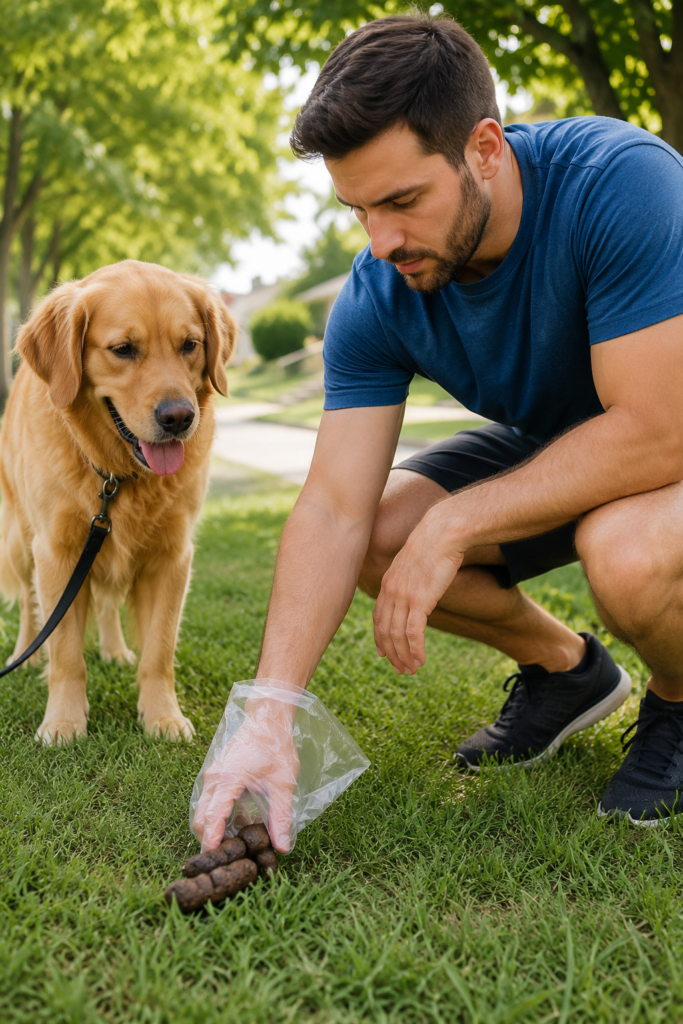
If your dog’s poop is a solid chocolate-brown color, congratulations — that’s exactly what you want to see. The brown color comes from bilirubin, a pigment produced when the liver breaks down old red blood cells and releases it into the digestive tract as bile.
Healthy brown poop should also be:
- Firm but not hard (think of a log you could pick up in one piece)
- Slightly moist on the surface
- Free of mucus, worms, or undigested food chunks
If your dog’s stool checks all these boxes, their digestive system is doing its job well. Nothing to worry about here — this is simply a sign of good gut health, which is often supported by a consistent, high-quality diet.
If you want to help maintain this healthy baseline, many owners rotate in a daily probiotic to support gut flora. [AFFILIATE LINK: Probiotic Supplement for Dogs – https://link.amazon/B0aetbEOZ]
2. Light Brown or Tan Poop
A lighter shade of brown isn’t usually cause for alarm on its own. This can happen when:
- Your dog recently switched food brands
- The food has a higher fiber or fat content than usual
- The stool passed through the intestines a bit faster than normal
Keep an eye on it for a day or two. If it returns to a normal brown color and your dog is acting normally (eating, playing, drinking water), it was likely just a temporary shift caused by diet. If it stays pale for more than 2–3 days, move on to the “grey/white” section below, since a very light stool can sometimes signal a bile issue.
3. Green Poop
Green stool tends to alarm owners the most because it looks so unnatural — but it’s often one of the more harmless colors on this list.
Common, low-concern causes:
- Eating a lot of grass (a very common canine habit)
- Eating green, leafy vegetables
- Food dyes in certain treats or kibble
Causes worth monitoring:
- Fast intestinal transit, where bile doesn’t have time to fully break down
- Intestinal parasites, especially if paired with visible worms, mucus, or a bloated belly
- Gallbladder issues affecting bile release
If the green color persists for more than two or three bowel movements, or if your dog seems lethargic, has diarrhea, or is vomiting, it’s worth a vet visit and a fecal exam to rule out parasites.
Routine deworming and fecal screening kits make it easy to catch parasite issues early, right from home. AFFILIATE LINK: At-Home Dog Fecal Test Kit – https://link.amazon/B0c9iizZk]
4. Yellow Poop
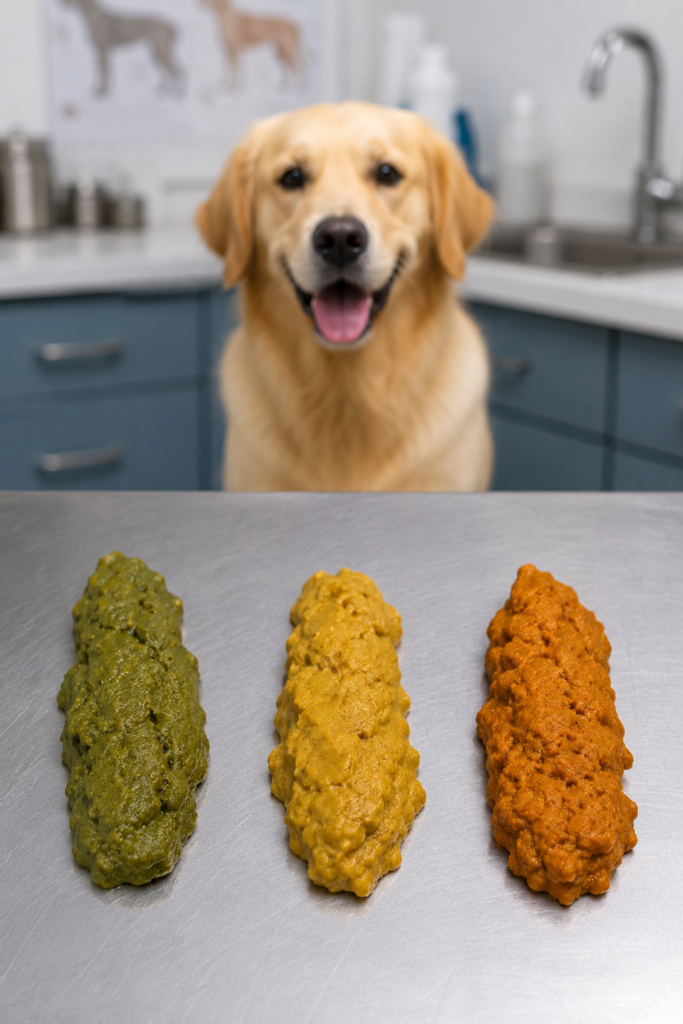
Yellow poop is one of the more common “worth watching” colors. It typically points to one of the following:
- Diet change or sensitivity — a sudden switch in food, a new treat, or a rich meal (like table scraps) can cause a yellowish, soft stool
- Liver or pancreas stress — since bile (which colors stool) comes from the liver and is processed with help from the pancreas, disruption here can shift color toward yellow
- Rapid gut transit — similar to green poop, if food moves too fast, bile doesn’t fully oxidize into brown
- Stress or anxiety — travel, boarding, or a stressful event can trigger a temporary yellow, soft stool
A single yellow stool after a dietary indiscretion is rarely an emergency. But recurring yellow, greasy-looking, or foul-smelling stool combined with vomiting, appetite loss, or lethargy warrants a vet check,Recurring yellow, greasy, or foul-smelling stool may be linked to digestive problems or other health conditions. If it continues or occurs with vomiting, poor appetite, or lethargy, contact your veterinarian for advice.
If your dog’s stomach seems sensitive to ingredient changes, a gradual food transition and a limited-ingredient diet can make a big difference.
5. Orange Poop
Orange stool sits close to yellow on the color wheel and Orange stool can happen because of diet changes, food pigments, or digestive issues. If it continues or appears with vomiting, poor appetite, or lethargy, contact your veterinarian for advice.
It can result from:
- A liver issue affecting how bile is produced or released
- A blocked or inflamed bile duct
- Some medications or supplements (always check the label first)
- Occasionally, foods with strong orange or yellow dyes
Because the liver is involved in filtering toxins and processing nutrients, persistent orange stool is one you shouldn’t ignore for more than a day or two, especially if paired with a yellow tint to the gums or eyes (a sign of jaundice), which is an emergency symptom.
6. White or Grey Poop
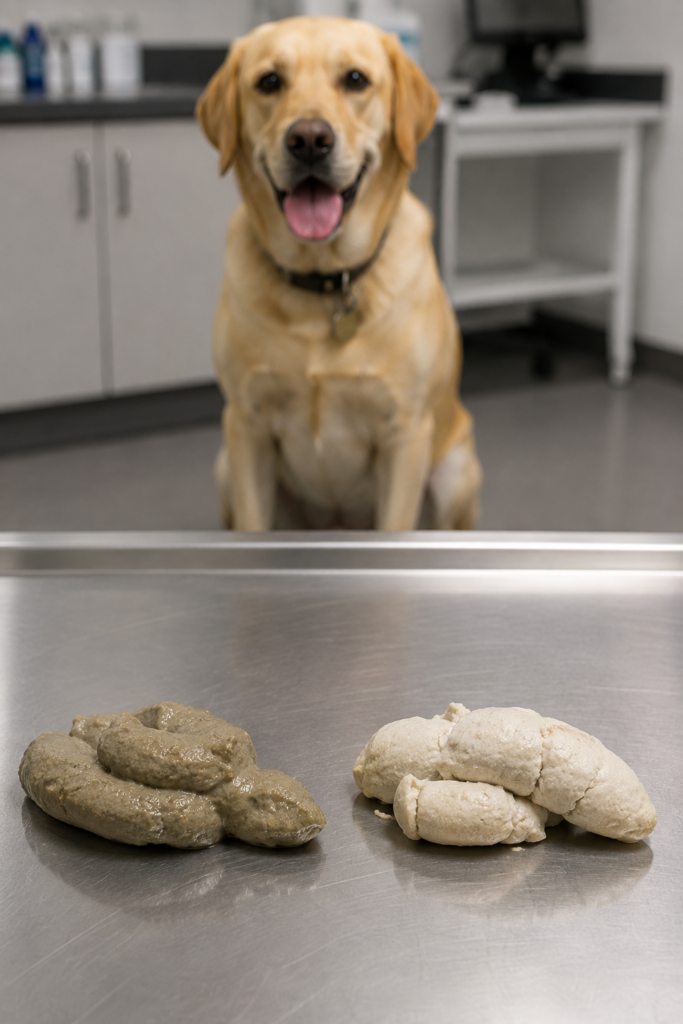
This is one of the more concerning shades on the list. Very pale, white, or gray stool can sometimes be linked to reduced bile flow or diet, especially a bone-heavy diet. If it continues or appears with vomiting, poor appetite, or lethargy, contact your veterinarian for advice.
which can point to:
- A bile duct obstruction
- Liver or gallbladder disease
- A diet extremely high in calcium or ground bone (common in some raw diets), which binds with fat and produces chalky, whitish stool
When it’s likely diet-related: If your dog eats a raw or bone-heavy diet, occasional pale, crumbly, white-tipped stool is a known and generally harmless side effect of excess calcium.
When it’s not diet-related: If your dog eats standard commercial kibble or wet food and suddenly produces grey or white stool, especially alongside vomiting, appetite loss, or yellowing eyes/gums, this needs same-day veterinary attention. It can indicate a serious liver or bile duct problem.
If you feed a raw or bone-inclusive diet, using a calcium-balanced pre-mix can help prevent overly chalky stool. [AFFILIATE LINK: Raw Diet Calcium Balance Supplement – https://link.amazon/B0ajju5Dc]
7. Black or Tarry Poop (Melena)
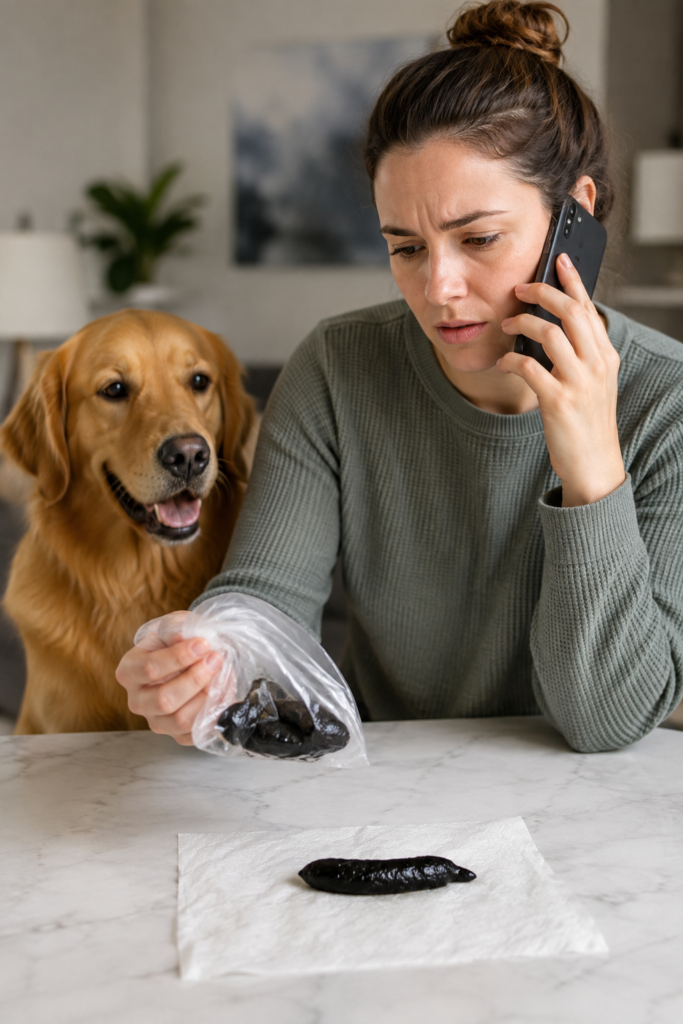
This is one of the two colors on this list that should send you straight to the vet — ideally the same day.
Black, tar-like, sticky stool (called melena in veterinary terms) usually means there’s bleeding somewhere in the upper digestive tract — the stomach or small intestine. By the time blood reaches the far end of the digestive system, it has been digested and turns black rather than staying red.
Possible causes include:
- Stomach ulcers
- Ingestion of a sharp object that caused internal injury
- Certain medications (like long-term NSAID use)
- Bleeding disorders
- Tumors in the digestive tract
Important note: Some iron supplements or a diet very high in red meat/blood can also darken stool slightly, but true melena has a distinctive tarry, sticky texture and a strong, unpleasant odor. If you’re not 100% sure it’s diet-related, treat it as an emergency and call your vet.
8. Red Streaks or Red-Tinged Poop
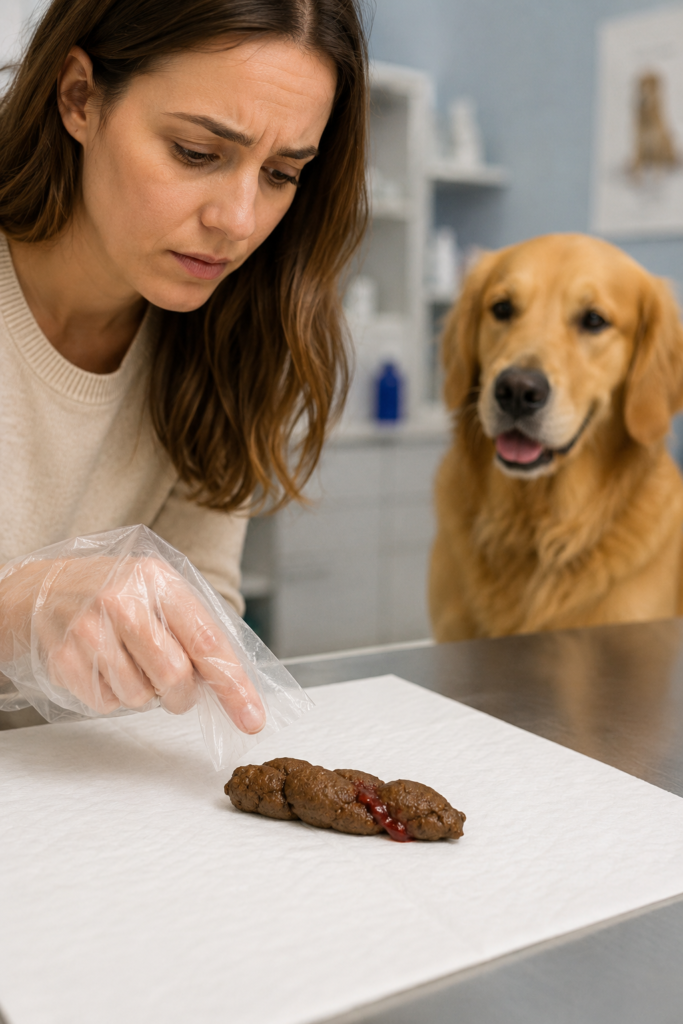
Bright red blood in or on the stool (called hematochezia) usually indicates bleeding lower in the digestive tract — the colon or rectum — since the blood hasn’t had time to darken.
Common, less serious causes:
- Straining from constipation, which can cause small blood vessels near the anus to break
- Anal gland irritation or infection
- Mild colitis (inflammation of the colon), often triggered by stress or a dietary change
More serious causes:
- Parvovirus (especially in unvaccinated puppies)
- Intestinal parasites
- Ingested foreign objects
- Tumors or polyps
A small streak of blood on an otherwise normal, firm stool is often less urgent than diarrhea that’s mixed heavily with blood. Still, any visible blood is worth mentioning to your vet, and if your dog is a puppy, unvaccinated, or showing other symptoms like vomiting or lethargy, treat it urgently — parvo can be fatal within days without treatment.
9. Purple or Maroon Poop
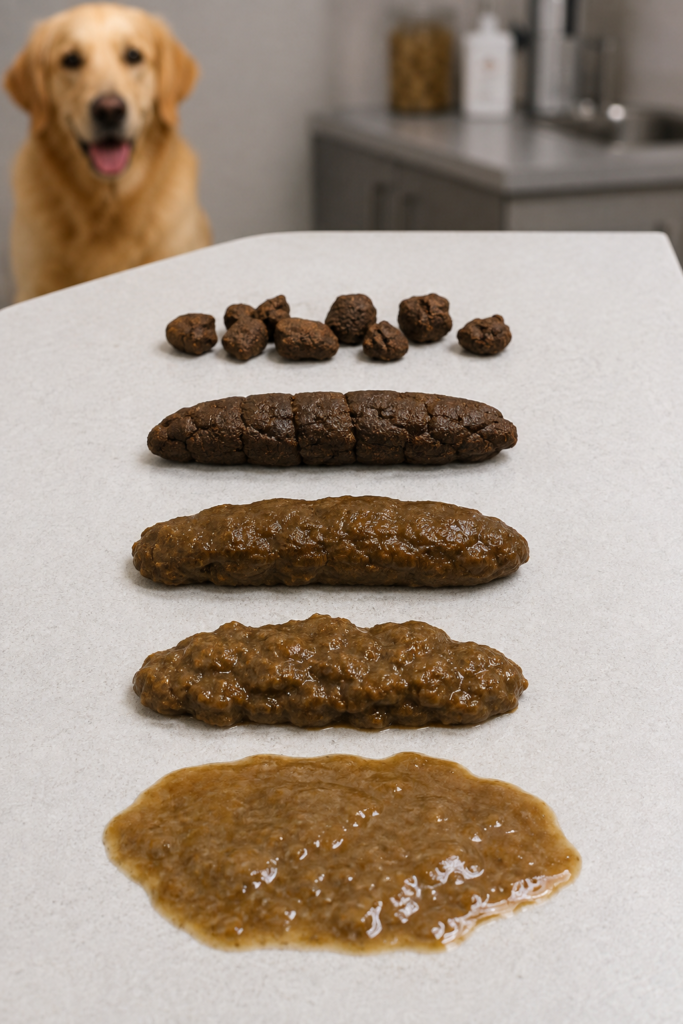
Dark red, maroon, or jelly-like bloody diarrhea can indicate intestinal inflammation or bleeding. Possible causes include AHDS, parvovirus, parasites, dietary problems, or other digestive conditions. If it continues or occurs with vomiting, weakness, lethargy, or dehydration, contact your veterinarian promptly.
It’s also a hallmark symptom of parvovirus in puppies, alongside vomiting, lethargy, and loss of appetite.
Both conditions can become life-threatening within 24–48 hours without treatment. If you ever see purple, maroon, or “raspberry jam” colored stool, don’t wait — get to a vet or emergency animal hospital immediately.
What About Texture and Consistency?
Color isn’t the whole picture — texture matters just as much. Many vets use a 1–7 stool scale, similar to the human Bristol Stool Chart:
- Too hard/dry (constipated): Small, hard pellets that are difficult to pass
- Ideal: Firm, log-shaped, holds its form when picked up, slightly moist
- Soft but formed: Holds shape but flattens when it lands — early sign of an upset stomach
- Very soft/no shape: Needs a bag to pick up, no defined form
- Watery diarrhea: Liquid, no form at all
If your dog’s poop is the right color but the wrong texture, it’s still worth monitoring, especially if diarrhea lasts more than 24–48 hours, since dehydration can set in quickly, particularly in small breeds and puppies.
Common Causes of Dog Poop Color Changes
To recap, most color changes trace back to one of these five root causes:
- Diet — new food, treats, table scraps, food dye, or too much fat/fiber
- Foreign objects — chewed toys, bones, fabric, or trash that irritate or damage the gut lining
- Parasites — worms or protozoa like giardia affecting the intestines
- Organ function — liver, gallbladder, or pancreas issues affecting bile and enzyme production
- Infection or inflammation — bacterial infections, viral infections (like parvo), or colitis
Keeping a simple log of your dog’s stool color, texture, and any diet changes can make it much easier for your vet to spot patterns if something goes wrong.
A simple pet health journal or app can help you track stool changes, meals, and symptoms over time, so you have clear information ready for your vet visit. [AFFILIATE LINK: Pet Health & Symptom Tracker Journal – https://link.amazon/B0aXmMgM3]
When to Call the Vet: A Simple Checklist
Call your vet the same day if you notice:
- Black, tarry stool
- Purple, maroon, or “jelly-like” stool
- Grey or white stool (without a bone-heavy diet explanation)
- Blood mixed throughout diarrhea
- Any color change paired with vomiting, lethargy, fever, or appetite loss
- Symptoms in a puppy, senior dog, or a dog with a known health condition
Monitor for 24–48 hours (call if it doesn’t resolve) if you notice:
- A single instance of yellow, green, or orange stool
- Mild diarrhea with normal energy and appetite
- Small streaks of red blood with normal-looking stool otherwise
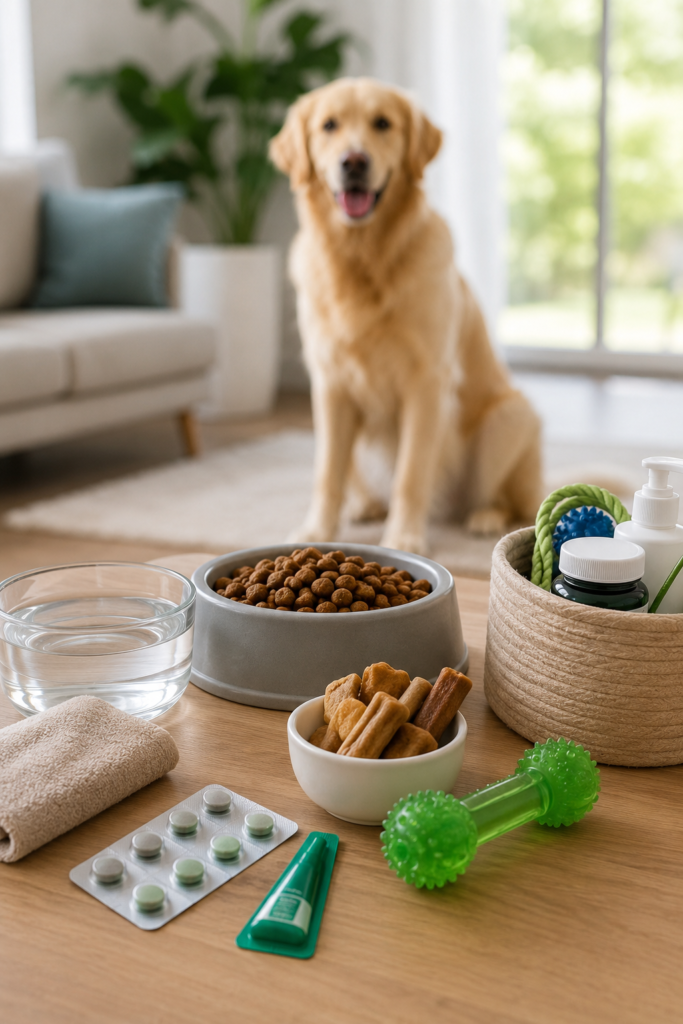
Everyday Products That Support Healthy Digestion
These products may support routine dog care, but they should not be used to diagnose or treat abnormal stoo
Everyday Products for Routine Dog Care.
These products may be useful for routine dog care, but they should not be used to diagnose or treat abnormal stool.
- Probiotic supplements to maintain healthy gut bacteria [AFFILIATE LINK: https://link.amazon/B0idIYD02]
- Digestive enzyme supplements for dogs with sensitive stomachs [AFFILIATE LINK: https://link.amazon/B06Do5n6y]
- High-quality, limited-ingredient dog food to reduce dietary triggers [AFFILIATE LINK: https://link.amazon/B0i0Me5pw]
- Sturdy, leak-proof poop bags for daily walks and easy stool inspection [AFFILIATE LINK: https://link.amazon/B0cYcxAf9]
- Enzyme-based cleaner for accidents at home [AFFILIATE LINK: https://link.amazon/B08iqtD9O]
Introducing any new supplement or food should be done gradually, over 5–7 days, to avoid causing the very digestive upset you’re trying to prevent.
Frequently Asked Questions
Is it normal for dog poop color to vary day to day? Small variations are normal, especially with treats or table scraps. Consistent daily brown poop with occasional minor shifts is nothing to worry about. Sudden, dramatic changes lasting more than a day or two deserve attention.
My dog ate something colorful — could that explain a strange poop color? Yes. Bright-colored treats, dyed toys, crayons, or even brightly colored plastic can pass through and tint stool. If your dog is behaving normally otherwise, this is often the simple explanation — just monitor for the next day or two.
How long does it take for diet-related stool color to return to normal? Usually 2–4 days after returning to a consistent, familiar diet. If it takes longer, it may not be diet-related.
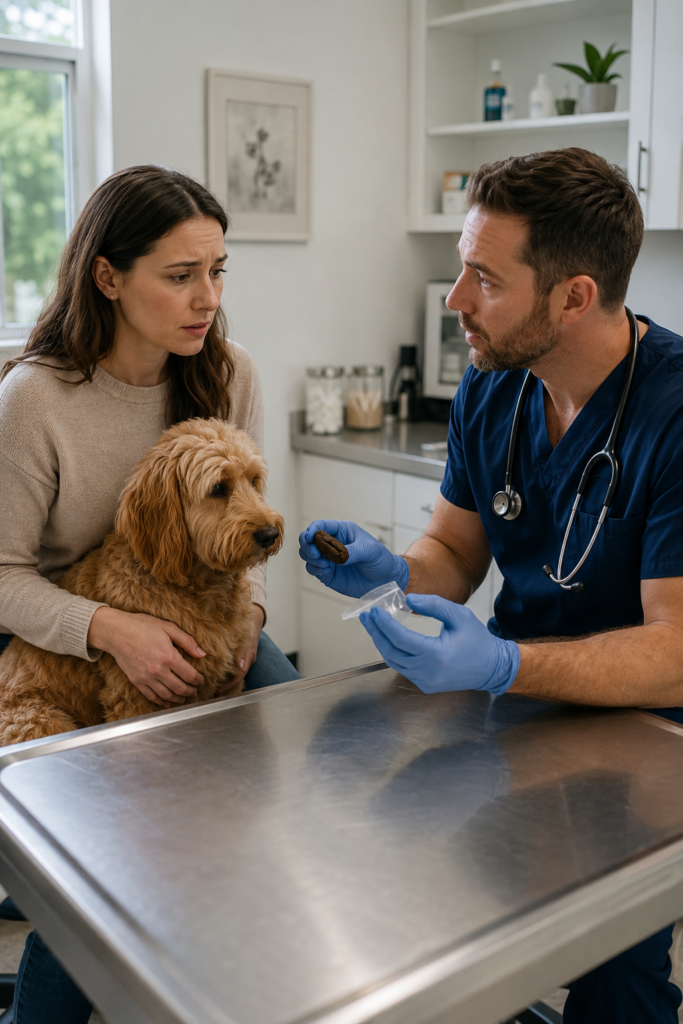
Should I bring a stool sample to the vet? Yes, if possible. A fresh sample (collected within a few hours, refrigerated if needed) helps your vet check for parasites, blood, and bacterial imbalances quickly and accurately.
Can stress cause poop color changes in dogs? Yes. Stress and anxiety can speed up or slow down digestion, commonly resulting in soft, yellow, or greenish stool. This usually resolves once the stressor (travel, new environment, loud events) passes.
Final Thoughts
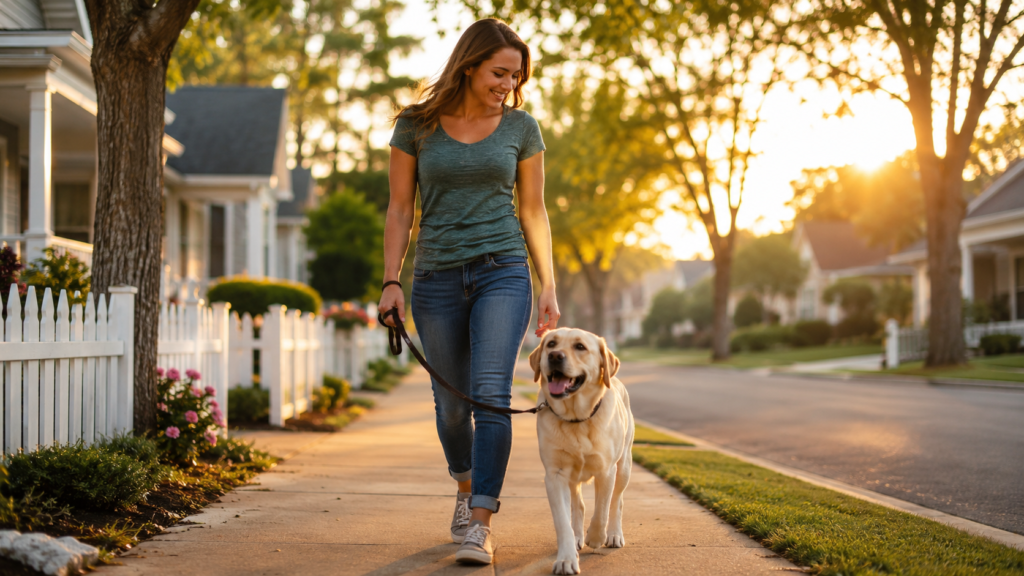
Checking your dog’s poop might not be glamorous, but it’s one of the simplest and most effective ways to catch health issues early. Most of the time, a color change is nothing more than a sign your dog ate something unusual or switched foods. But black, purple, or persistent grey stool are red flags that deserve prompt veterinary attention.
The best approach is simple: know what “normal” looks like for your dog, watch for real changes (not just one-off surprises), and don’t hesitate to call your vet when something seems consistently off.Checking your dog’s stool regularly can help you notice changes in color, consistency, or frequency. Minor changes may not always be serious, but persistent or unusual changes should be discussed with your veterinarian.
This article is for general informational purposes and is not a substitute for professional veterinary advice. If you’re concerned about your dog’s health, please consult a licensed veterinarian.
Disclaimer
This guide provides general pet health information and is not a substitute for professional veterinary diagnosis or treatment. If your dog has persistent, severe, or concerning symptoms, please consult a licensed veterinarian.